
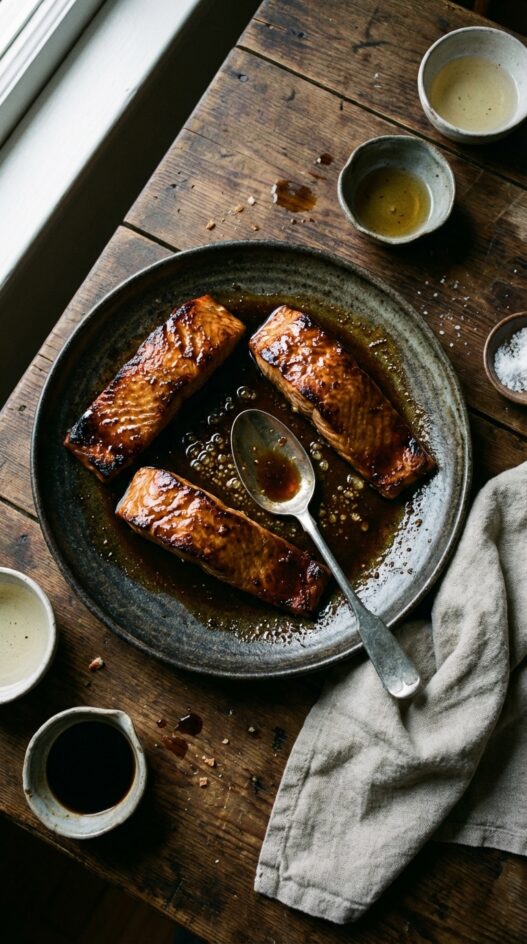
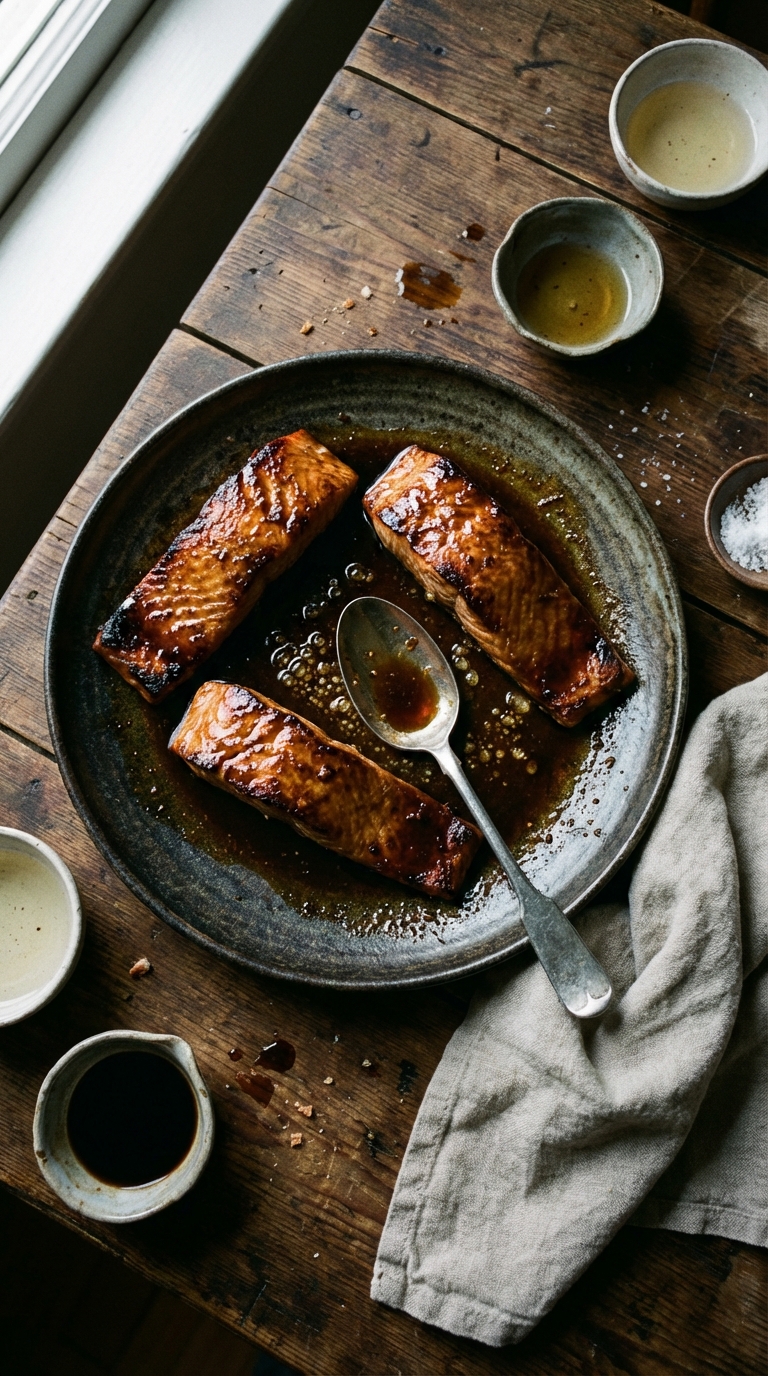
Here’s how to make real teriyaki salmon with a sauce that actually tastes like teriyaki, not like bottled sweetness with soy sauce as an afterthought. Sake, mirin, and soy sauce reduce down into a glossy glaze that coats the salmon without overwhelming it. The fish gets seared skin-side down first to crisp it up, then finishes in the sauce as it thickens.
The sauce takes five minutes to reduce, the salmon cooks in under ten, and you end up with something that belongs on a restaurant menu. Serve with steamed rice, and bok choy or whatever you love to pair with salmon.
What You’ll Need
1/2 cup (118ml) sake
1/4 cup (59ml) mirin (sweet Japanese rice wine)
1/4 cup (59ml) reduced sodium soy sauce
1 tablespoon (15ml) oil
1 pound (454g) wild caught salmon (skin on, cut into 4 pieces)
Salt
How to Make Homemade Teriyaki Salmon
Make the Teriyaki Sauce
In a small bowl, combine the sake, mirin, and soy sauce. Stir to combine and set aside.
Sear the Salmon
Heat the oil in a large skillet over medium heat. Season the salmon pieces with salt, then place them skin side down in the hot pan. Cook for 3-4 minutes until the skin is crispy.
Carefully flip the salmon and cook on the other side for about 1 minute. Transfer the salmon to a plate.
Reduce the Sauce
Wipe out any fat from the pan with a paper towel, then pour in the teriyaki sauce. Bring the sauce to a boil and cook until reduced significantly, about 4-5 minutes. The sauce should be noticeably thicker and syrupy.
Finish the Salmon
Add the salmon back into the pan, skin side up. Cook for an additional 2-3 minutes, spooning the sauce over the fish continuously, until the salmon is cooked through and the sauce has become thick and glossy.
Recipe Notes
Wiping out the fat before adding the sauce is important. It helps the sauce reduce and thicken properly without getting greasy.
Don’t overcook the salmon. It’s done when the sauce has thickened into a syrup and the fish flakes easily.
Keep the skin on. It crisps up nicely and helps hold the fish together while cooking.
Spoon the sauce over the fish constantly during the last few minutes. This builds up the glaze and ensures every piece is coated.
Use reduced sodium soy sauce. Regular soy sauce can make the final dish too salty once the sauce reduces.
Sake and mirin are both available in most grocery stores in the Asian section. Don’t substitute cooking wine for sake.
Serve over rice with steamed vegetables or a simple cucumber salad to balance the richness.
Leftovers can be flaked over rice or noodles the next day. The sauce firms up when cold but melts again when reheated.

Homemade Teriyaki Salmon
- Total Time: 20
- Yield: 4 servings
Description
Skin-on salmon seared crispy, then finished in a sake-mirin-soy glaze that reduces into a glossy, restaurant-quality teriyaki sauce.
Ingredients
- 1/2 cup (118 ml) sake
- 1/4 cup (59 ml) mirin (sweet Japanese rice wine)
- 1/4 cup (59 ml) reduced sodium soy sauce
- 1 tbsp (15 ml) neutral oil
- 1 lb (454 g) wild-caught salmon, skin on, cut into 4 pieces
- Salt, to taste
Instructions
- In a small bowl, combine the sake, mirin, and soy sauce. Stir to combine and set aside.
- Heat the oil in a large skillet over medium heat. Season the salmon pieces with salt, then place them skin-side down in the hot pan.
- Cook for 3-4 minutes until the skin is crispy and golden brown. Carefully flip the salmon and cook on the other side for about 1 minute. Transfer the salmon to a plate.
- Wipe out any fat from the pan with a paper towel, then pour in the teriyaki sauce.
- Bring the sauce to a boil and cook until reduced significantly, about 4-5 minutes. The sauce should be noticeably thicker and syrupy.
- Return the salmon to the pan, skin-side up. Cook for an additional 2-3 minutes, spooning the sauce over the fish continuously, until the salmon is cooked through and the sauce is thick and glossy.
- Serve immediately over steamed rice with bok choy, steamed vegetables, or a simple cucumber salad.
Notes
- Wipe out the fat before adding the sauce — it helps the sauce reduce and thicken properly without getting greasy.
- Use reduced sodium soy sauce. Regular soy sauce can make the dish too salty once the sauce reduces.
- Keep the skin on. It crisps up nicely and holds the fish together during cooking.
- Spoon the sauce over the fish constantly during the last few minutes to build up the glaze and ensure even coating.
- Do not substitute cooking wine for sake — the flavor difference is significant.
- Leftovers can be flaked over rice or noodles the next day. The sauce firms up when cold but melts again when reheated.
- Prep Time: 5
- Cook Time: 15
- Category: Main Course
- Cuisine: Japanese
Nutrition
- Serving Size: 1 piece
If you liked this, you are going to love these favorite salmon recipes:
Grilled Mojito Salmon with Pepper and Mint Salsa
Baked Salmon with Basil Chimichurri and Crispy Thyme Fries
Broiled Salmon with Balsamic Butter Sauce
Roasted Asparagus Salad with Smoked Salmon and Poached Eggs
Frequently Asked Questions
Can I substitute the sake in the teriyaki sauce?
You can use white wine or a mixture of water and rice vinegar as a substitute for sake, but the flavor may vary slightly.
How do I know when the salmon skin is crispy enough?
The salmon skin should be golden brown and easily release from the pan when you gently lift it with a spatula after cooking for 3-4 minutes.
What should I do if my teriyaki sauce isn’t thickening?
Make sure to boil the sauce for the full 4-5 minutes, as this allows it to reduce and thicken properly; if needed, you can let it cook a bit longer.








Made this last night and it was way way waaaaaaay better than store bought teriyaki. Like way better.
Truer words were never spoken, Cooking Dad!
This is the perfect teriyaki recipe. Awesome!!!
I couldn’t agree more Drake. (Drake, is that you?) :)