
Created on a typewriter, this worn and yellowing paper is stained with what I can only imagine is sweet tea and roux grease. The creases are brittle and the edges worn. On the margins is my mother’s loopy cursive, noting the slight adjustments she made over time. The first line reads, “One hen for boiling.”
It’s not often I use it — this emotional 8 1/2 x 11 page of measurements and instructions. It is reserved for special occasions. And the annual clamming trip to Southampton, New York is just that.
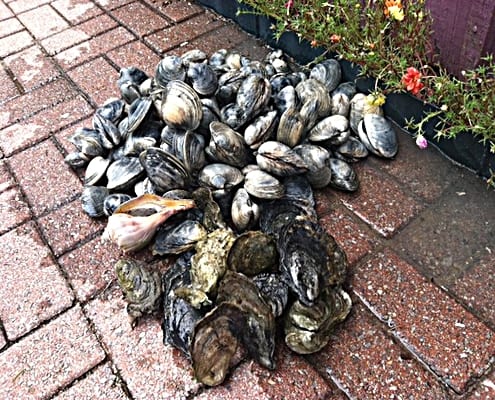
Myself and eight friends spend one weekend each summer at a tiny beach house — the former home of my friend’s grandmother, which has also been handed down from generation to generation. We make this trek for one purpose: clamming. We swim across the shallow bay, dragging floating coolers for beer and clams and dig our feet into the black, silky mush — a mix of quicksand and slick mud. Within minutes we’re hoisting clams to the surface with our toes. Within an hour we’ve filled the cooler.
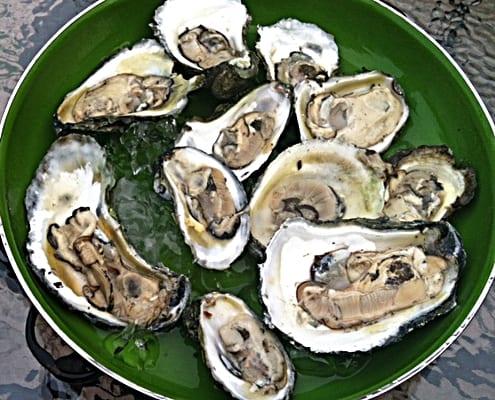
From there we swim to another area to hunt for oysters. Though not as plentiful as clams, we managed to catch close to a dozen, which we shucked and ate within minutes. The first time I tasted an oyster freshly caught from these waters, I proclaimed I would never taste a better bite of seafood. I still have yet to.
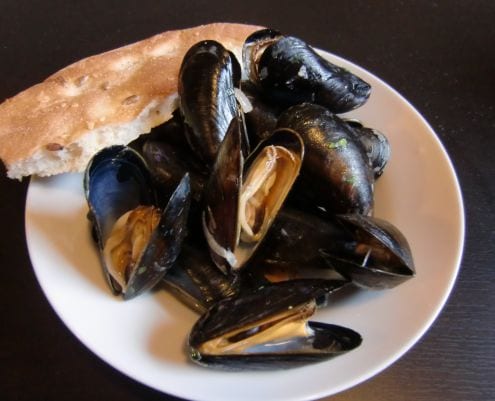
Back at the house, after enjoying melt-in-your-mouth oysters, we got to work steaming the clams. Working in batches, we piled the fresh clams (third picture) into a large, metal pot and added only water. A few minutes later, the clams opened, exposing the briny meat we worked so hard barely exerted any effort for. This process created a delicious, salty broth that we used in the gumbo. We were also lucky enough to have two quarts of lobster stock on hand, thanks to a friend’s recent seafood smorgasbord and his ambition to put to use leftover shells.
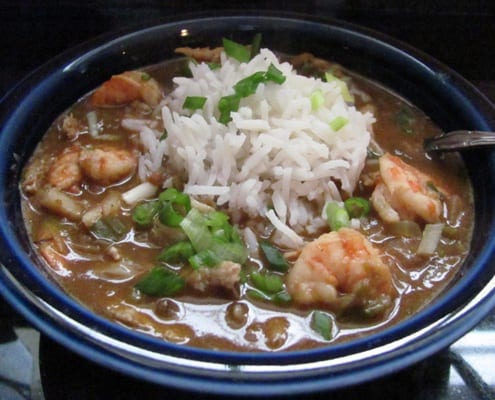
Here it is, the best gumbo you’ll ever taste–Grandma’s gumbo.
Print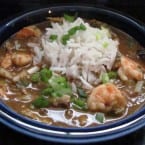
Grandma’s Gumbo
- Total Time: 2 hours 40 minutes
- Yield: 10 servings
Description
A rich and flavorful seafood gumbo, featuring tender chicken, fresh clams, and oysters, simmered in a savory roux-based broth and served over rice.
Ingredients
- 1 hen for boiling
- 1 cup (240 ml) shortening (or butter or vegetable oil)
- 1 cup (240 ml) flour
- 1 to 2 quarts (0.95 to 1.9 L) reserved chicken stock (from boiling the hen)
- 2 quarts (1.9 L) lobster stock (adds depth; brings total stock to 3 to 4 quarts combined with the chicken stock, per the recipe's own "3-4 quarts total" framing)
- 2 onions chopped
- 3 bell peppers chopped
- 1 1/2 cups (360 ml) chopped celery
- 3 tsp garlic, minced
- 5 bay leaves
- 1 cup (240 ml) chopped green onion (tops only)
- 1 bunch fresh parsley, chopped
- several squirt worsteschire sauce
- 1 to 1 1/2 lb (450 to 680 g) sliced okra
- 2 cans stewed tomatoes
- 1 lb (450 g) kielbasa, cut into 1/4 inch slices
- chopped chicken
- 3 to 4 lb (1.35 to 1.8 kg) small shrimp
- 1 tsp red pepper, plus more to taste
- garlic powder, to taste
- 5 to 6 oz (150 to 170 g) cure 81 ham
- 1 lb (450 g) crab meat
- steamed clams (as much as you have on hand)
- shucked oysters (as much as you have on hand)
- cooked white rice
- gumbo filé (optional)
Instructions
- Place shrimp in a large bowl, sprinkle with 1 tablespoon salt, 1 teaspoon red pepper, and garlic powder. Stir well, cover, and refrigerate until ready to use.
- Boil the hen with celery, onion, salt, and pepper until the meat is tender and falling off the bone. Remove the hen from the pot, let it cool, then shred the meat. Reserve the stock.
- In a large pot, heat 1 cup of shortening over medium heat. Add 1 cup of flour, stirring constantly to make a roux. Cook until the roux is a dark brown color, about 15-20 minutes, being careful not to burn it.
- Add the chopped onions, bell peppers, and celery to the roux. Cook for 8-10 minutes, stirring occasionally, until the vegetables are soft and translucent.
- Add the minced garlic and bay leaves, cooking for another 2 minutes until fragrant.
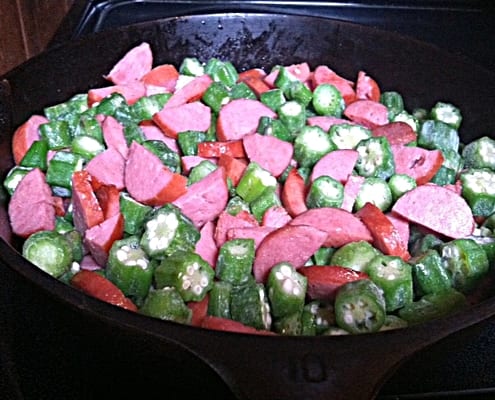
- Meanwhile, in a separate skillet, sauté the sliced okra over medium heat until it loses its ropy texture. Stir the sautéed okra into the pot along with the stewed tomatoes, kielbasa, and ham.
- Gradually whisk in 3 to 4 quarts of the reserved chicken stock and the lobster stock, stirring constantly to prevent lumps.
- Add the shredded chicken, crab meat, steamed clams, and shucked oysters to the pot. Simmer for 1 hour, allowing the flavors to meld together.
- Just before the gumbo finishes simmering, stir in the Worcestershire sauce, chopped green onion tops, and parsley.
- Adjust seasoning with additional salt and red pepper to taste.
- Serve the gumbo hot over cooked rice.
Notes
- Sauteeing okra beforehand helps remove some of the vegetable’s ropiness.
- Use fresh clams and oysters for the best flavor.
- The gumbo can be stored in the refrigerator for up to 3 days.
- Reheat gently before serving.
- Prep Time: 40 minutes
- Cook Time: 2 hours
- Category: Main Course
- Cuisine: American
Nutrition
- Serving Size: 1 serving
- Calories: 350
- Sugar: 3 grams
- Sodium: 800 mg
- Fat: 20 grams
- Carbohydrates: 20 grams
- Fiber: 3 grams
- Protein: 25 grams
- Cholesterol: 75 mg
If You Liked This Recipe, You’ll Love These
- All About Gumbo and a Seafood Gumbo Recipe
- Paleo Shrimp and Sausage Gumbo
- Langlois Culinary Crossroads in NOLA: The Secret to Making Gumbo
- Hearty Seafood Gumbo
Frequently Asked Questions
How do I avoid burning the roux?
Use equal parts shortening and flour (1 cup each) cooked over medium heat while stirring constantly for 15–20 minutes until the roux reaches a dark brown color. Be careful not to burn it — a burnt roux turns bitter and cannot be recovered, so keep the heat at medium and never stop stirring.
Why does the recipe call for sautéing the okra beforehand?
Sautéing the okra beforehand helps remove some of its ropiness — the slippery, mucilaginous texture okra releases when cooked directly in liquid. Pre-cooking it separately gives a cleaner texture in the finished gumbo.
This recipe uses both chicken stock and lobster stock — can I use just one?
The lobster stock came from a friend’s leftover shells and I added it because it was on hand. I call for 3–4 quarts of stock total; homemade chicken stock from boiling the hen is the base, and the lobster stock adds depth. Using only chicken stock (or another seafood stock) will still yield an excellent gumbo.

Halved the whole thing and still ended up with more gumbo than my biggest pot could hold.
SO GOOD. sauteeing the okra first was new to me and im never skipping it again
That step is the answer to the ropiness people complain about with okra, which is why it is written into the margin of the original. Glad it came good.
Used a whole chicken like it says rather than thighs and honestly Emily it made a difference to the stock.
Couldnt find a hen so i used a regular chicken and it worked fine. Took the roux too dark on my second try, still good but it needs watching.
Nothing beats a homemade roux!
Made my grandmothers gumbo for years and this roux method is spot on, low and slow is the secret, perfect every time. Thanks!
Emily
Sheila still makes the same gumbo and it is always fantastic. I can still remember Cheryl showing us how to make it.
Cheers to grandma and Cheryl!
Alan
Still thinking about Grandma’s delicious Gumbo…the “best I ever tasted”!!! Hoping this will be a new tradition.
Nothing beats a real family gumbo recipe and this one is the truth, so good and deep. I took my time on the roux like it said and stirred forever until it was dark and nutty, and the whole pot came together beautiful. Made a big batch on a sunday and we ate it all week, tastes even better the next day, thanks!
I’ve been looking for a good gumbo recipe for a while now, can’t wait to try this!
Wow! The recipe as a metaphor for the house, or vice versa? Didn’t see that one coming. You’re an amazing writer!
Can C2F come next year? Please?
What a wonderful article. There are so many emotions and memories that seem to be intertwined in this marvelous recap. Great !!!!!