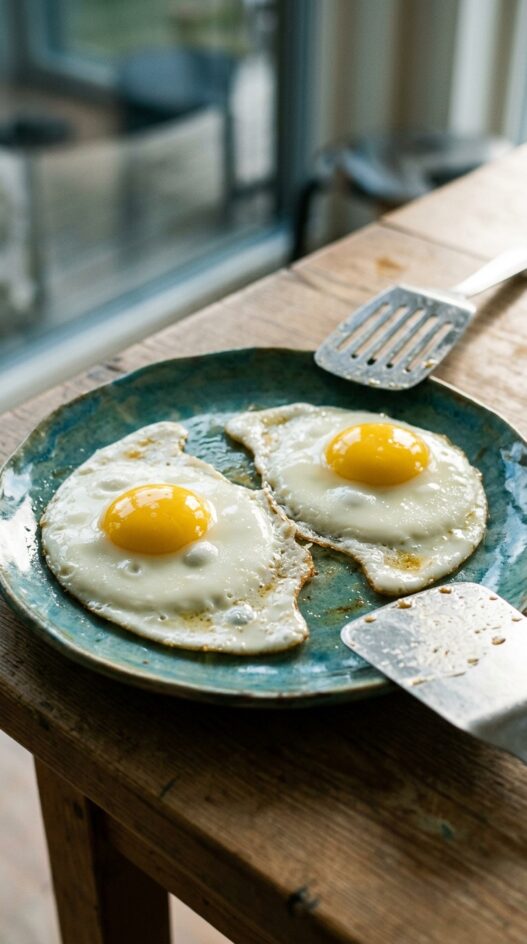
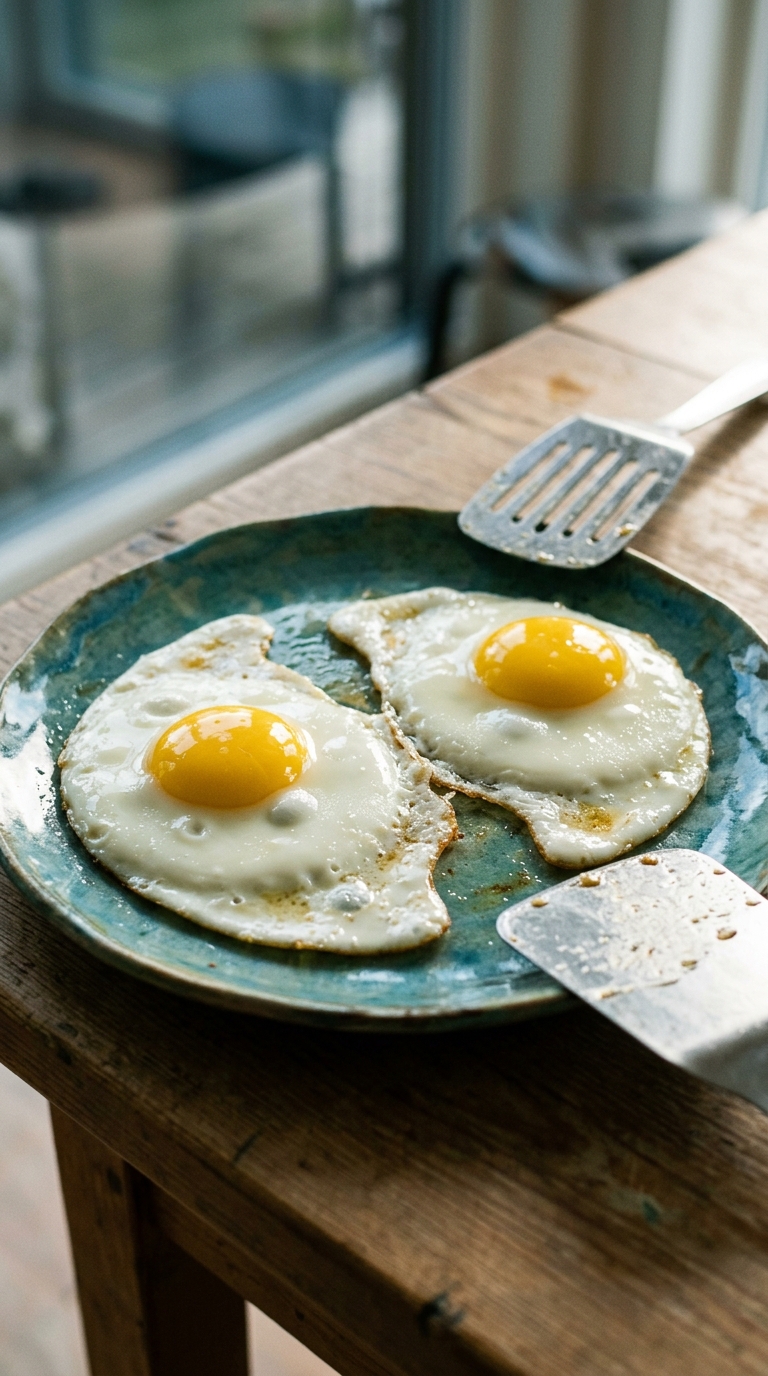
Eggs are a constant in baking, and frequently enjoyed at our breakfast tables as well as at other mealtimes. In Brazil, we love to serve them on top of a grilled steak which we call Bife à Cavalo (“Horseback-Riding Steak”). I decided it was time to present a simple and easy method or technique for how to cook PERFECT sunny-side up eggs (also known as fried eggs). For some, cooking perfect sunny-side up eggs is as easy as riding a bike… but for many others, not so much! Many just cannot seem to get them to come out soft and silky instead of producing crispy whites ends with hardened yolks…. With the simple technique that I am about to show you (my favorite of several), we are going to wind up with set yet soft whites, and runny yolks. Time and temperature play a big role in how to cook PERFECT sunny-side up eggs.
Print
How to Cook Perfect Sunny-Side Up Eggs
- Total Time: 3 mins
- Yield: 2
Description
Easy method for how to cook PERFECT sunny-side up eggs.
Ingredients
- 1 Tablespoon vegetable oil, bacon fat, or butter
- 2 large eggs
Instructions
- Heat a large, non-stick frying pan over medium-low heat. A large pan would be spacious enough to hold 2-3 eggs at a time with a bit of space between them and thereby prevent generating steam. Pour about 1/2 teaspoon of water into the heated pan. If water sizzles and evaporates on the pan, it means that pan is hot enough to hold the eggs in the right form.
- Lightly coat the bottom of the pan with olive oil or any vegetable oil of your preference, butter, or bacon fat (approximately 1 Tablespoon). If using butter, let it melt. You don’t need a large amount of fat to fry the eggs because the pan is non-stick and you don’t want the eggs to turn out greasy.
- Crack the eggs gently into the pan to keep the yolks intact (remember: do not overcrowd the pan. Rather, keep a space in between the two eggs). Note: An egg ring can be used to keep the eggs round and yolks centered if desired. As the eggs cook, their color will change from clear to opaque white. Cook until the tops of the whites are set but the yolk is still runny. This will take about 2 to 2-1/2 minutes. Meanwhile, if the oil starts to spit it is a sign that the oil is too hot…In this case, please turn the heat down to low.
- When sunny-side up eggs are ready, remove the pan from the heat. Use a large, metal spatula (not rubber) to remove the eggs from the pan one at a time and place on a serving plate. The metal spatula blade is thin enough to slide underneath the eggs without tearing them. And the large size of the blade will give more optimal support to keep the soft yolk intact while transferring from the pan to the plate. Some people like to dab them gently with paper towel to soak up any excess oil but I don’t dab mine because fat is flavor!!! Sprinkle salt and freshly ground black pepper — and also fresh or dried herbs if desired. Serve immediately and enjoy!
- Prep Time: 1 minutes
- Cook Time: 3 mins
- Category: Breakfast
- Cuisine: American
Frequently Asked Questions
How do I get fully set whites with a runny yolk — what's the technique?
Cook over medium-low heat in a large non-stick pan. The key is a low, steady temperature rather than high heat. Cook for about 2 to 2-1/2 minutes — the whites should turn from clear to opaque white all the way across while the yolk remains glossy and trembles when you move the pan. If the oil starts spitting, the heat is too high.
How do I know the pan is the right temperature before adding the eggs?
Pour a few drops of water into the heated pan. If the water sizzles and evaporates immediately, the pan is ready. Add about 1 tablespoon of oil, butter, or bacon fat and let it heat for a few seconds before cracking in the eggs.
Why do my egg whites spread out thin and become rubbery at the edges?
Rubbery edges almost always mean the heat is too high or the pan is overcrowded. Use a pan large enough to hold 2-3 eggs with space between them — crowding generates steam, which partially cooks the yolk from above and toughens the whites. Medium-low heat and a spacious pan solve both problems.
What's the best tool for removing sunny-side eggs from the pan without breaking the yolk?
Use a large, thin metal spatula — not rubber. The thin blade slides cleanly under the egg without tearing, and the large surface supports the yolk while you transfer it to the plate. Rubber spatulas are too thick and flexible; they'll push the yolk to one side.
If You Liked This Recipe, You’ll Love These
- Baked Sweet Potato and Chorizo Hash with Fried Eggs
- Instant Brunch Classic: Italian Eggs Benedict
- Turmeric Scrambled Eggs
- How to Cook Crawfish – The Perfect Boil