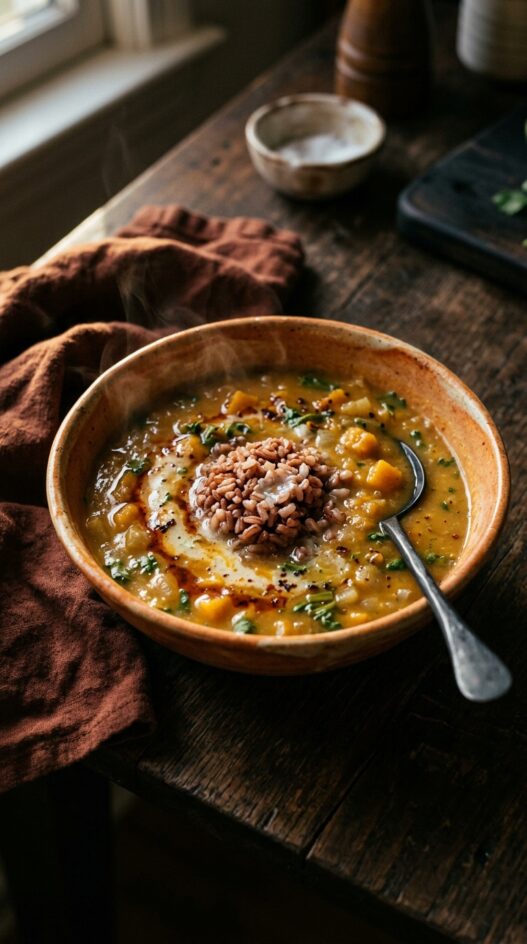
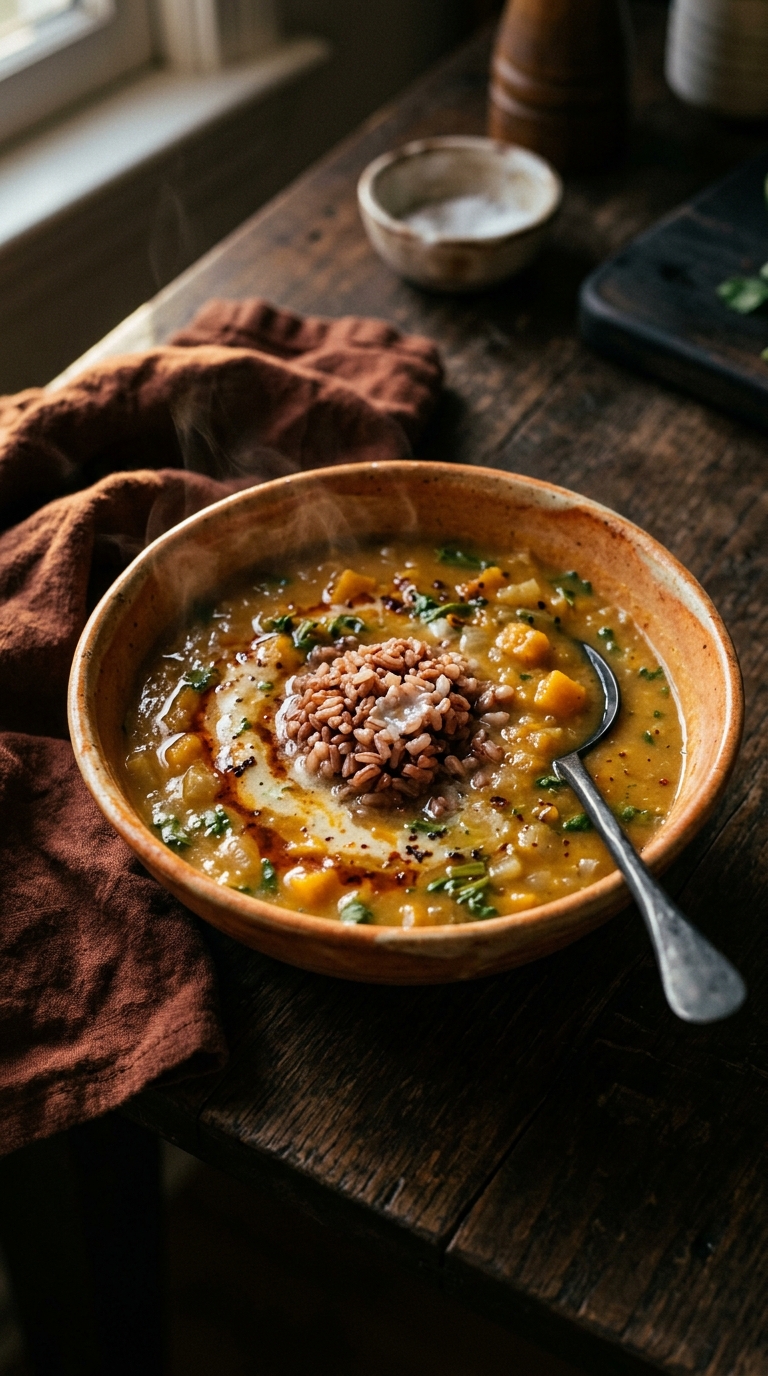
This soup is special. If I were having this at a restaurant, I’m sure it would go like this: a fancy presentation in which a wide shallow bowl is slid in front of me, with only a mound of rice artfully constructed in the center. The server would then take a miniature pitcher and pour the brightly colored soup all around, leaving me with an island of rice surrounded by a terra cotta sea.
Print
Butternut Squash Soup with Coconut Milk, Miso and Lime
- Total Time: 1 hour
- Yield: 3
Description
Partly pureed and partly chunky means this soup is smooth but feels substantial enough to stand on its own.
Ingredients
- 1 butternut squash (about 2 lb / 900 g)
- 2 tbsp (30 ml) light sesame oil
- 1 large onion, finely diced
- 1 heaping tbsp chopped fresh ginger
- 2 tsp crushed Aleppo Pepper
- 1 tsp turmeric
- 1/2c (120 ml) cilantro stems or leaves, chopped fine
- salt
- 1 can (15 oz / 450 ml) light coconut milk
- juice of one lime
- 1/2c (120 ml) red rice
- 1-2 tsp coconut butter
- 2 tbsp (30 ml) white miso
Instructions
- Cut the squash in half crosswise, just where the neck of the squash joins with the round (seeded) end. Bring a half inch or so of water to a boil, lower to a simmer and place the seeded end in (unpeeled and uncored). Put a lid on and steam until soft, about 15 minutes, while you continue with the recipe.
- Peel the neck and cut into 1/2” pieces.
- Heat the oil in a deep soup pot, and then saute the squash cubes together with the onion and ginger. After a few minutes, add the aleppo pepper, turmeric, and cilantro stems and cook for a few more minutes. Stir in the coconut milk and three cups of water and bring to a boil. Lower to a simmer and cook, covered, for about 20 minutes.
- Meanwhile, check on your round end of the squash (it’s a good idea to look from time to time anyway to make sure the water doesn’t evaporate fully). When soft, remove the squash and when it’s cool enough to handle, cut it in half lengthwise and scoop out the seeds and discard. Then scrape the soft flesh from the skin. Puree the flesh together with a cup of the soup liquid until smooth. (You can use a blender, a food processor, or an immersion blender to do this). Pour this back into the soup, and add the lime juice.
- While the soup cooks, also cook your rice. It will depend on the rice you use, but generally speaking you can count on about a cup of water for the half cup of rice. Boil the water, then add the rice, stir, and turn to the lowest heat and cook covered for about 20 minutes. When finished, stir in the coconut oil.
- When the soup is done, take a cup of liquid out and mash the miso paste into that. (It’s easier than adding the miso directly to the soup–mixing the miso into just a small portion of soup allows you to be certain you have fully dissolved it). Return this cup to the soup and heat through if necessary.
- To serve, pour the soup into bowls and then add a scoop of rice to the center. Enjoy!
- Prep Time: 20 mins
- Cook Time: 1 hour
- Category: Soup
- Cuisine: Asian Fusion
Nutrition
- Serving Size: 1 serving
- Calories: 270
If You Liked This Recipe, You’ll Love These
- Turkey and Coconut Milk Chili
- Miso-Coconut Noodle Soup
- Lemon and Butternut Squash Soup
- Miso and Roasted Garlic Mashed Potatoes
Frequently Asked Questions
Why does the recipe split the squash in half and cook each half differently?
The neck of the squash is peeled and cubed for sautéing with the onion and ginger, giving it direct caramelization in the pot. The round, seeded end goes into simmering water unpeeled and steams for about 15 minutes until soft — the flesh is then scooped out and pureed with a cup of the soup liquid to create the smooth, creamy body that gets stirred back in. This two-path approach gives the soup both texture and a silky consistency.
What is Aleppo pepper, and can I use something else?
Aleppo pepper is a mildly hot, slightly fruity dried chili from Syria with an oily, brick-red texture. I use 2 tsp — if you can’t find it, a smaller amount of regular crushed red pepper (about 1 tsp) or a pinch of cayenne mixed with sweet paprika is a reasonable substitute that approximates its moderate heat and depth.
Why does the recipe say to dissolve the miso in a separate cup of soup liquid rather than adding it directly?
I mix the 2 tbsp of white miso paste into just a small portion of soup because it allows you to be certain you have fully dissolved it before returning it to the pot. Adding miso paste straight to a full pot of liquid often leaves clumps that never fully incorporate.