There seems to be a little mystery about Risotto. There shouldn’t be. The only mystery regarding risotto is the rice you use.
If you have had a terrible experience making risotto you may have to start again with some more suitable rice. Did your last risotto resemble a pot of glue? Then you probably bought your rice in the supermarket and it was probably called “Arborio”. I would recommend buying Carnaroli or Vialone Nano rice to make wonderful risotto; this rice is in the “Arborio” family but couldn’t be further away from the rice you bought in the supermarket. For a start it is a protected product of Italy and therefore only grown in Italy. You won’t find this rice in the supermarket, you will only find it in specialty stores and deli’s.
Carnaroli and Vialone Nano rice are grown in the North of Italy where the rainfall and soil are most suitable for rice. Both Carnaroli and Vialone Nano are rounded short rice grains that can soak up almost double their weight in liquid and still stay firm and whole. Carnaroli is the most well known and the preferred grain It’s slightly larger and stays firmer in the centre than Vialone Nano which is often used in Liguria to make beautiful soupy fish based risottos.
There are of course a number of ways to make Risotto, just like most things that come from Italy, every one has their own way of making it. I am known to add various vegetables, on the odd occasion, that don’t go into risotto, so that it can become a hidden treasure trove of goodness without any of the vege-phobic residents at our house knowing they are eating good bits.
So, don’t feel you have to follow any hard and fast rules other than to buy the best Carnaroli or Vialone Nano rice you can find. And start by following the basic principles of making Risotto.
Heat a wide deep pot adding oil and butter and always toast the rice.
Always use hot stock
Add stock bit by bit until the grains are soft and creamy on the outside but have a tiny core of firmness left in the middle.
Add grated parmesan and butter in the amounts you prefer
Always cover and let sit for five minutes before serving.
Print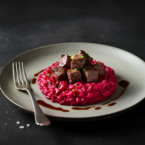
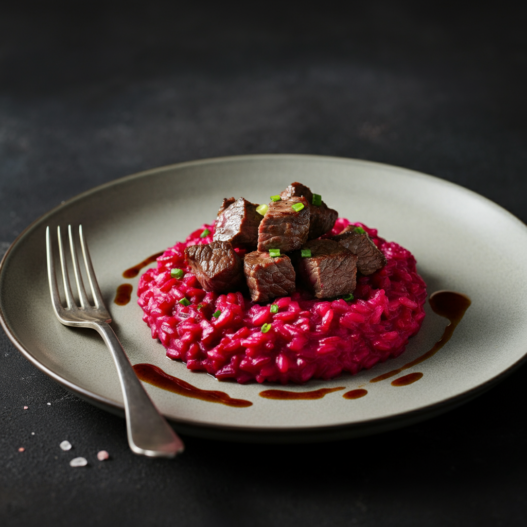
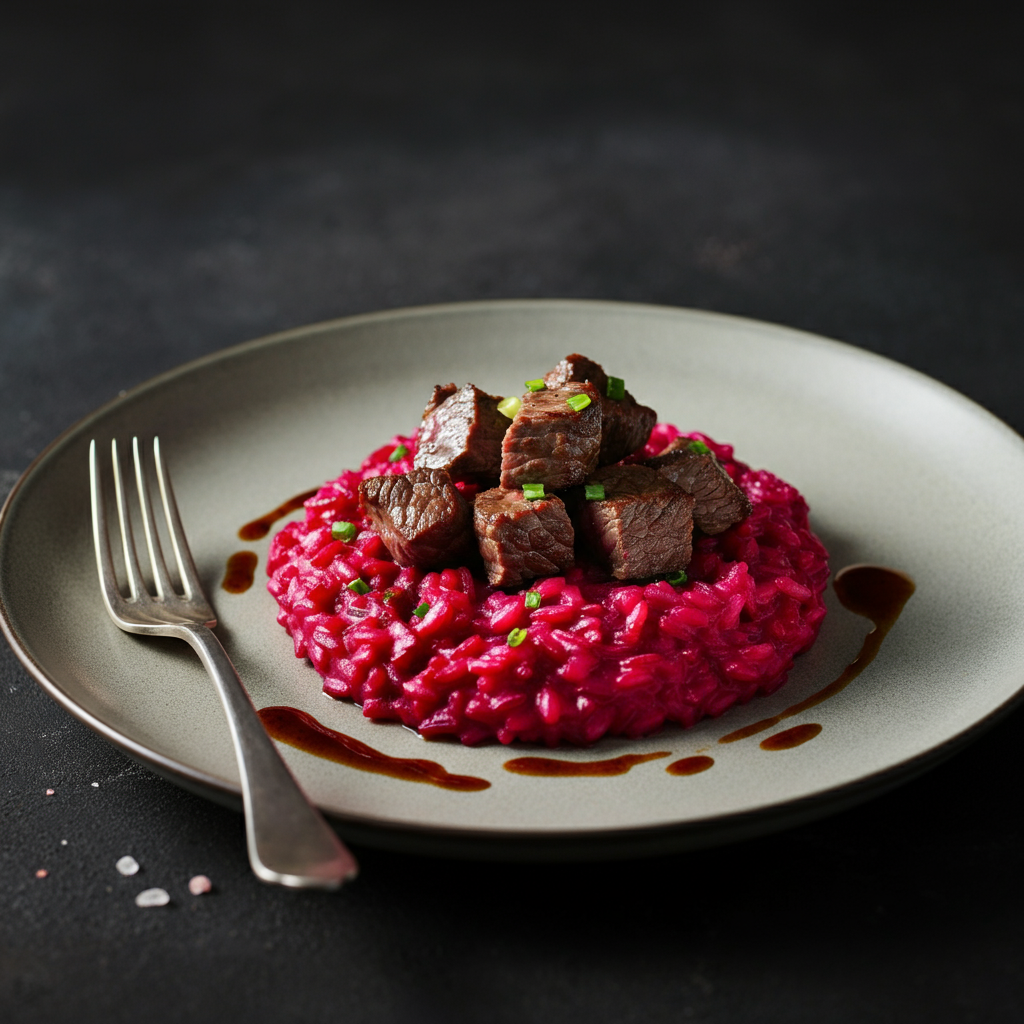
Beet Risotto with Horseradish Cream and Balsamic Beef
- Total Time: 50 minutes
- Yield: Serves 2
- Diet: Omnivore
Description
Vibrant beet risotto gets a savory boost from balsamic-marinated beef. A quick weeknight meal packed with flavor.
Ingredients
- 1 small onion
- 2 sticks celery
- 1 small clove of garlic
- 1 cups (237 ml) carnaroli rice
- 25 gm (1 oz) butter
- 2 tbsp olive oil
- 1.25 liters (5.25 US cups) chicken stock
- 100 gm (3.5 oz) grated parmesan cheese
- extra butter
- 2 tbsp beetroot powder
- 1 lbs (454 gm) tender rump diced
- 1 tbsp sweet balsamic
- 1 small garlic clove
- 2 tsp olive oil
- a sprinkle of salt
- 1 tbsp chives
- 2 tbsp chopped flat leaf parsley
- 120 gm (1/2 cup) sour cream
- 1 tbsp horseradish
Instructions
- Combine beef cubes, balsamic vinegar, oil, and salt in a bowl. Refrigerate.
- Chop herbs and set aside.
- Mix horseradish into sour cream and refrigerate.
- Melt olive oil and butter in a wide, low-sided pot over medium heat. Add onion, garlic, celery, and rice; toast the rice and soften the vegetables.
- Gradually add stock, one cup at a time, stirring until absorbed. Continue until rice is creamy with a slightly firm center (15-20 minutes).
- Stir in beetroot powder. Add more stock if needed to achieve a loose consistency. Add boiling water if necessary. Stir in butter and parmesan to taste; season with salt and pepper. Cover and set aside.
- Heat a skillet over high heat. Add beef and cook until browned. Remove from heat, transfer to a bowl, and let rest.
- Divide risotto among bowls. Top each serving with some beef and pan juices.
- Garnish with sour cream, herbs, and extra parmesan cheese.
Notes
- For a richer flavor, use beef broth instead of chicken broth in the risotto.
- To speed up the cooking time, prepare the balsamic beef marinade earlier in the day or even the night before.
- If you don’t have beetroot powder, you can roast and puree fresh beets to add to the risotto for similar color and flavor.
- Prep Time: 20 minutes
- Cook Time: 30 minutes
- Category: Main Course
- Method: Sautéing
- Cuisine: Italian
Nutrition
- Serving Size: 1.5 cups
- Calories: 600
- Sugar: 5
- Sodium: 400
- Fat: 30
- Saturated Fat: 15
- Unsaturated Fat: 10
- Carbohydrates: 70
- Fiber: 5
- Protein: 30
- Cholesterol: 80
Frequently Asked Questions
How do I keep the beet risotto from turning the entire dish an overwhelming purple?
Stir the cooked beet into the risotto near the end rather than cooking it in from the start. This gives you more control over the color intensity and keeps the beet flavor distinct rather than completely absorbed into the rice.
Can I use prepared horseradish instead of fresh for the cream?
Prepared horseradish works fine for the cream component. Drain off any excess liquid before stirring it into cream or sour cream, and start with a smaller amount than this calls for since prepared horseradish can be stronger and more acidic than freshly grated.
What cut of beef works best for the balsamic beef in this recipe?
A braising cut like chuck or short rib benefits most from the slow cooking and balsamic reduction, becoming tender and rich after long cooking. Sirloin or tenderloin is too lean for this method and will tighten up rather than become tender.
If You Liked This Recipe, You’ll Love These
- Vietnamese Shaking Beef (Bo Luc Lac)
- Stuffed Cabbage Rolls
- Classic Meatloaf with Brown Gravy
- Crispy Baked Beet Chips
- Brisket Ho Fun Rice Noodle Soup