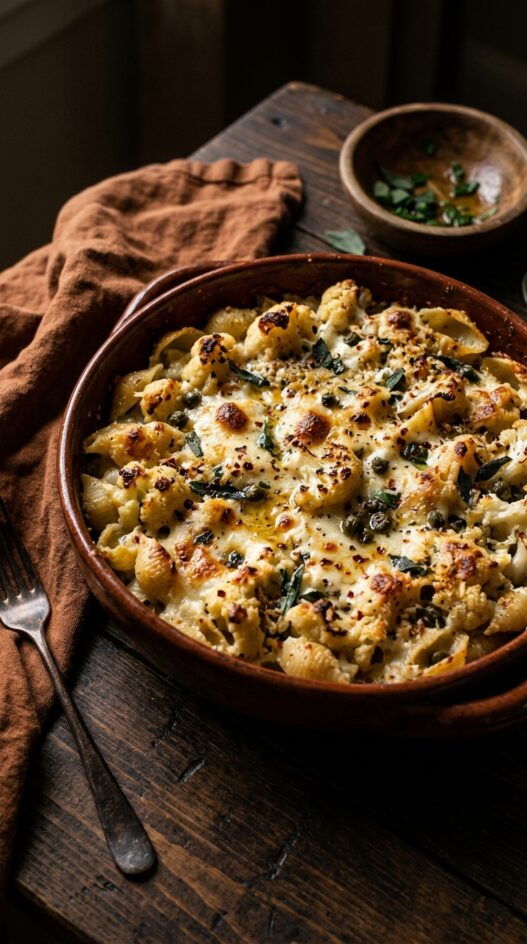
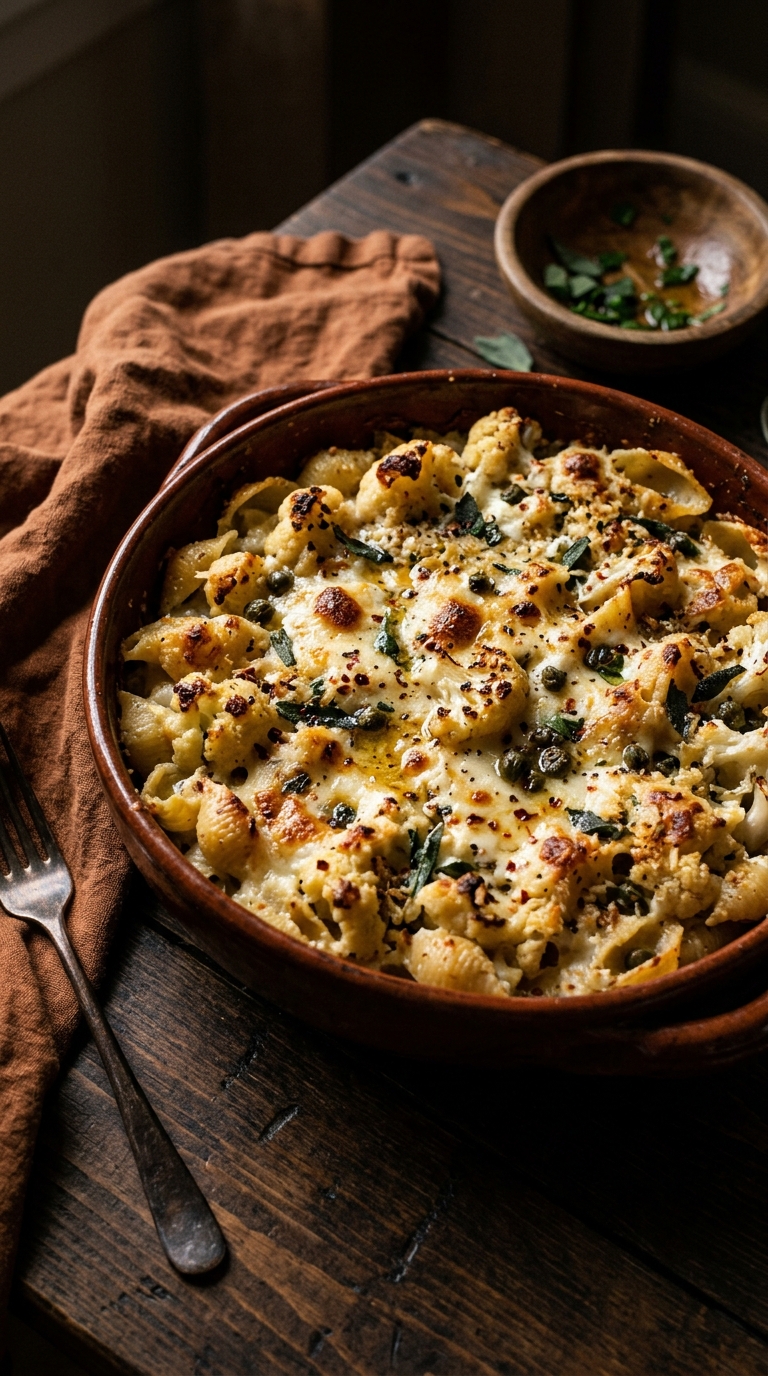
This week I prepared several old favorites, but I also made, for the first time, this recipe for Baked Crusty Pasta Shells and Cauliflower. It’s fabulous on a cold, dark February night in Minnesota, and for those in my family that are eating less meat or none whatsoever. Anything made with salty capers, lemon zest and fresh ricotta is a winner, as far as I’m concerned. Yes… I’ll be making Pasta Shells with Cauliflower again.
(NOTE) When purchasing the ingredients for this recipe, my cheesemonger suggested I cut back on the Fontina Val d’Aosta, which is pricey. I used half the amount that is shown in the original recipe below, and replaced the remaining 5 ounces with a container of pre-grated cheeses that included fontina in the mix. I had no complaint with doing that nor with the results. I loved this pasta.
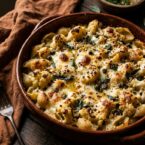
Baked Cauliflower and Sage Pasta with Fontina
- Total Time: 25 minutes
- Yield: 6 servings
Description
A comforting and elegant baked pasta featuring tender roasted cauliflower, fragrant sage, and a rich blend of Italian cheeses. The crunchy panko topping makes it truly irresistible.
Ingredients
- Kosher salt
- Freshly ground black pepper
- 3/4 pound (340g) medium pasta shells
- Extra-virgin olive oil
- 2 1/2 pounds (1.1kg) cauliflower (cut into small florets (1 large head))
- 3 tablespoons (44ml) roughly chopped fresh sage leaves (I substituted 2 tablespoons (30ml) rubbed sage)
- 2 tablespoons (30ml) capers (drained)
- 1 tablespoon (15ml) minced garlic
- 1/2 teaspoon (2.5ml) grated lemon zest
- 1/4 teaspoon (1.2ml) crushed red pepper flakes
- 2 cups (473ml) freshly grated Italian Fontina Val d'Aosta cheese (10 ounces/283g with rind... see NOTE above)
- 1 cup (237ml) (8 ounces/227g fresh ricotta)
- 1/2 cup (118ml) bread flakes
- 6 tablespoons (89ml) freshly grated Italian Pecorino cheese
- 2 tablespoons (30ml) minced fresh parsley leaves
Instructions
- Preheat oven to 400°F (200°C).
- Fill a large pot with water, add 1 tablespoon (15ml) of salt and bring to a boil. Add the pasta and cook until al dente, according to the instructions on the package. Drain and pour into a very large bowl.
- Meanwhile, heat 3 tablespoons (44ml) of olive oil in a large (12-inch) sauté pan over medium-high heat, add half of the cauliflower in one layer and sauté for 5 to 6 minutes, tossing occasionally, until the florets are lightly browned and tender. Pour the cauliflower into the bowl with the pasta. Add 3 additional tablespoons (44ml) of olive oil to the pan and add the remaining cauliflower. Cook until browned and tender; add to the bowl.
- Add the sage, capers, garlic, lemon zest, crushed red pepper flakes, 2 teaspoons (10ml) salt, and 1 teaspoon (5ml) black pepper to the bowl; stir gently to combine. Stir in the Fontina cheese.
- Transfer half of the mixture to a 10 x 13 x 2-inch baking dish. Spoon rounded tablespoons of ricotta on the pasta and spoon the remaining pasta mixture on top.
- Combine the bread flakes, Pecorino cheese, parsley, and 1 tablespoon (15ml) of olive oil in a small bowl and sprinkle it evenly on top.
- Bake for 25 to 30 minutes, until browned and crusty on top. Serve hot.
Notes
Consider substituting half of the Fontina Val d’Aosta with a pre-grated cheese mix to save on cost. This dish is perfect for those looking to reduce meat consumption. Store leftovers in an airtight container in the refrigerator for up to 3 days. Reheat in the oven for best results.
- Prep Time: 15 minutes
- Cook Time: 10 minutes
- Category: Main Course
- Cuisine: Italian
Nutrition
- Serving Size: 1 serving
- Calories: 450
- Sugar: 4
- Sodium: 750
- Fat: 20
- Carbohydrates: 55
- Fiber: 5
- Protein: 18
- Cholesterol: 40
Frequently Asked Questions
Can I use a different type of pasta instead of shells for this recipe?
Yes, you can substitute the pasta shells with other types like rigatoni or penne, but be sure to adjust the baking time if needed.
What size should the cauliflower florets be for this dish?
Chop the cauliflower into small florets, about 1 to 2 inches in size, to ensure they cook evenly and mix well with the pasta.
How important is the use of capers in this recipe?
Capers add a salty, briny flavor that complements the other ingredients, so while you could omit them, it may alter the overall taste of the dish.