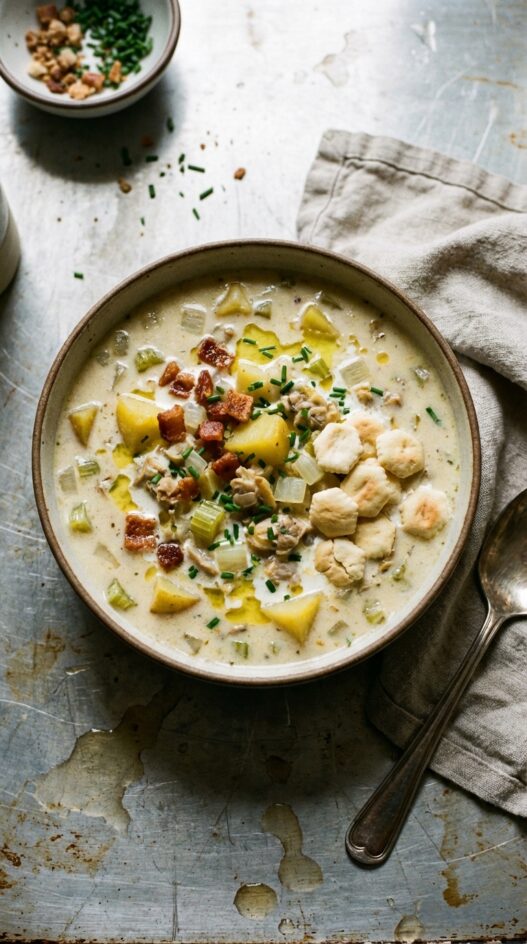
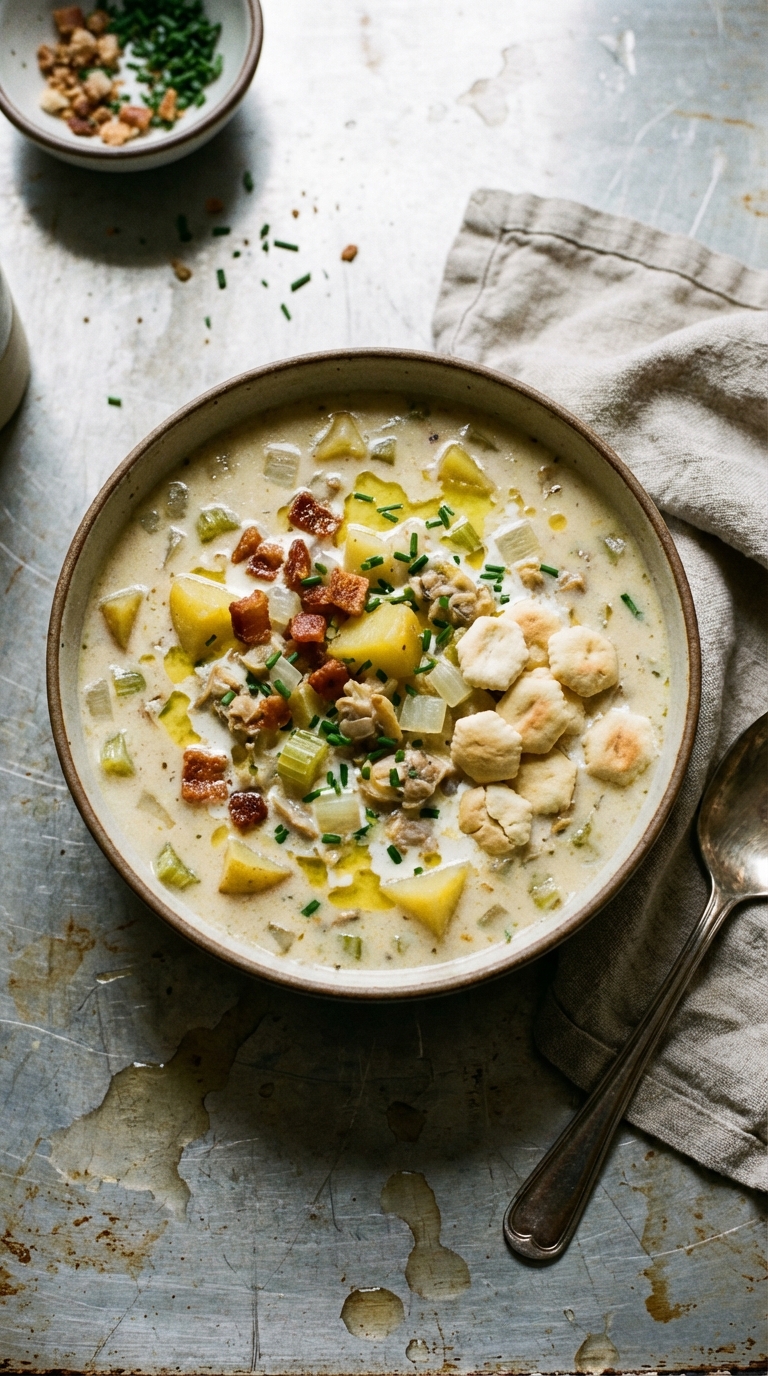
I vividly remember the moment when I, as a child, ordered Clam Chowder at a restaurant and something very much not New England Clam Chowder was put in front of me: Manhattan clam chowder. For the longest time, I just thought it was me who found the Manhattan version awful. When searching for a recipe to try for New England Clam Chowder, I came across James Beard’s opinion on the Manhattan Version. In his introduction to Miss Farmer’s Recipe for Rhode Island Clam Chowder his American Cookery:”This is the closest bridge I have found to that rather horrendous soup called Manhattan clam chowder. It is a sensible recipe and takes away the curse of the other, which resembles a vegetable soup that accidentally had some clams dumped in it.”
Traditional clam chowder has the following narrative: Cook clams, chop clams, reserve cooking liquid. Render fat from salt pork, sauté onions in salt pork fat. Parboil potatoes for 5 minutes. Arrange onions in the bottom of a heavy sauce pan and top with a layer of half of the potatoes. Add the salt pork pieces, chopped clams, second layer of potatoes and salt and peppers. Cover with boiling water and cook. Add scaled milk, bring to a boil, add crackers soaked in milk and the reserved clam liquid. Lastly, add a bit of flour and butter that have been kneaded together, return to the boiling point and serve. You can find the above version in Fannie Farmer and other famous New England cookbooks. I agree with James Beard that it appears this recipe allows the clams to cook for too long. So, I came across a little recipe in Beard’s American Cookery that seemed easy, yet captured the spirit of the New England Clam Chowder. The recipe below was inspired by Beard’s “My favorite Clam Chowder” recipe from American Cookery.
Print
New England Clam Chowder
- Total Time: 60 minutes
- Yield: 6 servings
Description
New England clam chowder is the undisputed champion of American soups — a thick, creamy broth enriched with salt pork, loaded with tender clams and chunks of potato, and served in a bread bowl if you are on a wharf in Boston. It was codified in New England fishing communities in the 18th century, and to this day, a fierce regional pride surrounds the recipe. Adding tomatoes is considered heresy north of Connecticut. The clam broth, built from steaming the clams open, is the foundation — without it, you are just making potato soup.
Ingredients
- 3 slices of thick slab bacon
- 1 medium onion, finely chopped
- 2 stalks of celery, finely chopped
- 2 cups of water, salted
- 2 medium potatoes, thinly sliced
- Salt and Pepper
- 1 pound frozen clam meat with frozen clam juice (or cooked clam meat with juice)
- 3 cups heavy cream (may substitute half and half)
- Butter
- Thyme
- Chopped parsley
Instructions
- Cook the bacon in a sauté pan over medium heat, until fat is rendered and bacon is crisp.
- Remove bacon and add the onion and celery and sauté until translucent, or just slightly brown and remove from heat.
- In a 4 quart sauce pan, bring the salted water to a boil. Add the potatoes, cooking until just tender.
- Add the bacon, onion, celery, salt and pepper to taste, and the clams and heavy cream, simmering until the clams are no longer frozen. Bring to a boil and remove from the heat.
- Correct the seasoning.
- According to Mr. Beard, serve with a “dollop of butter, merest pinch of thyme, and a bit of chopped parsley”.
Notes
- The clam broth is the backbone of the chowder. Steaming fresh clams open rather than using canned clams makes a substantial difference in flavor. Strain the broth carefully to remove all sand.
- Salt pork is traditional and provides a deeper, more nuanced flavor than bacon, though bacon is an acceptable substitute.
- Do not boil the chowder after adding the cream and clams. Boiling toughens the clams and can cause the cream to break. Gentle heat is all you need.
- Prep Time: 10 mins
- Cook Time: 25 mins
- Category: Classic
- Cuisine: American
Frequently Asked Questions
Should I use fresh clams or canned clams for New England Clam Chowder?
Both work, but they serve different purposes. Fresh clams give you a briny clam juice to build the base, while good-quality canned chopped clams are convenient and consistent. Many home cooks use a combination of canned clams and bottled clam juice.
How do I keep the cream from curdling when I add it to the soup?
Add the cream at the end over low heat and do not let the soup boil after that point. Bringing heavy cream to a rolling boil causes it to break and separate.
What type of potato holds up best in chowder?
Waxy potatoes like Yukon Gold or red potatoes hold their shape during cooking. Russets will break apart and thicken the soup, which some people prefer, but they can turn grainy if overcooked.
If You Liked This Recipe, You’ll Love These
- Thai Green Curry Fish Soup
- Kerala Style Grilled Sardines
- Spicy Cod Tacos with Avocado Crema
- Irish Potato and Corned Beef Chowder
- Italian Swordfish Skewers with Red Pepper Pesto