The origin of Sicilian sardines pasta is intertwined with an act of rebellion and revenge.
At the beginning of the 9th Century A.D., Euphemius of Messina, the commander of the Byzantine navy had been a man of power. According to the legend, the influence of Euphemius was too much for the Byzantine empire; so, the Emperor Michael II the Amorian ordered the demotion and the mutilation of the nose of the Commander on charges of the presumed kidnapping and marrying a nun.
In response to that accusations, that Euphemius considered outrageous, the former commander retreated in Africa along with a clutch of trusted men and hooked up with the Saracens.
On June 14 827, Euphemius sailed to the southern coast of Sicily and reached the bay of Capo Granitola, near to Mazara del Vallo after a three-day storm. The Saracens sailors were tired and hungry. The pantry was almost empty, and the soldiers needed an energetic meal before the battle.
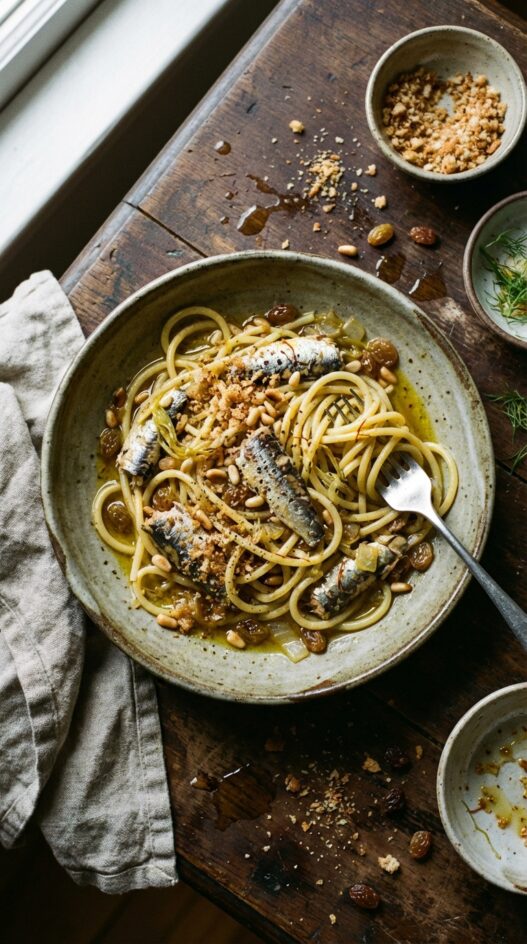
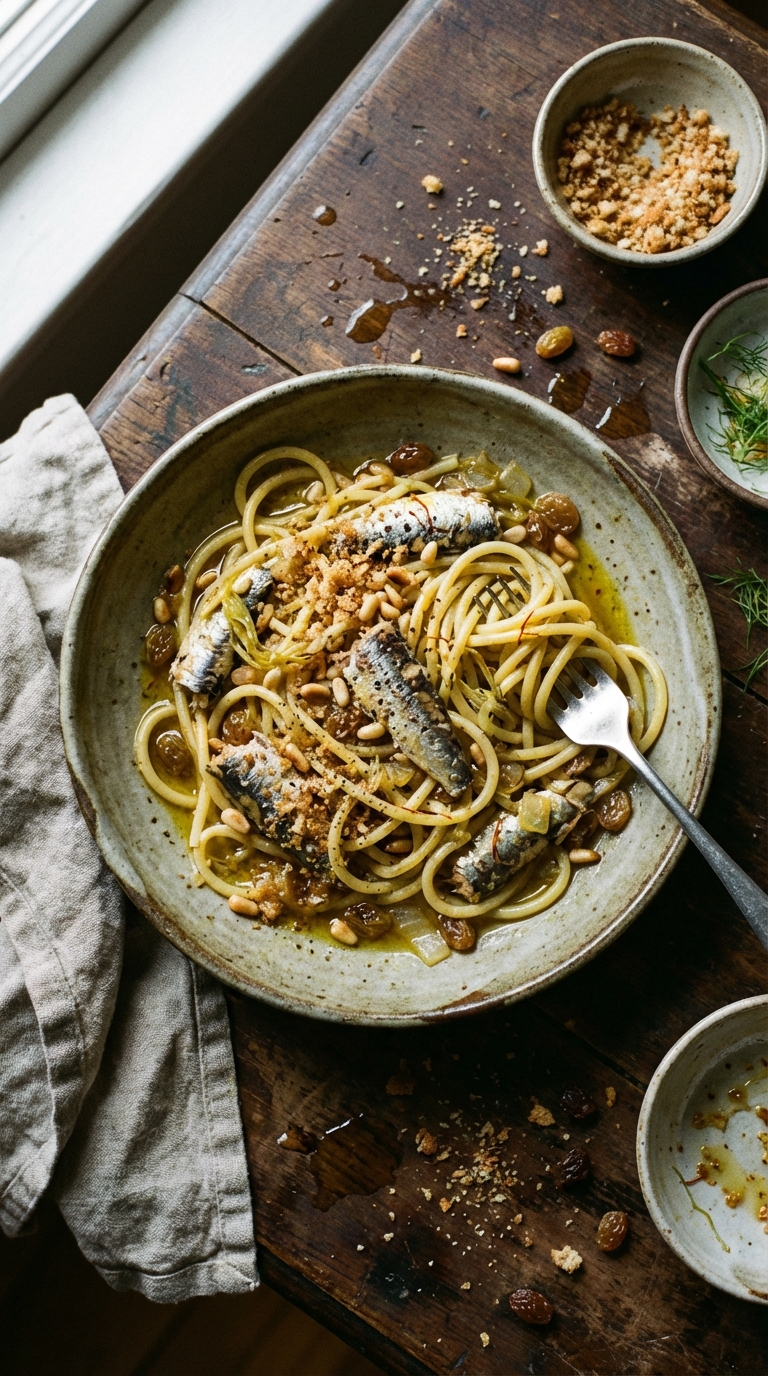
At this moment the cook of the boat prepared a dish with the few ingredients at his disposal: wild fennel, pine nuts, dried pasta, saffron, raisin and the sardines caught in the water of the Sicilian bay. The legend says the Sicilian Pasta con le Sarde has been born that day!
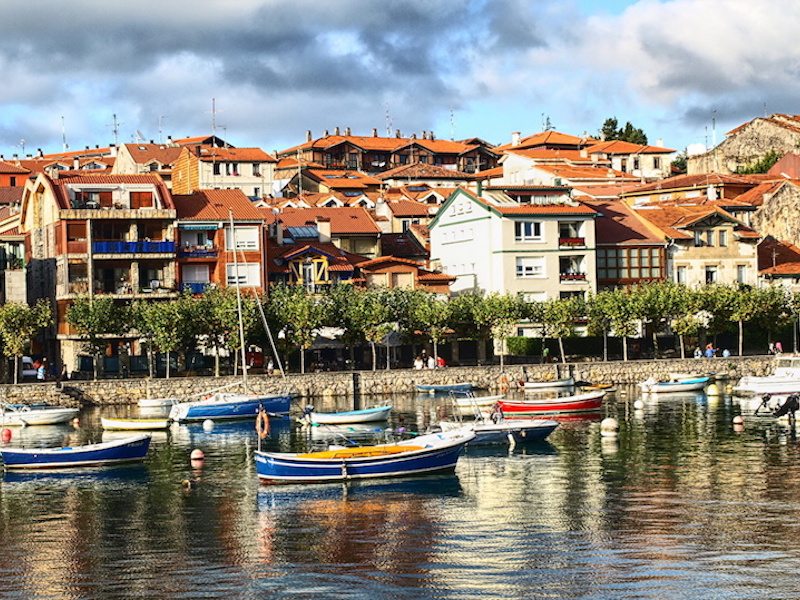
Walking down the streets of Mazara del Vallo, I’m feeling suspended between two continents. The narrow alleys of the Kasbah, a memory of the long Arab occupancy, amplify unique sounds and flavors: sweet and spicy. All over the Arab district, monumental churches rise up, like the Cathedral, built on the same site of the former mosque, and the magnificent baroque San Francis church.
This contamination has been introduced into the local cuisine: along with the local red prawn and the traditional couscous, sardines pasta symbolizes the thin line between two different cultures. The sardines, abundant in the bay, are fresh fished, and seasoned with sweet and sour ingredients typical into the Arab and Italian cuisines, like saffron, pasta, raisin, pine nuts, and wild fennel: an ideal bridge across the Mediterranean sea!
Until a few decades ago, sardines were considered a cheap fish, used as bait to catch bigger fishes, or as an ingredient to prepare the meals for the poor people. The famous peasant recipe sarde al beccafico is the perfect instance of the sardines reputation in the past: stuffed sardine as the imitation of the stuffed wild birds served on the noble’s tables.
Although the past reputation of poor-quality food, sardines are a powerful boost to stay healthy. Their meat is rich in vitamin D, vitamin B12, calcium, selenium, and proteins. Furthermore, sardines are an excellent supplementation of Omega 3, and very useful for whom have a high prevalence of Hypertriglyceridemia.
Thankfully, in the present days, sarde al beccafico and pasta con le sarde have contributed to clear the name of the sardines, thanks to their delicious taste: a pleasure for the stomach in the interest of a salutary diet!
Legend has it that pasta con le sarde has been born in Mazara del Vallo. But, the rapid evolution and diffusion of this recipe make virtually impossible to confirm the story behind this dish. Nowadays, pasta con le sarde is considered just a Sicilian recipe with some local variations.
Palermo is the city that claims more vigorously the birth of sardines pasta. The Palermitan recipe requires a sauce absolutely without tomato sauce.
Tomato sauce is present in the variation traditional in the Enna province, whereas in Agrigento is common to use a splash of tomato paste.
In Messina, the sauce is totally white, without even the saffron.
Another variation of sardines pasta created by the Sicilian immigrants in Milan is named A la Milanisa: made with sardines preserved in salt given the lack of fresh fish.
Eventually, the pasta alle sarde a mare (sardines in the sea pasta) is a variation prepared with all the traditional ingredients except the fish, that as the title of the dish says, remains in the sea!
Print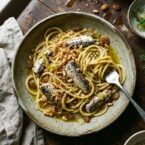
Sicilian Sardine Pasta
- Total Time: 45 minutes
- Yield: Serves 2
- Diet: Omnivore, Pescatarian
Description
A taste of Sicily! This sardine pasta recipe is a flavorful, historic dish, perfect for a weeknight dinner.
Ingredients
- 13 oz (360 g) pasta
- 1/2 lbs (225 g) sardines deboned, fresh or canned
- 2 anchovies in oil
- 1/2 medium white onion
- 4 tbsp extra-virgin olive oil
- 1 tbsp pine nuts
- 2 tbsp raisin
- 4 tbsp breadcrumbs or Panko
- 2 tbsp wild fennel (minced (alternatively, 1/2 tsp fennel tops))
- 2 pinches saffron threads
- 1 dash black pepper
- to taste table salt
- 4.5 tbsp cooking salt
Instructions
RAISIN AND SAFFRON
- Soak the raisins in a bowl of warm water.
- Soak the saffron in a separate small cup with 2 tbsp of water.
WILD FENNEL
- If using regular fennel, use the greenest and most tender parts of the fennel tops.
- Bring a large pot of water to a boil.
- Roughly mince the fennel tops and leaves.
- Poach the minced fennel for 1 minute, then immediately transfer to a bowl of iced water to preserve color.
- Save the fennel-flavored water.
CLEANING SARDINES
- If using fresh sardines, rinse them thoroughly under running water to remove scales.
- Open the stomach with your thumb and discard the offal.
- Remove the head and separate the meat from the backbone.
- Rinse the fillets again, dry them, and refrigerate until ready to cook.
SARDINES SAUCE
- In a small pan over medium heat, sauté pine nuts until golden brown, then set aside.
- Finely mince the onion.
- Sauté the minced onion in a pan with 3 tbsp of olive oil over medium heat until smooth and translucent.
- Rinse the raisins and add them to the pan along with the pine nuts, anchovies, and minced fennel.
- Cook for 5 more minutes, then add the sardine fillets.
- Sauté for 3-4 minutes, stirring until the fish starts to fall apart. Do not overcook.
- Season with salt and add another splash of olive oil.
FINISHING
- Toast breadcrumbs or panko in a small pan until golden brown, then set aside.
- Cook pasta in the reserved fennel water with 4.5 tbsp of coarse salt until al dente.
- Toss the pasta with the sardine sauce.
- Top with toasted breadcrumbs and black pepper.
- Serve immediately.
Notes
- For a richer flavor, use high-quality, oil-packed sardines.
- If you don’t have saffron, you can omit it or substitute with a pinch of turmeric for color.
- Leftovers can be stored in the refrigerator for up to 2 days; the flavors will meld nicely.
- Prep Time: 20 minutes
- Cook Time: 25 minutes
- Category: Main Course
- Method: Stir-Frying
- Cuisine: Italian
Nutrition
- Serving Size: 1.5 cups
- Calories: 500
- Sugar: 5
- Sodium: 600
- Fat: 25
- Saturated Fat: 5
- Unsaturated Fat: 15
- Carbohydrates: 60
- Fiber: 5
- Protein: 20
- Cholesterol: 50
Frequently Asked Questions
What type of pasta is best for Sicilian Sardine Pasta?
Dried pasta, such as bucatini or spaghetti, works best for this dish as it holds the sauce well.
How do I prepare the wild fennel for this recipe?
If using fresh wild fennel, wash it thoroughly, chop the fronds, and use them to add flavor to the sauce.
Can I substitute fresh sardines if I can’t find them?
Yes, you can use canned sardines as a substitute, but be sure to adjust the cooking time to avoid overcooking.