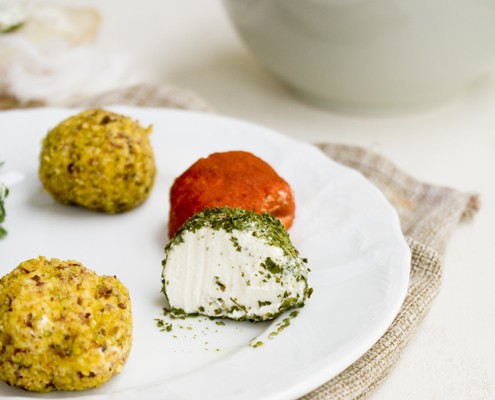
In Lebanon and other countries that ring the Eastern Mediterranean, Labneh is a mainstay of the breakfast table.It is slightly sour, has more delicate taste and aroma than classic cheese and is therefore prone to be seasoned with an abundance of various herbs, spices and/or nuts.
When I first heard the word labneh, I thought of it as some sort of fancy middle eastern concoction. Upon further research, however, I learned that labneh was no more than strained yogurt. Yes, it’s that simple to make: you put thick yogurt (Greek-style) into a muslin cloth over a fine sieve, put everything into a large bowl and let strain in the fridge for 1 or 2 days. The process kind of reminds me of Harry Potter stories. In the atmosphere of the latest and final Harry Potter movie, I endeavoured to watch all 8 movies of the Harry Potter saga in the last two days (haven’t watched any of them up until now) to see what’s all the buzz about. I didn’t want to stay uninformed. Harry Potter is, at last, obligatory literature in many schools today… Needless to say I liked it, especially the last three movies when it all becomes darker and less of a “children’s literature”. I like the fantasy genre anyway so I knew I had to watch this. So, the connection between labneh and Harry Potter is-in my mind-the following: you put something in the fridge and get something different the other day, without ever touching it.

Labneh is a suitable dip for pita or veggies. It can be served with olive oil and some spices or herbs (paprika, garlic, thyme, etc), with nuts… I find that it is also pretty tasty as a sandwich spread, or for anything else that needs a bit of zest! When you make labneh, it’s best to use thicker Greek-style yogurt.
Print
Labneh cheese
- Total Time: 48 hours 5 minutes
- Yield: Approximately 2 cups
Description
Labneh is a tangy, creamy cheese made from strained Greek-style yogurt, perfect as a dip or spread.
Ingredients
- 3 cups (600 g) thick Greek-style yogurt
- 1 tsp salt
- Various seasonings (optional, such as paprika, garlic, thyme)
- Sieve
Instructions
- Place a sieve over a large bowl and line it with a cheesecloth.
- In a separate bowl, combine the Greek-style yogurt with 1 tsp of salt, mixing well.
- Pour the yogurt mixture into the prepared cheesecloth-lined sieve.
- Cover the yogurt with the edges of the cheesecloth and place the entire setup in the refrigerator.
- Allow the yogurt to strain for 1 to 2 days, until it reaches your desired consistency. The longer it strains, the thicker the labneh will become.
- Once strained, transfer the labneh to a serving dish and season with your choice of spices or herbs, if desired.
- Serve with a drizzle of olive oil and enjoy as a dip with pita or vegetables, or use as a sandwich spread.
Notes
- For the best results, use thick Greek-style yogurt.
- Labneh can be stored in an airtight container in the refrigerator for up to a week.
- Experiment with different herbs and spices to customize the flavor.
- Serve with olive oil and a sprinkle of your favorite seasoning for added zest.
- Prep Time: 5 minutes
- Cook Time: 0 minutes
- Category: Condiment
- Cuisine: Lebanese
Nutrition
- Serving Size: 2 tablespoons
- Calories: 60
- Sugar: 5
- Sodium: 250
- Fat: 3
- Carbohydrates: 5
- Fiber: 0
- Protein: 5
- Cholesterol: 10
Find it online: https://honestcooking.com/how-to-make-your-own-labneh-cheese/
If You Liked This Recipe, You’ll Love These
- Roasted Cauliflower and Pumpkin Gratin with Gruyère Cheese
- How to Make Perfectly Smooth Hummus
- How to Make Authentic Greek Tzatziki
- Grilled Asparagus With Haloumi
Frequently Asked Questions
What exactly is labneh, and how is it different from regular yogurt or cream cheese?
Labneh is strained yogurt — I make it by letting thick Greek-style yogurt drain through cheesecloth in the fridge for 1–2 days until much of the whey is removed. The result is slightly sour, more delicate in aroma than classic cheese, and much lower in calories than cream cheese, which is why it’s used as a cream cheese alternative across Lebanon and the Eastern Mediterranean.
Does the yogurt have to be Greek-style, or can I use regular yogurt?
I specifically recommend thick Greek-style yogurt. Regular yogurt has much more liquid and will take significantly longer to drain to the same thick consistency, and the final texture may not be as firm or spreadable.
How can I serve labneh once it’s ready?
I love drizzling it with olive oil and seasoning with spices or herbs like paprika, garlic, or thyme, then serving it as a dip with pita or vegetables. It also works beautifully as a sandwich spread or with any dish that benefits from a tangy, creamy element. The finished labneh keeps in an airtight container in the fridge for up to one week.