
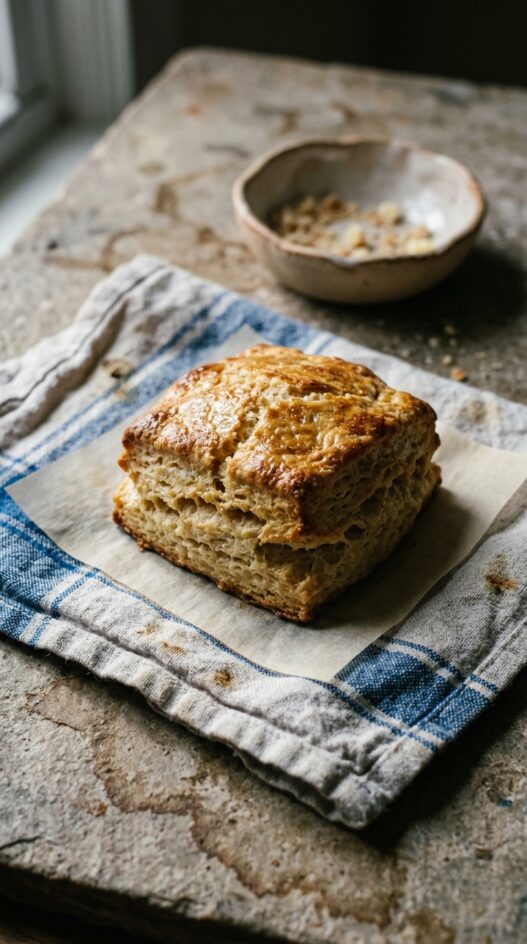
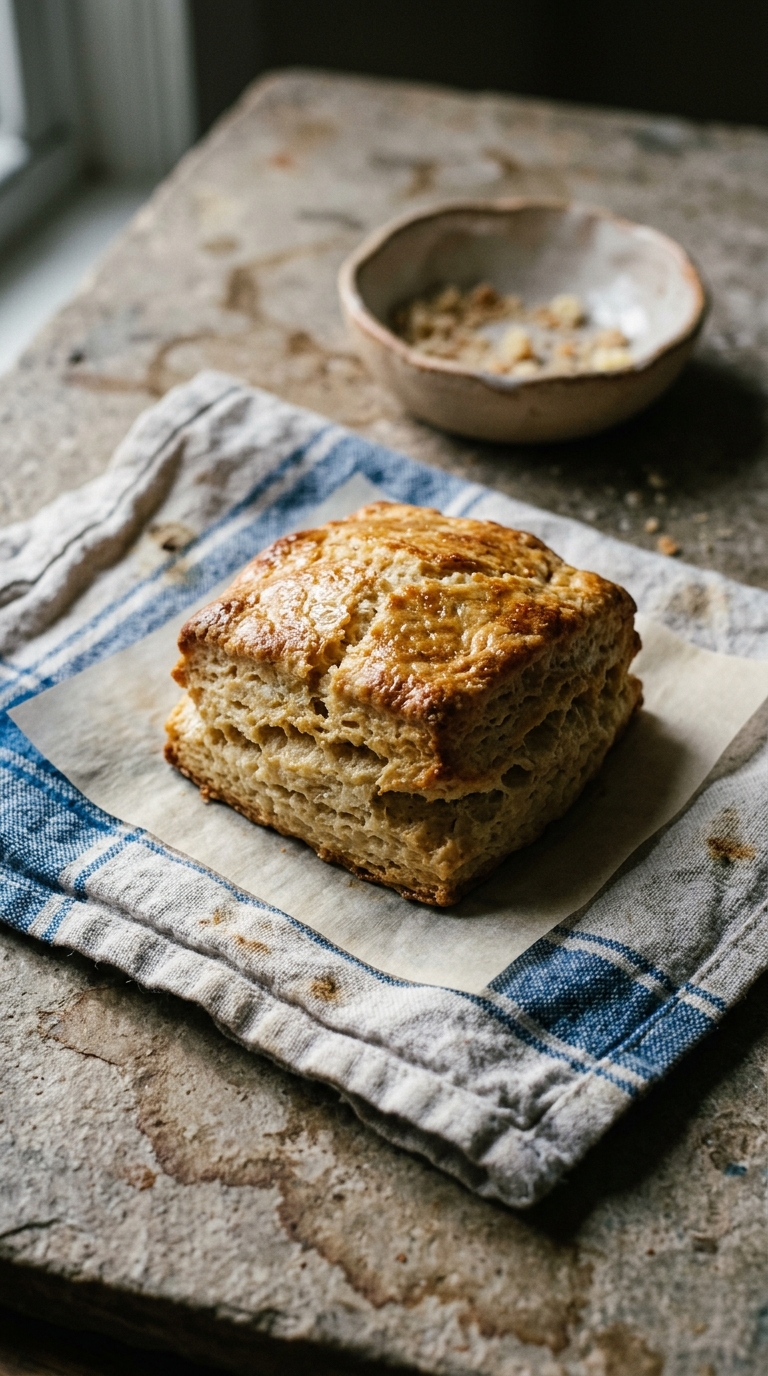
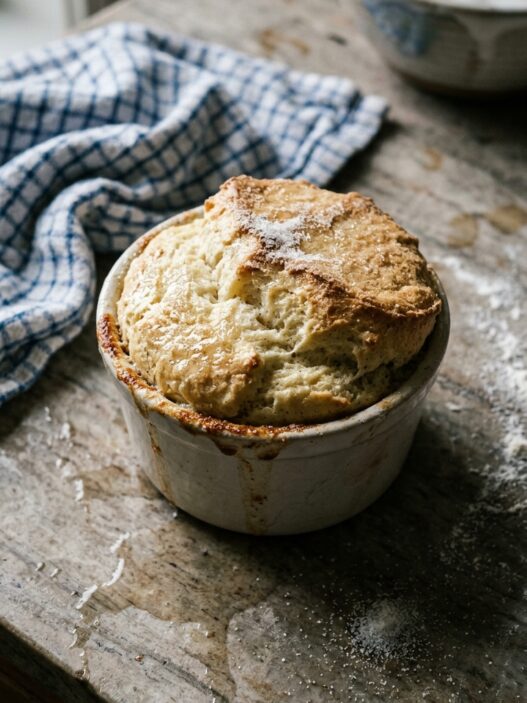
The best part about these John Besh biscuits is that you can freeze them and pop them in the oven the next morning as a breakfast item, served with a fried egg and more gravy.
This biscuit dough is folded in thirds, making even more layers, which means even more flakiness! When making biscuits, if you’re going to remember one thing, remember that your butter needs to be cubed cold and cut into the flour mixture. The large pieces of butter will then melt in the oven, causing steam to create the layers you love so much in biscuits. They’re homey biscuits that you can either cut into squares (like I did) or cut them with a round cutter. Enjoy!
Print
Angel Biscuits
- Total Time: 50 minutes
- Yield: 12 biscuits
Description
Flaky and buttery, these Angel Biscuits are perfect for the holiday table, offering layers of deliciousness that pair beautifully with honey butter or gravy.
Ingredients
- 1 package active dry yeast
- 1/4 cup (60 ml) warm water
- 5 cups (1.2 L) all-purpose flour
- 1/4 cup (60 ml) sugar
- 2 tbsp baking powder
- 1 1/2 tsp salt
- 2 cups (480 ml) buttermilk
- 1 cup (2 sticks) (225 g) cold butter, cubed
Instructions
- Dissolve the yeast in 1/4 cup warm water and let it sit for about 5 minutes until it becomes frothy.
- In a large mixing bowl, sift together the flour, sugar, baking powder, and salt.
- Add the buttermilk and dissolved yeast to the dry ingredients and mix until just combined.
- Using a pastry knife or your fingers, cut the cold, cubed butter into the flour mixture until it resembles coarse crumbs with some larger pea-sized pieces of butter remaining.
- Turn the dough out onto a floured surface and gently knead it a few times until it comes together. Be careful not to overwork the dough.
- Roll the dough out into a rectangle, fold it in thirds like a letter, and then roll it out again. Repeat this folding process two more times to create layers.
- Roll the dough out to about 1/2 inch thickness and cut into squares or use a round cutter to shape the biscuits.
- Place the biscuits on a baking sheet lined with parchment paper and freeze for at least 30 minutes or until ready to bake.
- Preheat the oven to 400°F (200°C). Bake the biscuits for 15-20 minutes or until golden brown.
- Serve warm with whipped honey butter or gravy.
Notes
- These biscuits can be frozen and baked directly from the freezer, making them a convenient breakfast option.
- Ensure the butter is cold and cut into the flour mixture to achieve the flakiness.
- You can cut the biscuits into squares or rounds, depending on your preference.
- Prep Time: 30 minutes
- Cook Time: 20 minutes
- Category: Baking
- Cuisine: American
Nutrition
- Serving Size: 1 biscuit
- Calories: 250
- Sugar: 3
- Sodium: 450
- Fat: 13
- Carbohydrates: 30
- Fiber: 1
- Protein: 4
- Cholesterol: 35
If You Liked This Recipe, You’ll Love These
- How to Make “Lussekatter”: Traditional Swedish Lucia Buns
- Sausage Polenta Bake
- Brunede Kartofler – Danish Caramelized Christmas Potatoes
- Spring Strawberry Cupcakes
Frequently Asked Questions
Why do these biscuits use both yeast and baking powder?
The double leavening is what makes these “angel” biscuits: the yeast (dissolved in ¼ cup warm water for 5 minutes until frothy) provides a slow, gentle rise and a subtle tang, while 2 tbsp of baking powder gives the immediate lift and lightness in the oven. Together they produce a biscuit that is both airy and tender.
Why is it so important to use cold, cubed butter?
Cold, cubed butter is the one thing to remember: cut it into the flour mixture so that pea-sized pieces remain intact. Those pieces melt in the oven and create steam, which is what forms the distinct, flaky layers. Warm or melted butter would incorporate fully into the dough and produce a much denser biscuit.
Can I freeze these biscuits before baking?
Yes — freeze the cut biscuits for at least 30 minutes before baking (or until ready to use). You can bake them directly from frozen, making them a convenient make-ahead option for a holiday breakfast, served with a fried egg and gravy.
What does folding the dough in thirds three times actually do?
This step is the key to exceptional flakiness. Rolling the dough, folding it like a letter, and repeating three times stacks the butter pieces into distinct layers throughout the dough — the same principle used in croissants and puff pastry, just simpler. Each fold multiplies the number of layers.




do you really cut in the butter AFTER adding the
wet??
No – don’t do like I did – and waste your ingredients….first cut in the butter and then and the liquids ! Happy Biscuits!