
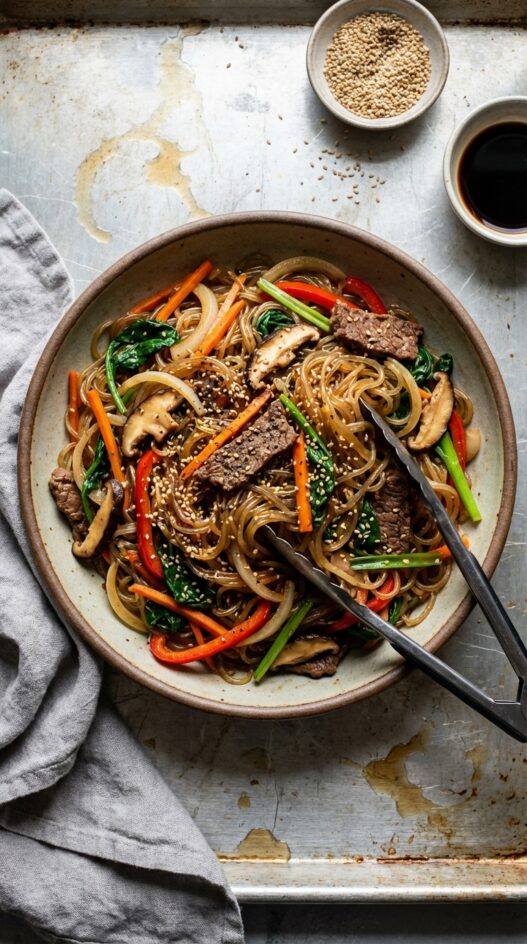
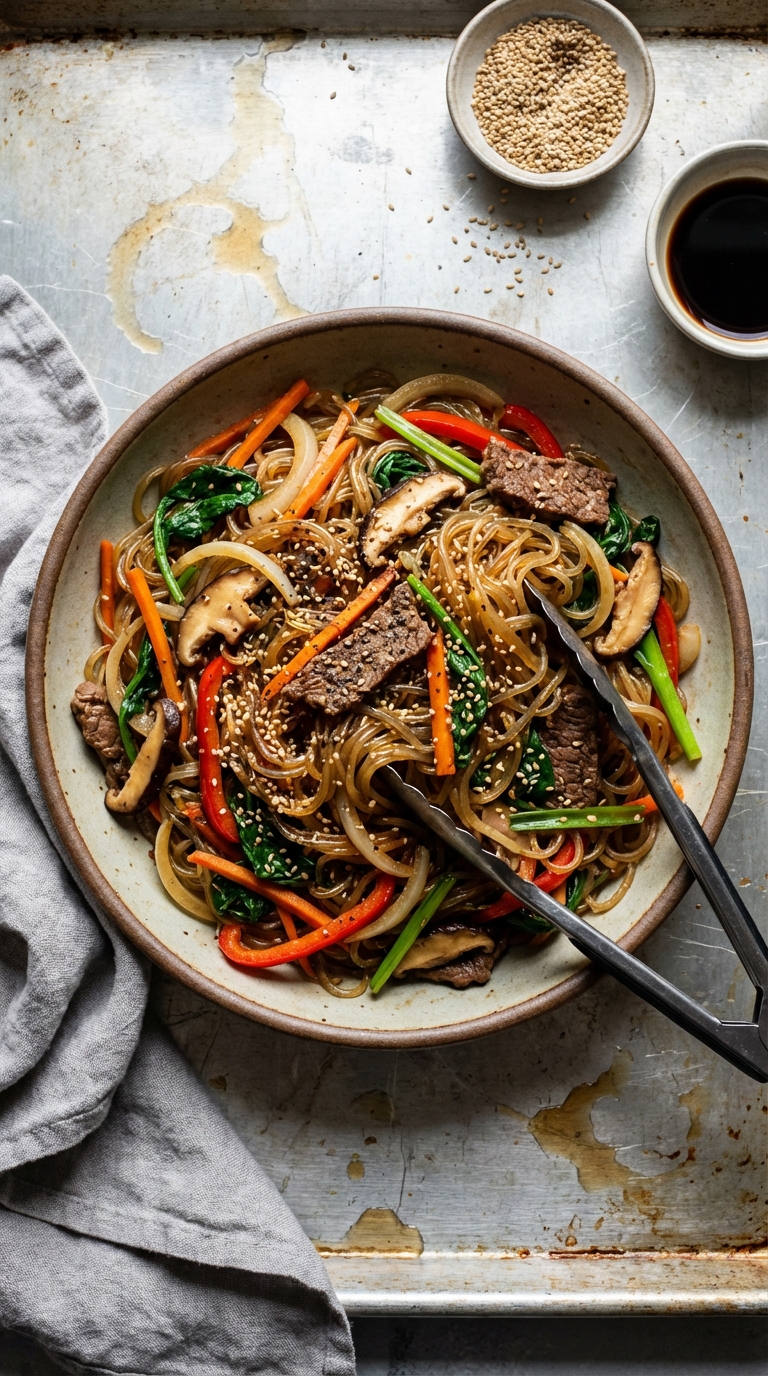
Japchae is usually served room temperature or chilled as part of the meal’s banchan, or set of side dishes. Originally, it was made of only vegetables stirfried together, but sometime in the early 20th century, noodles snuck into the recipe, and that’s the way we eat the dish today. Some japchae recipes call for beef, chicken, or seafood. Add whatever vegetables are in season where you are, and slice them into strips so they mix easily with the noodles. Here’s a simple and common vegetarian version cooked both at home and in restaurants.
Recipe from Korean Cooking Lab.
Print
Japchae
- Total Time: 45 minutes
- Yield: 2-3
Description
A common side dish throughout Korea made of stir-fried vegetables and glass noodles with soy, sesame, and sugar.
Ingredients
- 1 handful (or bunch) dried dangmyeon (dried glass noodles)
- 1 large bunch fresh spinach, washed well
- 4-5 fresh pyogo (shiitake mushrooms)
- 1/2 white onion
- 1 small carrot, peeled
- 1 clove garlic
- grapeseed oil (or other cooking oil)
- 1 tsp sugar
- 3 tbsp (45 ml) soy sauce
- 2 tsp sesame oil
- sesame seeds
Instructions
- Bring a large pot of water to boiling.
- Meanwhile, slice onion into strips and julienne the carrot. Set aside together. Remove stems from each mushroom and slice the caps. Mince the garlic. Set mushrooms and garlic aside together.
- Once water starts boiling, add the spinach. Let cook for a minute, then transfer spinach with tongs to a bowl of ice water to cool. Save the hot water for the noodles. Bring the hot water back up to boil, then turn off the heat and add the dried noodles. Cover and let them sit, off the heat, for 8 minutes or until noodles are soft to bite. Then drain, add sesame oil, and mix. Snip noodles in half if they are extra long. Once cooled, drain the spinach and set aside.
- Heat oil in a saute pan, and add onions and carrots. Saute for a minute.
- Add garlic and mushrooms to the pan and saute for two minutes.
- Mix soy sauce with sugar, then add to the vegetables. Add the noodles, too.
- Add the drained spinach along with the noodles, and mix well and let cook until noodles, vegetables and spinach are incorporated, and soy sauce has soaked through the noodles.
- Taste, and add more soy sauce or sugar if needed.
- Serve sprinkled with sesame seeds.
- Prep Time: 10 minutes
- Cook Time: 20 minutes
- Category: Classic
- Cuisine: Korean
Nutrition
- Serving Size: 1 serving
- Calories: 290
If You Liked This Recipe, You’ll Love These
- Thai Favorite: How to Make Pad-See-Ew
- Sesame Noodles with Crispy Tofu
- Punjabi Paneer Masala – A Classic Vegetarian Indian Dish
- Chicken Khao Soi: Curry Noodle Soup
Frequently Asked Questions
What are dangmyeon noodles?
Dangmyeon noodles are Korean glass noodles made from sweet potato starch. They are commonly used in dishes like japchae and have a chewy texture.
Can I add different vegetables to this japchae recipe?
Yes, you can add any seasonal vegetables you have on hand. Just slice them into strips so they mix easily with the noodles.
Why is the spinach blanched and then cooled in ice water?
Blanching the spinach and then cooling it in ice water helps preserve its bright green color and crisp texture.









The way to eat japchae is diverse. It doesn’t be served in room temperature or chilled. In my case, I like a little bit wram japchae.