Similar to fresh fish, canned fish is also kind of an issue for me. In theory, I have no problems with canned fish as a budget-friendly and quick alternative to fresh. The reason it hasn’t been on my regular rotation at the grocery store in quite some time is because I never really trust the source or the fishing techniques. Ok, yes, it’s ‘dolphin-friendly,’ but is it every other-type-of-fish friendly too? Is it ocean-friendly?
I recently discovered Wild Planet, a brand that uses only sustainable fishing techniques to catch fish. All of the fish and shellfish they use is fully traceable and they defer to the sourcing guidelines issued by the Monterey Bay Aquarium’s Seafood Watch. Plus, it tastes good, which is pretty important too. So, suddenly, I feel like I can use a can of tuna or salmon every once and a while without visualizing the end of fish as we know it with every guilt-ridden bite.
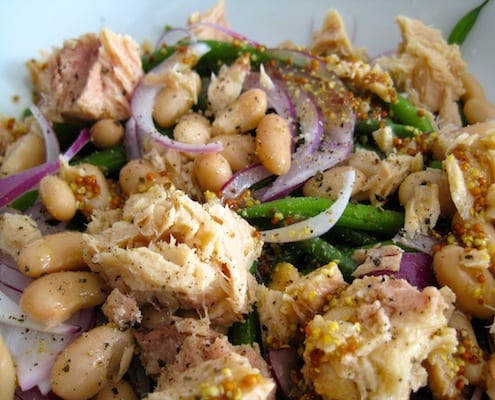
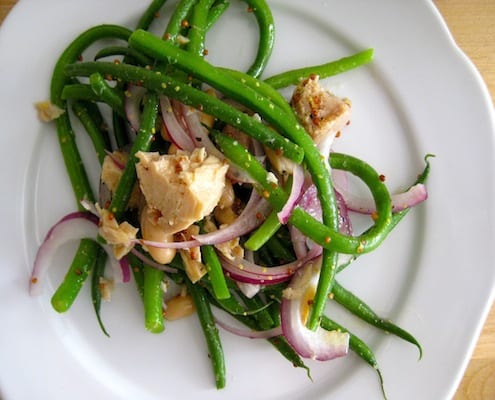
But, if I’m using canned tuna, I’m not going to be making any boring ole’ tuna salads or watered down bean salads. I wanted to jazz it up a bit, so instead, I made this – a kind of conglomeration of a Tuscan tuna salad and an American bean salad – minus the mushy canned string beans and tasteless tuna.
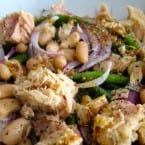
Two Bean Tuna Salad
- Total Time: 20 minutes
- Yield: 4
Description
This is not your grandmother’s bean salad. No watery and bland canned string beans here. This is the perfect marriage of bean salad and tuna salad – dressed in a slightly biting dijon vinaigrette, it leaves very little to be desired. Perfect for lunch or a light dinner.
Ingredients
- 3 generous handfuls haricots verts, aka French green beans
- 1 can cannellini beans, drained and rinsed
- 1 can tuna in olive oil, drained
- 1/4 large red onion, sliced paper thin
Dijon Vinaigrette
- 1 tbsp (15 ml) whole grain dijon mustard
- 2 tbsp (30 ml) red wine vinegar
- 3 tbsp (45 ml) extra virgin olive oil
- Salt and black pepper
Instructions
- Fill a large pot with salted water and place over high heat to boil.
- While waiting, in a small bowl, combine the mustard, salt, pepper and vinegar. Whisk together. In a slow stream, whisk in the olive oil. Taste and adjust seasoning. Set aside.
- Once the water boils, add the trimmed haricots verts to the pot for 3-4 minutes. Immediately drain the beans and immerse in a bowl of ice cubes and water – this will stop their cooking and shock them into retaining a vibrant green color. Once cooled, drain the beans again. Once dry, lay them on the bottom of a large salad bowl or platter.
- Add a layer of the thinly sliced red onion on top of the green beans.
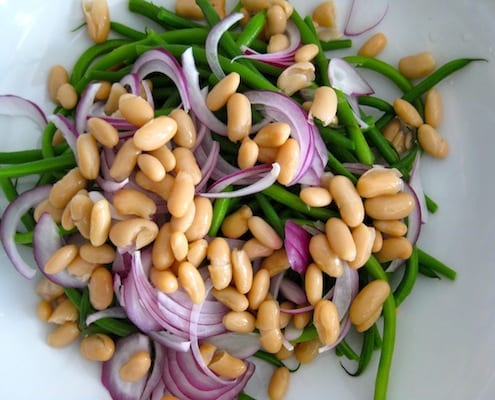
- Follow this with the drained, rinsed and dry cannellini beans.
- Using a fork, carefully remove large chunks of the tuna from the can and spread them around the top of the salad.
- Dress the salad and serve.
Notes
- Serves 4 as a side dish and 2 as a main course.
- Prep Time: 15 mins
- Cook Time: 5 mins
- Category: Salad
- Cuisine: French
Nutrition
- Serving Size: 1 serving
- Calories: 280
If You Liked This Recipe, You’ll Love These
- Green Mango Salad With Avocado, Shrimp and Cashews
- Salade Niçoise: Classic French Tuna Salad
- Mango and Tuna Poke Salad Bowl
- Warm Asparagus Salad with Bacon, Egg, and Hazelnuts
Frequently Asked Questions
What are haricots verts and can I use regular green beans instead?
Haricots verts are French green beans — thinner and more tender than American-style green beans. They provide a delicate snap that pairs well with the cannellini beans and tuna, though regular green beans work if trimmed small and blanched to the same 3–4 minute window.
Why shock the green beans in ice water after boiling?
Immediately drain the beans and plunge them into a bowl of ice cubes and water after 3–4 minutes of boiling. This stops their cooking and shocks them into retaining a vibrant green color.
Why does the recipe specify tuna in olive oil rather than water?
Tuna packed in olive oil has a richer, firmer texture and more flavor than water-packed tuna. I also specifically call for a sustainably sourced brand (Wild Planet) because I want tuna I can trust for its fishing practices.