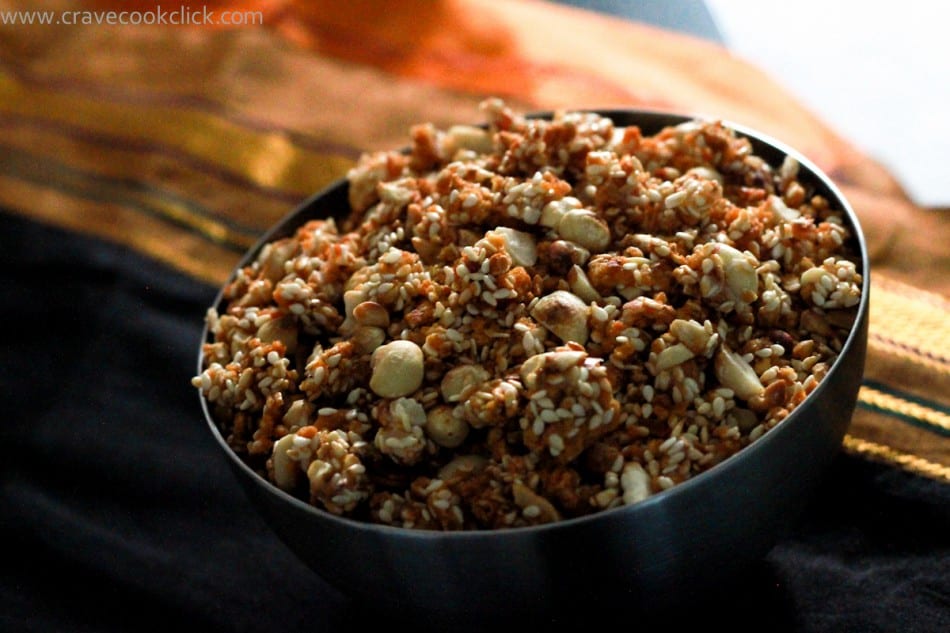
Tilgul is a colourful sesame candy coated with sesame seeds; in Maharashtra people exchange tilgul on Sankranti, a Hindu festival celebrated on 14 January. The sweet is a mixture of seasame seed (called “Til” in Marathi/Hindi) and jaggery (called “Gul” in Marathi/Hindi) and hence the name. On the Sankranti eve, families serve their guests with Tilgul while saying “Tilgul kha, goad goad bola” which literally means “Eat Tilgul and talk all sweet”.
Makar Sankranti is one of the most auspicious occasions for the Hindus, and is celebrated in almost all parts of the country in myriad cultural forms, with great devotion, fervour and gaiety. It is a harvest festival. Makar Sankranti is perhaps the only Indian festival whose date always falls on the same day every year on the 14th of January (with just a few exceptions when it is celebrated either on 13th or 15th of January).
Makar Sankranti is the day when the glorious Sun-God begins its ascendancy and entry into the Northern Hemisphere and thus it signifies an event wherein the Sun-God seems to remind their children that ‘Tamaso Ma Jyotir Gamaya’- may you go higher & higher, to more & more Light and never to Darkness.
To Hindus, the Sun stands for knowledge, spiritual light and wisdom. Makar Sankranti signifies that we should turn away from the darkness of delusion in which we live, and begin to enjoy a new life with bright light within us to shine brighter and brighter. We should gradually begin to grow in purity, wisdom, and knowledge, even as the Sun does from the Day of Makar Sankranti.
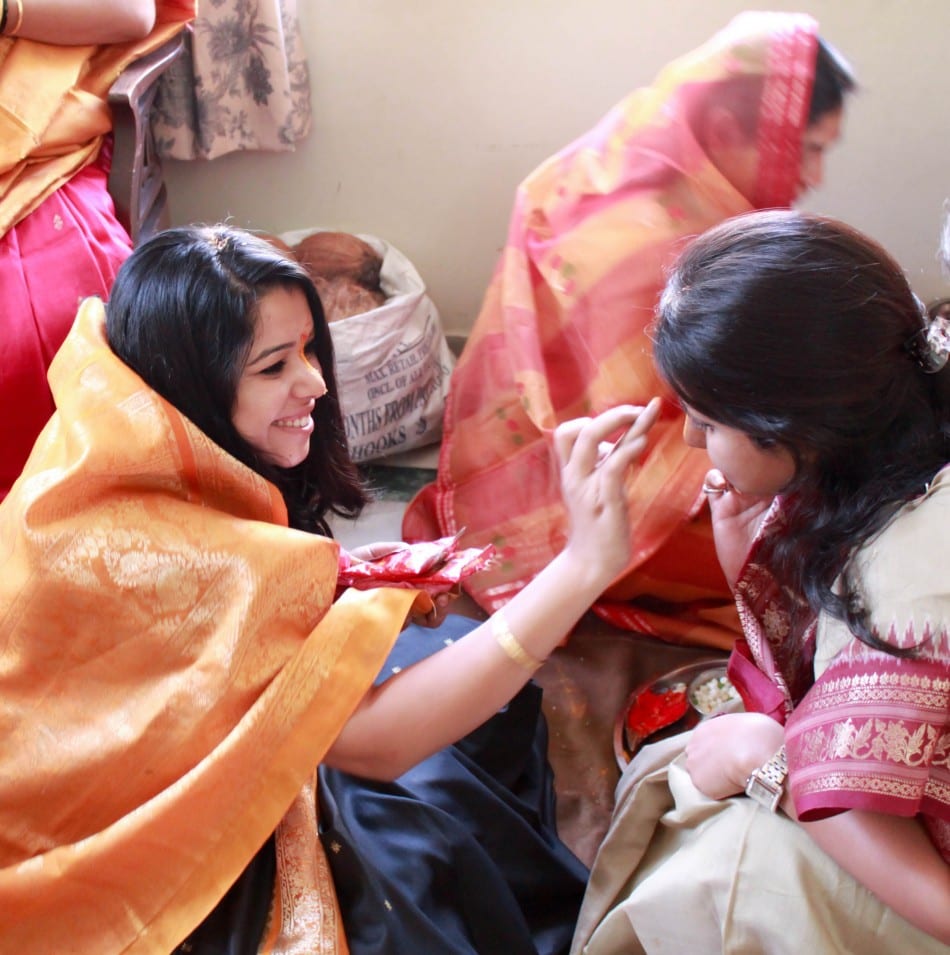
This is a special day for the women in Maharashtra when married women are invited for a get-together called ‘Haldi-Kunku’ (literally meaning turmeric and vermillion) and given gifts such as utensil, clothes etc. Typically, women wear black sarees or black coloured outfits on this occasion. The significance of wearing black is that Sankranti comes at the peak of the winter season and black colour retains and absorbs heat, helping keep warm. Maharastra is also famous for kite flying on this special occasion.
The festival of Makar Sankranti is highly regarded by the Hindus from North to down South. The day is known by various names and a variety of traditions are witnessed as one explores the festival in different states. Sankrat is celebrated at a huge scale in Baroda, Gujarat with lots of kite flying and fire crackers.


Tilgul – Hindu Festival Recipe
- Total Time: 40 minutes
- Yield: Approximately 20 pieces
Description
Tilgul is a traditional Maharashtrian sweet made from sesame seeds and jaggery, perfect for celebrating Makar Sankranti with its delightful crunch and sweetness.
Ingredients
- 2 cups (480 ml) sesame seeds (til)
- 1 1/2 cups (360 ml) chikki jaggery (gul)
- 1 cup (240 ml) groundnuts
- 1 cup (240 ml) chana dal
- 1 tbsp (15 ml) cardamom powder
- 1 tbsp (15 ml) ghee
Instructions
- Roast the sesame seeds in a pan over medium heat until they turn a light brown color, then set them aside.
- In the same pan, dry roast the groundnuts and chana dal separately until they are golden brown. Allow them to cool, then crush them coarsely.
- In another pan, melt the jaggery over low heat, stirring continuously until it becomes a smooth syrup. Add 1 tbsp of ghee to the melted jaggery and mix well.
- Add the roasted sesame seeds, crushed groundnuts, chana dal, and cardamom powder to the jaggery syrup. Mix thoroughly until all ingredients are well combined.
- While the mixture is still warm, shape it into small balls or flatten it into a tray to cut into squares once cooled.
- Allow the tilgul to cool completely before serving or storing.
Notes
- Tilgul can be stored in an airtight container for up to two weeks.
- If jaggery is not available, you can substitute with brown sugar, though the flavor will differ slightly.
- Ensure that the jaggery syrup is not overcooked, as it will harden too much when cooled.
- Serve tilgul with tea or as a festive treat.
- Prep Time: 20 minutes
- Cook Time: 20 minutes
- Category: Dessert
- Cuisine: Indian
Nutrition
- Serving Size: 1 piece
- Calories: 150
- Sugar: 12
- Sodium: 5
- Fat: 8
- Carbohydrates: 18
- Fiber: 2
- Protein: 4
- Cholesterol: 0
If You Liked This Recipe, You’ll Love These
- Summer Sweets: Cool No-Bake Desserts
- Dessert with a Jolt: Delicious Coffee-Spiked Sweets
- Boozy French Toast
- Plantains Foster: A Caribbean Twist on New Orleans’ Classic Dessert
Frequently Asked Questions
What is jaggery, and can I substitute it with brown sugar?
Jaggery (called “gul” in Marathi/Hindi) is an unrefined cane sugar with a deep, caramel-like flavor that differs from granulated or brown sugar. Brown sugar can replace it if jaggery is unavailable, though the flavor will differ slightly — brown sugar lacks jaggery’s slight molasses depth.
How do I know when the jaggery syrup is ready and why is it critical not to overcook it?
Melt 1½ cups (360 ml) of chikki jaggery over low heat, stirring continuously, until it forms a smooth syrup. Overcooked syrup hardens too much once cooled, making the tilgul brittle and impossible to shape — stop as soon as the syrup is smooth and pulls away cleanly from the pan.
Why are the sesame seeds, groundnuts, and chana dal roasted before mixing?
Dry roasting each ingredient separately — sesame seeds until light brown, groundnuts and chana dal until golden — removes moisture and develops a nutty flavor. The roasted ingredients are then coarsely crushed, which also gives tilgul its characteristic crunchy texture inside the candy.
How long does tilgul keep, and what is the best way to store it?
Store tilgul in an airtight container for up to two weeks, which also makes it practical for gifting at the Makar Sankranti festival on January 14.