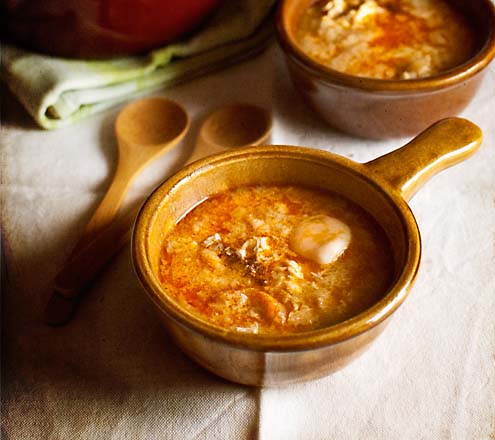
Yes, garlic soup… I guess the very name will scare the hell out of a few people. Well, they are wrong. There’s no garlicky fierceness in these very Spanish garlic soup shots, only delicious mellowness. In fact, the larger contribution to its assertive flavor comes from the chorizo and the pimentón. Garlic soup or, as it is known in many regions, Castilian soup, is peasant fare. The simplest and cheapest dish you could prepare to warm up in the bleak plateau winter: garlic, pimentón, olive oil, stale bread, some chorizo or ham (if you were lucky to have some) and water. Nowadays garlic soup can also be enhanced with a good homemade meat or chicken stock, but it is not essential, as the result is quite delicious with just water.
The recipe I’ve used is a mixture of my mother’s and José Andrés’. Quite an endorsement, don’t you agree?
Print
School of Tapas: Garlic Soup Shots
- Total Time: 25 minutes
- Yield: 4
Description
Simple and hearty garlic soup served in shots for a comforting tapa
Ingredients
- 6 garlic cloves
- 6 tbsp (90 ml) olive oil
- 6 slices good chorizo
- 1 generous dash white wine
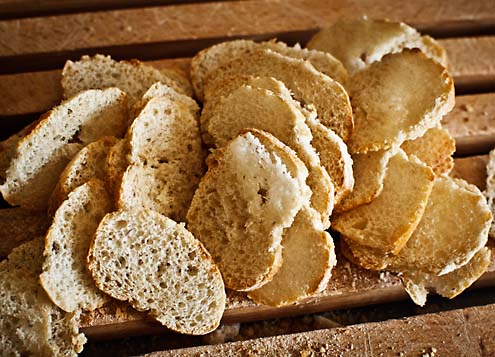
- 1 cup (240 ml) thinly sliced stale bread
- 1 tsp sweet pimentón
- 2 cups (480 ml) water or stock
- Salt to taste
- 8 quail eggs
Instructions
- Thinly slice the stale bread, set aside.
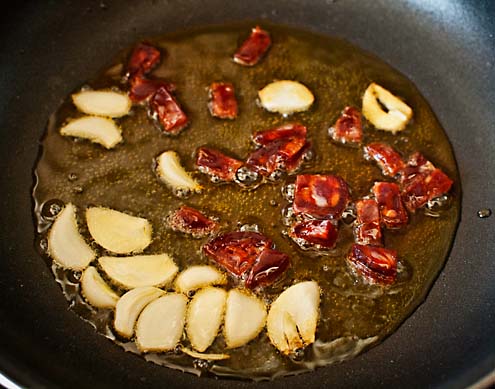
- Pour the oil in a pot or better, in an earthenware cazuela, which is the proper way to make garlic soup, and sauteé the sliced garlic cloves, till golden.
- Add the diced chorizo and sauteé 1 minute. Then add the pimentón, stirring for another minute, just to lightly toast it. Never allow pimentón to brown, as it develops a bitter taste.
- Add the wine and let concentrate for a couple of minutes.
- Add the bread and toss so that it absorbs the flavors. Then pour the water and add the salt. Let simmer 6-8 minutes for the bread to soak the liquid and the flavors to blend. The soup will feel somewhat gelatinous because of the bread. Taste the seasoning and adjust if necessary. Keep the soup steaming hot.
- Serve the soup in small ramequins or bowls, and add 2 quail eggs to each (1). Let the soup sit for a couple of minutes or more; the hot soup will make the eggs set.
Notes
- (1) The eggs can be added whole or beaten, either way.
- Prep Time: 15 mins
- Cook Time: 15 mins
- Category: Soup
- Cuisine: Spanish
Nutrition
- Serving Size: 1 serving
- Calories: 280
Don’t fret if the soup looks messy. That’s the way it should look. The bread gives it a gelatinous and thick feel, with the egg floating on top. Enjoy it on a sunny and cold noon as a snack or for lunch, with a full-bodied red Spanish wine. You’ll get a glimpse of Spanish peasant life in Castille…
Try another great Spanish recipe – Padron Peppers – here.
If You Liked This Recipe, You’ll Love These
- Brandada de Bacalao: Catalan Cod Spread
- Pappa al Pomodoro – Rustic Tuscan Tomato and Bread Soup
- Lemon and Butternut Squash Soup
- Rosemary Garlic Challah Bread
Frequently Asked Questions
Won’t this taste overwhelmingly of garlic?
There is no garlicky fierceness in the finished soup, only delicious mellowness. The dominant flavor comes from the chorizo and sweet pimentón rather than raw garlic, because the garlic is sautéed in olive oil until golden before anything else goes in.
Why does the recipe warn not to let the pimentón brown?
Stir the pimentón for only about one minute after adding it and never let it brown. Burned pimentón develops a bitter taste that will ruin the soup’s flavor.
What role does the stale bread play?
Toss about 1 cup of thinly sliced stale bread dry into the garlic-chorizo-pimentón base to absorb the flavors before adding the water or stock. After simmering 6–8 minutes the bread soaks up the liquid and gives the soup a distinctly gelatinous and thick texture — and that is exactly how it should look.
How are the quail eggs used — do they need to be cooked separately?
No — place 2 quail eggs directly into each small ramekin of steaming-hot soup, and the residual heat sets them over a couple of minutes. They can be added whole or beaten, either way works.