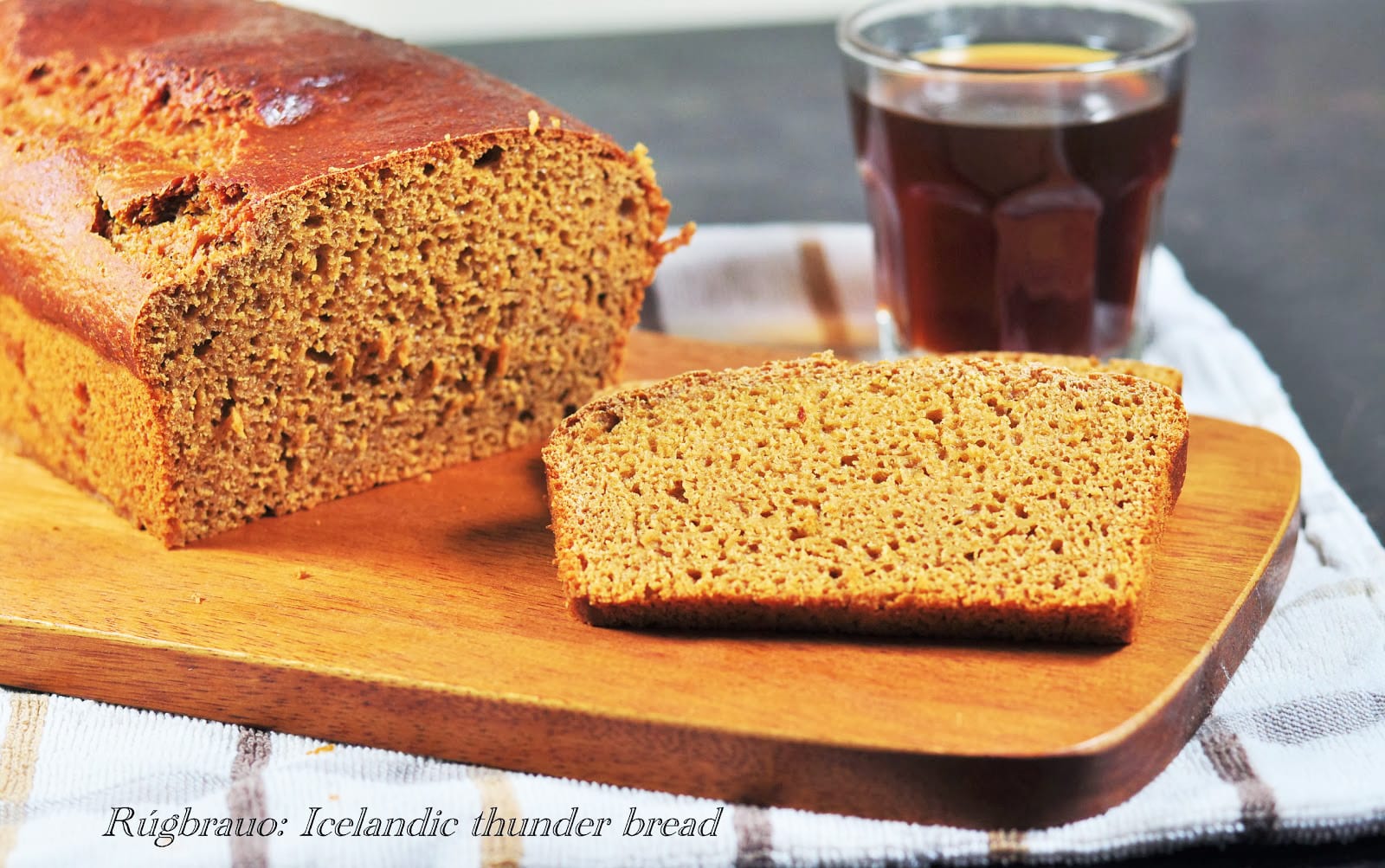
Rúgbrauð: Icelandic Thunder Bread
- Total Time: 2 hours 50 mins
- Yield: 1 loaf
Description
Traditionally, Rúgbrauð is baked buried in the ground near hot springs. If you don’t have access to hot springs at home, adding a water bath to your oven to steam will work just fine.
Ingredients
- 1.6/167g cups rye flour
- 1 cup /150g White whole wheat flour
- 1cup/160g Bread flour
- 1 1/2 tsp/6g Instant yeast (if you are using active dry yeast, you must proof the yeast with 1 tsp sugar and 1/4 cup luke warm water)
- 1 tsp/6g salt
- 1 tsp/6gbaking soda
- 1/3 cup (80 ml) molasses
- 2 cup/460g buttermilk
Instructions
- In a bowl of kitchen aid stand mixer, add flours, salt, baking soda, yeast. Blend together molasses and buttermilk and add to flour yeast mixture with gradual mixing.
- Mixture will be fairly thin, more like a cake batter than bread dough.
- Transfer the batter into a lightly greased pan ( I used 9×13 inch loaf tin) and smooth the top. Set aside for 60 minutes covered with plastic wrap and a damp towel. You may or may not see any yeast activity at this time.
- By the end of 60 minutes, preheat oven to 360F. In the lower rack of your oven place a roasting pan filled with hot water for about half while the oven is preheating. This will create a hot steamy oven.
- Bake, uncovered, for about an hour and half or it register an internal temperature of 200F or until a knife inserted in the middle comes out clean. Run a knife around the edges to loosen, let sit for just a couple minutes, and then turn over onto a cooling rack.
- Once it is cooled completely cut the pieces and brush with warm butter and enjoy.
- Prep Time: 1 hour 20 mins
- Cook Time: 1 hour 30 mins
- Category: Baking
- Cuisine: Icelandic
Nutrition
- Serving Size: 1 slice
- Calories: 150
If You Liked This Recipe, You’ll Love These
- Rosemary Garlic Challah Bread
- Kalács – Traditional Hungarian Sweet Braided Bread
- Soft and Fluffy Sourdough Sandwich Loaf
- How to Make “Lussekatter”: Traditional Swedish Lucia Buns
Frequently Asked Questions
Why is this called Thunder Bread and how is it traditionally made?
Rúgbrauð is traditionally baked buried in the ground near geothermal hot springs in Iceland—the steam from the earth slowly cooks the dense rye bread over many hours. The excerpt notes that a water bath in a home oven replicates this steamy environment.
The recipe says the batter will be more like cake batter than bread dough—is that normal?
Yes, completely normal for this bread. The instructions explicitly state the mixture will be fairly thin. The combination of rye flour, buttermilk, and molasses creates a pourable batter that bakes into a dense, moist loaf rather than a risen sandwich bread.
Why is a roasting pan of hot water placed in the lower rack of the oven?
The water bath creates a hot, steamy oven environment that mimics the geothermal steam cooking method. The moisture prevents the crust from setting too quickly, keeping the inside moist during the 1.5-hour bake at 360°F.
How do I know when the bread is done?
The instructions give two reliable tests: an internal temperature of 200°F, or a knife inserted in the middle coming out clean. The long bake time of about 1 hour 30 minutes at 360°F is intentional for this dense rye loaf.