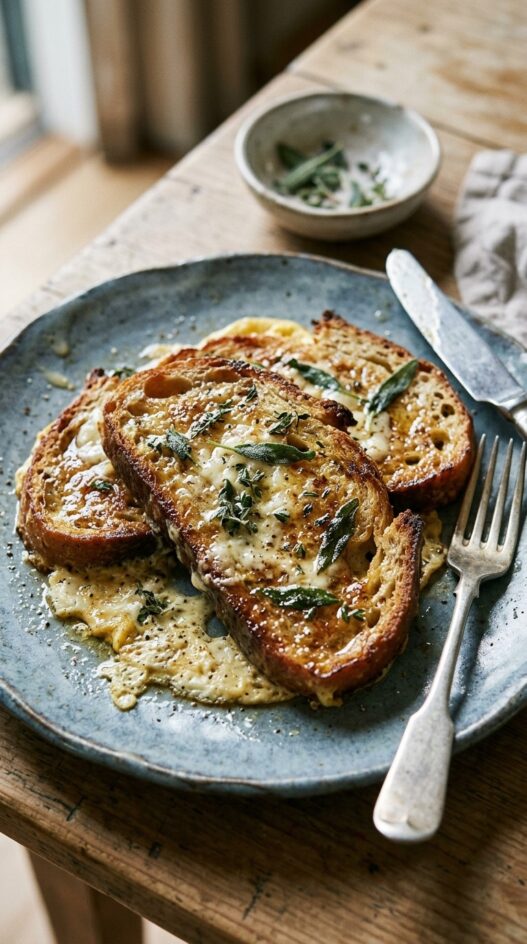
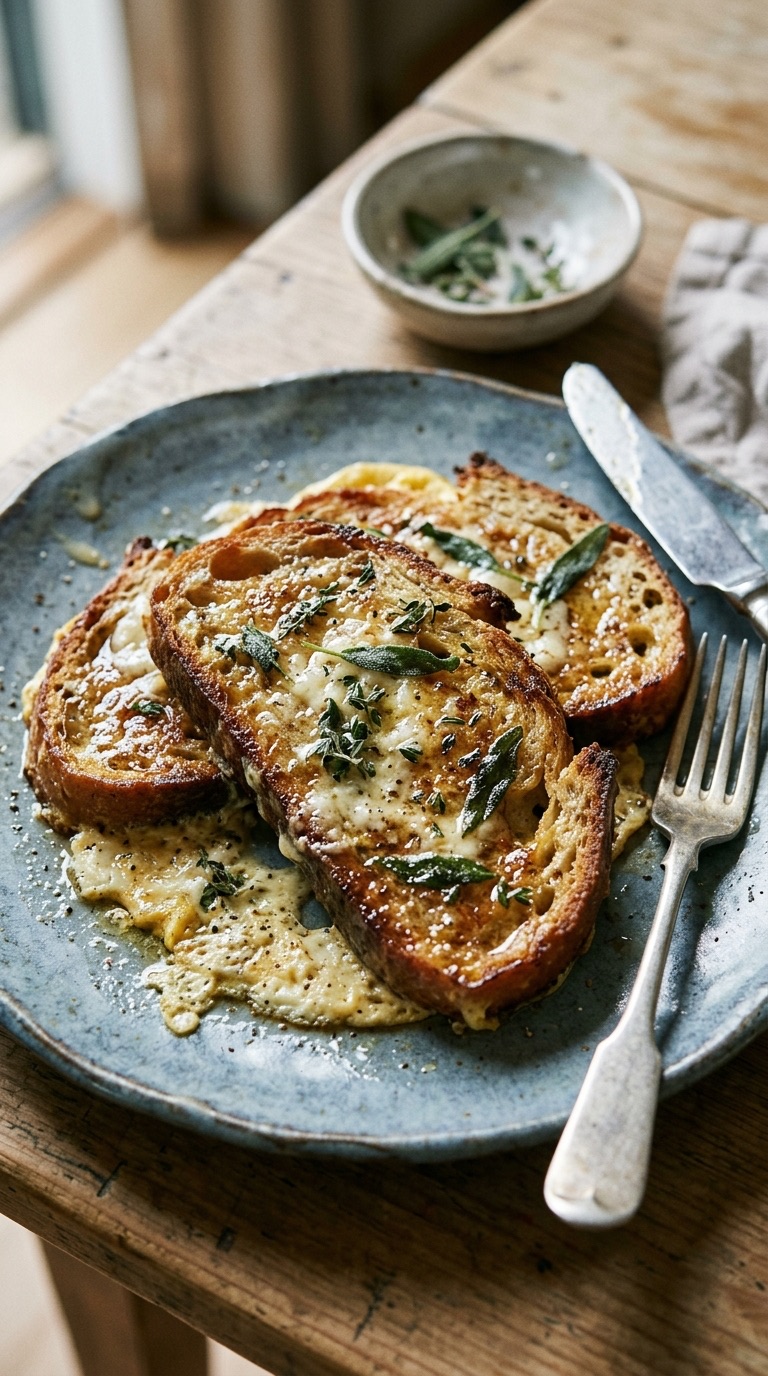
Pain Perdu (literally “lost bread”) is the original version of “French toast”, in which stale bread becomes a canvas for various leftovers. I prefer it savory and pan-fried with tangy, soft cheese and herbs.
Print
Pain Perdu (Savory French Toast)
- Total Time: 15 minutes
- Yield: 1-2
Description
Pain Perdu (literally “lost bread”) is the original version of “French toast”, in which stale bread becomes a canvas for various leftovers. I prefer it savory and pan-fried with tangy, soft cheese and herbs.
Ingredients
- stale bread, (ideally sourdough)
- 2 eggs
- a splash of milk
- herbs (I prefer sage or thyme)
- 1/4 cup (60 ml) tangy, soft cheese (sheep or goat's cheese is best)
- salt/pepper
- butter
Instructions
- Cut stale bread into 1/2 – 1 inch slices.
- Crack eggs into a bowl, add a splash of milk, cheese, salt & pepper to taste.
- Heat butter in a skillet until it turns nutty-brown.
- While butter is heating, beat egg/cheese mixture until relatively smooth.
- Dip bread slices into egg wash, let soak for a few seconds on each side.
- Once pan is hot and butter nutty-brown, start adding egg-washed slices of bread to the pan. (If you have extra egg-wash, you can just pour it into the pan with the bread. As you move the bread around/flip it, it will absorb more of the egg).
- Rip or sprinkle herbs over the bread.
- Flip toast and press down with spatula, ensuring that it browns on both sides. (If your bread is sliced thick, you can cover your pan, to ensure the egg cooks through properly).
- Once the bread is golden-brown on each side, serve to your eager guests (or yourself!).
Notes
- I prefer sourdough bread, but any hearty bread with more inside than crust will work well.
- This recipe can be adapted to use really any herbs or cheese, as long as you have enough egg-wash to properly soak the bread.
- Prep Time: 5 mins
- Cook Time: 5 mins
- Category: Breakfast
- Cuisine: French
Nutrition
- Serving Size: 2 slices
- Calories: 280
Frequently Asked Questions
Why does the butter need to turn nutty-brown before adding the bread?
That nutty-brown stage — what the French call beurre noisette — adds a deep, toasty layer of flavor that plain melted butter just does not have. It also means the pan is at the right temperature so the soaked bread browns quickly rather than steaming and going soggy.
Why whisk the cheese directly into the egg wash instead of adding it on top?
Whisking 1/4 cup of soft sheep or goat cheese into the eggs and milk means every slice is flavored all the way through when it soaks. If you put cheese on top it melts off or burns. The key is getting the mixture relatively smooth so it soaks evenly into the bread.
What bread works if I do not have sourdough?
Any hearty bread with more crumb than crust will work well. You need a loaf that can soak up the egg wash without falling apart. Avoid anything too airy or baguette-style — not enough inside to absorb the liquid and hold together in the pan.
Why press the bread down with a spatula while it cooks?
Pressing down ensures the full surface makes contact with the hot pan so you get even browning on both sides. If your bread is cut thick, you can also cover the pan briefly so the heat circulates and the egg cooks all the way through without burning the outside.
If You Liked This Recipe, You’ll Love These
- Boozy French Toast
- Salade Niçoise: Classic French Tuna Salad
- Tartiflette au Reblochon: The French Alpine Potato Gratin
- Salade Chèvre Chaud – French Goat Cheese Salad