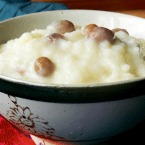
Paal Payasam: Kerala Rice and Milk Pudding
- Total Time: 40 mins
- Yield: 5
Description
This rich rice pudding, traditional to South India, can be served warm or chilled.
Ingredients
- 1/2 cup (120 ml) basmati rice
- 800 ml milk (4 cups)
- 6 tbsp sugar (or to taste)
- 2 tbsp raisins
Optional ingredients
- 1 tsp saffron dissolved in 1 tbsp milk
- 1 tbsp cashew, fried in little ghee till golden
Instructions
- Wash rice, drain. Cook rice in water till 90% cooked. Drain excess water.
- Add cooked rice to milk. Bring to boil. Reduce heat. Simmer for sometime till thickens and rice is softer and cooked thoroughly. Keep stirring at regular intervals.
- Add sugar, raisins. Stir and let sugar dissolve.
- Remove from heat. Add optional ingredients if adding.
- Serve hot or cold.
- Prep Time: 10 mins
- Cook Time: 30 mins
- Category: Dessert
- Cuisine: South Indian
Nutrition
- Serving Size: 1 serving
- Calories: 180
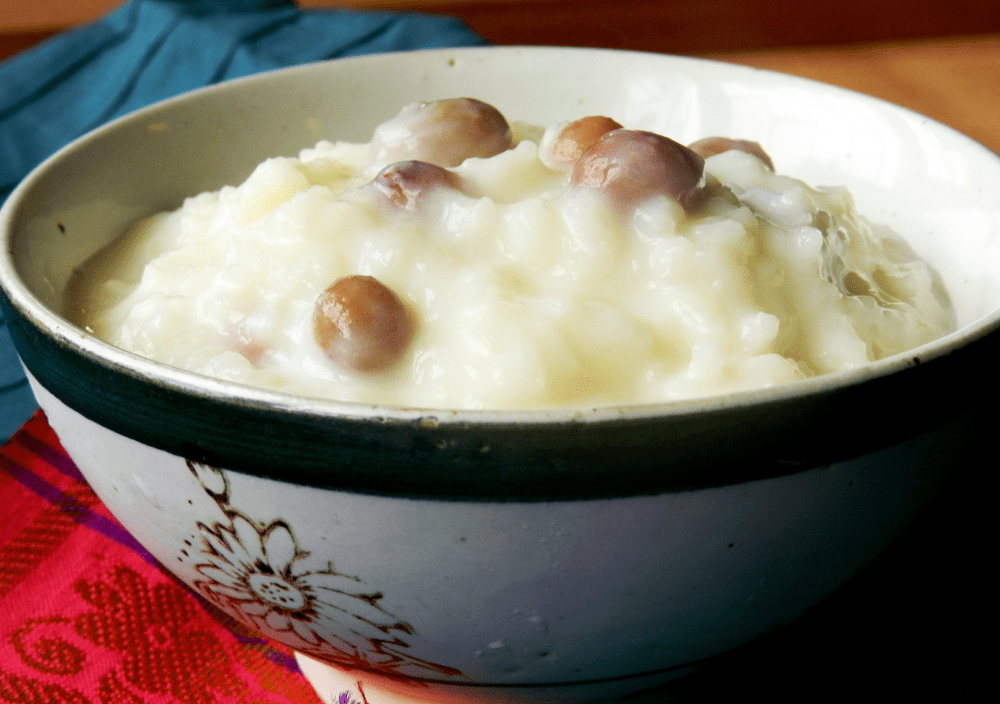
We all know that rice pudding exists in local versions in just about every country around the globe, often with regional twists and tweaks. Paal payasam is Kerala's version, down at the southwestern tip of India. Paal means milk, and the ingredient list is almost comically short: half a cup of basmati, four cups of milk, six spoons of sugar, a handful of raisins. Just those four things and it is one of the loveliest desserts in the world (if I have something to say about it, and I do, this is my article, after all).
There is one step that separates this from every other rice pudding you have met. Because here, you start by cooking the rice in plain water until it is about ninety percent done, then drain it. Only then tip it into the milk. That way the milk never has to sit there boiling away while it waits for raw rice to soften, and it creates a whole other structure to the rice.
When you have added the milk, bring the pot back to a boil, drop the heat right down to very low, and let it simmer until it thickens and every grain has gone soft. Stir it every few minutes, because as you probably already know, milk left alone at the bottom of a pan will find a way to catch.
Finally stir in the sugar and the raisins, and keep going until the sugar has dissolved. Saffron and cashews fried gold in ghee are both marked optional on this recipe and they genuinely are optional, though the saffron turns the whole pot a beautiful pale gold.
Warm or cold? Good news, both are awesome! Straight off the stove it is loose and comforting. Out of the fridge the next day it sets thick enough to eat with a spoon standing up in it.
If You Liked This Recipe, You’ll Love These
- How to Make Indian Pancakes: Easy, Crispy, Homemade Dosas
- ISHQ Restaurant NYC: A Modern Love Letter to Indian Cuisine
- Riso al Latte con Fregole e Mandorle – Easy Rice Pudding
- Medieval Arroz Con Leche: Ancient Spanish Rice Pudding
Frequently Asked Questions
Why cook the rice to 90% done before adding it to the milk?
Cooking the rice most of the way in water first, then finishing it in the milk, allows the milk to slowly absorb the starch from the rice as it simmers, creating the thick, creamy consistency characteristic of paal payasam rather than a watery pudding.
What do the optional saffron and cashews add?
If you’d like, stir in 1 tsp saffron dissolved in 1 tbsp milk and fold in 1 tbsp cashew fried in ghee until golden — both go in off the heat. The saffron contributes a floral aroma and golden color, while the ghee-fried cashews add a rich, nutty crunch.