
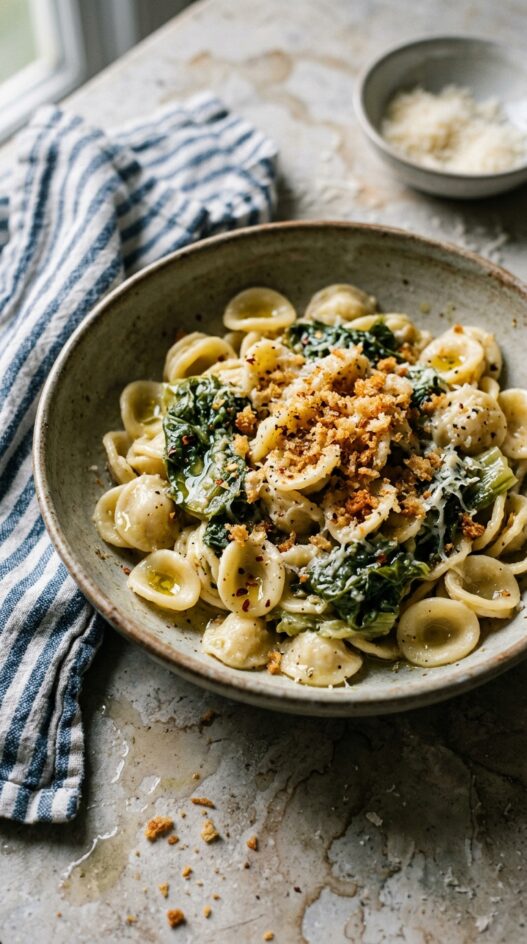
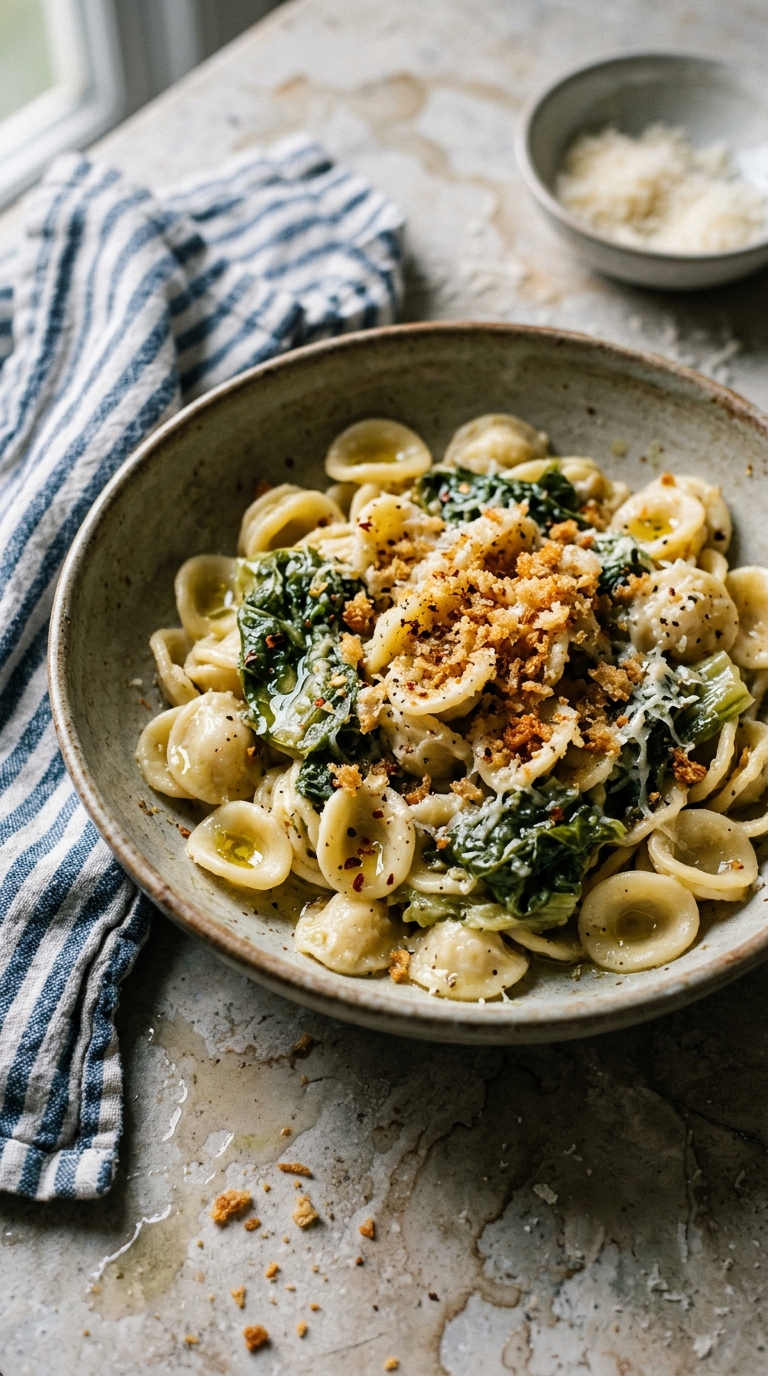
A lot of bold flavors, a satisfying meal, and an easy way to eat those leafy greens everyone is always on us about. And more good news: this recipe is ready in just over the time it takes to boil the pasta. ”Just over” because you dip the greens into your boiling vat of water for a few minutes before lifting them out and sliding the pasta in. But since you re-use the water, it’s an extra step that’s hardly onerous.
Print
Orecchiette with Escarole and Bread Crumbs
- Total Time: 30 minutes
- Yield: 4 servings
Description
This orecchiette pasta dish combines tender escarole, crispy breadcrumbs, and a hint of heat from red pepper flakes, creating a flavorful and satisfying meal.
Ingredients
- 1 lb (450 g) escarole (or kale or other green), about 2 large bunches, stems trimmed
- Kosher salt
- 5 tbsp (75 ml) olive oil, divided, plus more for drizzling
- 1 cup (55 g) coarse fresh breadcrumbs
- 3 garlic cloves, chopped
- 2 tbsp (1/4 stick) unsalted butter
- 4 anchovy fillets packed in oil, drained
- 1/4 tsp crushed red pepper flakes
- Freshly ground black pepper
- 1 lb (450 g) orecchiette pasta
- 1/4 cup finely grated Parmesan or Grana Padano, plus more for serving
Instructions
- Bring a large pot of salted water to a boil. Add the escarole and cook until just tender, about 4 minutes. Using tongs or a skimmer, transfer the escarole to a colander to drain, keeping the water in the pot.
- Return the pot of water to a boil and add the orecchiette. Cook according to package instructions until al dente. Reserve 1 cup of pasta cooking water, then drain the pasta.
- Meanwhile, heat 3 tbsp of the olive oil in a large skillet over medium heat. Add the breadcrumbs and cook, stirring often, until golden brown and crisp, about 5 minutes. Transfer to a bowl and wipe out the skillet.
- Heat the remaining 2 tbsp of olive oil and the butter in the same skillet over medium-low heat. Add the garlic, anchovies, and red pepper flakes and cook, mashing the anchovies with a spoon, until a paste forms and the garlic is fragrant, about 2 minutes.
- Add the escarole to the skillet and cook, tossing, until heated through, about 2 minutes. Season with salt and black pepper.
- Add the pasta and 1/2 cup of the reserved pasta cooking water to the skillet. Cook, tossing and adding more cooking water if needed, until the sauce coats the pasta, about 2 minutes.
- Remove from heat and stir in 1/4 cup of Parmesan cheese. Serve the pasta topped with breadcrumbs and additional Parmesan cheese.
Notes
- You can substitute escarole with kale or another leafy green.
- Reusing the pasta water for cooking the greens saves time and adds flavor.
- Store leftovers in an airtight container in the refrigerator for up to 2 days.
- Reheat gently to maintain texture.
- Prep Time: 10 minutes
- Cook Time: 20 minutes
- Category: Main Course
- Cuisine: Italian
Nutrition
- Serving Size: 1 serving
- Calories: 450
- Sugar: 3 grams
- Sodium: 600 mg
- Fat: 15 grams
- Carbohydrates: 65 grams
- Fiber: 5 grams
- Protein: 15 grams
- Cholesterol: 10 mg
If You Liked This Recipe, You’ll Love These
- Lemon and Swiss Chard Orecchiette
- One-Pot Chicken Alfredo
- Catanian Rigatoni alla Norma
- Sicilian Cavatappi with Breadcrumbs and Anchovies
Frequently Asked Questions
Why does the recipe cook the escarole in the pasta water before the pasta?
Blanch the escarole for about 4 minutes in the salted water, lift it out, then slide the orecchiette into the same pot. Reusing the water adds starch and flavor to the pasta as it cooks and saves dirtying a second pot — the greens infuse the water with flavor, which is entirely intentional.
Can I substitute a different green for escarole?
Yes — kale or any other leafy green works well here. Kale will be slightly more bitter and take a bit longer to become tender than escarole’s 4-minute blanch, so adjust accordingly.
What’s the purpose of saving pasta cooking water?
Reserve 1 cup of pasta water after cooking the orecchiette. Add ½ cup to the skillet when tossing the pasta with the escarole, garlic, and Parmesan, and add more as needed — the starchy water helps emulsify the olive oil and Parmesan into a light sauce that coats the orecchiette without becoming greasy.




Dry breadcrumbs are made from dry bread which has been baked or toasted to remove most remaining moisture, and may even have a sandy or even powdery texture. Bread crumbs are most easily produced by pulverizing slices of bread in a food processor, using a steel blade to make coarse crumbs, or a grating blade to make fine crumbs. A grater or similar tool will also do.’
Our very own internet site
http://www.caramoan.co