One-Pan Pasta
- Total Time: 25 mins
- Yield: 4
Description
This recipe, adapted from Martha Stewart, cooks up pasta and sauce in the same pan for a streamlined dinner.
Ingredients
Units
- 12 oz (340 g) linguine (or other pasta)
- 12 oz (340 g) chopped tomato (if using cherry or grape tomatoes, halve or quarter depending on size).
- 1 onion, thinly sliced (about 2 cups)
- 4 cloves garlic, thinly sliced
- 1/2 tsp red-pepper flakes
- 2 sprigs basil, plus torn leaves for garnish
- 2 tbsp (30 ml) extra-virgin olive oil, plus more for serving
- Coarse salt and freshly ground pepper
- 4 1/2 cups (1,080 ml) water Freshly grated Parmesan cheese, for serving
Instructions
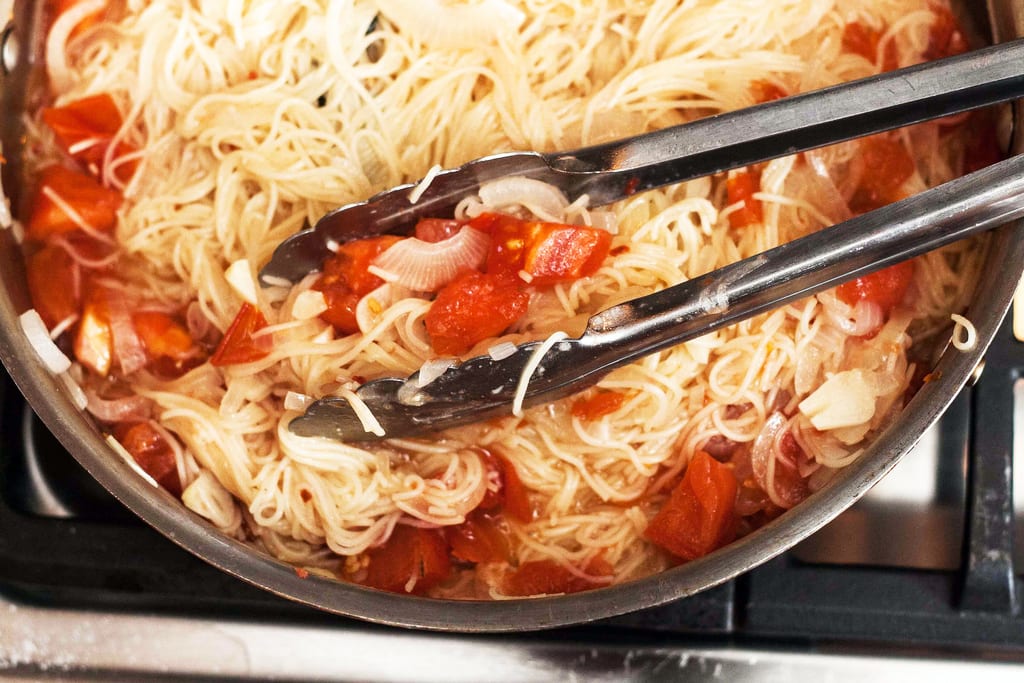
- Combine pasta, tomatoes, onion, garlic, red-pepper flakes, basil, oil, 2 tsp salt, 1/4 tsp pepper, and water in a large straight-sided skillet. Bring to a boil over high heat. Boil mixture, stirring and turning pasta frequently with tongs, until pasta is al dente and water has nearly evaporated, about 9 minutes.
- Season to taste with salt and pepper, divide among 4 bowls, and garnish with basil. Serve with oil and Parmesan.
- Prep Time: 15 mins
- Cook Time: 10 mins
- Category: Main
- Cuisine: Italian-American
Nutrition
- Serving Size: 1 serving
- Calories: 380
If You Liked This Recipe, You’ll Love These
- One-Pot Chicken Alfredo
- Spaghetti Al Nero Di Seppia: Squid Ink Calamari Pasta
- Casarecce Pasta with Lamb Sausage and Kale
- Angel Hair Stracchino and Tomato Pasta
Frequently Asked Questions
How does cooking the pasta in the same pan as the sauce work — won’t it be starchy?
All ingredients — 12 oz linguine, tomatoes, onion, garlic, red-pepper flakes, basil, olive oil, and 4½ cups water — go into the skillet raw and are brought to a boil together. The pasta starch that leaches into the water actually thickens the sauce naturally, so by the time the water has nearly evaporated after about 9 minutes, you have pasta coated in a lightly thickened tomato sauce rather than a watery pan.
Can I use a pasta shape other than linguine?
I use linguine, but other pasta shapes work too. Long thin shapes cook most predictably in this method since they’re submerged consistently; shorter shapes should cook similarly but may need a minute of adjustment.