
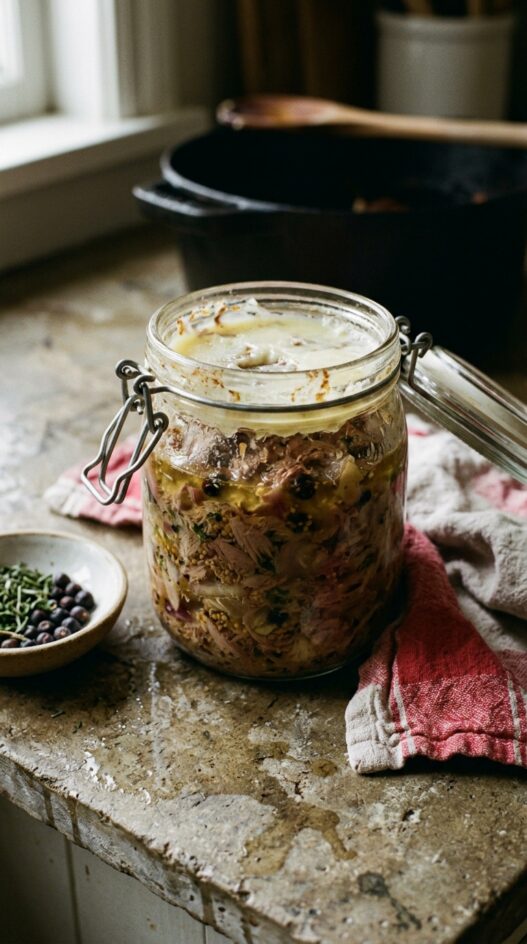
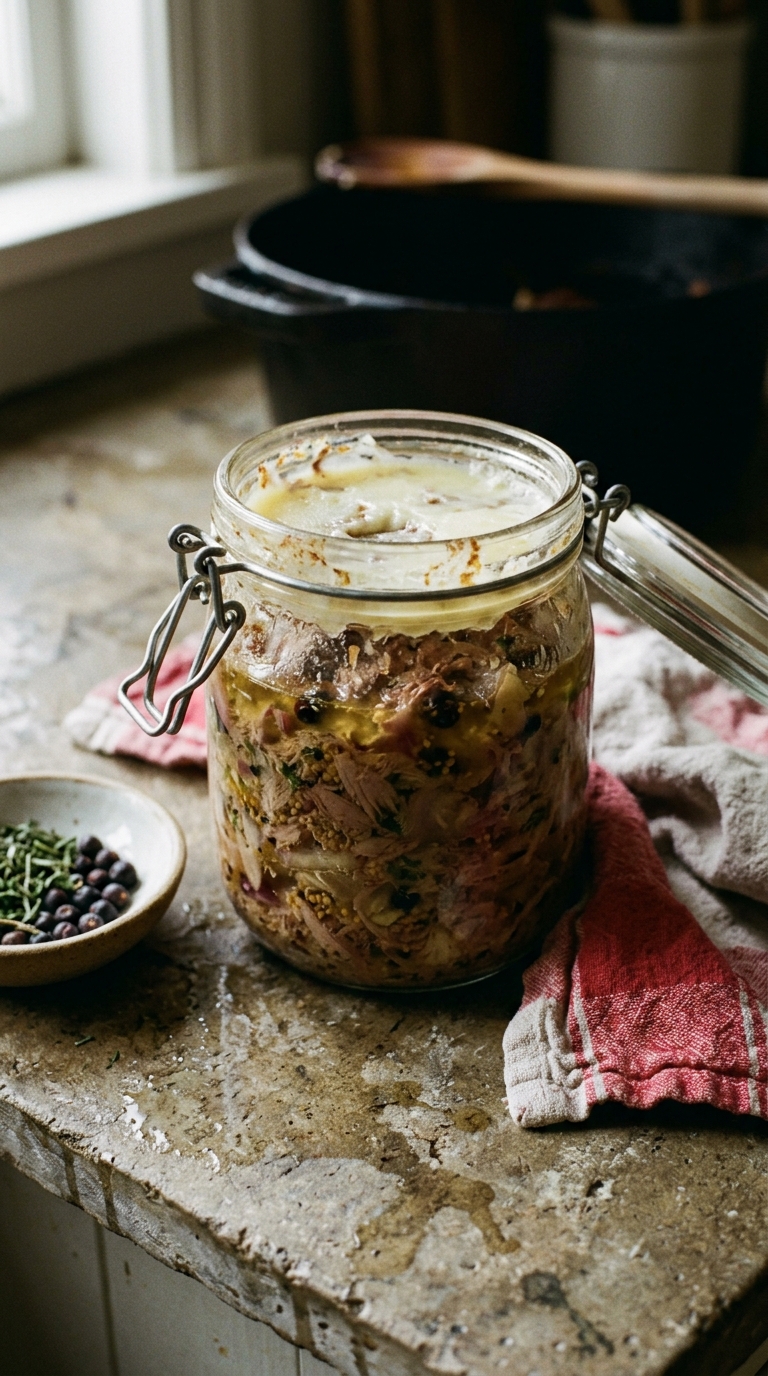
Christmas is coming very soon and one of the things I always stock in my fridge is rillette. It is incredibly easy to make, serve, store and it tastes absolutely amazing – who doesn’t adore slow-cooked meat, herbs and a little duck fat to combine it all! Plate it up for every occasion; it’s a brilliant appetizer, lunch or snack during this festive season.
New version of a classic preserve
Rillette is a classic preserving methods. Normally the meat is salted days or weeks ahead, then cooked, taken of the bone and mixed with plenty of fat and stored for several months. Similar to duck confit, but rillette is served on bread, not fried or roasted prior to serving. The flavourings are often limited to bay leafs, black pepper and sometimes sage. I like the traditional rillette, but it tends to be lacking flavour and balance. In Denmark the, more or less, traditional rillette is made with pork breast or belly. To me, these cuts are more suitable for braising or oven-roasting, instead I choose more challenging cuts that are difficult to get juicy and tender with other cooking methods. Rabbit, wild duck and pheasant makes an extremely tasty rillette. The gamy flavour is gorgeous with duck or goose fat, but I also add apple juice, beer or fruit wine, along with vinegar. This gives a fermented aroma, depth in flavour and a perfect balance, which is much more appealing and tasty, than just fat. Adding Nordic inspired herbs like crushed juniper berries, thyme and mustard seeds is my way of giving this a Christmassy and Scandinavian touch
Serve with crunchy base or topping
I recently cooked this pheasant rillette during “New Nordic Christmas” at Culinary Anthropologist in London. Of the many dishes we cooked, this was one of the most popular ones. We served the rillette on freshly baked rye bread and topped it with quick-pickled apples with a little thyme . crispy, fresh and quite sour – ideal to match the fatty richness in the rillette. Try an aim for “contrast” when deciding a topping for your own rillette and just as important – keep it simple. Enjoy!
Pheasant rillette
- Total Time: 3 hours 30 minutes
- Yield: 10
Description
Pheasant rillette is a rich, tasty appetiser or lunch. Real make-ahead party food for christmas – serve it on toasted sourdough bread or ryebread!
Ingredients
- 1 pheasant (get your butcher to rinse it for you and remove head and feets)
- 500g duck OR goose fat
- 1 red onion, peeled and sliced
- 3 cloves of garlic, sliced
- 10 dried juniper berries
- 2 tbsp (30 ml) dried thyme
- 1 tbsp. (15 ml) yellow mustard seeds
- 2 bay leaves (optional)
- freshly ground black pepper
- 200ml (7 fl oz) apple juice OR christmas beer
- 3 tbsp. (45 ml) apple balsamic vinegar
- 1 tbsp. (15 ml) salt
Instructions
- Pad the pheasant with paper towel to remove excess liquid.
- Heat 2 tbsp of the duck fat in a caserolle (just big enough to fit the pheasant).
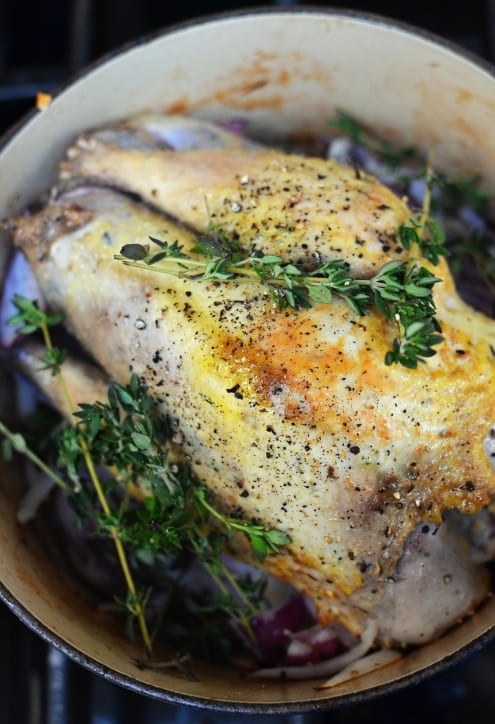
- Brown the pheasant over high heat for 4 minutes on each side untill golden all over. Add the onions, garlic and spices, fry for further 5 minutes.
- Pour over the apple juice and vinegar. Turn the heat down to low and let it simmer for 2 1/2-3 hours (flip it over, every now and then if the fat doesn’t cover the whole pheasant).
- Pick the meat of the bones (get rid of all bones and tendons) and stir it with a little of the cooking fat and what is left of the onions and spices in the bottom of the casserolle.
- Add salt, pepper and vinegar to taste and fill it into a sealed jar. Pour over a little extra cooking fat to cover the surface.
- Let it solidify in the fridge for a few hours before serving.
Notes
- TIP: This rillette will keep for around 5 days in the fridge.
- TIP: Same recipe can be used for pork cheeks.
- Then you will need around 500g of pork cheeks and let them braise for 3-4 hours.
- TIP: Save the leftover goose fat in the freezer for next time making rillette, confit or for roasting potatoes.
- Prep Time: 15 mins
- Cook Time: 3 hours
- Category: Appetizer
- Cuisine: Scandinavian
Nutrition
- Serving Size: 2 tablespoons
- Calories: 190
If You Liked This Recipe, You’ll Love These
- How to Make Flæskesteg: Danish Pork Roast with Crispy Crackling
- Nordic Cuisine for the Home Cook – Bringing the Trends Down to Earth
- Nordic Cuisine for the Home Cook – Poached Cod Roe with Pickled Celeriac and Mustard Mayo
- Nordic Cuisine for the Home Cook – Buttermilk Marinade
Frequently Asked Questions
What makes this rillette different from traditional French-style rillette?
Traditional rillette is salted days or weeks ahead, cooked low and slow, and flavored with little more than bay leaves, black pepper, and occasionally sage. My Nordic version uses pheasant instead of the typical pork belly, adds apple juice or Christmas beer plus apple balsamic vinegar for a fermented aroma and balanced acidity, and seasons with juniper berries, thyme, and mustard seeds for a Scandinavian Christmas character.
Why does the recipe add apple juice and vinegar — won’t that make it too sour?
I find traditional rillette to be “lacking flavour and balance,” so I add 200ml of apple juice (or Christmas beer) and 3 tbsp of apple balsamic vinegar to give “a fermented aroma, depth in flavour and a perfect balance” against the richness of the 500g of duck or goose fat. The acidity cuts the fat rather than overpowering it.
What should I serve on top of the rillette?
Aim for “contrast” and keep it simple. When I served this at a London cooking event, I topped it with quick-pickled apples with a little thyme on freshly baked rye bread — the crisp, fresh, and sour pickled apple contrasting with the fatty richness of the pheasant rillette.
How long does pheasant rillette keep, and what else can I do with leftover duck fat?
The rillette keeps for around 5 days in the fridge, sealed with a layer of cooking fat poured over the surface. Save any leftover duck or goose fat in the freezer for the next batch of rillette, confit, or for roasting potatoes.


Why only 5 days? Recipe looks delicious, but I was hooping to make a big batch in several small containers to keep over winter. Thanks