
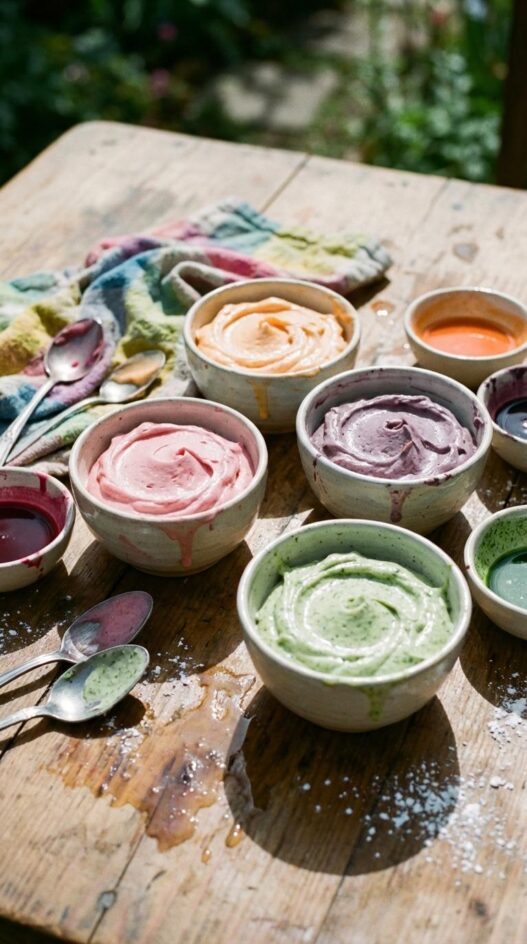
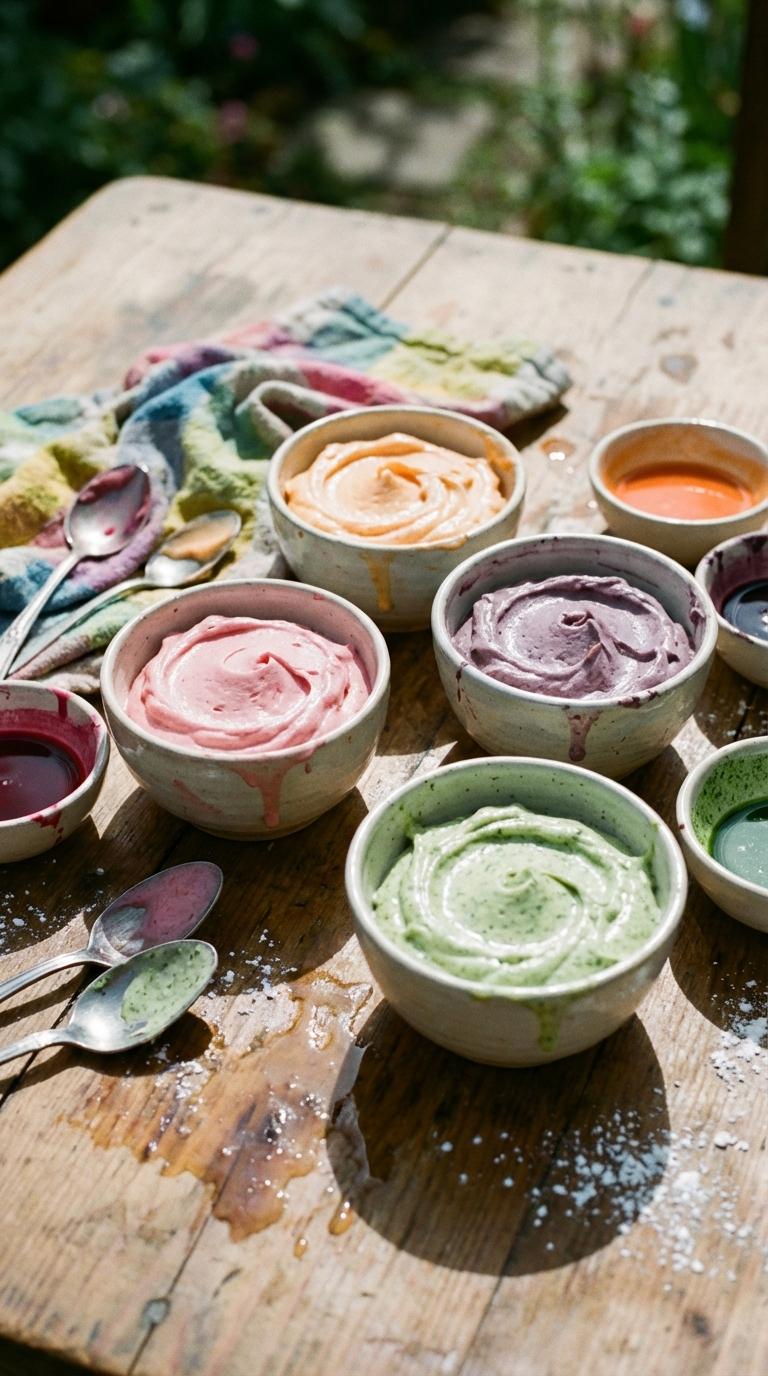
I stopped using artificial food coloring about three years ago, after my youngest had a reaction to a store-bought cupcake. That sent me down a rabbit hole of beet juice, carrot juice, spinach juice, and grape concentrate as replacements. Turns out they work. The shades are softer, more pastel, which actually suits spring baking better than the neon you get from a squeeze bottle.
The ratio matters more than you think. Too much juice thins out buttercream fast, and then you are chasing it with powdered sugar trying to get the consistency back. I have dialed in the amounts below after a lot of trial runs. Start small. You can always add more color, but you cannot take it out.
These are real pastels, not candy-bright. For Easter cupcakes, that is exactly right.
How to Make Natural Dyes for Buttercream Frosting
Adjust Consistency Before Adding Color
Reduce milk in your base frosting by 1 tablespoon (15 mL) before mixing in any juice.
This gives you room to add liquid color without ending up with runny frosting.
If it still loosens too much, sift in powdered sugar 2 tablespoons (16 g) at a time.
Get Brighter Pinks from Beet Juice
Use juice from canned beets, not fresh. It is more concentrated.
Start with 1/4 teaspoon (1.2 mL) per 2 tablespoons of frosting and build up from there.
Fresh beet juice tends to oxidize and turn brownish within a few hours.
Keep Colors Separate Until Piping
Mix each color in its own small bowl so you can control the shade individually.
Load a piping bag with two colors side by side for a swirled effect on each cupcake.
Refrigerate finished frosting for 15 minutes before piping so it holds its shape.
Natural Dyes for Buttercream Frosting
- Total Time: 20 minutes
- Yield: 12-24 cupcakes
Description
Create beautifully colored buttercream frosting using natural dyes from fruits and vegetables, perfect for decorating spring and Easter cupcakes.
Ingredients
- 1 lb (3 3/4 cups) powdered sugar
- 1/2 cup butter, softened
- 1 tsp vanilla extract
- 3 Tbsp milk
- 1-2 Tbsp beet juice (for pink frosting)
- 1-2 Tbsp carrot juice (for orange frosting)
- 1-2 Tbsp grape juice (for purple frosting)
- 1-2 Tbsp spinach juice (for green frosting)
Instructions
- Cream the powdered sugar, butter, vanilla and milk until a smooth frosting forms.
- Divide the frosting into separate bowls to make the different colors. Adding the fruit/veggie juices will affect the consistency of the frosting so you can add more powdered sugar or reduce the amount of milk to compensate for the added liquid.
- I made small quantities for experimental purposes but you can use the following ratios for any batch size. You can also change the shade of color by adjusting the amount of fruit/veggie juice.
Pink frosting
- Mix roughly 1/4 tsp (1,2mL) beet juice with 2 Tbsp (2 spoonfuls) frosting. (I just used the juice from a can of beets.)
Orange frosting
- Mix roughly 1/2 tsp carrot (2,4mL) juice with 2 Tbsp (2 spoonfuls) frosting.
Green frosting
- Mix roughly 1/2 tsp (2,4mL) spinach juice with 2 Tbsp (2 spoonfuls) frosting.
Purple frosting
- Mix roughly 1/4 tsp (1,2mL) grape juice concentrate with 2 Tbsp (2 spoonfuls) frosting.
Notes
Refrigerate any leftover frosting in a sealed container. The natural dyes provide pastel colors ideal for spring. You may notice a slight flavor from the juices, but it’s generally mild and pleasant. This is a great way to involve kids in the kitchen, letting them experiment with different natural colors.
- Prep Time: 20 minutes
- Cook Time: 0 minutes
- Category: Dessert
- Cuisine: American
Frequently Asked Questions
Will the natural dyes change the taste of the frosting?
Barely. Beet juice can add a faint earthiness if you use too much, but at the small amounts called for here, the vanilla and sugar in the buttercream cover it completely. Carrot and grape are the most neutral tasting of the four.
How long do the natural colors last before fading?
They hold well for about 24 hours at room temperature. Refrigerated, the colors stay true for 2 to 3 days. Spinach green fades the fastest, so if you are making these ahead, add the green color last and keep the cupcakes covered.
Can I use frozen juice or powder instead of fresh juice?
Grape juice concentrate works even better than fresh for purple. For green, frozen spinach blended and strained through cheesecloth gives a strong color. Beet powder also works; mix 1/4 teaspoon (0.5 g) with a few drops of water before stirring it into the frosting.
Jeanna, if you are looking for pink you can also use strawberry or raspberry juice (microwave berries for 30 seconds or until the berries begin to pop and strain out the juice). To achieve a bright pink you may need to use more berry juice and the berry flavor comes through but depending on the flavor of your cake that may not be a problem.
Exactly what I was looking for. My dd cant tolerate food dye. She has a birthday coming up which she has requested to have a “pink princess cake” and I was at a loss on how to make pink buttercream. Thank you!
It’s fun to see what you have come up with. I’ve been doing this for a few years, as we can’t tolerate red food coloring. I also make our powdered sugar, since we can’t do corn. The home made works well in frostings too. (1/3 cup sugar + 1 tsp. tapioca starch in a coffee grinder.)
I looked up natural food colorings and found a site that sells some too! Thanks for your information.
I find this soooo interesting!
This is really interesting, looks great