
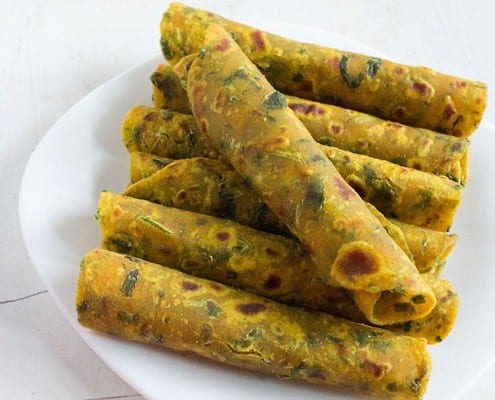
Methi Thepla is amongst one of the many flat breads that is popular in the Indian Cuisine. It originally comes from the region of Gujarat in India and is a staple in Gujarati homes.
They are healthy as they are made with fresh fenugreek leaves also called as ‘Methi’ in the Hindi language.
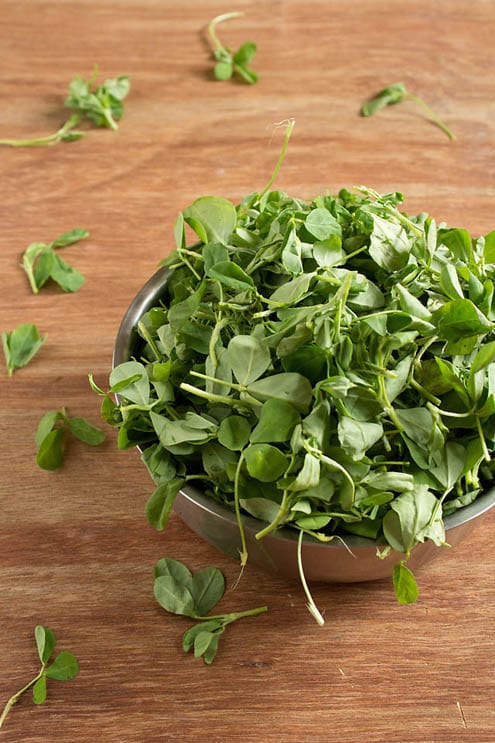
The flours that are added are whole wheat flour and gram flour. Traditionally the dough is kneaded with yogurt. But here I have veganized the recipe and kneaded the dough with a little water.
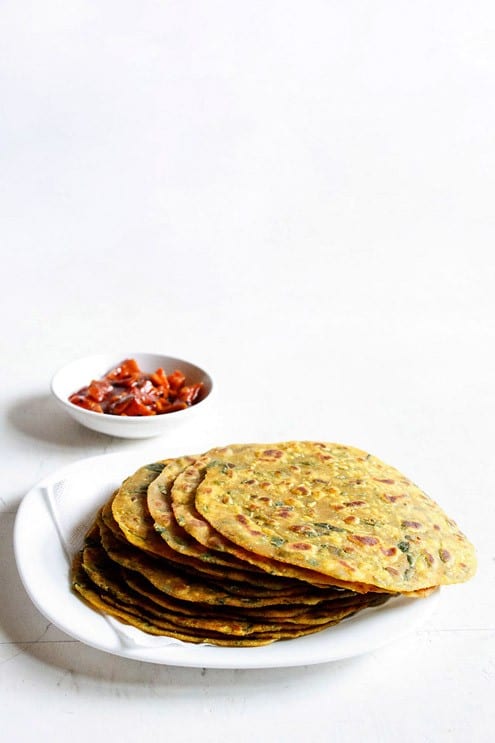
Easy and simple to make, these flat breads can be had anytime with some sweet mango pickle or just plain. They also pair off beautifully with the Indian chai.
Methi Thepla: Gujarati Fenugreek Flatbread
- Total Time: 60 minutes
- Yield: 4 servings
Description
Methi Thepla is a healthy and flavorful flatbread from Gujarat, made with fresh fenugreek leaves and a blend of spices, perfect for pairing with chai or pickles.
Ingredients
- 1 cup (240 ml) whole wheat flour (atta)
- 1 cup (240 ml) gram flour (besan)
- 1 cup (240 ml) chopped fresh fenugreek leaves (methi)
- 1 tsp cumin powder or whole cumin
- 1 tsp coriander powder
- 1/2 tsp turmeric powder
- 1 tsp red chili powder
- 1 tsp green chili paste
- Salt to taste
- Water, as needed for kneading
- Oil, for frying
Instructions
- In a large mixing bowl, combine whole wheat flour, gram flour, chopped fenugreek leaves, cumin powder, coriander powder, turmeric powder, red chili powder, green chili paste, and salt.
- Mix all the ingredients thoroughly. The fenugreek leaves will release some moisture, so start kneading the dough without adding water initially.
- If the dough feels dry, add 1 to 2 tbsp of water gradually, only if required, to form a smooth and pliable dough. If the dough becomes sticky, sprinkle a little more flour and knead again.
- Divide the dough into equal portions and roll each portion into a ball.
- On a floured surface, roll out each ball into a thin circle, about 6 inches in diameter.
- Heat a tawa or griddle over medium heat. Once hot, place the rolled thepla on it.
- Cook for about 1-2 minutes on each side, applying a little oil around the edges, until golden brown spots appear.
- Repeat the process with the remaining dough balls.
- Serve hot with sweet mango pickle or enjoy plain with Indian chai.
Notes
- Instead of water, you can also use yogurt to knead the dough for a richer flavor.
- For frying, ghee (clarified butter) can be used instead of oil for a more traditional taste.
- If fresh fenugreek leaves are unavailable, you can substitute with dried fenugreek leaves (kasuri methi), adjusting the quantity as needed.
- Prep Time: 30 minutes
- Cook Time: 30 minutes
- Category: Main Course
- Cuisine: Indian
Nutrition
- Serving Size: 1 thepla
- Calories: 150
- Sugar: 1
- Sodium: 150
- Fat: 3
- Carbohydrates: 25
- Fiber: 4
- Protein: 6
- Cholesterol: 0
If You Liked This Recipe, You’ll Love These
- Tikka Masala Spiced Chickpeas and Cauliflower
- Mangú – Mashed Plantains
- Dhingri Matar – Creamy Indian Mushroom and Pea Curry
- How to Make Indian Pancakes: Easy, Crispy, Homemade Dosas
Frequently Asked Questions
What makes thepla different from other Indian flatbreads?
Thepla comes from the Gujarati region of India and is distinguished by its two-flour dough—a combination of whole wheat flour (atta) and gram flour (besan)—plus fresh fenugreek leaves kneaded directly into it. The fenugreek gives thepla its characteristic slightly bitter, earthy flavor that plain roti or chapati does not have.
Why should I knead the dough without water at first?
Start without water because the fresh fenugreek leaves release moisture as you mix. Adding water too early can make the dough sticky. Add water gradually — 1 to 2 tbsp at a time — only if the dough still feels dry after the leaves have released their liquid.
Can I use dried kasuri methi if I can’t find fresh fenugreek leaves?
Yes. You can substitute dried fenugreek leaves (kasuri methi), just adjust the quantity as needed since dried leaves are more concentrated in flavor than the 1 cup of fresh methi I call for.

Thnks dassana my son is realy like thise I had try this recipe
O so tempting……. Orgasmic…….
thanks priya :-)
Those look fabulously tempting!