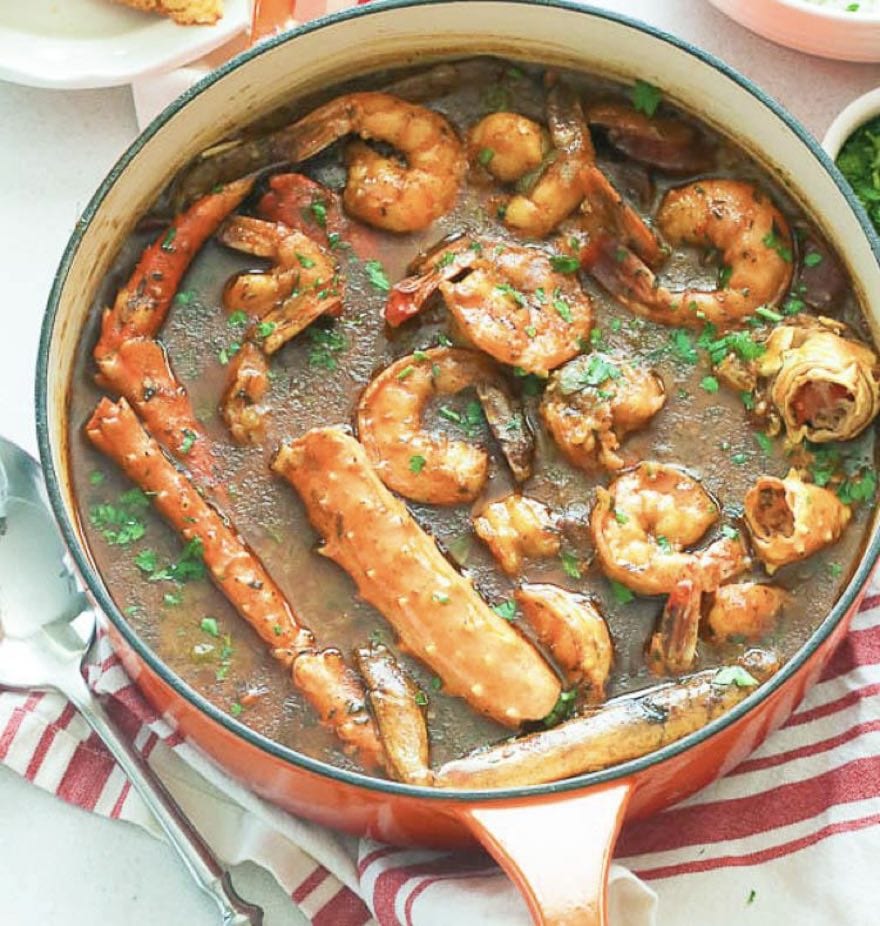
The Benefiel family has roots in Louisiana and this dish always makes them feel connected and proud of these roots. Read more recipes from the Wildwood Family Cookbook here. Bon Appetit!
“This is my grandmother’s recipe that my mom taught me. We often make it during the winter season and especially around the holiday. My family has roots in Louisiana and this dish always makes me feel connected and proud of these roots. We carry on this gumbo making tradition teaching our boys how to make this savory, spicy gumbo to share with their family’s one day. This is a time-consuming recipe but worth the effort!” 
– Melanie Benefiel
Print
Melanie’s Grandma’s Louisiana Gumbo
- Total Time: 3 hours 30 minutes
- Yield: 10 1x
Description
The Benefiel family has roots in Louisiana and this dish always makes them feel connected and proud of…
Ingredients
- 2 lb (900 g) chickens cut into 10 piece (or use chicken parts)
- 3 tbsp Creole seasoning
- 12 cups (2.9 L) chicken broth
- 1 1/2 cups (360 ml) all-purpose flour
- Vegetable oil for frying
- 2 cups (480 ml) chopped onion
- 2 cups (480 ml) green bell pepper
- 1 1/4 cups (300 ml) chopped celery
- 10 garlic cloves
- 4 bay leaves
- 1/2 lb (225 g) andouille sausage
- 1 lb (450 g) large shrimp, peeled and cleaned
- 4 crabs, disjointed
- Cooked rice
Instructions
- Remove visible fat from chicken and rub with creole seasoning. Allow seasoned chicken to sit at room temperature for a half an hour.
- Meanwhile, place broth in a large saucepan and bring to a simmer.
- While stock is simmering, shake together about two-thirds of the flower and two tbsp of the Creole seasoning in a plastic or paper bag. Add chicken pieces and shake to coat. Remove chicken from bag and shake off excess flour. Reserve remaining flour for later use.
- Heat 1/2 inch of oil to 350 degrees in a large, heavy skillet. Fry chicken skin side down. Do not crowd the pan. Adjust the heat so that the sediment does not burn. Remove chicken as it browns and set aside. Remove all but 1/4 cup oil from the pan.
- Combined reserved flour and additional flour, if necessary, to make 1/4 cup. Increase heat under skillet to high. Using a very long handled spoon, gradually stir in the flour into the hot oil. Roux is extremely dangerously hot. Handle with Extreme Caution. Stir very rapidly to prevent burning and keep stirring until the Roux is a dark red-brown color, bordering on black. Remember that the Roux will continue to cook for a few minutes after you remove it from the heat. The trick is to get the roux as dark as possible without burning it. Remove the roux from the heat and immediately stir in the onions, bell pepper, and celery. Continue to stir and carefully spoon roux into the simmering chicken stock. Bring stock to a quick boil. Reduce heat to medium and cook for 30 minutes.
- Add fried chicken, garlic, bay leaves, and the remaining 1 tbsp of the Creole seasoning to the stock. Stir in the andouille sausage and reduce heat to low, simmer until chicken is tender, approximately 2 hours.
- Skim excess fat from top while gumbo is cooking, and stir occasionally to prevent sticking. Just prior to serving, add shrimp and crab. Cook 5 minutes or until the shrimp turn pink and crab turns bright red.
- Mound Steamed rice in individual bowls, serve gumbo over the rice.
- Prep Time: 45 minutes
- Cook Time: 2 hours 30 minutes
- Category: Main Courses
- Cuisine: American
Nutrition
- Serving Size: 1 serving
- Calories: 380
If You Liked This Recipe, You’ll Love These
- Langlois Culinary Crossroads in NOLA: The Secret to Making Gumbo
- Family Recipe – Grandma’s Gumbo
- All About Gumbo and a Seafood Gumbo Recipe
- Paleo Shrimp and Sausage Gumbo
Frequently Asked Questions
How dark should the roux be and how do I avoid burning it?
The instructions say to stir very rapidly over high heat until the roux reaches a dark red-brown color “bordering on black” — and explicitly warn that the roux continues to cook for a few minutes after you remove it from the heat. The goal is to get it as dark as possible without burning it, then immediately stir in the onions, bell pepper, and celery to stop the cooking.
Why is the roux described as dangerously hot, and what precautions should I take?
The recipe specifically says “Roux is extremely dangerously hot — handle with extreme caution” and calls for a very long-handled spoon. Hot roux can reach temperatures far above boiling water and causes severe burns on contact with skin — using a long spoon and keeping your face back from the pot is essential.
When should the shrimp and crab be added?
The shrimp and crab go in only during the last 5 minutes of cooking, just before serving — the shrimp is done when pink and the crab when bright red. Adding them earlier during the 2-hour chicken simmer would overcook them into a tough, rubbery texture.
Why does the chicken rest at room temperature after seasoning before frying?
The recipe instructs you to rub the 2-lb chicken pieces with Creole seasoning and then let them sit at room temperature for 30 minutes before coating with flour and frying at 350°F. This resting period allows the seasoning to penetrate the meat and helps the chicken fry more evenly from a less-cold starting temperature.