
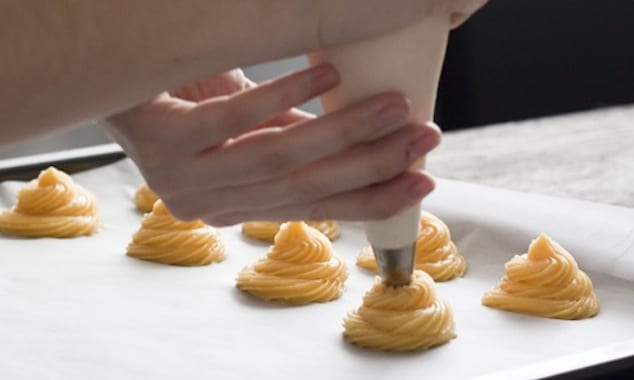
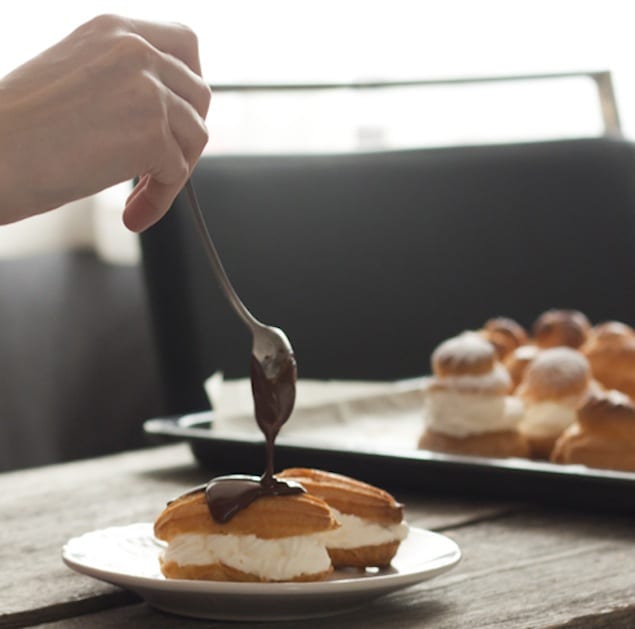
Choux pastry (pate a choux) is a pastry used to make eclairs, profiteroles, croquembouches, beignets, gougères etc. The ingredients are cooked, then baked (sometimes fried) and if not done properly, the end result can be rather disappointing. If the dough is too firm, the cakes won’t puff enough during baking. If it’s too soft, they will spread out too much in the oven.
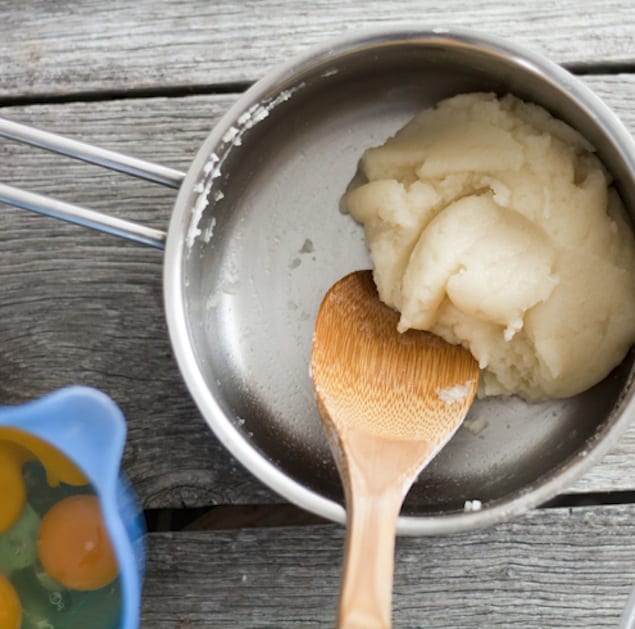
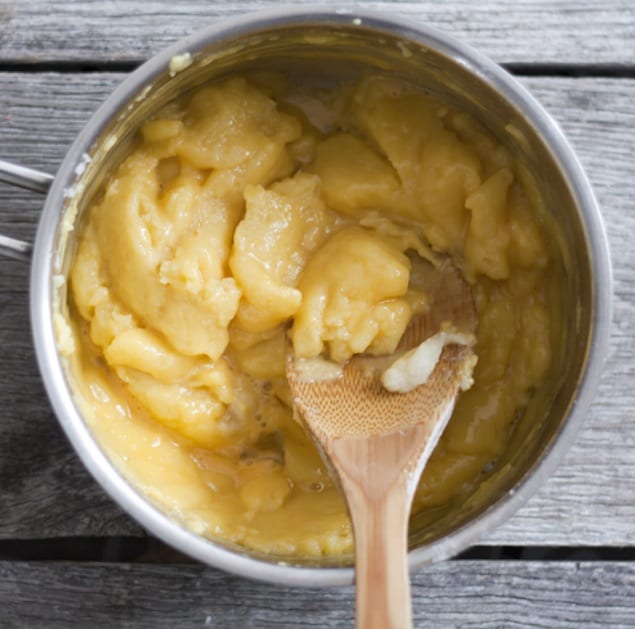
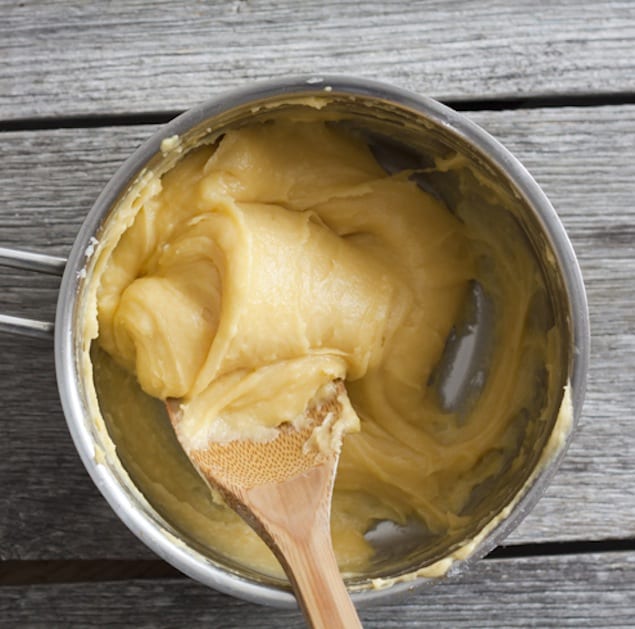
They need to have a crisp outside and be hollow on the inside. The most important thing when preparing this pastry is the water-oil-flour ratio.
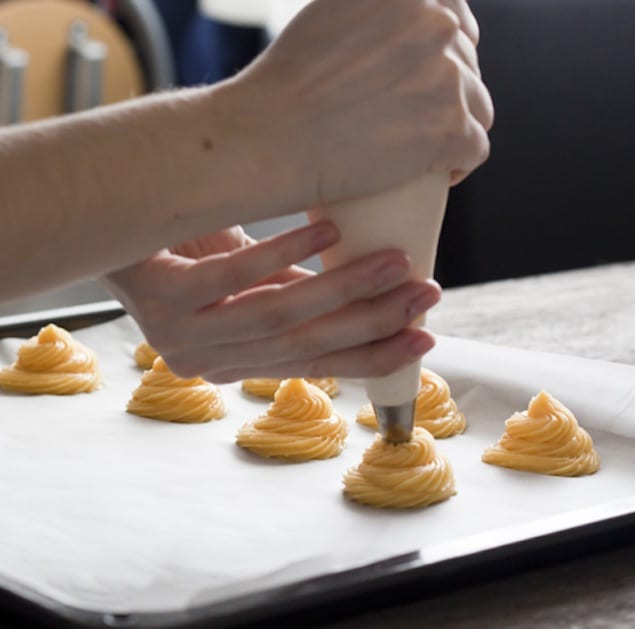
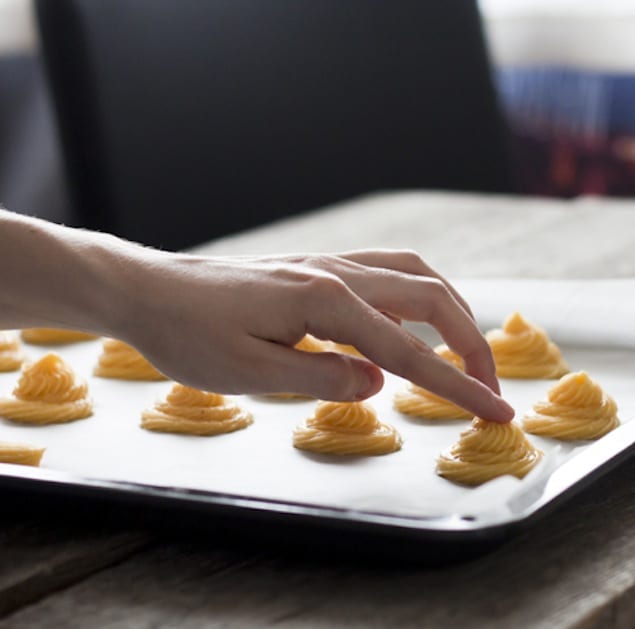
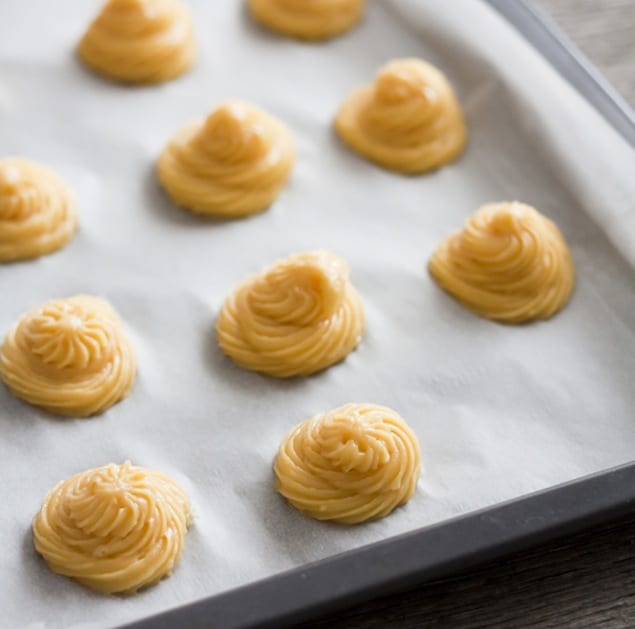
Here is the recipe that makes it fairly simple to prepare and guarantees a perfect choux pastry. The recipe is inspired by this one.
Print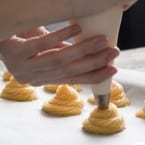
How to make a perfect choux pastry
- Total Time: 40 minutes
- Yield: Approximately 20 pastries
Description
Master the art of choux pastry with this simple recipe, perfect for creating light and airy eclairs, profiteroles, and more.
Ingredients
- 1 cup (250 ml) water
- 1/2 cup (125 ml) vegetable or sunflower oil
- 3 tsp (15 ml) sugar
- Pinch of salt
- 1 1/4 cups (150 g) all-purpose flour
- 1 cup (250 ml) eggs (about 4 medium-sized eggs)
Instructions
- In a medium saucepan, combine 1 cup of water, 1/2 cup of vegetable or sunflower oil, 3 tsp of sugar, and a pinch of salt. Heat the mixture over medium heat until it reaches a boil.
- Remove the saucepan from the heat and immediately stir in 5.2 oz of all-purpose flour. Use a wooden spoon to mix vigorously until the dough comes together and starts to pull away from the sides of the pan.
- Allow the dough to cool slightly, then add 1 cup of beaten eggs gradually, mixing well after each addition until the dough is smooth and glossy.
- Preheat your oven to 400°F (200°C). Line a baking sheet with parchment paper.
- Transfer the dough to a piping bag fitted with a large round tip. Pipe the dough onto the prepared baking sheet in small mounds or desired shapes, leaving space between each for expansion.
- Bake in the preheated oven for 20-25 minutes, or until the pastries are puffed and golden brown. Do not open the oven door during baking, as this can cause the pastries to collapse.
- Once baked, remove from the oven and allow to cool on a wire rack. The pastries should be crisp on the outside and hollow on the inside.
Notes
- Ensure the water-oil-flour ratio is correct for the perfect texture.
- Do not open the oven during baking to prevent collapse.
- Store baked pastries in an airtight container to maintain crispness.
- If the dough is too firm, it won’t puff properly; if too soft, it will spread too much.
- Prep Time: 15 minutes
- Cook Time: 25 minutes
- Category: Dessert
- Cuisine: French
Nutrition
- Serving Size: 1 pastry
- Calories: 80
- Sugar: 1
- Sodium: 20
- Fat: 5
- Carbohydrates: 7
- Fiber: 0
- Protein: 2
- Cholesterol: 35
If You Liked This Recipe, You’ll Love These
- Gateau Saint Honoré: How to Make the French Classic
- Chocolate Cardamom Cream Filled Profiteroles
- How to Make an Elegant Croquembouche
- How to Make Perfect Tart Dough with Yogurt
Frequently Asked Questions
How do I know if my choux dough has the right consistency?
Watch out for two failure modes: if the dough is too firm, the pastries won’t puff enough during baking; if it’s too soft, they will spread out too much. After adding 1 cup of beaten eggs gradually, the dough should be smooth and glossy — the water-oil-flour ratio is what determines the correct texture.
Why can’t I open the oven door while the pastries are baking?
Don’t open the oven during baking at 400°F (200°C). Choux pastry puffs because steam builds up inside the shells — opening the door releases that steam and causes the pastries to collapse before the structure has set.
Why does this recipe use oil instead of butter, which is more traditional in choux?
I use ½ cup of vegetable or sunflower oil rather than the butter in classic French choux. This is a ratio-focused recipe that “makes it fairly simple to prepare” — oil is more stable in solution and produces a reliably smooth, glossy dough.



Sugar is added, only a little bit to the pastry, it is all in the recipe
Without sugar we cannot prepare this recipe?