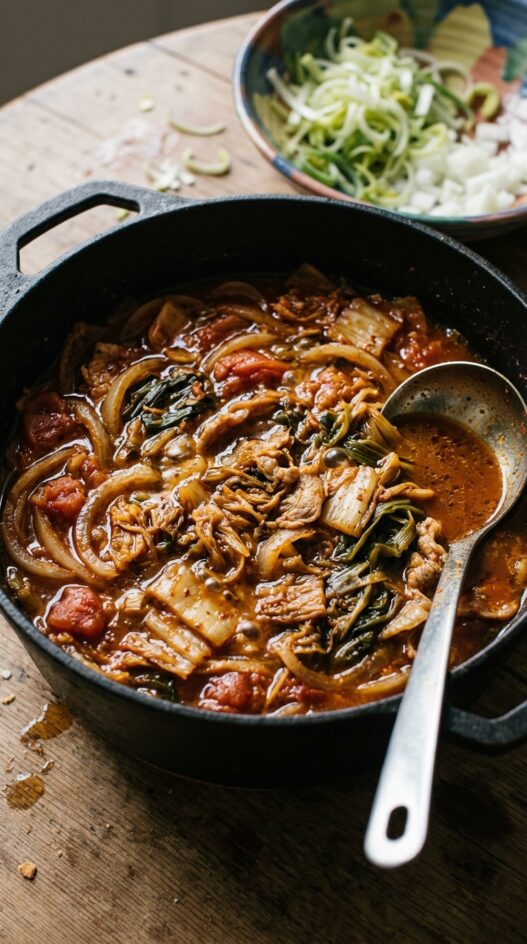
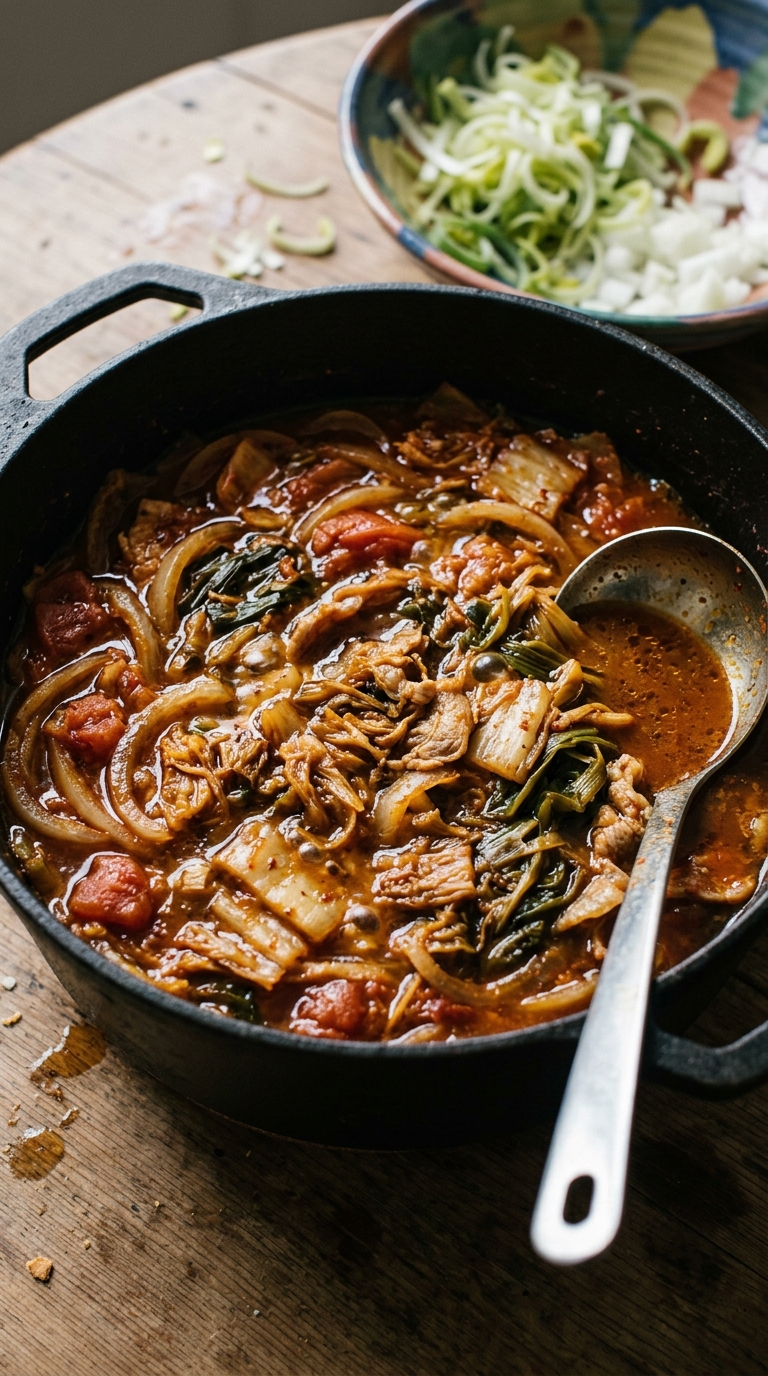
Although Kimchi can be almost instantly rejected by the uneducated westerner who is put off by the pungent spicy sour smell, it is a natural probiotic and a staple food in Korean cuisine. Koreans would not consider a meal to be complete without at least one variation of this spicy cabbage side dish, and there are so many varieties of the stuff that it would be impossible to say you had tried every kind. Radish, beans, spring onion or the standard crunchy napa cabbage all make fantastic accompaniments to Korean BBQ, rice dishes and in this article’s case, soup.
Kimchi making is a long process and generally families have both fresh and ‘old’ kimchi in their fridge. Old kimchi can be more than a year old, and during the winter, kimchi is made in huge vats on the side of the street and out the back of resturants after which it is transferred to large outside storage pots with heavy duty matching lids, and left to literally rot over the coming year. It is then rescued bit by bit to cook something wonderful or accompany something equally delicious.
Most modern Korean fridges have a kimchi container built into the design and when I first arrived, the only thing in the apartment fridge was a plastic container of the ‘old’ stuff. I didn’t understand at that point what value there was in that box. I believed that the previous occupant must have neglected to throw this evil smelling foul in the bin. I committed a sin that day and threw the whole thing out, container and all. How I cringe now! I really can’t get enough of it and the spicy refreshing cabbage makes me all warm inside. I am still not to keen on the raw stuff though.
Looking back through my photos, Kimchi is an omnipresent force, at birthdays, after work occasions, day trips, even on boat trips. This man was very friendly and in true Korean style he wanted to share his bounty with us foreigners. Too bad I was not prepared for the eye watering soju and a raw sour and spicy kimchi chaser!
Making your own kimchi is now unnecessary and supermarkets sell the stuff in value pack bags. I am sure it is readily available in most city Asian marts. The ingredients mixed in during the fermentation process include garlic, tiny shrimp, Korean hot pepper flakes and fish sauce. Needless to say then it makes a perfect spicy stock for the famous Korean soup or stew named Jjigae in Korean.
Print
Kimchi Jjigae
- Total Time: 20 minutes
- Yield: 2-4 servings
Description
A spicy and sour kimchi stew that invigorates your palate with its bold flavors. This versatile dish can be enhanced with various vegetables and proteins for a hearty meal.
Ingredients
- 1 onion, halved and finely sliced
- Olive or canola oil for frying
- 2 fistful portions of Korean cabbage kimchi, cut into small pieces with scissors
- 2-3 fistful portions of shredded leeks or other vegetables
- 1 firm tomato, diced
- Optional: extra shredded cabbage, bean sprouts, spinach, finely cut mushrooms, thick fatty pork pieces or tuna
Instructions
- Heat a deep frying pan or heavy soup pot over medium heat and add a splash of olive or canola oil.
- Add the finely sliced onion and fry until soft and translucent, about 5 minutes.
- Increase the heat to high and add the kimchi. Cook with the onions for 2-3 minutes, stirring occasionally, until the kimchi begins to brown and dry out slightly.
- Add the shredded leeks and diced tomato to the pot. Stir well to combine with the kimchi and onions.
- If using, add any optional ingredients such as extra cabbage, bean sprouts, spinach, mushrooms, pork, or tuna. Stir to combine.
- Reduce the heat to medium and let the stew simmer for about 10 minutes, allowing the flavors to meld together.
- Serve the stew hot, directly from the pot, and enjoy the spicy, sour flavors with your favorite side dishes.
Notes
- For a more wholesome stew, consider adding extra vegetables or proteins like pork or tuna.
- Traditionally served in a heavy pot, this stew is best enjoyed hot.
- Be cautious as it can be extremely hot when served.
- Store leftovers in an airtight container in the refrigerator for up to 3 days.
- Prep Time: 5 minutes
- Cook Time: 15 minutes
- Category: Soup
- Cuisine: Korean
Nutrition
- Serving Size: 1 bowl
- Calories: 200
- Sugar: 6
- Sodium: 800
- Fat: 12
- Carbohydrates: 18
- Fiber: 4
- Protein: 6
- Cholesterol: 0
If You Liked This Recipe, You’ll Love These
- Hearty Potato and Seafood Stew
- Ribollita – Tuscan Bread Soup
- Tteokbokki: Korean Spicy Rice Cakes
- Fried Rice with Kimchi and Pork Belly
Frequently Asked Questions
Does it matter whether I use fresh or old kimchi in this stew?
Korean households keep both fresh and old kimchi on hand — old kimchi can be more than a year old, fermented in large outdoor pots over winter. Old kimchi has a stronger, sourer flavour and is the traditional choice for Jjigae, where its acidity and funk create the soup’s characteristic punch. Fresh kimchi will produce a milder stew.
What optional proteins and vegetables does the recipe suggest?
I suggest thick fatty pork pieces or tuna as optional proteins, along with extra shredded cabbage, bean sprouts, spinach, and finely cut mushrooms. Add all optional ingredients after the kimchi, leeks, and tomato have combined, then let the stew simmer for about 10 minutes for the flavours to meld.
What makes this stew sour and spicy without adding chili paste separately?
Kimchi itself is fermented with garlic, Korean hot pepper flakes, tiny shrimp, and fish sauce — so when you cook the kimchi with the onion over high heat until it begins to brown slightly, those fermented seasonings become the stock base of the stew. No separate spice blend is needed.