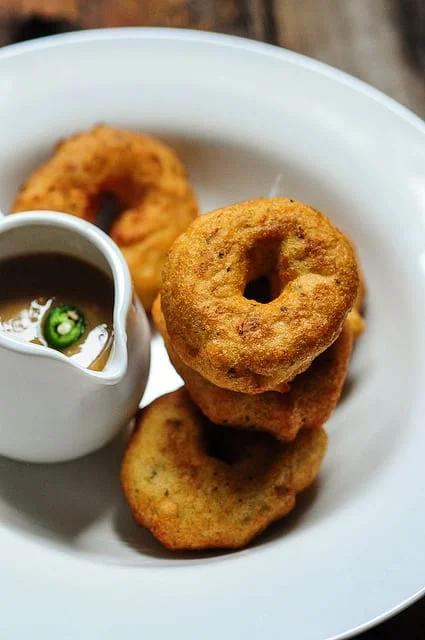

Medhu Vadai: South Indian Fried Lentil Donuts
- Total Time: 1 hour 15 minutes
- Yield: 8
Description
In Nagalakshmi Viswanathan’s book, this stands as one of the best South Indian breakfasts you can get.
Ingredients
- 1 cup (240 ml) of whole, skinned, urad dal
- 2 of green chillies, chopped
- 2 tsp of whole, black pepper
- 10-12 of curry leaves, torn roughly
- 2 tsp of salt (adjust to taste)
- 1 tsp of minced ginger (optional)
- 4 cups (960 ml) of oil, to deep fry, depending on the size of your pan
Instructions
- – Soak the urad dal for at least 45 mins in enough water.
- – Grind adding water by the tsp until you have a smooth, thick batter that falls off with reluctance as you drop it off a spoon.
- – Mix the rest of the ingredients (except oil) with the batter.
- – Heat oil until smoking point
- – Shape the vadai using wet hands into a donut shape (read notes)
- – Dunk into the hot oil. Take care not to over crowd the pan and also, regulate the heat to medium-low so that the insides of the vadai get cooked and the outside crisps up.
- – Drain and set aside.
Notes
- – Some people find it easier to do shape Medu Vada with one hand: Place the batter in the middle of your palm and form the hole with thumb of the same hand.
- Or, use the index finger of the other hand to form the hole.
- Others find it easier to use greased banana leaves or cling wrap to shape the vadai and then use a spatula to dunk into the oil.
- I am a one-hand-medhu-vadai-shaper, but it did take quite a bit of practice.
- Prep Time: 1 hour
- Cook Time: 15 mins
- Category: Breakfast
- Cuisine: South Indian
Nutrition
- Serving Size: 2 vadai
- Calories: 180
Medhu vadai are lovely savory doughnuts, and they are eaten for breakfast across South India, usually next to a bowl of sambar (stew) or a smear of coconut chutney. They have the same shape as a doughnut, hole in the middle and all, but they are made of ground lentils, and they are savory, with a crisp shell, but cloud-soft inside.
To make them, you start by soaking a cup of urad dal, the skinned white lentil, for at least forty five minutes. Then grind it, adding water a teaspoon at a time, until you have a thick batter that falls off a spoon reluctantly. That reluctance is the thing to aim for, because if you add too much water, the vadai drink oil and turn heavy and greasy.
Next, mix in chopped green chili, plenty of crushed black pepper, torn curry leaves, salt and a little minced ginger. No spice paste, no tempering, nothing else.
Then we get to the shaping, which is the only fiddly part. Wet your hands, take a ball of batter, flatten it on your palm and poke a hole through the middle with a thumb. If the hole keeps closing up on you, do not fight it. A plain flat disc fries perfectly well and tastes exactly the same, and half the vadai sold at roadside stalls have lost their holes by the time they reach you anyway, so you're in good company.
Keep the heat medium-low. The middles need time to cook through before the outsides take on color. Eat them hot, within minutes, with coffee, or if you serve them for a late lunch, a cold beer is a great match too.
If You Liked This Recipe, You’ll Love These
- Rava (Khara) Bath Recipe: Perfecting the South Indian Breakfast Classic
- Daal Poori: Lentil Stuffed Deep Fried Indian Bread
- Tikka Masala Spiced Chickpeas and Cauliflower
- Mangú – Mashed Plantains
Frequently Asked Questions
How do I know the urad dal batter has the right consistency?
Grind the soaked urad dal, adding water by the teaspoon, until you have a smooth, thick batter that falls off a spoon only with reluctance. It should not be watery or it won’t hold its donut shape during frying.
What is the best way to shape the donut hole without it falling apart?
I use three approaches depending on what works for you: (1) one-hand method — place batter in the center of your palm and form the hole with the thumb of the same hand; (2) two-hand method — use the index finger of your other hand to push the hole through; (3) tool method — use greased banana leaves or cling wrap to shape the vadai, then use a spatula to lower it into the oil. I use the one-hand method, but it does take practice.
Why cook on medium-low heat rather than high?
Regulate the heat to medium-low so that the insides of the vadai cook through while the outside crisps up. High heat would brown the exterior before the dense urad dal batter is cooked in the center.