
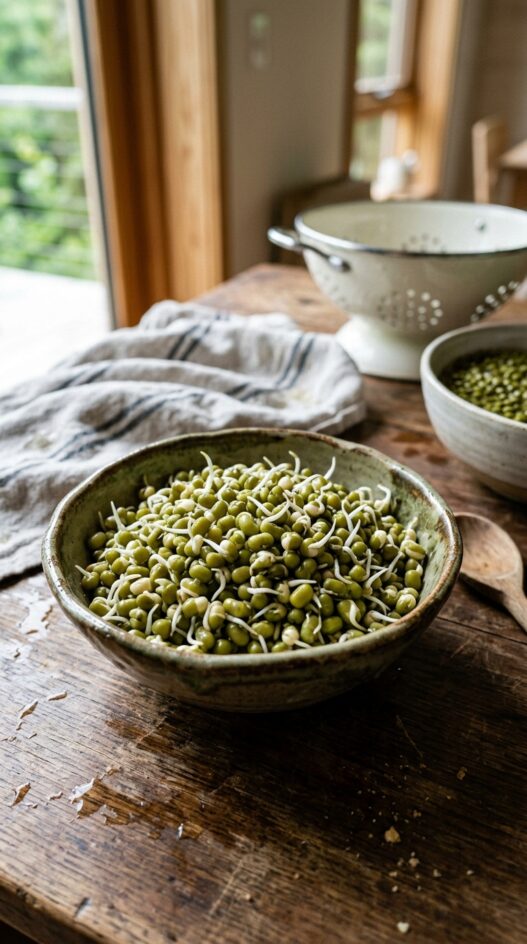
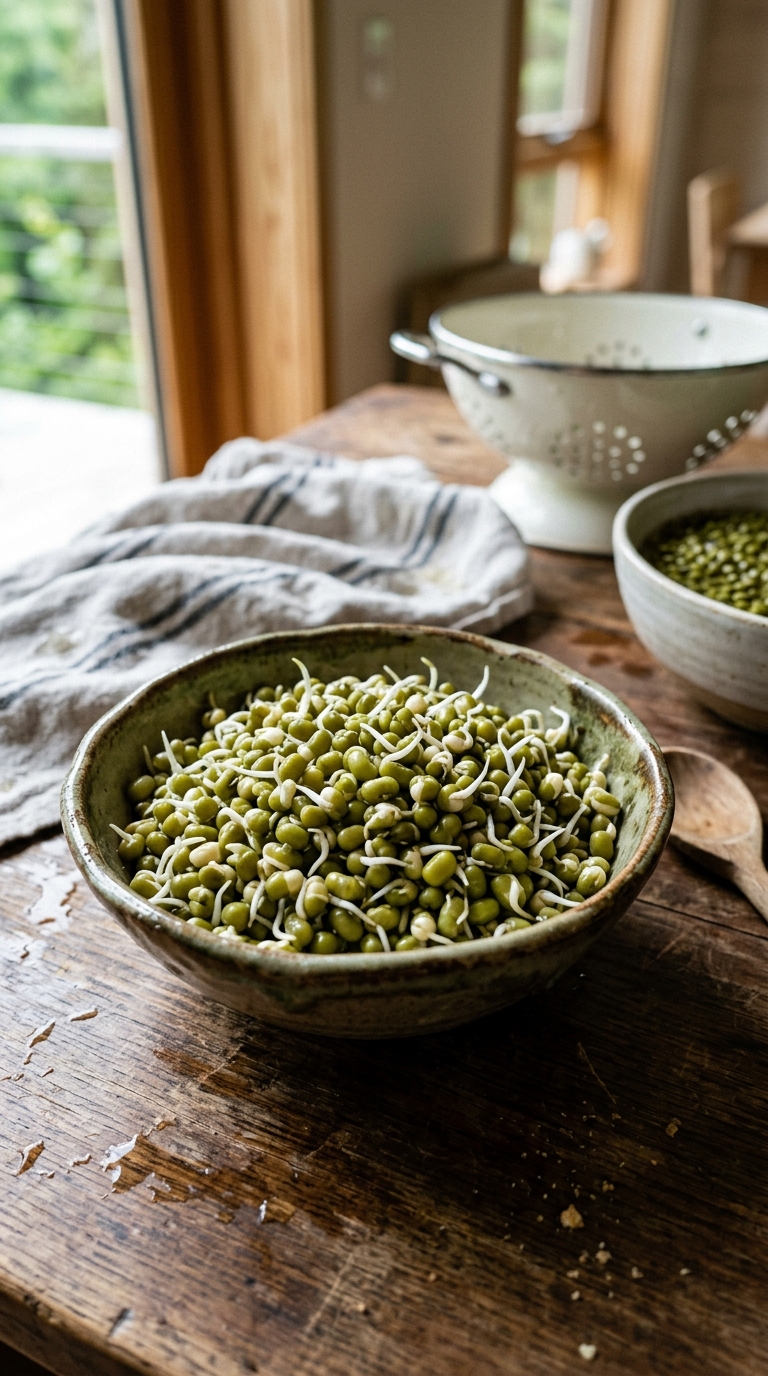
I grew up watching my grandmother and mother germinate mung bean, which are also called moong dal. The sprouted lentils are really hearty and delicious on their own or thrown into salads. You automatically feel healthier just consuming them.
The germination process is quite easy, but for some reason it took me time to try it out myself. I think watching a hard lentil actually grow a sprout may have made me think it was harder than it is. Now that I’ve done it once, it doesn’t seem so daunting after all.
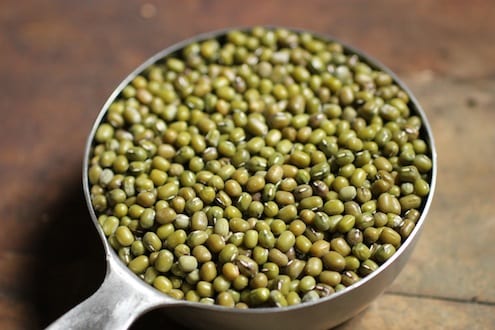
This is what moong dal looks like before you start the process.
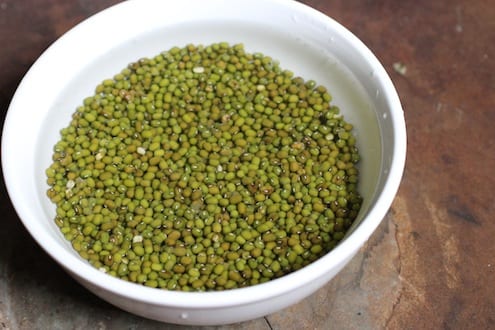
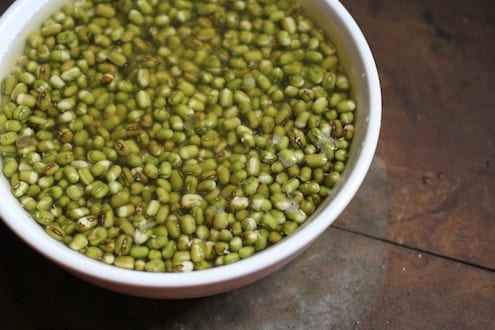
I soaked these lentils in water overnight, making sure they were completely submerged.
The next morning, I found that they had absorbed much of the water and plumped up like this.
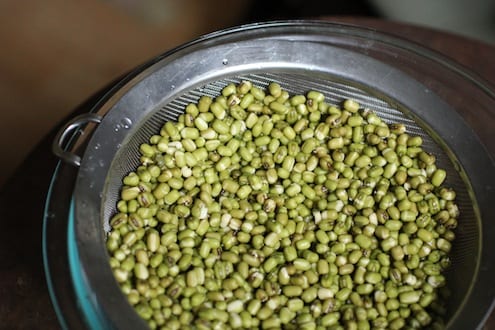
Before I went to work, I just drained the dal in a colander and let it sit there until I came home.
Then I put the dal in a covered corning ware dish in my oven with the light on, and the next morning I had these sprouts! Success!
Print
How To Sprout A Mung Bean
- Total Time: 24 hours 5 minutes
- Yield: 8 servings
Description
Learn how to easily sprout mung beans at home for a nutritious addition to salads or as a healthy snack.
Ingredients
- 1 cup (240 ml) mung bean or moong dal with green skins
- Water, enough to submerge the beans
Instructions
- Rinse the mung beans thoroughly under cold water to remove any debris.
- Place the rinsed mung beans in a large bowl and cover them with water, ensuring they are completely submerged. Soak the beans overnight, or for at least 8-12 hours.
- After soaking, drain the water using a colander. Allow the beans to sit in the colander for a few hours to ensure they are well-drained.
- Transfer the drained mung beans to a covered dish or container. Place the container in a warm, dark place, such as an oven with the light on, for 12-24 hours.
- Check the beans after 12 hours to see if they have sprouted. If not, leave them for a few more hours until sprouts appear.
- Once sprouted, rinse the mung beans again and they are ready to be used in salads or as a snack.
Notes
- Ensure the beans are fully submerged in water during soaking.
- Use a warm, dark place for sprouting, like an oven with the light on, to encourage growth.
- Sprouted mung beans can be stored in the refrigerator for up to a week.
- They are great in salads or as a standalone snack.
- Prep Time: 5 minutes
- Cook Time: 24 hours
- Category: Basics
- Cuisine: Indian
Nutrition
- Serving Size: 1/2 cup
- Calories: 31
- Sugar: 1 gram
- Sodium: 2 mg
- Fat: 0 grams
- Carbohydrates: 6 grams
- Fiber: 2 grams
- Protein: 2 grams
- Cholesterol: 0 mg
If You Liked This Recipe, You’ll Love These
- Strawberry Spring Salad
- Mangú – Mashed Plantains
- Cauliflower with Chimichurri and Tahini
- Eggplant and Cauliflower Curry with Tofu
Frequently Asked Questions
Why does the sprouting container go into the oven with just the light on?
I place the drained mung beans in a covered dish in an oven with the light on overnight — not the heating element, just the bulb. This creates a consistently warm, dark environment (the light provides gentle warmth without cooking the beans) that encourages germination. My grandmother and mother used the same method, and I had sprouts by the next morning.
Do I need to use mung beans with their green skins on, or will hulled moong dal work?
Use 1 cup of mung bean or moong dal with green skins. The whole bean with intact skin is what sprouts — hulled (split, yellow) moong dal has had the seed coat removed and won’t germinate into sprouts the same way.
How will I know if the sprouts have grown enough to use?
Check after 12 hours; if no sprout tail has appeared yet, leave them for a few more hours. Once sprouted, you can store them in the refrigerator for up to one week — they work beautifully eaten raw in salads or as a standalone snack.








A good write up re. Germinating mung bean to produce mung sprouts.
You have omitted one important step before the actual proces and that is
to wash the mung thoroughly well to remove all the dirt while it is being packed
and shipped all over the world.
Thank you.
Kind regards
Dr Jay
That is fantastic I will begin now to do this, thank’s very very much.and is delicious. love it.