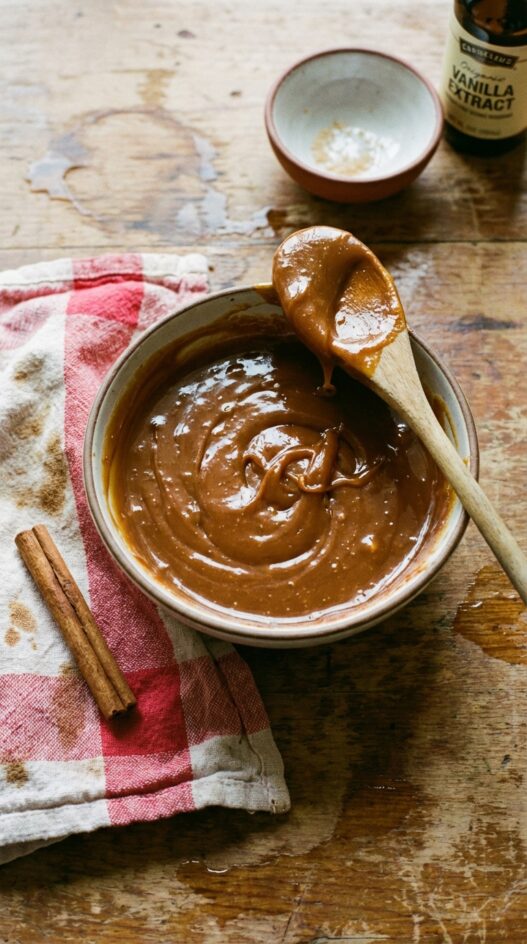
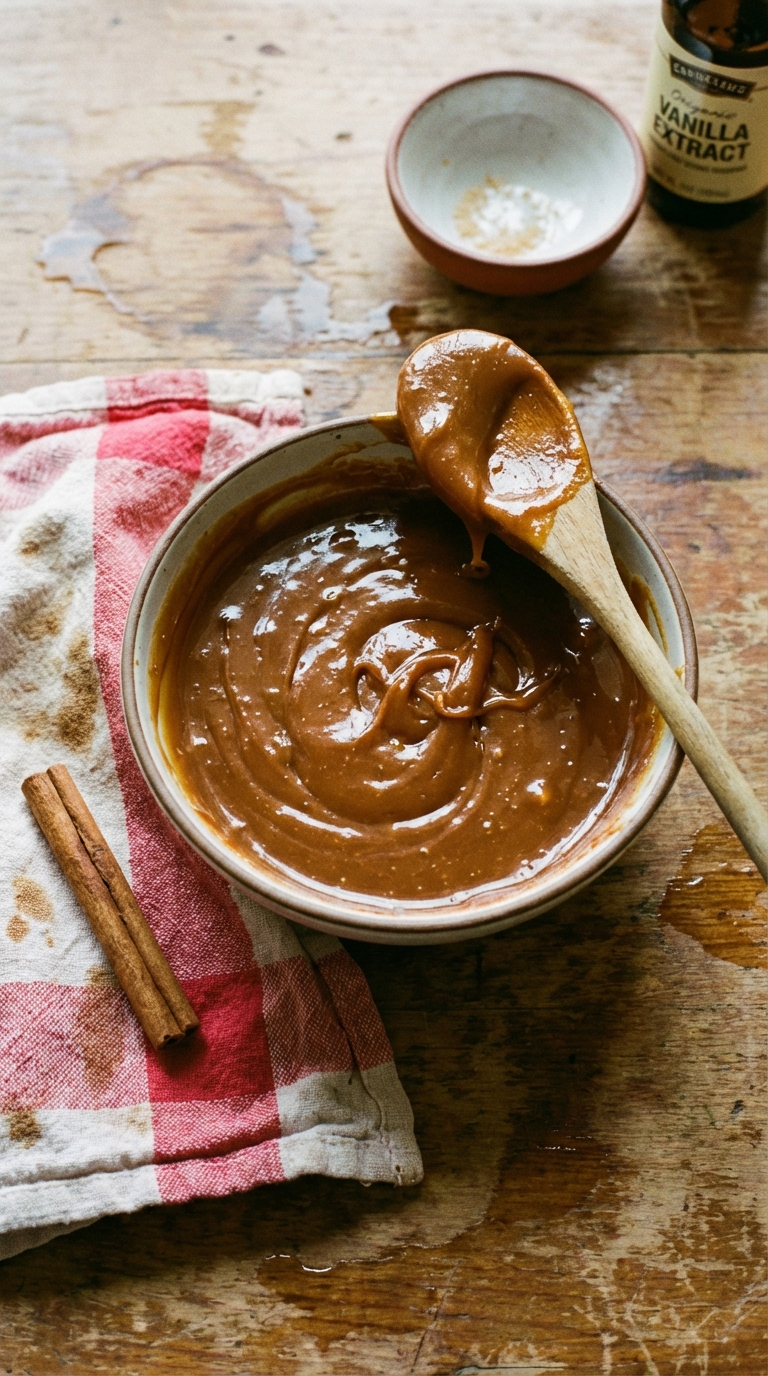
Dulce de leche (milk jam/confiture de lait) is a thick, creamy caramel substance made from cooked milk and sugar. It can be thick and spreadable, or more liquid and pourable. It features heavily in South America but is still a bit niche in Ireland.
The cooking process needs a bit of a trial and error approach. I looked to both Smitten Kitchen and Farmette’s recipes, which cautioned against both too little and too much heat. At first I erred on the side of caution and kept mine very low. I’m still getting the hang of temperature control on my new gas stove. After a while I realised nothing was happening and turned up the heat. Soon the colour started to change and things started to happen. Something just above a gentle simmer seems to be the best approach. This recipe doesn’t make a huge amount considering the amount of milk involved, you end up with about 300ml or so of dulche de leche. The length of cooking time depends on the consistency you want, whether it is pouring and a bit liquid, or thick and slightly jelly-like.
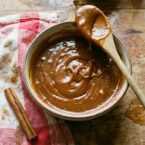
Homemade Dulce de Leche
- Total Time: 155 minutes
- Yield: Makes 1 cup
- Diet: Omnivore
Description
Rich, creamy caramel made from simmered milk and sugar. A simple treat perfect for desserts or spreading!
Ingredients
- 1 liters (4 cups) full fat milk
- 300g caster sugar
- 1/2 tsp baking soda/bicarbonate of soda
- 1/2 tsp salt
- 1 tsp vanilla extract
- 1 cinnamon stick
Instructions
- Pour the milk into a large, heavy-bottomed pot. Use one that is at least twice the volume of the milk because it will bubble up when it boils.
- Add the sugar, baking soda, salt, vanilla extract, and cinnamon stick to the milk. Stir to dissolve the sugar.
- Place the pot over medium heat and bring to a boil, watching carefully. The milk will foam up rapidly when it hits a boil. Stir and lower the heat immediately to prevent it from boiling over.
- Reduce the heat to medium-low so the mixture maintains a gentle, steady simmer. Stir every 5-10 minutes with a wooden spoon, scraping the bottom and sides of the pot to prevent scorching.
- After about 45 minutes the mixture will turn a pale tan color and reduce noticeably. Continue cooking and stirring. After about 1.5 hours it will become a deeper golden caramel color.
- Cook for a total of 1.5 to 2.5 hours. The dulce de leche is done when it turns a rich amber-brown color, coats the back of the spoon thickly, and a drop placed on a cold plate holds its shape without running.
- Remove the cinnamon stick. Let the dulce de leche cool in the pot for 15 minutes, then transfer to a clean glass jar. It will thicken further as it cools. Store in the refrigerator for up to one week.
Notes
- For a smoother dulce de leche, use a fine-mesh sieve to strain out the cinnamon stick and any solids before cooling.
- If you don’t have caster sugar, granulated sugar can be used, but it may take slightly longer to dissolve.
- Store the cooled dulce de leche in an airtight container in the refrigerator for up to 2 weeks for optimal freshness.
- Prep Time: 5 minutes
- Cook Time: 150 minutes
- Category: Dessert
- Method: Simmering
- Cuisine: Latin American
Nutrition
- Serving Size: 2 tablespoons
- Calories: 150
- Sugar: 25
- Sodium: 20
- Fat: 8
- Saturated Fat: 5
- Unsaturated Fat: 3
- Carbohydrates: 20
- Protein: 2
- Cholesterol: 10
Frequently Asked Questions
What is the safest way to make dulce de leche on the stovetop?
Cook whole milk with sugar, baking soda, salt, vanilla, and a cinnamon stick in a large, heavy-bottomed pot over medium heat. Watch closely as it comes to a boil, since it foams up fast, then lower the heat to a gentle simmer. Stirring every 5 to 10 minutes and scraping the bottom and sides keeps it from scorching, and after about 1.5 to 2.5 hours it turns into a deep amber dulce de leche.
How do I know when it has cooked enough and will not be too thin?
It should coat the back of a spoon thickly and when you drag a finger through it on the spoon, the line should hold. It continues to thicken as it cools, so pull it slightly before you think it is done.
How long does homemade dulce de leche keep and how should I store it?
Transfer it to a clean jar and refrigerate for up to two weeks. Press a piece of plastic wrap directly onto the surface before sealing to prevent a skin from forming.