
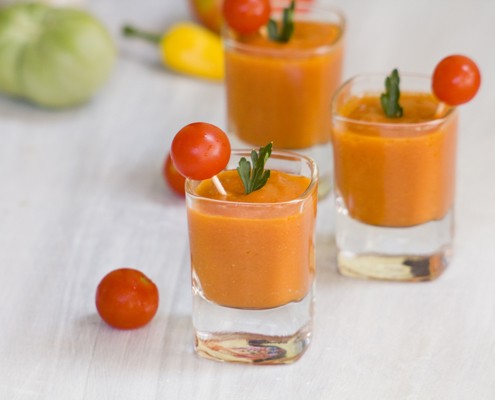
A huge chapter could be written about the origins of this refreshing meal, but right now I’m going to keep it simple and just write that the origin is Spanish. A few weeks ago I came across some interesting names for the gazpacho, such ad liquid salad or cold vegetable stew…Let’s just call it cold soup, for the sake of keeping it appetizing. Because that’s what this soup really is-appetizing. And refreshing. And beyond healthy, since you get a bowl of fresh, uncooked vegetables.
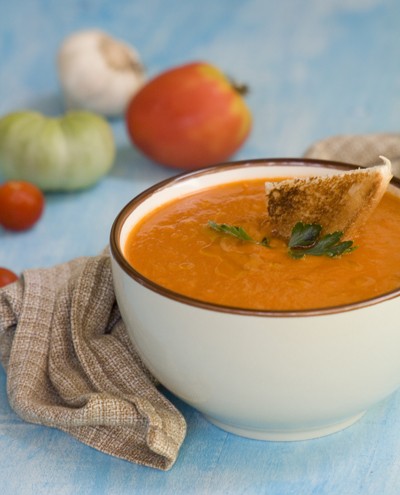
Originally, gazpacho was made in white versions, with garlic being the main component. Old bread was soaked in vinegar, olive oil, water and spices and integrated into the soup. However, you can separate the bread, simply toast it or cut into cubes and toast them, then sprinkle over the soup. Today, red gazpacho is known throughout the world and its main star is, of course, tomato. Add some cucumbers and peppers, garlic and shallots, salt, olive oil, a bit of vinegar and toasted bread and you get a delicious tomato soup. Of course you can play a bit and add celery and carrots, some fresh basil or mint, even tart apples, but don’t get too distracted-tomato has the leading role. You can use onion instead of shallots, but I prefer the later since we’re dealing with raw vegetables here and shallots have more subtle aroma.
If you want to make elegant version or small shots for the party guests, serve gazpacho in tiny glasses or cocktail glasses with some fresh shrimp tales.
Print
Gazpacho
- Total Time: 30 minutes
- Yield: 4 servings
Description
This refreshing Spanish gazpacho is a cold soup made with fresh summer tomatoes, cucumbers, and peppers, perfect for a healthy and appetizing meal.
Ingredients
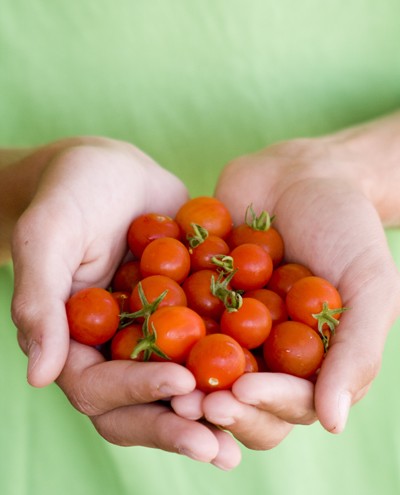
- 2 lb (1 kg) fresh tomatoes
- 2 peppers
- 1 cucumber
- 2 shallots
- 2 garlic cloves
- Salt, to taste
- Pepper, to taste
- Olive oil
- 1 tsp vinegar
- 2 slices of toasted white bread
- Some fresh chopped parsley
Instructions
- Wash the tomatoes and dip them in boiling water for several minutes. Remove, cool under cold water, and peel the skins off.
- Peel the cucumber, remove the seeds, and chop into small pieces.
- Finely chop the peppers, shallots, and garlic.
- Combine the tomatoes, cucumber, peppers, shallots, and garlic in a blender or food processor.
- Add salt, pepper, olive oil, and vinegar to the mixture. Blend until smooth.
- Chill the gazpacho in the refrigerator for at least 2 hours before serving.
- Serve cold, garnished with toasted bread cubes and fresh chopped parsley.
Notes
- For a smoother texture, strain the gazpacho after blending.
- You can add celery, carrots, fresh basil, or mint for additional flavors.
- Serve in tiny glasses for an elegant presentation, optionally with fresh shrimp tails.
- Prep Time: 20 minutes
- Cook Time: 10 minutes
- Category: Soup
- Cuisine: Spanish
Nutrition
- Serving Size: 1 cup
- Calories: 150
- Sugar: 10
- Sodium: 300
- Fat: 7
- Carbohydrates: 22
- Fiber: 4
- Protein: 3
- Cholesterol: 0
If You Liked This Recipe, You’ll Love These
- Pappa al Pomodoro – Rustic Tuscan Tomato and Bread Soup
- Chill Out with Watermelon Gazpacho
- Summer Fresh Apricot Salsa
- Chef Thomas Keller’s English Pea Soup
Frequently Asked Questions
Why does this recipe peel the tomatoes before blending?
I dip the tomatoes in boiling water, then cool them under cold water before peeling — this standard blanch-and-shock method loosens the skins in seconds without cooking the flesh, giving the finished gazpacho a smoother texture without any chewy skin pieces.
Why does the article prefer shallots over onion?
Since all the vegetables are raw, I prefer shallots because they have a more subtle aroma than onion. Raw onion can easily overpower a cold soup; shallots add depth without the sharp bite.
Does the gazpacho need to chill before serving?
Yes — refrigerate for at least 2 hours before serving. This is essential both for temperature and for flavor development, as the garlic and vinegar mellow and integrate during the chill time. Serve cold, topped with toasted bread cubes and fresh chopped parsley.
What is the original role of the bread in gazpacho?
Historically, old bread was soaked in vinegar, olive oil, water, and spices and blended directly into the soup as a thickener — this is how the original white gazpacho was made. Today I toast the bread and serve it as a garnish on top rather than blending it in, but both methods are traditional.


I love gazpacho and I have a friend who is s chef that posted this sweet easy summer melon gazpacho. I’ve made it once already and my family cannot wait for it again. summer melon gazpacho
thanks
Ronald, Joan, thank you both!
I absolutely love gazpacho in the summer, and this looks stunning.
Lovely presentation!