
Egg Bhajia: Indian Spiced Egg Fritters
- Total Time: 35 mins
- Yield: 4
Description
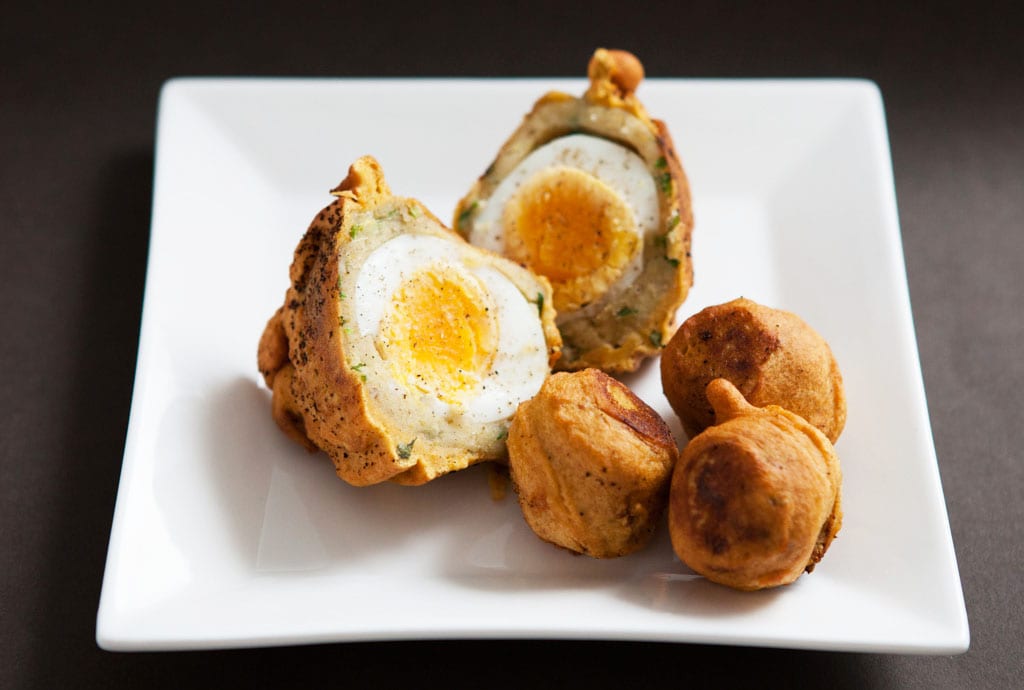
This is a vegetarian version of a scotch egg with a layer of mashed potatoes between the crispy crust and the hard boiled egg.
Ingredients
- 850 grams waxy red potatoes - peeled and cut into large wedges
- 4 eggs
- 2 cloves garlic - crushed
- 3 small green chillis - finely chopped
- 10 grams root ginger - peeled and grated
- 4 tsp coriander-cumin powder
- 1/2 tsp garam masala
- 1 tsp salt
- pinch of turmeric
- 2 tbsp (30 ml) lemon juice
- 1 tsp sugar
- 15 grams coriander - chopped
- 2 tbsp sultanas (optional)
- 1 tsp sesame seeds (optional)
- Light tasting vegetable oil for frying
For the batter
- 100 grams gram flour
- 1/4 tsp chilli powder
- 1/4 tsp black pepper - finely ground
- 1/4 tsp salt
- pinch of turmeric
- 100 millilitres water
Instructions
- Boil the potatoes for twenty minutes or until cooked.
- Meanwhile hard boil the eggs. When they are done immediately run cold water over them as this makes them easier to peel and prevents a black ring forming around the yolk.
- Once the eggs are cool enough to handle, peel and leave to one side.
- Mash the potatoes in a large bowl. I find the best results are obtained using a potato ricer or vegetable mill but use whatever method you prefer.
- Add the garlic, chopped green chillies, ginger, coriander-cumin powder, garam masala, salt, turmeric, lemon juice, sugar, coriander, sultanas and sesame seeds to the mashed potato. Mix well. I always taste the potato at this stage ostensibly to check the seasoning but in reality because I love the flavours.
- Heat the vegetable oil in a large pan. Caution: Hot oil is dangerous, do not leave unattended.
- Meanwhile, mix together all of the batter ingredients in a bowl to create a smooth batter. It should flow freely off the spoon but be thicker than water.
- Take one of the eggs and cover it with the potato mixture. The potato should be evenly distributed around the egg with a depth of approximately one centimetre.
- Test the heat of the oil by placing a drop of batter into the pan. The batter should sizzle and float to the surface immediately.
- If the oil is hot enough, add a tsp of the hot oil to the batter. Stir well.
- Dip the potato-covered egg in the batter.
- Place the battered, potato-covered egg in the pan and fry until golden brown.
- Place the egg bhajia on a piece of kitchen roll to drain.
- Repeat steps 8, 11, 12 and 13 with the remaining eggs.
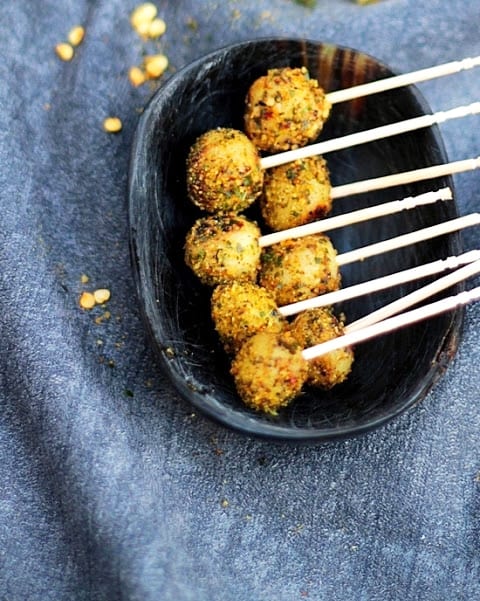
- If you have any potato mixture left, roll it into small balls the size of a golf ball, dip them in the batter and fry as above to create potato bhajia.
- Serve hot with tomato sauce or garlic chutney.
- Prep Time: 15 mins
- Cook Time: 20 mins
- Category: Main
- Cuisine: Indian
Nutrition
- Serving Size: 1 bhajia
- Calories: 370
If You Liked This Recipe, You’ll Love These
- Warm Asparagus Salad with Bacon, Egg, and Hazelnuts
- Homemade Egg Drop Soup
- Grilled Tofu Tacos with Pickled Radishes
- Smokey Sweet Potato and Black Bean Tacos
Frequently Asked Questions
What is an egg bhajia?
An egg bhajia is a vegetarian take on the British scotch egg. A hard-boiled egg is encased in a layer of spiced mashed potato — seasoned here with garlic, green chillies, ginger, coriander-cumin powder, garam masala, and lemon juice — then dipped in a gram flour batter and deep-fried until golden brown.
Why does the recipe tell you to run cold water over the hard-boiled eggs immediately?
Cool the eggs under cold running water as soon as they are done because it makes them easier to peel and prevents the grey-green ring that can form around the yolk when eggs continue to cook from residual heat. Both problems make the finished bhajia less appealing when sliced.
How do I know the frying oil is hot enough before I add the bhajia?
Drop a small amount of batter into the oil — if it sizzles immediately and floats to the surface, the oil is ready. I also add 1 tsp of the hot oil into the batter bowl just before coating, which helps the batter adhere and fry more evenly.
What can I do with leftover potato mixture?
Roll any remaining spiced potato into golf ball-sized spheres, dip them in the gram flour batter, and fry them the same way to make potato bhajia as a bonus side dish.