
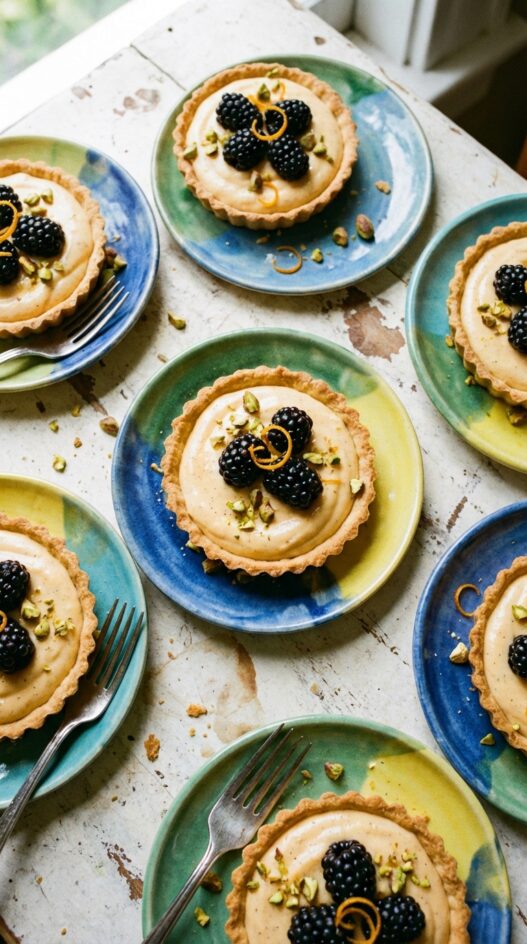
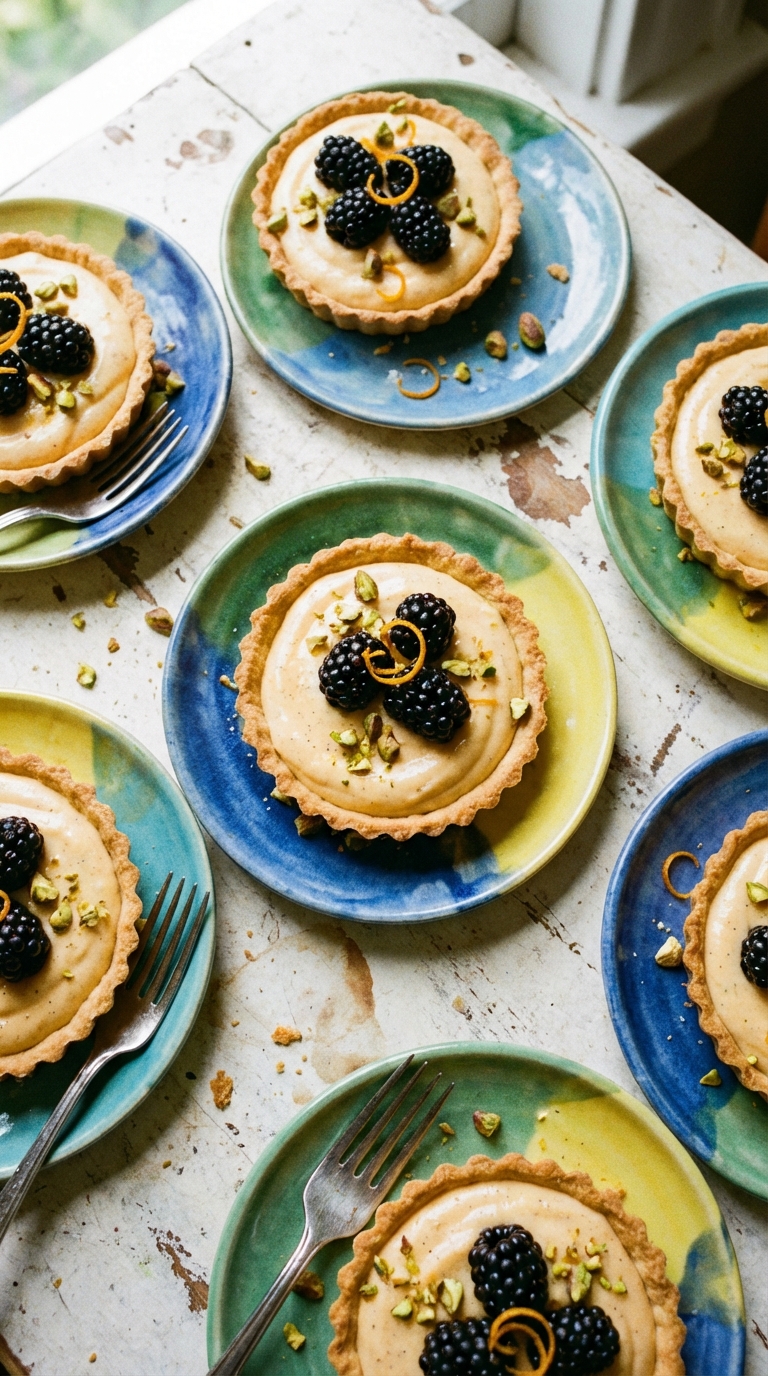
I learned to blind bake tart shells from a pastry chef who treated pie weights like a personal insult. She used dried beans, saved in a jar labelled ‘tart beans,’ reused for years. This recipe asks for the same thing: beans, rice, or pie weights pressed into foil-lined shells, baked at 400°F (204°C) until golden, then five to seven more minutes without the weights.
I have made simpler tarts. I have also made tarts that tasted simpler. The extra hours here, the steeping of a split vanilla bean in milk and cream, the tempering of eggs and cornstarch, the overnight chill, show up in the first bite. Butter, cream, vanilla, orange zest, and blackberries piled on top. Worth the afternoon.
Tips for Making Blackberry, Orange and Vanilla Cream Tartlets
Chill the dough thoroughly
The dough needs at least two hours in the fridge, or overnight. Under-chilled dough shrinks during blind baking and pulls away from the sides of the pan.
Take it out 15 minutes before rolling. Cold dough cracks if you force it.
Temper the eggs carefully
When the milk-cream-sugar mixture simmers, pour it slowly into the egg-cornstarch bowl while whisking constantly. Dump it in too fast and you get scrambled eggs in your pastry cream.
Strain the pastry cream after cooking to catch any bits of cooked egg. Do not skip it.
Prevent soggy shells
The instructions mention spreading a thin layer of apricot jam on the baked shells before filling. This creates a barrier between the wet cream and the crisp pastry.
Fill the shells as close to serving time as possible. Assembled tartlets soften within a few hours.
Blackberry, Orange and Vanilla Cream Tartlets
- Total Time: 90 minutes
- Yield: Makes 12
- Diet: Omnivore
Description
Sweet and tart blackberry filling in a buttery vanilla pastry cream tart shell. Perfect for a special occasion or afternoon tea.
Ingredients
- 14 oz (400 g) unsalted butter
- 1 tbsp white distilled vinegar
- 3 oz (100 g) granulated sugar
- 2/3 cups (160 ml) water
- 1 lbs (665 g) all purpose flour
- 1 tsp salt
- 1 cups (237 ml) milk
- 1 cups (237 ml) heavy cream
- 1/4 cups (60 ml) cornstarch
- 2 eggs
- 4 egg yolks
- 2 oz butter
- 1/2 vanilla bean
- 1 orange zest
- Fresh blackberries, for topping
- Chopped pistachios, for topping
Instructions
- Crust
- Remove butter from the fridge 20 minutes before mixing.
- In a small bowl, combine sugar, water, and vinegar; stir to dissolve the sugar. Refrigerate for 10 minutes, then stir again to completely dissolve the sugar.
- In a food processor, pulse flour and salt to combine. Add butter and pulse 3–4 times until butter is cut in and evenly dispersed. You should have visible chunks of butter.
- Pour mixture into a large bowl; make a well in the center. Pour the vinegar-water mixture into the well; gently mix into the flour with a fork. When liquid is evenly dispersed, dump dough onto a clean surface and knead gently until it forms a cohesive ball.
- Cut the dough in half and shape each half into a disc about 1/2–3/4 inch thick. Wrap in plastic wrap and chill for at least two hours, or overnight. Take dough out of the fridge about 15 minutes before rolling.
- Cut each disc in half, roll into a 1/8-inch-thick square, and cut into four pieces. Place each piece in a tart mold. Roll dough from the center outward, turning 30 degrees after each roll. Carefully move the dough to your tart pan and press into all corners, pinching off the excess.
- Dock with a fork and freeze for 20 minutes. Preheat oven to 400°F (204°C). Place tin foil over tart shell, pressing it down, and fill with beans, rice, or pie weights. Blind bake for 15 minutes, flipping halfway through. Remove weights and foil; bake for another 5–7 minutes, until golden brown. Let cool completely.
- Cream
- In a medium saucepan, heat milk, 1/2 cup cream, and vanilla bean pod (split and scraped). Bring to a boil, remove from heat, cover, and let steep for 20 minutes. Strain, then return to burner. Add sugar and bring to a boil.
- While heating, combine eggs, yolks, cornstarch, and remaining 1/2 cup cream in a medium bowl. Whisk until smooth.
- When the cream/sugar mixture simmers and the sugar is dissolved, temper into the egg mixture, whisking constantly. Return to the saucepan and cook over medium-low heat, whisking constantly, until thickened.
- Bring to a boil, remove from heat, and immediately strain to remove any scrambled eggs. Whisk in butter and orange zest and chill for about 4 hours or overnight.
- Tart Assembly
- Pipe pastry cream into each tart shell. Arrange blackberries on top, then add chopped pistachios and more orange zest.
- For tarts made ahead, spread a thin layer of apricot jam onto the pastry crust before filling to prevent sogginess.
Notes
- For a richer flavor, use high-quality vanilla bean paste instead of extract in the pastry cream.
- To prevent the tart shells from shrinking during baking, chill the dough thoroughly and pre-bake them with pie weights.
- Leftover tartlets can be stored in the refrigerator for up to 2 days; cover with plastic wrap to maintain freshness.
- Prep Time: 60 minutes
- Cook Time: 30 minutes
- Category: Dessert
- Method: Baking
- Cuisine: French-Inspired
Nutrition
- Serving Size: 1 tartlet
- Calories: 350
- Sugar: 25
- Sodium: 100
- Fat: 20
- Saturated Fat: 12
- Unsaturated Fat: 5
- Carbohydrates: 40
- Fiber: 2
- Protein: 4
- Cholesterol: 100
Frequently Asked Questions
Why does the dough need to chill for two hours?
Chilling solidifies the butter in the dough, which prevents shrinking during blind baking. Under-chilled dough pulls away from the sides of the tart pan as it bakes. Overnight in the fridge works even better.
Can I skip the blind baking step?
No. The pastry cream is too wet to bake inside raw dough. Without blind baking, the crust stays pale and soggy under the filling. Use dried beans, rice, or pie weights to hold the dough in shape during the first 15 minutes.
How far ahead can I make these tartlets?
Bake the shells and make the pastry cream up to a day ahead. Store the shells in an airtight container at room temperature and the cream covered in the fridge. Assemble no more than a few hours before serving, as the shells soften over time.


Way fancier than the effort and so pretty.
Steeping a whole split vanilla bean in the milk sold me instantly. Making these for my daughter’s birthday and they look straight out of a bakery window, I am thrilled.
I always dreaded blind baking until I started using dried beans like you describe, total lifesaver for me. Thank you for making it sound so doable!
Blackberry and orange together. HEAVEN.
The pastry chef who treated pie weights like a personal insult is officially my spirit animal, because I have a jar of tart beans sitting in my cupboard too. Blind baked these until golden, did the five extra minutes without the weights, and the steeped vanilla cream was worth every single second of fuss. Absolutely delicious.