
Fourteen years ago I didn’t know anything about bacalhau. Before moving to Brazil, cod to me was fish sticks. During our first Christmas together I was baffled by my soon-to-be-husband getting misty when he mentioned his mother was making bacalhau. Suppressing my secret jones for a baked ham, I remained open-minded, and looked forward to learning a new tradition. Since that first Christmas, I have come to appreciate the many forms bacalhau takes in Brazil, especially during the holidays.
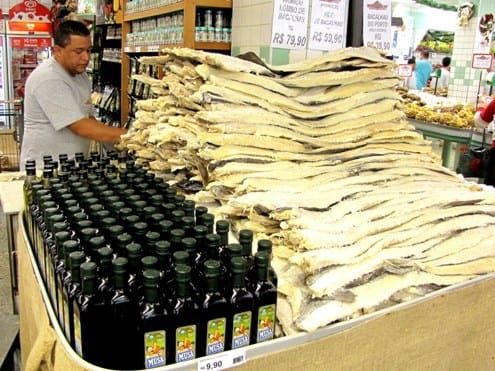
Bacalhau, staple to the Vikings, is oddly a big part of Brazilian culture. Supermarkets offer stacks of salted bacalhau all year long. During the holidays the stacks just get taller. In his hugely popular variety show during the 70s and 80s, way before David Letterman gave out prime cuts of beef, Chacrinha, a maverick of Brazilian TV, used to throw bacalhau to his audiences. Here’s a clip. Why, with an enormous coastline and delicious fresh fish available in so many parts of Brazil, is dried, salted cod so popular? In a word, tradition.
Here is a quick history of bacalhau: Humans have been drying cod for later consumption at least for over a thousand years. Icelandic Vikings did it without salt, leaving the fish to dry out in the sun, to be consumed later on long sea voyages. The Basques started salting cod about a thousand years ago, turning into an even more durable product, perfect for trading, becoming an import part of the Mediterranean table. In Spanish it is called bacalao and in Italian baccalà. However it was the Portuguese that brought bacalhau to Brazil. Colonization also brought the Catholic Church’s many days of of meatless menus, so bacalhau became a favorite throughout the year. When the Portuguese Court moved to Brazil in the beginning of the 19th century bacalhau went from practical to fashionable. All the great tables served a form of bacalhau feeding the imaginations of chefs and homemakers ever since. After WWII, bacalhau prices soared, quickly making it a luxury item. I think that is when it became codified as official holiday food. Today’s threats of over-fishing and Brazil’s emerging middle class’ growing taste for finer things keep prices at a premium. It is more expensive than a turkey (which is relatively expensive here), and much more expensive than prime rib or filet mignon (which are absurdly cheap here). A strong Portuguese influence keeps the tradition of bacalhau alive in Brazil. But I think it is more than that.
Visitors to Brazil may have encountered at the better botequinhos, or as a starter in Brazilian restaurants, bolinhos de bacalhau, bite-sized crab cake-like along side their beer or caiprinha. More sophisticated restaurants offer dishes like Bacalhau à Gomes de Sá (a sort of beautiful lasagna of everything great in Portugual: bacalhau, eggs, olives, olive oil and tomatoes – between layers of thinly sliced potato) or the lovely Bacalhau Espiritual (Spiritual Bacalhau: a heavenly melange of shredded cod, potatoes, carrots, bread crumbs and other things, depending on the chef, that is satisfyingly fluffy on the inside and crispy on the outside.)
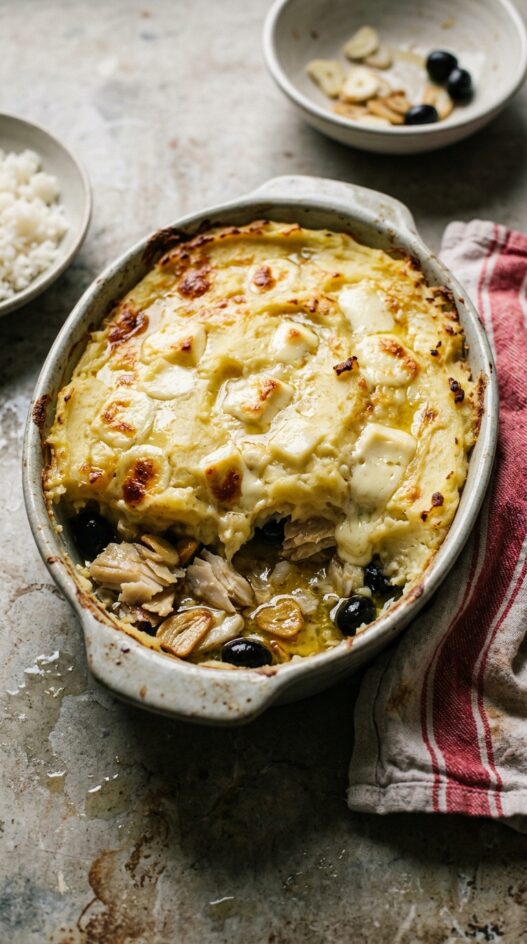
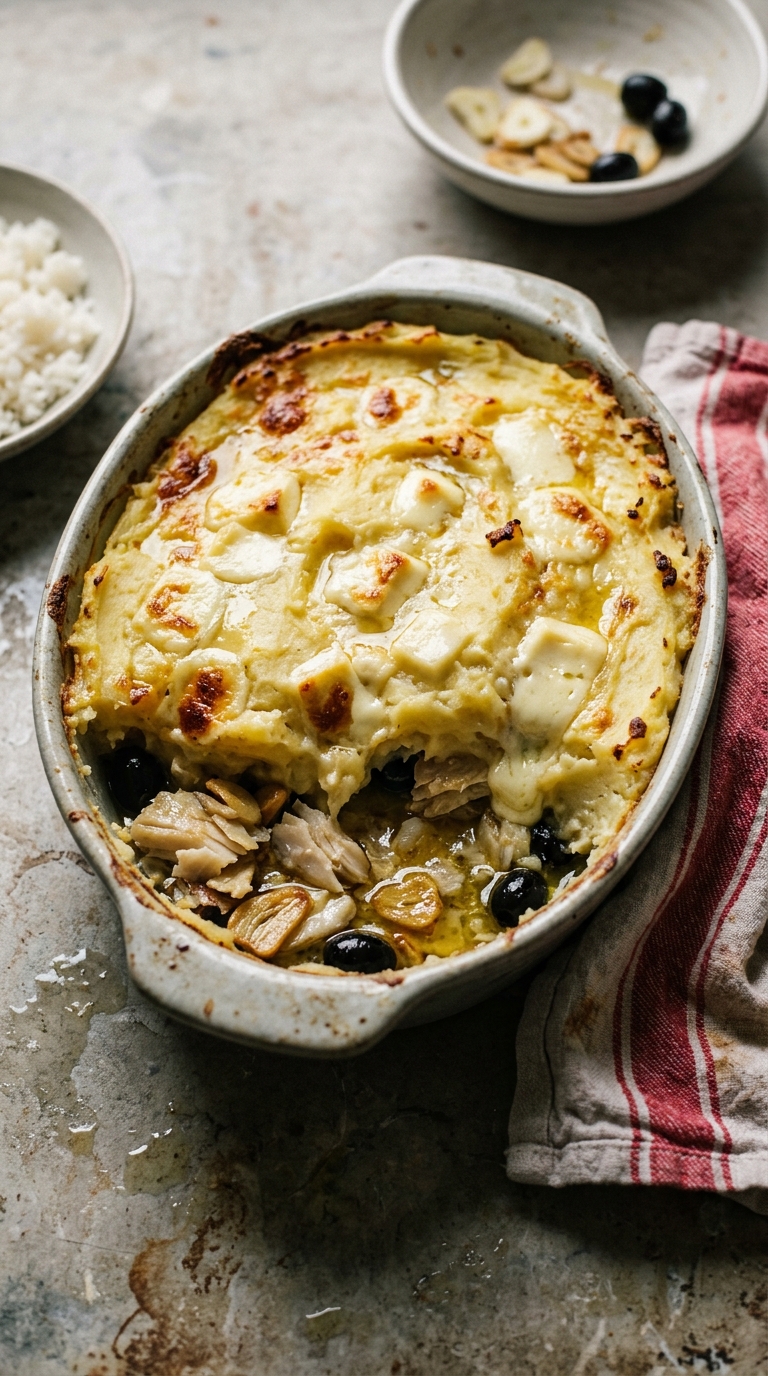
My favorite bacalhau dish, however, is the one that leaves my husband misty: his mom’s. We call it Bacalhau à Elizabeth. It is sort of a Portuguese shepherd’s pie; chunks of bacalhau, garlic and hand-cut black olives drenched in olive oil, smothered in a layer of fluffy mashed potatoes in which nuggets of melted cheese are buried. it isn’t the uniform much that many bacalhau dishes end up bing. Each bite holds something different. She serves it with rice. This is essential, because rice and potatoes on the same plate is the key to Brazilian comfort food. This is why I think bacalhau has lasted through the ages. It speaks comfort. Versatile, independent of the need for refrigeration, there when you need it, I imagine bacalhau speaking comfort through the ages.
Bacalhau à Elizabeth is not a particularly fussy dish and seems to please everyone, kids and grown-ups alike. It also serves as a cushion for the most exuberant party-goer, allowing one to soak up incredible amounts of alcohol. And, it is easy to make ahead of time, freeing up the cook to enjoy the holiday more. It is always part of our holidays, either for lunch on Christmas Day, to ring in the New Year, or to celebrate Good Friday.
Print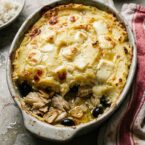
Bacalhau à Elizabeth
- Total Time: 48 hours 40 minutes
- Yield: 12 servings
Description
Bacalhau à Elizabeth is a comforting Brazilian dish featuring salted cod, garlic, and olives, smothered in fluffy mashed potatoes with melted cheese, perfect for holiday gatherings.
Ingredients
- 1.8 to 2 kg of good quality bacalhau or salted cod
- 10 cloves of garlic, sliced
- 125 ml (1/2 cup) of good quality olive oil
- 100 g (1/2 cup) black olives, pits removed
- 125 ml (1/2 cup) of dry white wine
- 3.5 kg (7 lbs) potatoes, peeled and cubed
- 125 g (1/2 cup) butter
- 200 g (7 oz) of cheese, cubed (such as mozzarella or a similar melting cheese)
- 125 ml (1/2 cup) mayonnaise
- Salt and pepper to taste
- Milk, for soaking
- Rice, for serving
Instructions
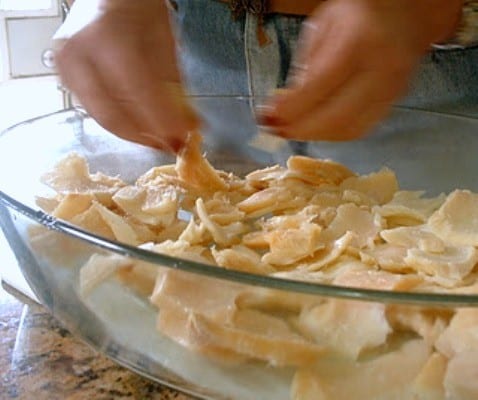
- Soak the pieces of bacalhau skin side up, changing the water three times during a period of 24 hours to remove excess salt.
- Rinse the bacalhau and let it soak in milk for another 24 hours to further reduce saltiness and enhance flavor.
- Rinse the bacalhau again and pat dry with paper towels.
- Preheat your oven to 180°C (350°F).
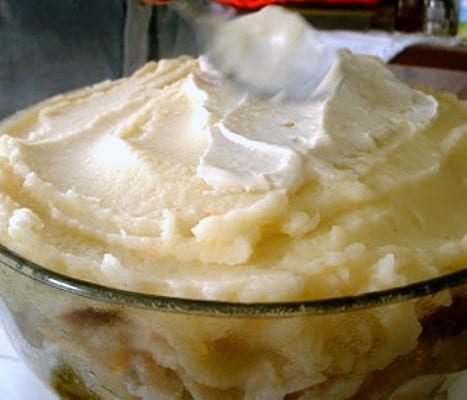
- In a large pot, boil the potatoes in salted water until fork-tender. Drain and mash them until smooth with the butter. Season with salt and pepper.
- In a large skillet, heat the olive oil over medium heat. Add the sliced garlic and sauté until golden brown and fragrant, about 2 minutes.
- Add the bacalhau pieces to the skillet and cook for 5-7 minutes, turning occasionally, until they are opaque and flake easily with a fork.
- Add the black olives and white wine to the skillet, stirring gently to combine. Cook for another 2-3 minutes until the wine has reduced slightly.
- Transfer the bacalhau mixture to a large casserole dish, spreading it evenly across the bottom.
- Layer the mashed potatoes over the bacalhau mixture, smoothing the top with a spatula.
- Press the cheese cubes into the mashed potatoes, distributing them evenly throughout.
- Spread a thin, even layer of mayonnaise over the top.
- Bake in the preheated oven for 30-40 minutes, or until the top is golden brown and the cheese is melted and bubbly.
- Let the dish rest for 10 minutes before serving. Serve with rice on the side.
Notes
- To save time, prepare the mashed potatoes and soak the bacalhau a day ahead.
- Serve with rice for an authentic Brazilian experience.
- This dish can be made ahead and reheated, making it ideal for holiday gatherings.
- Adjust salt levels based on the saltiness of the bacalhau after soaking.
- Prep Time: 48 hours
- Cook Time: 40 minutes
- Category: Main Course
- Cuisine: Latin American
Nutrition
- Serving Size: 1 serving
- Calories: 450
- Sugar: 2
- Sodium: 800
- Fat: 20
- Carbohydrates: 40
- Fiber: 4
- Protein: 35
- Cholesterol: 60
If You Liked This Recipe, You’ll Love These
- How to Make Swedish Meatballs
- Creamy Cauliflower Soup with Garlic Bread
- Tater Tot Casserole
- Stuffed Cabbage Rolls
Frequently Asked Questions
Why does bacalhau need 48 hours of soaking before cooking?
Bacalhau is heavily salted dried cod — a preservation method dating back over a thousand years. The first 24 hours of soaking (skin side up, changing the water three times) draws out most of the salt. Then soak again in milk for another 24 hours, which further reduces saltiness and adds a creamier flavor. Skipping or shortening these soaks will leave the dish inedibly salty.
What makes this dish specifically Brazilian rather than Portuguese?
Bacalhau came to Brazil through Portuguese colonization and the Catholic Church’s meatless-day traditions, eventually becoming a luxury holiday food. This version — Bacalhau à Elizabeth — is a Portuguese-style shepherd’s pie (bacalhau, garlic, olives, and olive oil smothered in mashed potatoes with buried cheese cubes) served with rice, which I call “the key to Brazilian comfort food.” Rice and potatoes on the same plate is distinctly Brazilian.
Can I make this dish ahead of time?
Yes — I actually recommend it. Prepare the mashed potatoes and soak the bacalhau a day ahead to save time, and the assembled casserole can be made ahead and reheated, making it ideal for holiday gatherings. It also works well as a “cushion” at parties, holding up over a long event.
How do I know how much salt to add after soaking?
Adjust salt levels based on the saltiness of the bacalhau after soaking — some fish retains more salt than others depending on how it was processed. Taste the fish after its soak before seasoning the mashed potatoes or the sauté.


This is such a lovely lovely recipe, I make it for almost every holiday.
This recipe is delightful and has become a Good Friday tradition with my family. Thank you!
Hi Suzie,
I had a small restaurant in San Francisco, Ca. and a Carioca partner.
He taught me to make feojoada, which I couldn’t stop eating-even for breakfast.
He also made a great bacaoada. I noticed he fried the potato slices in
adenje before a added them to the dish. It really intensified the flavor as well as your waistline. He made a sauce for the “casserole” out of what seemed to be some kind of cheese ingredient. Have any idea what that was.
Thanks,
Dennis