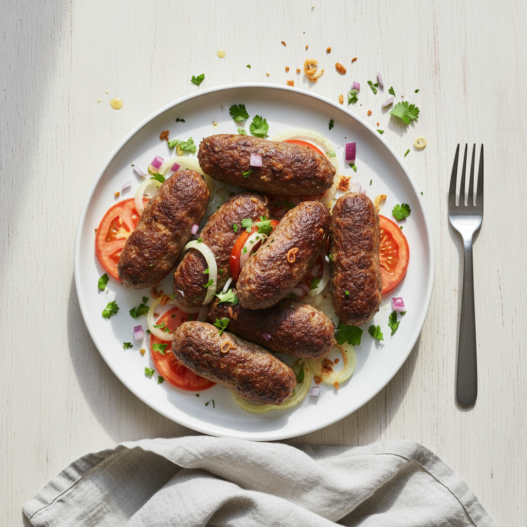
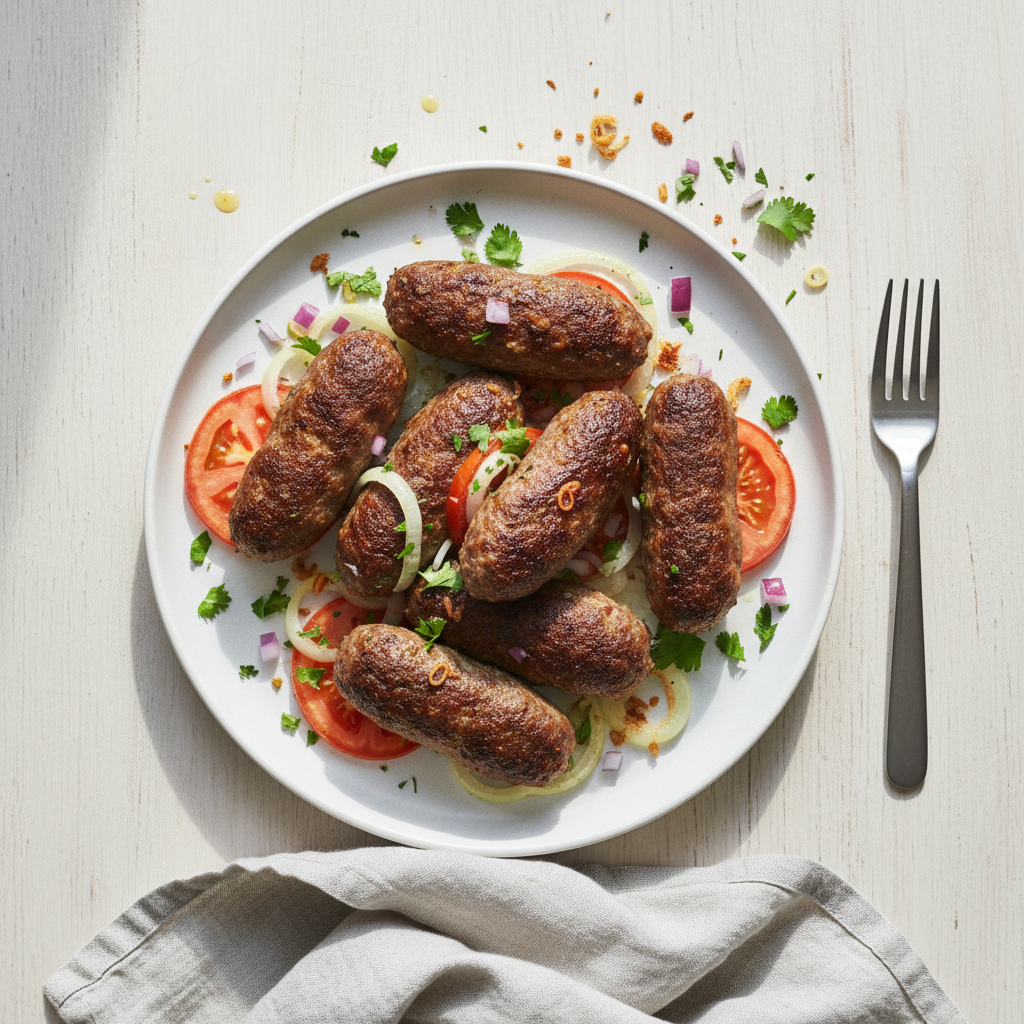
Dum is a cooking technique where food is slow cooked over a very low flame in sealed containers. The seal can be a tight lid or aluminum foil. As it cooks, heat creates steam in the sealed container. As the steam condenses and stays confined in the sealed pot, it cooks the food slowly before it can escape. Traditionally, a bed of hot coals are used to cook in the dum method. However, often cooking in low flame on stovetop or baking in a tightly sealed oven also mimic a “dum” method. Herbs and spices play an extremely critical role in dum technique. Dum kabab is a minced meat kabab prepared using off course the dum technique. Excellent as appetizer, sides or sandwich filler.
Instead of grilling, this minced meat kabab is slow cooked in the oven or stovetop in its own juices which persuades the release of maximum flavor. Fresh spices and herbs are key for dum kabab flavoring. The dum method makes this kabab melt in the mouth and herbs like cilantro, dill, parsley, mint mixed with spices gives this kabab an irresistible aroma. The kabab retains all the natural aromas and becomes infused with the richness of flavors that distinguishes this kabab from other kababs that are mostly dry.
Print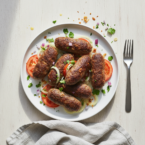
Tender Dum Pukht Meat and Vegetable Kebab
- Total Time: 70 minutes
- Yield: Serves 4
- Diet: Omnivore
Description
Tender, flavorful kebabs slow-cooked to perfection. A fragrant and juicy dish, perfect for a weeknight meal.
Ingredients
- 1 lbs (454 g) ground beef or lamb
- 2 tsp garlic paste
- 1 tsp ginger paste
- 1/2 tsp garam masala
- 2-3 green chili, chopped
- 1 cups (237 ml) onions, finely minced and liquid discarded
- 1/2 cups (118 ml) beresta, crushed
- 1/2 cups (118 ml) herb mix of choice (cilantro, dill, parsley, mint, etc.), finely chopped
- 2 tbsp lemon juice
- 2 tbsp gram flour(besan)
- 2 tsp salt
- 1 egg
- 2 tbsp oil, additional oil or Spray oil to grease baking tray
- 2 tbsp yogurt
- 2-3 tomatoes, round sliced
- 1 onion, round sliced
- Red onion, chopped for garnish
Instructions
- Preheat oven to 350°F (177°C).
- Grease a baking tray with spray oil or by brushing some oil. Set aside.
- Mix all ingredients and roll into sausage-size kebabs.
- Sprinkle or layer the round sliced tomatoes and onion rings on top of the kebabs.
- Tightly cover the baking tray with aluminum foil so steam cannot escape.
- Bake for 40 minutes, turning once, and let the kebabs cook in their own juice.
- Broil the kebabs for 8-10 minutes uncovered, turning once. Put the cover back on after broiling.
Notes
- For extra tender kebabs, gently mix the ingredients to avoid overworking the meat.
- If you don’t have beresta, you can substitute with finely chopped dried apricots or raisins.
- Leftover kebabs can be stored in the refrigerator for up to 3 days and reheated in a skillet or oven.
- Prep Time: 20 minutes
- Cook Time: 50 minutes
- Category: Main Course
- Method: Roasting
- Cuisine: Indian
Nutrition
- Serving Size: 1-2 kebabs
- Calories: 350
- Sugar: 5
- Sodium: 400
- Fat: 20
- Saturated Fat: 8
- Unsaturated Fat: 10
- Carbohydrates: 25
- Fiber: 4
- Protein: 30
- Cholesterol: 80
Frequently Asked Questions
What does dum pukht mean and how does it affect the kebabs?
Dum pukht is a slow-cooking technique using a sealed vessel so that steam circulates inside, keeping the meat tender and infusing it with the spices. It is the reason these kebabs stay moist rather than drying out on a grill.
Can I make these kebabs with a different meat if I cannot find the one listed?
Lamb or goat are the most traditional choices, but beef works too. The fat content matters more than the specific animal: leaner cuts benefit from a little added fat to keep the kebabs from crumbling.
Do the vegetables need to be pre-cooked before mixing with the meat?
Finely grating or mincing the vegetables helps them cook through during the sealed dum cooking time. Large chunks would remain undercooked, so keep everything fine and uniform.
If You Liked This Recipe, You’ll Love These
- How to Make Homemade Ukrainian Borscht
- Oven-Baked BBQ Short Ribs
- Danish Hakkebøf Recipe: Beef Patties with Caramelized Onions
- Nar Welcomes Turkish Cuisine to Manhattan
- Provoleta – Argentinian Grilled Cheese Spread