
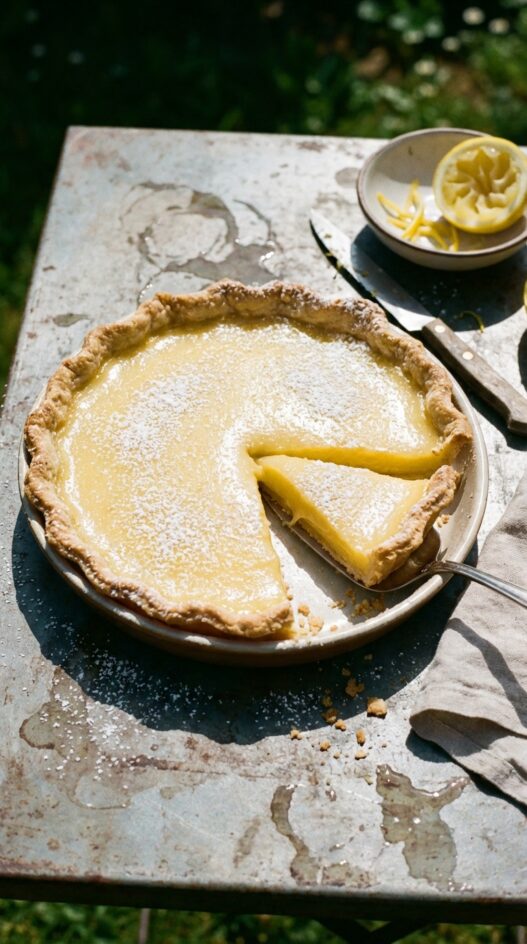
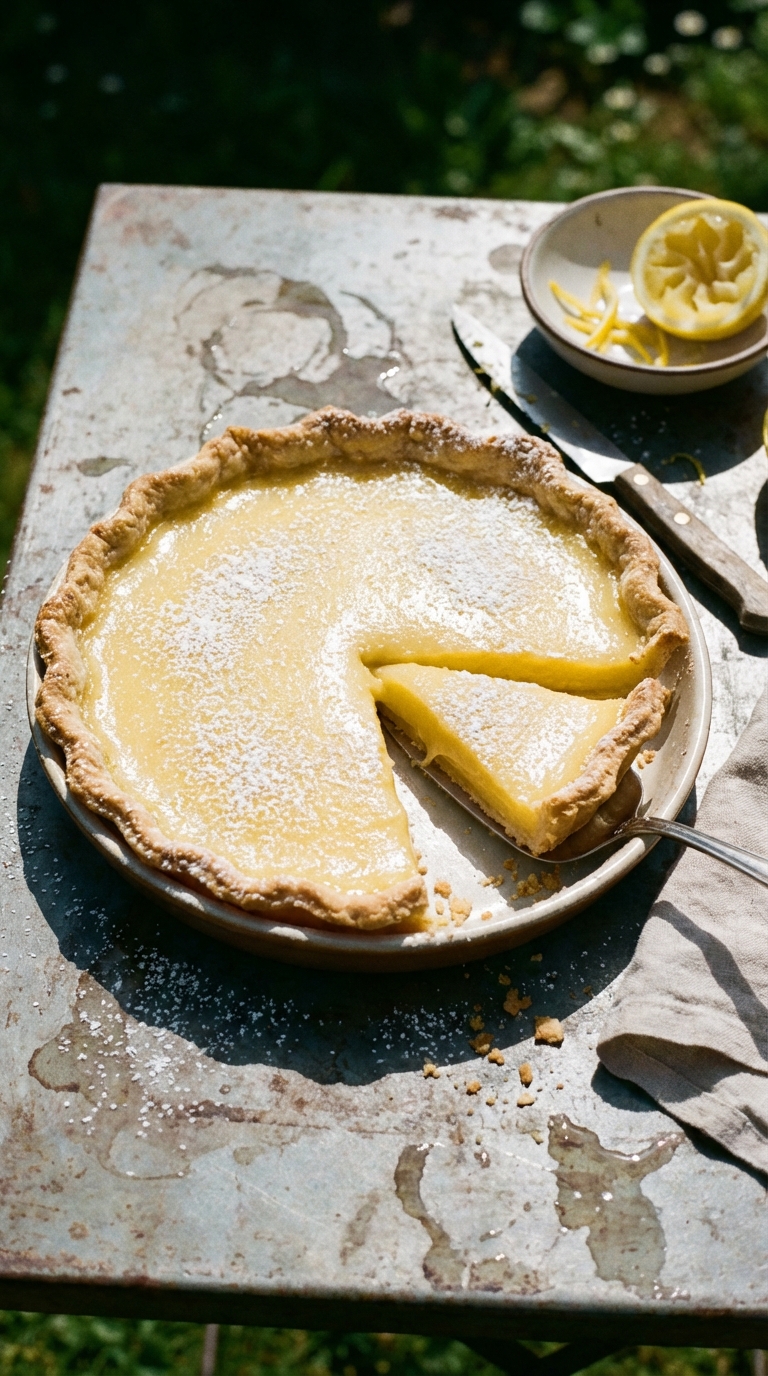
I first made this lemon curd tart in culinary school, and it’s a challenge. You need to set aside days (yes, days!) for this beautiful concoction, but it’s so worth it. Trust me. Presenting this lemon curd tart is like subtly — but very clearly — saying to your dinner party, “Look at me. I made this tart all by myself. I am a real grownup.”
Of course, that’s basically saying that making this lemon curd tart may add years to your life. There is never a moment as tense as when you have to pour your lemon curd filling into the half-baked pastry shell while it’s hanging halfway out of your preheated oven. I held my breath the first time I did it and nearly passed out both from nerves and literal lack of oxygen.
But by the time this glossy, just ever-so-wobbly lemon curd tart was finished baking in the oven, I was a changed person. I felt like I’d climbed Mount Everest and made it in one piece to the summit. Except instead of just being really cold and hungry, I got to eat this tart, sweet, citrusy wonder.
It can be yours, too! Check out the recipe below, which is originally from Leith’s How to Cook (with additional notes from me on how to make this tart less painful to make).
Click HERE for the pastry crust recipe.
Print
Silky Lemon Curd Tart
- Total Time: 1 hour 50 minutes
- Yield: 8–10 servings
Description
A luscious lemon curd filling cradled in a buttery, delicate pastry crust. Perfect for a special occasion or a simple afternoon treat.
Ingredients
For the pastry crust:
- 1 1/2 cups (190 g) all-purpose flour
- 1/4 teaspoon salt
- 3 tablespoons icing (powdered) sugar
- 115 g (1 stick / 1/2 cup) cold unsalted butter, cubed
- 2-3 large egg yolks (use just enough to bring the dough together)
For the lemon curd filling:
- 3 lemons
- 6 eggs plus 1 extra yolk
- 150-170 g (1 1/4 - 1 3/4 cups) caster sugar
- 225 ml (1 cup) heavy whipping cream
- Powdered sugar, for dusting
Instructions
- Sift the salt and flour together and pour into the bowl of a food processor (or a large mixing bowl). Pulse a few times — or use two butter knives to cut the butter in — until the mixture resembles coarse sand.
- Sprinkle over the icing sugar and toss gently until incorporated.
- Pour the egg yolks in a little at a time, pulsing just until the dough comes together into a ball. You may not need all the yolks. Shape the dough into a flat disk, wrap in plastic wrap, and chill for at least 4–5 hours until firm, ideally overnight.
- While the pastry dough chills, prepare the lemon curd filling. Zest the lemons and squeeze the juice to yield about 3/4 cup (180 ml) of lemon juice.
- Put the eggs and extra yolk in a large bowl. Add 1 cup of the sugar and whisk together. Add the cream, lemon zest, and lemon juice, then mix well. Taste — if too tart, add more sugar. Cover and chill the lemon mixture for at least 2–3 hours, preferably overnight.
- Line a flan tin with a loose-bottomed base with parchment. Roll out the chilled dough on a lightly floured surface until about 12 inches (30 cm) in diameter and about 3 mm (1/16 inch) thick. Gently fold the dough over the tin and let it drape naturally. Trim excess with a palette knife. Cover with plastic wrap and refrigerate for another 30 minutes.
- Preheat oven to 190°C (375°F). Crumple a sheet of parchment large enough to cover the flan tin and use it to line the pastry. Add pie weights and bake for 15–20 minutes until the pastry is no longer translucent and just starting to color. Remove from the oven, discard parchment and weights, and return to the oven for 3–5 minutes more. Remove and let cool slightly.
- Reduce oven to 150°C (300°F).
- Place the pastry case on a baking sheet. Pour lemon curd filling in until it reaches halfway up the sides, then carefully slide the baking sheet into the oven. Pour in more filling to reach the top, then gently close the oven door.
- Bake for 40–50 minutes until the curd still wobbles but not violently. Remove and allow to cool, then carefully remove from the tin. Dust with powdered sugar and serve.
Notes
Chill the pastry dough for at least 4–5 hours — ideally overnight. A well-chilled dough is far less likely to shrink during blind-baking. The two-pour method for the filling (halfway, then to the top once the tin is in the oven) is the trick that saves you from spillage — take your time with it.
- Prep Time: 40 minutes
- Cook Time: 1 hour 10 minutes
- Category: Dessert
- Cuisine: French-Inspired
Frequently Asked Questions
What type of flour should I use for the pastry crust?
For the pastry crust, a standard all-purpose flour is recommended, but you can substitute with a 1:1 gluten-free flour blend if needed.
How do I know when the lemon curd filling is set properly?
The lemon curd filling should be glossy and slightly wobbly in the center when you take it out of the oven; it will continue to set as it cools.
What should I do if my pastry shell shrinks during baking?
To prevent shrinking, ensure that you properly chill the pastry dough before baking and consider using pie weights or dried beans to help maintain its shape while it bakes.
If You Liked This Recipe, You’ll Love These
- Strawberry and Lemon Cream Tart
- Ultimate Sweet-Tart Lemon Desserts
- Tarte Au Citron: French Lemon-Lime Tart
- Personal Raspberry and Lemon Mug Cake



Silky, tart, and so good.