
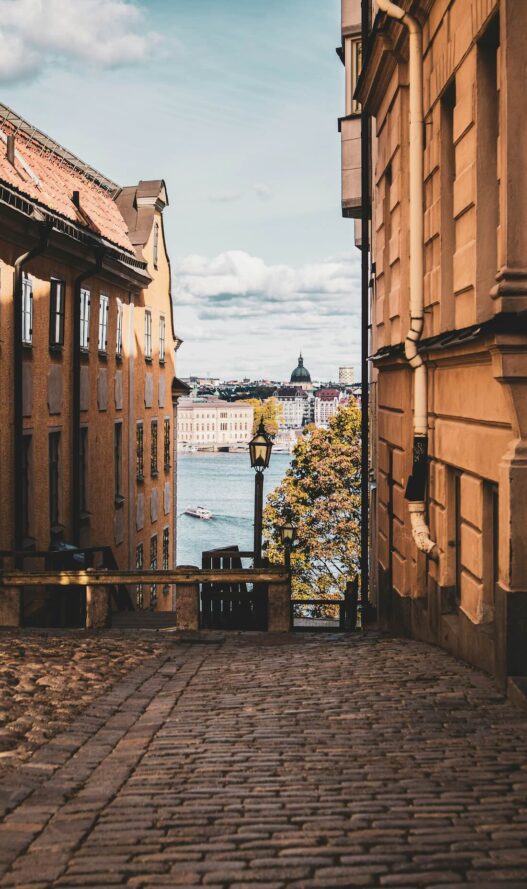
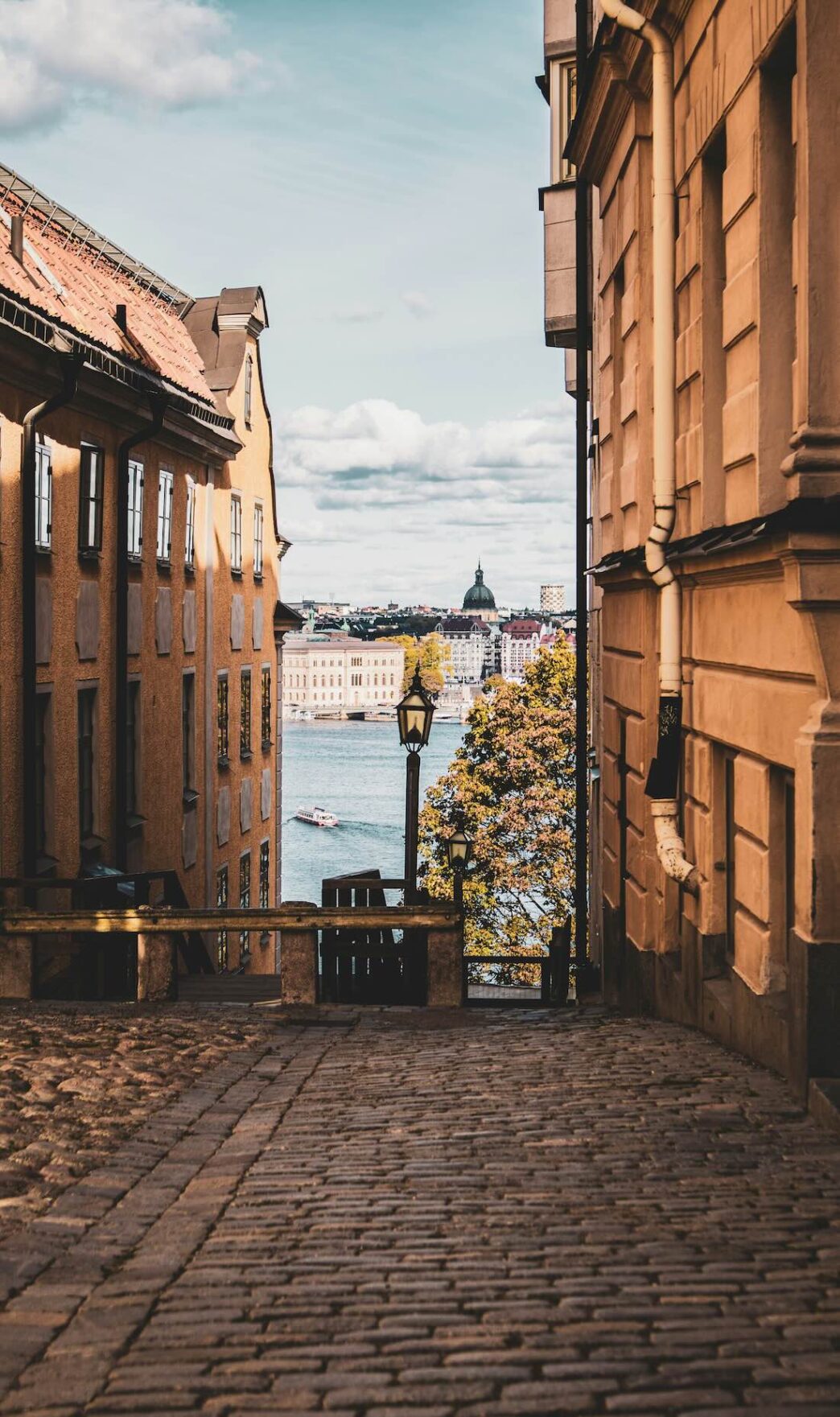
Stockholm has been feeding people seriously for a long time. Centuries of trade, Baltic winters, and a kitchen culture that prizes craft over spectacle. And while Stockholm has one of the most exciting contemporary food scenes in Europe, the city's food identity isn't built on whatever opened last month; it's built on the kanelbulle your grandmother pulled from the oven, the tunnbrödsrulle handed across a gatukök counter at midnight, the pickled herring that has anchored every Swedish table since the Middle Ages.
1 · Kanelbulle
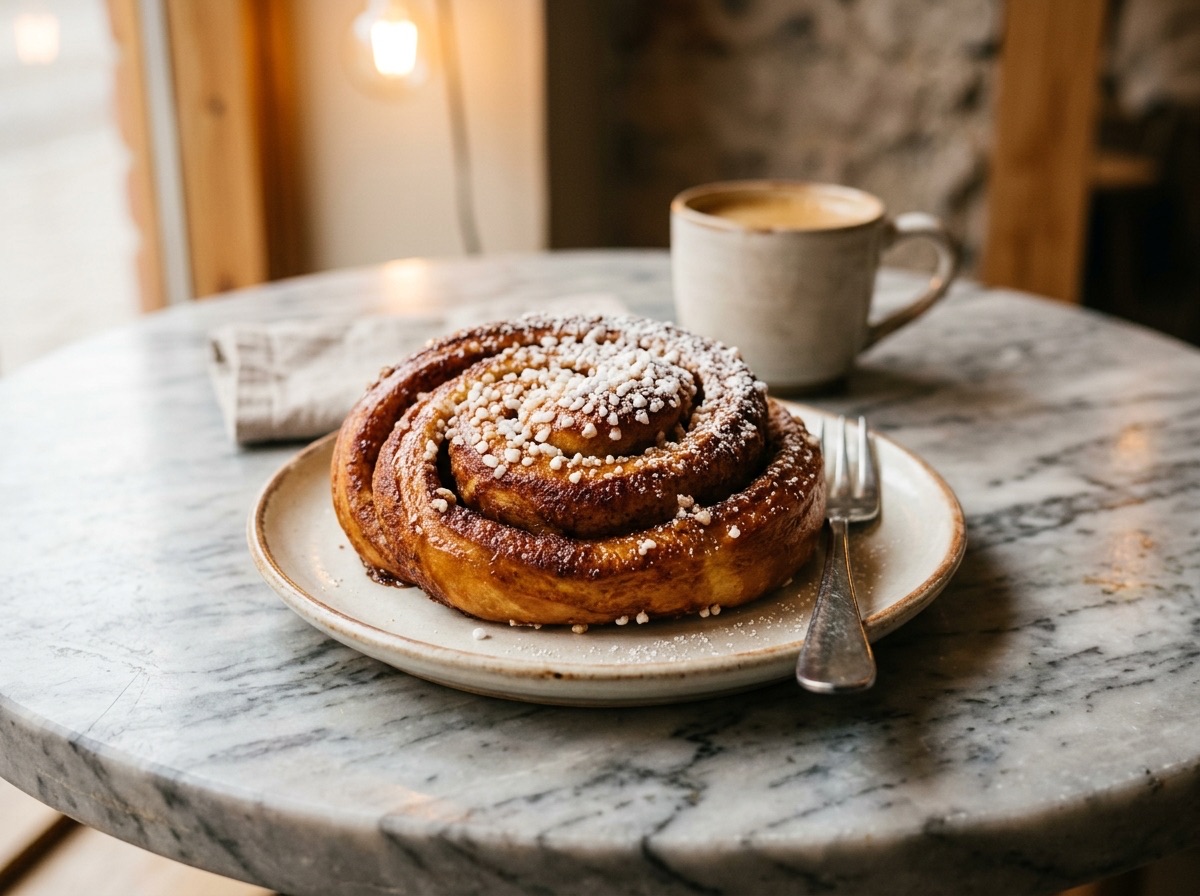
The kanelbulle is Sweden's great contribution to the world of baked goods, and Stockholm takes it with an almost religious seriousness. Unlike the American cinnamon roll (soft, gummy, drowned in cream-cheese frosting) the Swedish original is firmer, more aromatic, and built around cardamom as much as cinnamon: the spice mix is everything. A good kanelbulle has distinct, pull-apart layers, a slightly sticky glaze, and a scattering of pearl sugar on top that gives a gentle crunch against the tender dough. The bun is intrinsically linked to fika, the coffee-break ritual that is a Swedish social institution; you do not eat a kanelbulle in a hurry. October 4th is officially Kanelbullens Day in Sweden, which tells you something about how seriously this country treats its pastry heritage. Any classic konditori in Stockholm (old-fashioned cafès with marble counters, silver trays, and coffee served in proper cups) will set the standard; that's where you want to be eating one.
Where to try it
2 · Tunnbrödsrulle
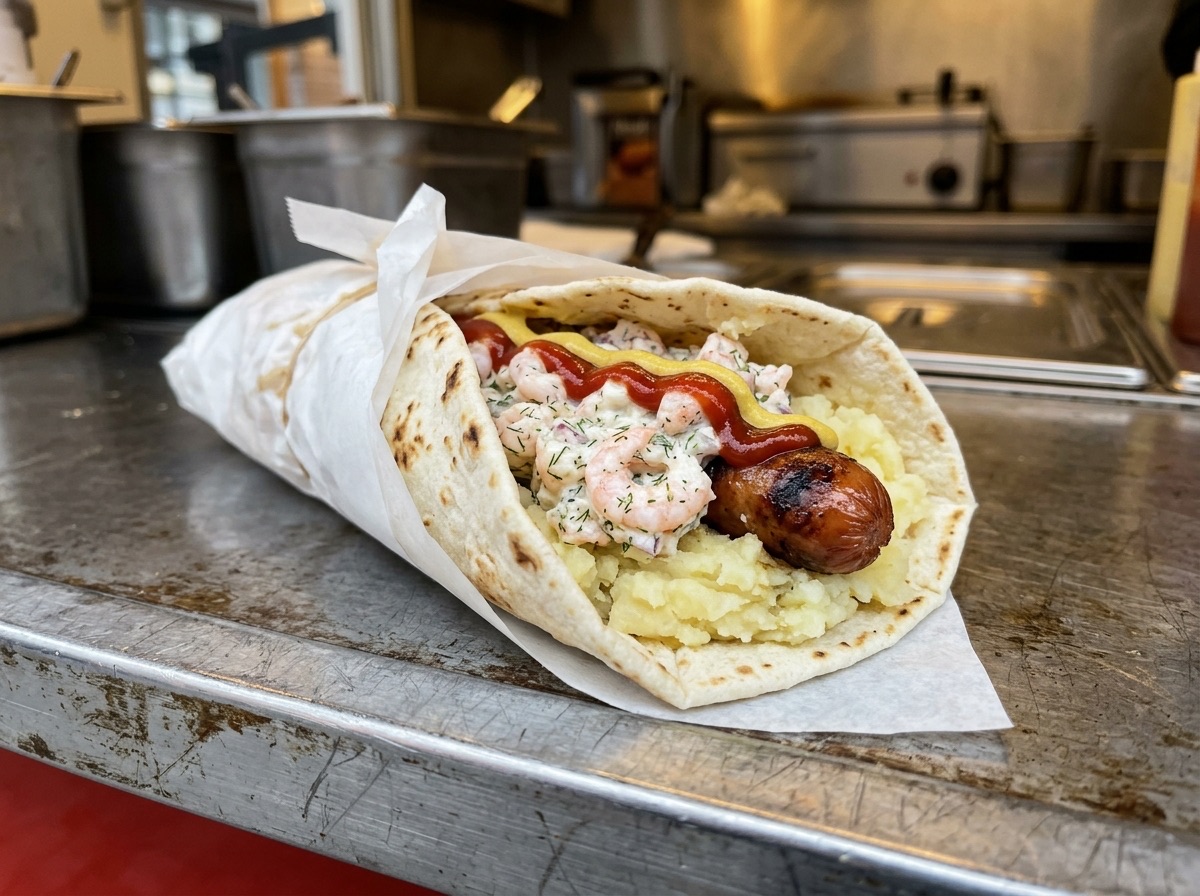
The tunnbrödsrulle is Stockholm's great democratic food: a thin, pliable Swedish flatbread (tunnbröd) wrapped tightly around a filling of mashed potatoes, one or two grilled hot dogs, shrimp salad, and a squeeze of mustard and ketchup. It sounds chaotic. It is chaotic. It's also one of the most satisfying things you will eat in this city, particularly after midnight. The dish has its roots in Swedish husmanskost, but it evolved on the street, sold from gatukök (street kitchen) stands that have operated around the subway exits and ferry terminals for generations. The shrimp salad component is not a mistake: it turns this into the most fabulously filling surf and turf experience, and without it you'd have something else entirely. Any late-night gatukök with a steamer tray and a line of people is serving a version worth eating.
3 · Toast Skagen
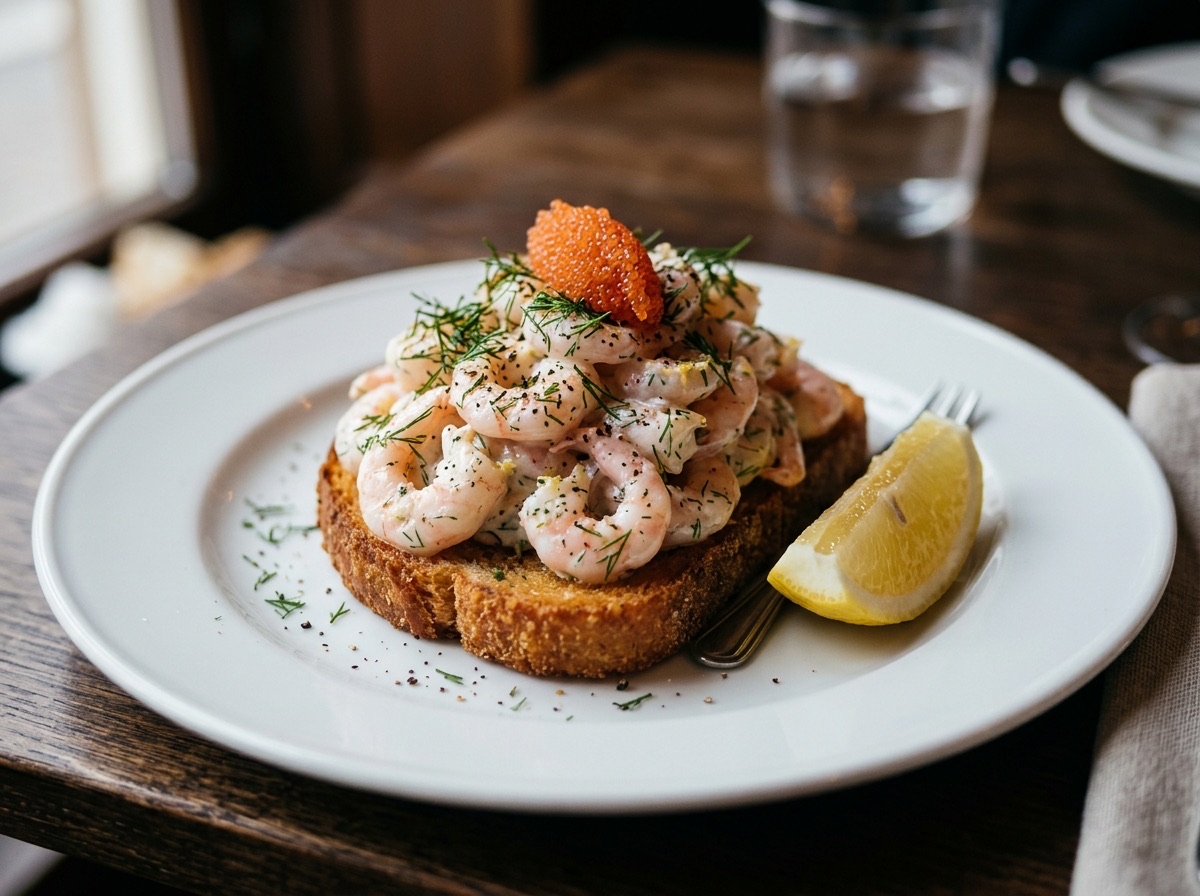
Toast Skagen was invented by the "father of Swedish cuisine" Tore Wretman in the 1950s: this is decadent restaurant food that became a national institution, not a street dish that got gentrified. The formula is austere and precise, a thick slice of white bread fried in butter until deeply golden, topped with a generous heap of cold-water prawns dressed in mayonnaise and fresh dill, finished with a squeeze of lemon and, traditionally, a spoonful of bleak roe (löjrom). The contrast of the hot, crisp toast against the cool, briny shrimp filling is the whole point; it should be eaten immediately. The quality depends almost entirely on the prawns: insist on cold-water, shell-on Nordic shrimp, not the warm-water farmed variety, which will taste of nothing. At any white-tablecloth Swedish restaurant, Toast Skagen appears as a near-mandatory starter, it's the dish that signals whether the kitchen respects classical Swedish cooking. A well-made version, with proper löjrom and hand-peeled shrimp, is one of the biggest pleasures Swedish cuisine offers.
Where to try it
4 · Swedish Meatballs
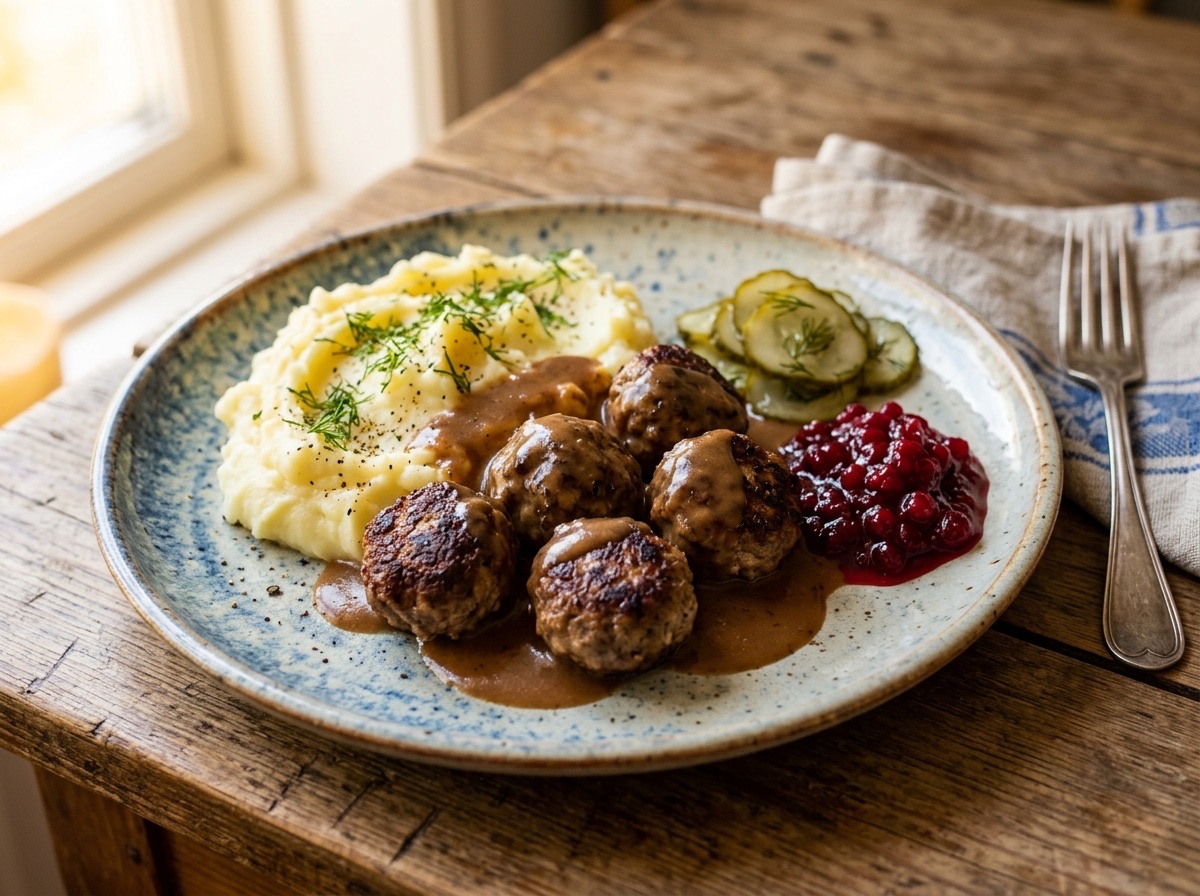
Köttbullar are the Swedish national dish, and the version you grew up eating at a flat-pack furniture retailer is a pale imitation of what they actually are. A proper Swedish meatball is perfectly sized, somewhere in-between large marble and a golf ball, mixed from a blend of beef and pork, seasoned with allspice and white pepper, bound with breadcrumbs soaked in cream, and pan-fried in butter so each one has a dark, slightly caramelized crust. They are served with brown gravy, creamy mashed potatoes, tart lingonberry jam, and thinly sliced pickled cucumber, and every element of that plate is 100% load-bearing. The lingonberries cut the richness of the gravy; the pickle cuts the richness of the meat; together they are in full harmony. The dish has roots in husmanskost, the plain Swedish home cooking that has sustained this country for centuries, and at its best it still tastes exactly like that: not a restaurant interpretation, but home food made with confidence. Any traditional Swedish restaurant or husmanskost specialist in Stockholm serves köttbullar; look for the ones that make their own rather than using the frozen commercial version, and the difference will be immediate.
Where to try it
5 · Pickled Herring
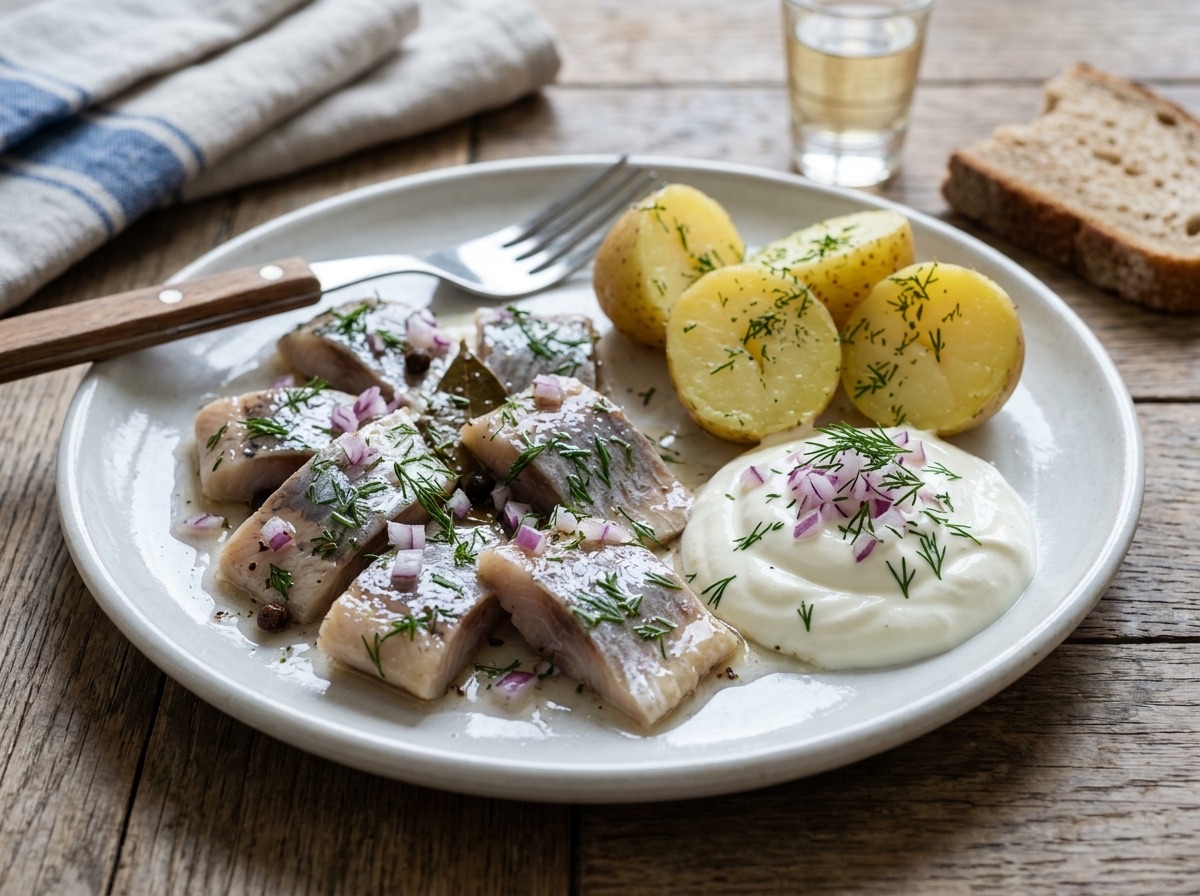
Pickled herring – sill in Swedish – is the oldest food on this list, and probably the most important to Swedish food identity. Sweden's relationship with Baltic herring stretches back to the Middle Ages, when the fish sustained populations through long winters and funded the Hanseatic trade; preserved herring was essentially a currency. Today sill appears at every major Swedish table moment: Christmas julbord, Easter, Midsommar, and the classic smörgåsbord, always as the first course, always eaten with boiled potatoes and fresh dill. The range of preparations is considerable: the vinegar-cured basic sill is the foundation, but you'll also encounter it with mustard (senapsill), onion and bay leaf, matjes-style, and counless family variations beyond those. For some tourists, the combination of sweet and acidic fish is sometimes an acquired taste, but you haven't truly been to Sweden if you haven't tried at least a small plate to share.
Where to try it
Stockholm does not need to prove anything with its food. These dishes have been here for generations, and they will be here long after whatever is currently winning design awards has closed. Eat the kanelbulle slowly, with coffee, sitting down. Order the köttbullar somewhere that makes them from scratch. Enjoy!
Make these at home: recipes from this guide
Frequently Asked Questions
What is the most famous food in Stockholm?
Swedish meatballs (köttbullar) are Sweden's most internationally recognized dish, but within Stockholm, the kanelbulle, the cardamom-and-cinnamon bun eaten during fika, is arguably the food most woven into daily city life. Both are essential.
What is a tunnbrödsrulle and where can I find one in Stockholm?
A tunnbrödsrulle is a thin Swedish flatbread wrapped around mashed potatoes, grilled hot dogs, shrimp salad, and condiments. It's Stockholm's defining street food, sold from gatukök stands near Tunnelbana exits and ferry terminals, best found late at night, from any stand with a steamer tray.
Who invented Toast Skagen?
Toast Skagen was created by Tore Wretman in the 1950s (during a sail race outside Skagen in Denmark). The original formula, butter-fried toast topped with cold-water prawns, dill, mayonnaise, lemon, and bleak roe, has remained essentially unchanged since.
What is the difference between Swedish meatballs and regular meatballs?
Swedish meatballs (köttbullar) are small, mixed from beef and pork, seasoned with allspice and white pepper, and fried in butter for a caramelized crust. They are served with brown gravy, mashed potatoes, lingonberry jam, and pickled cucumber, not tomato sauce. The spicing, size, and accompaniments set them apart from Italian-American or other meatball traditions.
When do Swedes eat pickled herring?
Pickled herring (sill) is eaten at every major Swedish celebratory meal: the Christmas julbord, Easter, and especially Midsommar. It is also the first course of the classical Swedish smörgåsbord. The fish is cured in vinegar and served with dark rye bread, boiled potatoes, and dill — with variations including mustard, cream, and onion preparations.
What is fika and what do you eat at one?
Fika is the Swedish ritual of a coffee break taken with something sweet — less a habit than a social institution. The kanelbulle is the canonical fika pastry: a cardamom-and-cinnamon bun with distinct layered dough, a sticky glaze, and pearl sugar on top. Any traditional konditori in Stockholm will serve the definitive version alongside proper filter coffee.





Heading to Stockholm in September for a friend’s wedding and bookmarking this whole list, the kanelbulle from Vete-Katten sounds incredible.
I spent eight days in Stockholm last August and your kanelbulle paragraph nailed exactly what the American cinnamon roll gets wrong. Vete-Katten on Kungsgatan was the spot a Stockholm friend dragged me to twice. The tunnbrödsrulle from the kiosk by Slussen at midnight after a long dinner was a top-three travel meal of the year. Thanks for the round-up that does not name a single tasting-menu place.
sill is an acquired taste, then unmissable.
Visited Stockholm last fall and Vetekatten was one of the highlights, the kanelbulle with proper coffee is exactly what you describe!
My grandmother taught me to make köttbullar the way the article describes, beef-pork mix, breadcrumbs soaked in cream, lots of allspice. The lingonberry against the gravy isn’t a garnish, it’s load-bearing. Pelikan does it right, the gravy there has the brown depth of long-cooked drippings.
Born and raised in Stockholm, this list is on the money. Cafè Saturnus has been my Sunday-morning fika spot for fifteen years and the kanelbulle there sets the standard. Its HUUUUUGE and the cardamom dominates the dough, way less sweet and more aromatic than an American cinnamon roll. One thing I’d add for visitors, a lobster soup at Sturehof at the bar with a glass of Riesling is the move on a rainy afternoon.