
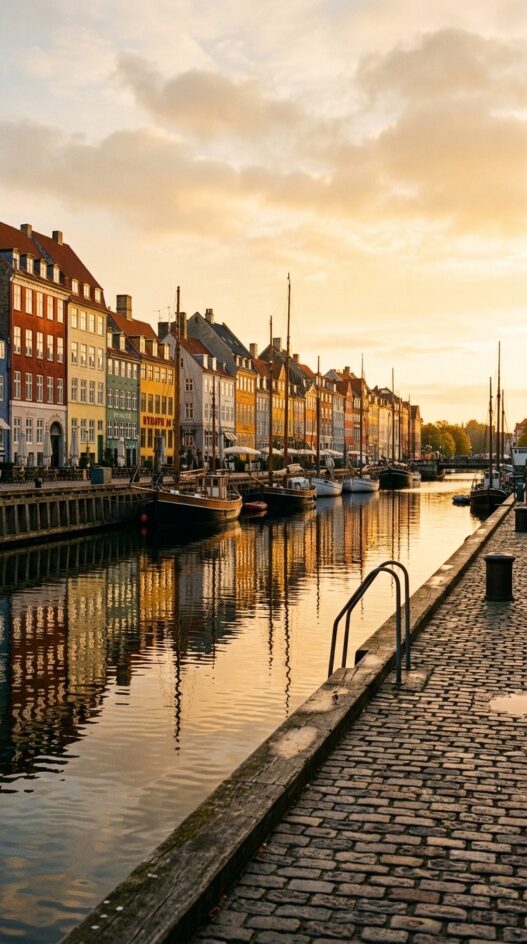
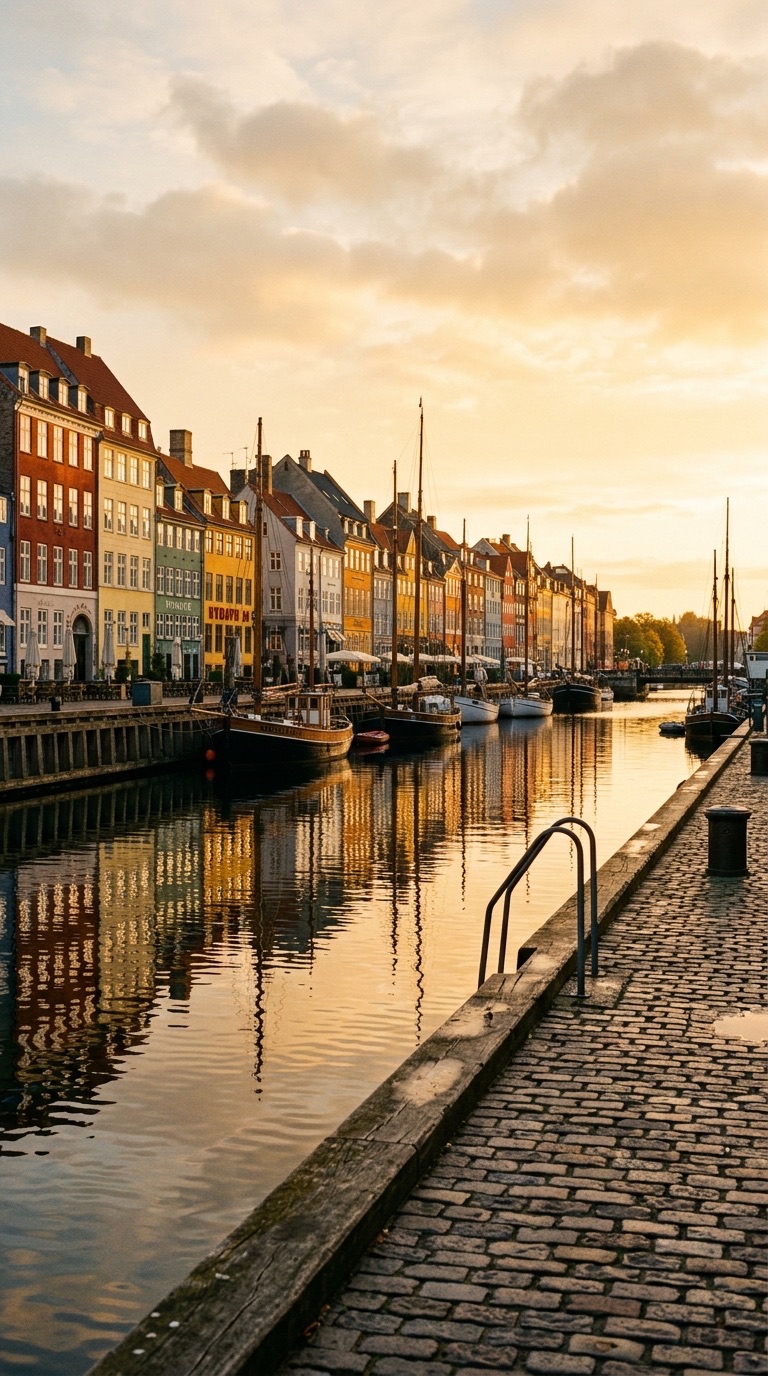
Copenhagen is a city that takes its food seriously, and has done so for centuries. Long before New Nordic cooking put Scandinavia on the global culinary map, Danes had already built a food culture rooted in seasonality, and an almost stubborn loyalty to tradition. The five dishes on this list will not surprise any Copenhagener; that is precisely the point. Skip the tasting menus for one lunch, one breakfast, one street-corner stop, and eat the way the locals eat.
1 · Smørrebrød
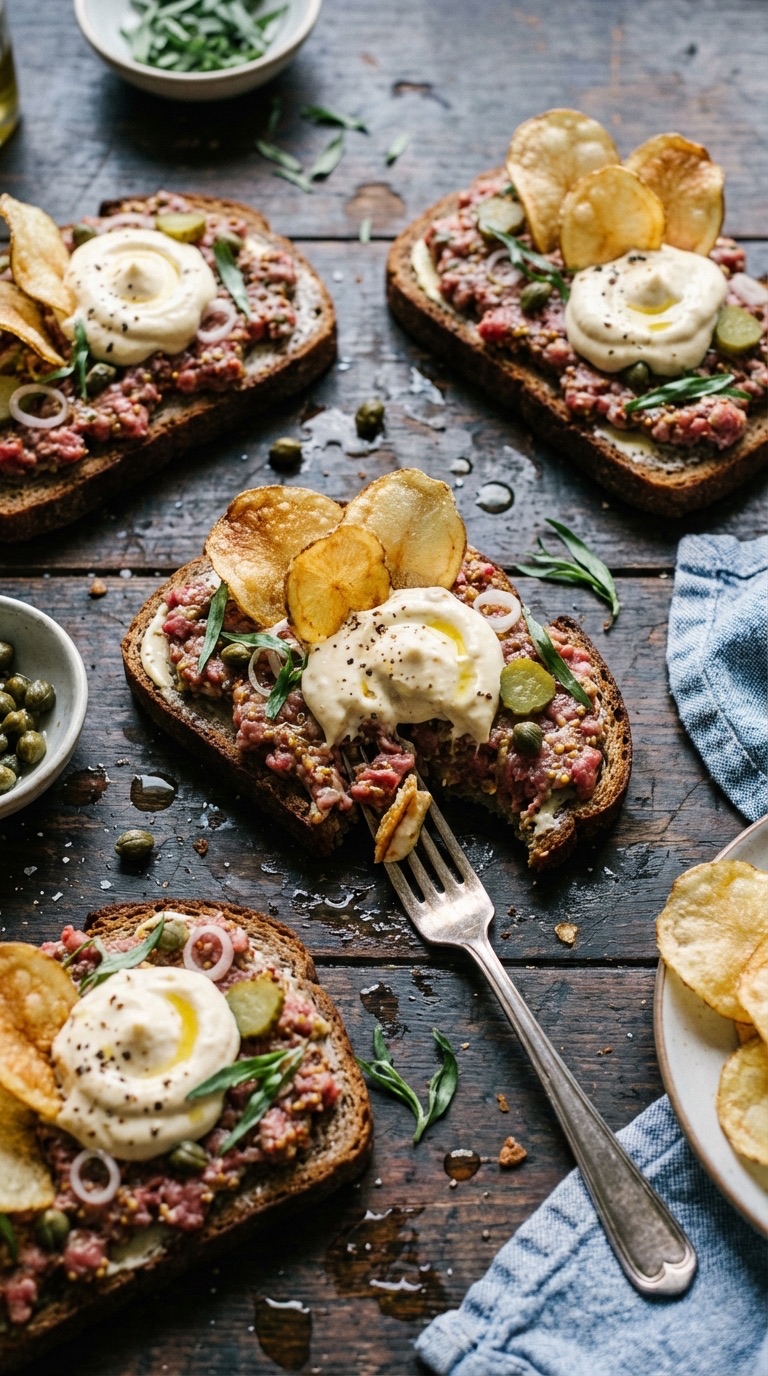
Smørrebrød is the Danish open-faced sandwich, and in Copenhagen its something close to a civic institution. The base is always rugbrød (more on that below), spread with good salted butter, then layered with toppings that follow strict aesthetic and flavor logic: pickled herring with onion and capers, roast beef with remoulade and crispy shallots, smoked eel with scrambled egg, liver pâté with pickled beets, or poached shrimp piled so high they overhang the bread. You eat it with a knife and fork, in a fixed order if you’re following tradition (herring first, then fish, then meat), and you do not fold it in half. Any classic smørrebrødsrestaurant will build each piece to order, and the quality gap between a carefully composed piece and a hasty tourist version is enormous, so look for places where the kitchen takes visible pride in the garnish.
Where to try it
2 · Rød Pølse
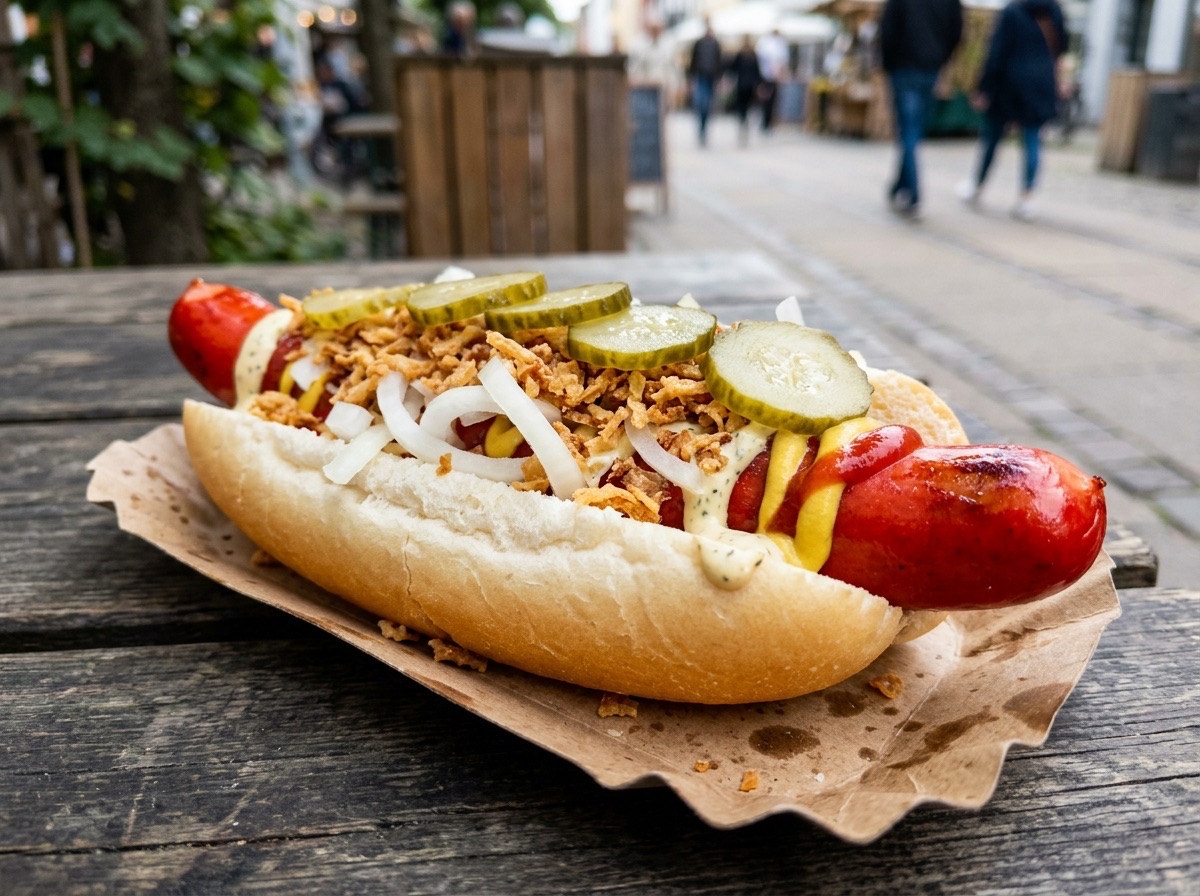
The rød pølse (red sausage) hot dog is Copenhagen’s original street food, and it has been sold from pølsevogn (sausage cart) stands across the city since the 1920s. The sausage gets its vivid scarlet color from a natural dye derived from the cochineal insect, and it is boiled rather than grilled, which gives it a snappy, taut casing and a juicy interior that is distinct from any grilled frankfurter. It arrives on a paper tray with a bun on the side, or tucked into a bun, dressed with yellow mustard, ketchup, remoulade, raw onion rings, crispy fried onions, and a few slices of pickled cucumber. The combination sounds chaotic but lands as a perfectly calibrated balance of fat, acid, and crunch. Every corner pølsevogn in the city runs basically the same menu, and the ritual of eating standing up next to the cart, paper tray in hand, is as Copenhagener as anything in this city. Do not skip it because it looks too simple.
3 · Flæskesteg
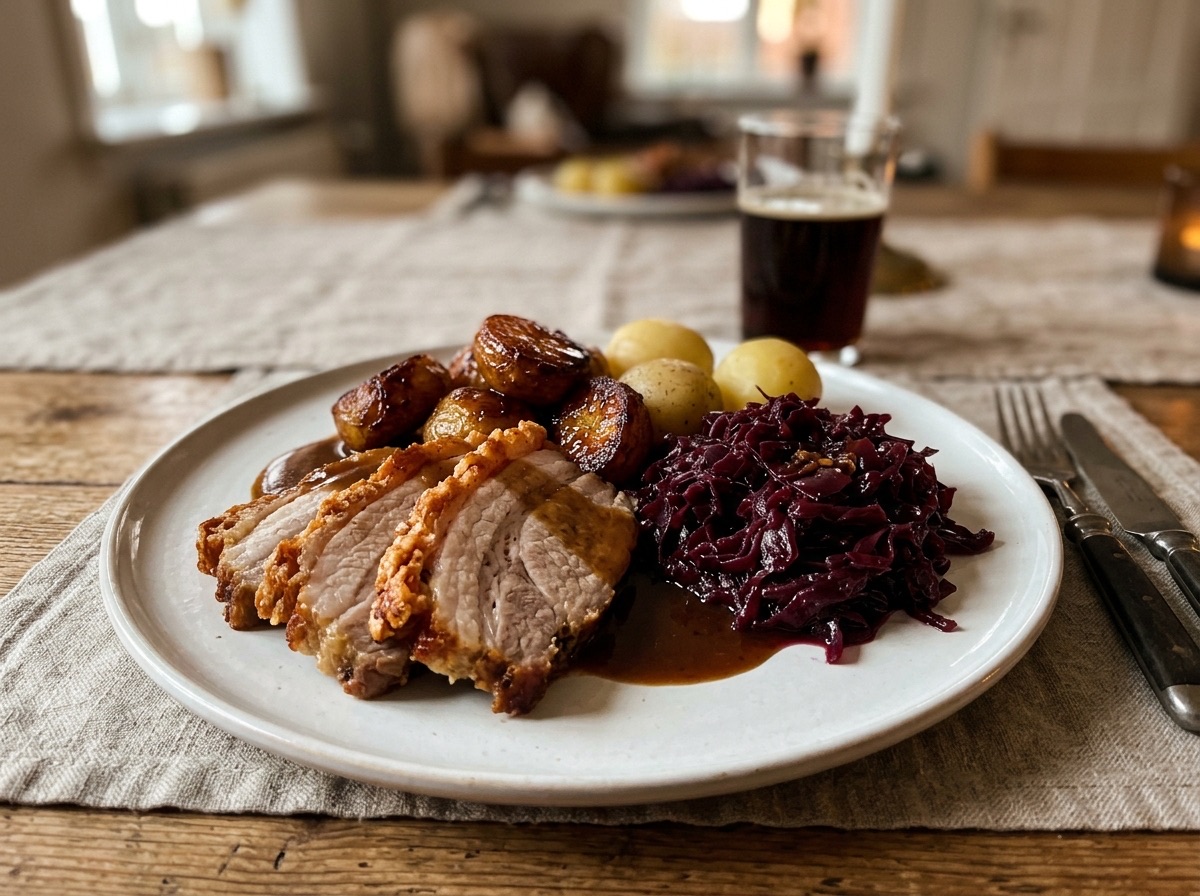
Flæskesteg is Danish roast pork with crackling, and it occupies a place in Danish food culture that goes well beyond the dinner table. It is the centerpiece of the Christmas Eve meal in most Danish homes, it appears on Sundays in traditional households, and the standard by which a cook’s skill is judged is the crackling: it must shatter at the tap of a knife, like glass, not flex or chew. The pork is scored in deep parallel cuts across the fat, rubbed with coarse salt, and roasted low then finished high so the fat renders completely and the rind blisters into crisp, amber bubbles. It comes to the table with caramelized browned potatoes (brunkartofler), dark gravy built from the pan drippings, and braised red cabbage cooked with apple, vinegar, and a little sugar.
4 · Rugbrød
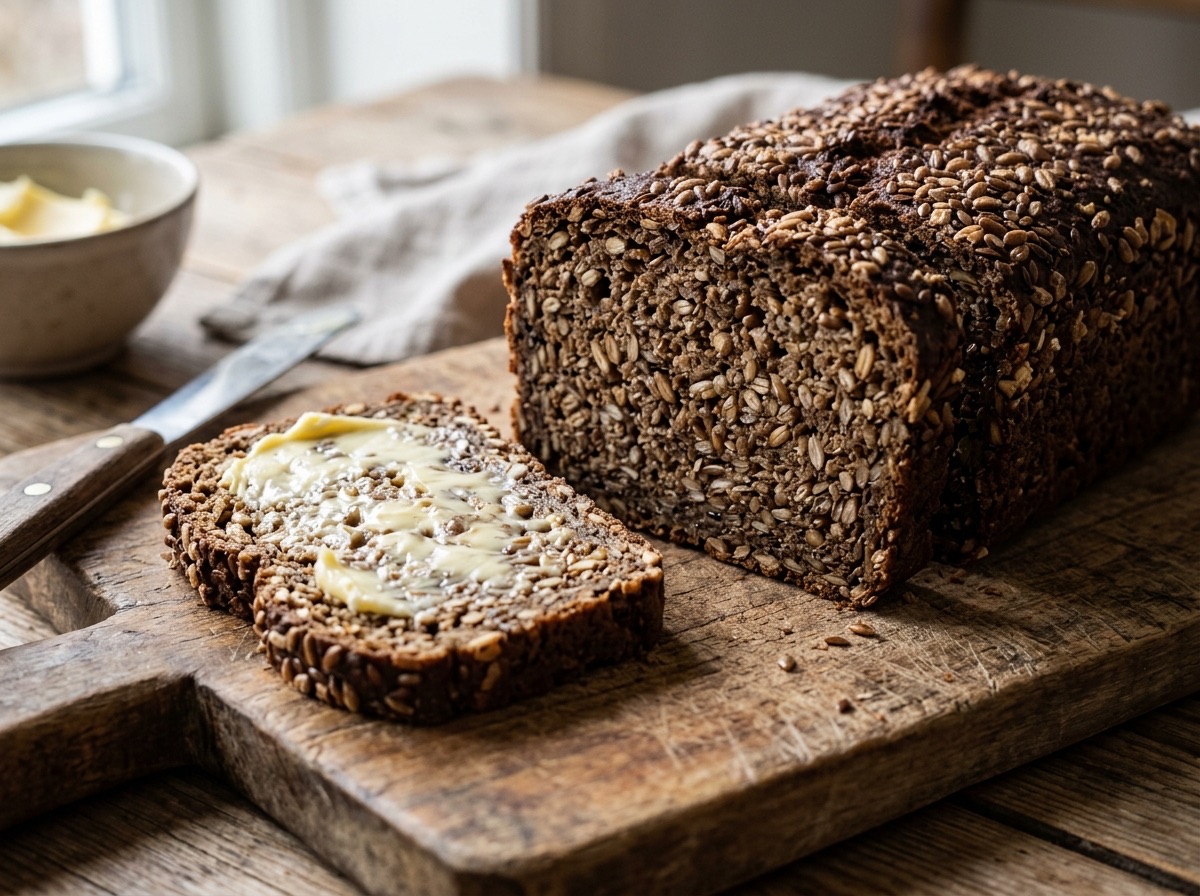
Rugbrød is so fundamental to Danish food that it is almost invisible to Danes themselves, the way a native speaker stops hearing their own accent. It is a dense, dark, nearly black sourdough loaf made from coarsely ground rye flour and whole rye kernels (rugkerner) that are soaked overnight before baking, giving the finished bread a moist, chewy texture packed with intact grain. The fermentation cycle runs for two to three days minimum, which builds a pronounced sourness that lighter breads cannot replicate. A proper rugbrød has no air holes, no crust to speak of, and slices into neat, tight planks that can hold the weight of herring, roast beef, or shrimp without going soft. It is also, by any nutritional measure, one of the most sustaining things you can eat: the whole kernels digest slowly and Danes have relied on it for centuries as everyday fuel. Any classic bager (bakery) in Copenhagen will have a fresh loaf behind the counter, and a slice with butter alone, still warm, is worth the stop.
5 · Wienerbrød
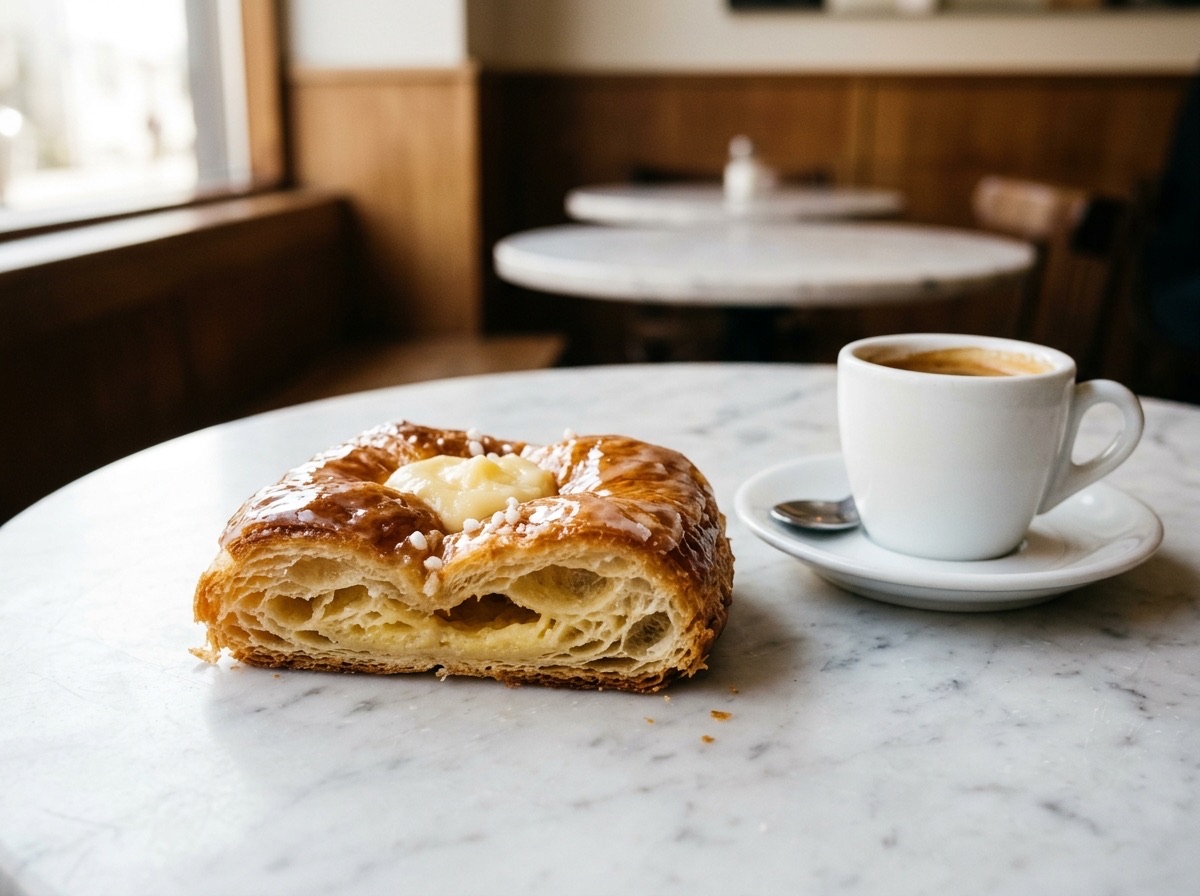
The rest of the world calls it a Danish pastry; in Denmark it is wienerbrød, which translates literally as “Viennese bread,” and the name carries a specific history. In 1850, Danish bakers went on strike and bakery owners brought in replacement workers from Vienna. Those Austrian bakers introduced their laminated dough technique (layers of butter folded repeatedly into yeasted dough) to Copenhagen, the Danish bakers eventually returned, adapted the method with their own touches, and the result became something the Viennese themselves never quite achieved. A proper wienerbrød has shatteringly crisp outer layers that give way to a buttery, slightly chewy interior; it is glazed with a thin icing or a brush of apricot jam, and it comes in a range of shapes (the spandauer, the snegl, the kanelstang) that each bakery executes with a quiet sense of ownership. Eat one at a marble café table with a cup of filter coffee in the morning, ideally from any classic bager that bakes its own.
Copenhagen is a city that has a plethora of incredible modern restaurants, some that rank among the best in the world. But take your time to immerse yourself in some of these traditional dishes, as they provide a uniquely Danish heritage experience.
Make these at home: recipes from this guide
Frequently Asked Questions
What is Copenhagen’s most famous food?
Smørrebrød is arguably Copenhagen’s most iconic food: an open-faced sandwich on dense rye rugbrød, layered with toppings like pickled herring, roast beef, or shrimp, and eaten with a knife and fork at a traditional smørrebrødsrestaurant.
What is a rød pølse and where do you eat it in Copenhagen?
Rød pølse is a bright-red boiled Danish sausage that has been sold from pølsevogn street carts since the 1920s. It is dressed with mustard, ketchup, remoulade, raw and crispy onions, and pickled cucumber. Every corner pølsevogn cart in Copenhagen serves it; eating it standing up at the cart is the correct way.
What makes Danish rugbrød different from other rye breads?
Danish rugbrød is made with coarsely ground rye flour and whole soaked rye kernels, and the dough ferments for two to three days before baking. This process produces a dense, almost black loaf with a pronounced sourness, a moist crumb, and no air holes, which is quite different from lighter German or Scandinavian rye breads.
Why is Danish pastry called wienerbrød in Denmark?
The name means “Viennese bread” and dates to 1850, when Danish bakery owners brought in Viennese replacement workers during a bakers’ strike. The Austrian bakers introduced laminated dough technique to Copenhagen; Danish bakers later adopted and adapted it, producing the wienerbrød that is now considered a Danish classic.
What is flæskesteg and when do Danes eat it?
Flæskesteg is Danish roast pork with crackling, served with caramelized browned potatoes, dark pan-dripping gravy, and braised red cabbage. It is the traditional centerpiece of the Danish Christmas Eve meal and a standard Sunday dinner dish. The crackling must be glass-crisp to be considered properly made.
What should I eat for breakfast in Copenhagen?
Wienerbrød from a local bager (bakery) is the classic Copenhagen breakfast, best with a cup of filter coffee. The laminated pastry, in shapes like the spandauer or the snegl, bears little resemblance to what is sold in airport cafés internationally, so seek out a neighborhood bakery for the real thing.



I spent four days in Copenhagen last May and your smørrebrød write-up matches what I ate at Aamanns 1921 almost item for item. The rugbrød is what I have failed to recreate at home every time I try. Incredible city for eating, thanks for the round-up.
rugbrød with pickled herring takes me home.
Spent four days in Copenhagen last fall and the smørrebrød at Palægade with a beer was the most Danish thing I did, this list is dead on!
Smørrebrød is genuinely a civic institution, my mormor would lose her mind at people folding it in half on a tourist menu. The herring-fish-meat order is very important to Danes, the palate clears between each piece. Aamanns is the modern reference but Palægade serves a slightly more traditional version if that’s what you’re after.
My family lived in Copenhagen until I was eighteen and these are the five things I’d send any visitor to. Aamanns 1921 for smørrebrød is the right call, if you want to see the difference between a tourist version and a real one go there for lunch. Rugbrød especially gets glossed over but a good one is dense and sour and a little molasses-sweet, that’s the layer everything else on the smørrebrød rests on. The pølsevogn near Tivoli has been there since I was a kid.