
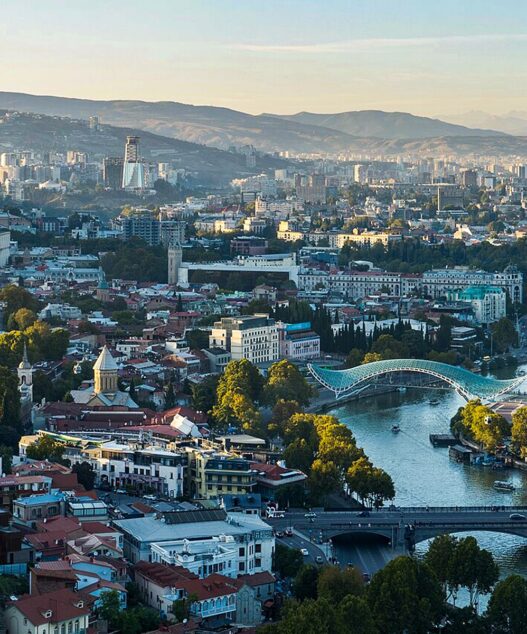
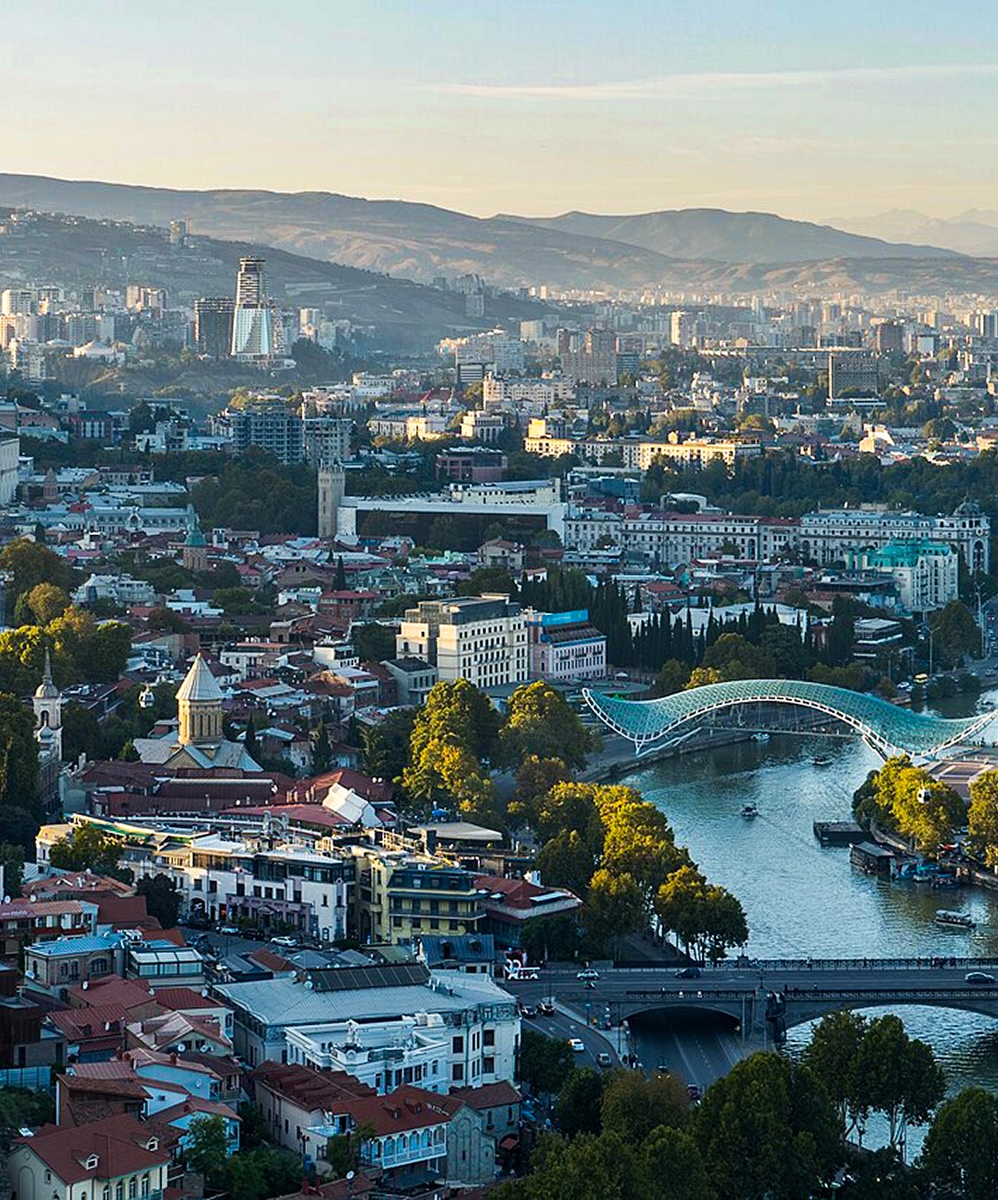
Tbilisi has been a crossroads city for two thousand years, and its food shows every layer of that history: Persian, Turkish, Russian, Caucasian, all of it distilled into a cuisine that is unmistakably Georgian. I leaned hard on Paul Rimple, an American journalist, food tour guide, and blues musician who has lived in Tbilisi for 25 years, for the picks that follow. The places named below are some of his favorites, and perfect jumping off points for exploring the city. If there is one city in the world right now where the food alone justifies the flight, Tbilisi makes a strong case.
1 · Acharuli Khachapuri
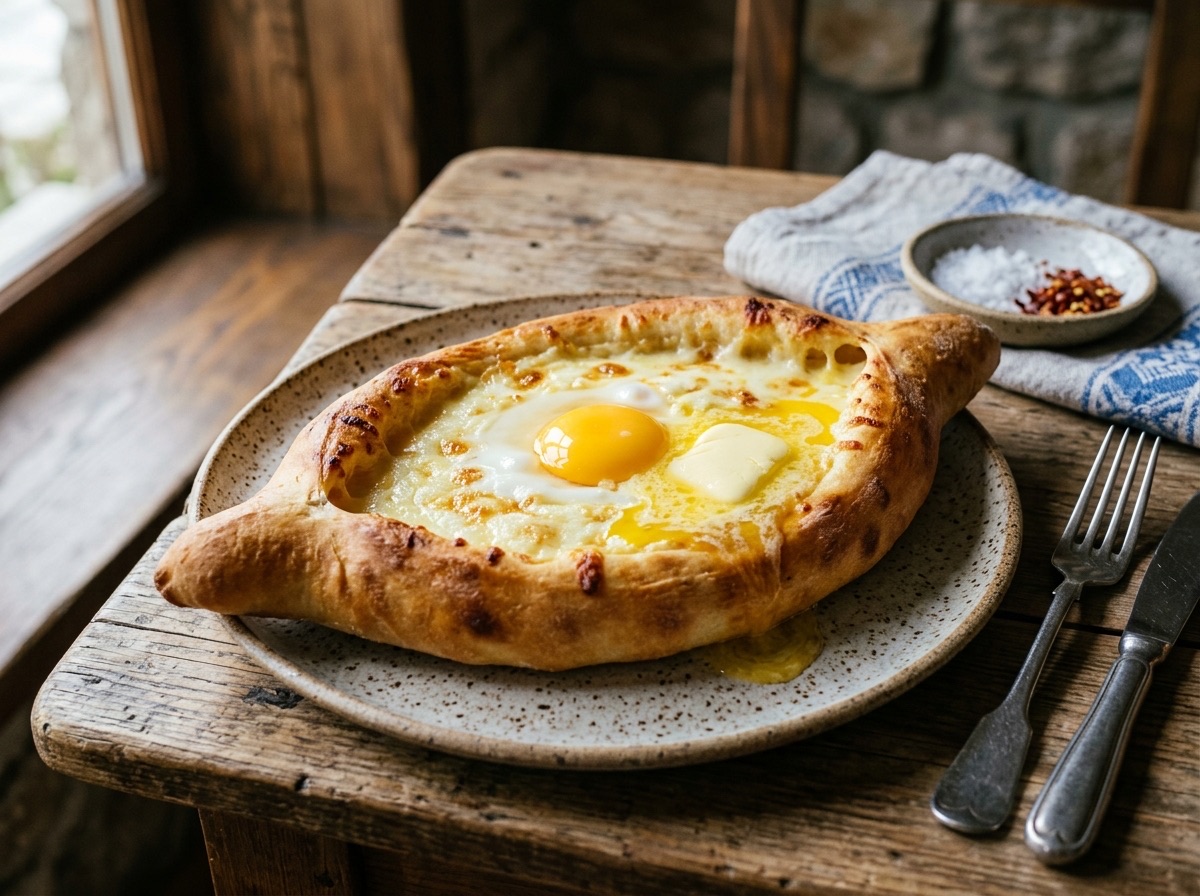
Khachapuri, broadly speaking, means cheese bread, and Georgia has a dozen regional styles of it. But the Adjarian version from the Black Sea coast, known as acharuli khachapuri, is the one that stops visitors cold. It arrives at the table in the shape of a long boat, the dough casing cradling a molten pool of fresh sulguni and imeruli cheese into which a raw egg yolk and a thick slab of butter are dropped mid-service and stirred in while you watch. You tear off the ends of the bread and use them to drag through the warm, yielding center. The cheese should be salty and slightly tangy; the egg should not be fully cooked. A glass of Rkatsiteli, Georgia’s most planted white grape, cuts the richness cleanly. Good acharuli khachapuri is deeply satisfying in the way that almost nothing else is.
Where to try it
- Retro (Tbilisi) — This is Paul’s pick for the best acharuli khachapuri in the city: the egg and butter arrive at the table together, stirred in front of you, the cheese below already properly molten.
2 · Khinkali
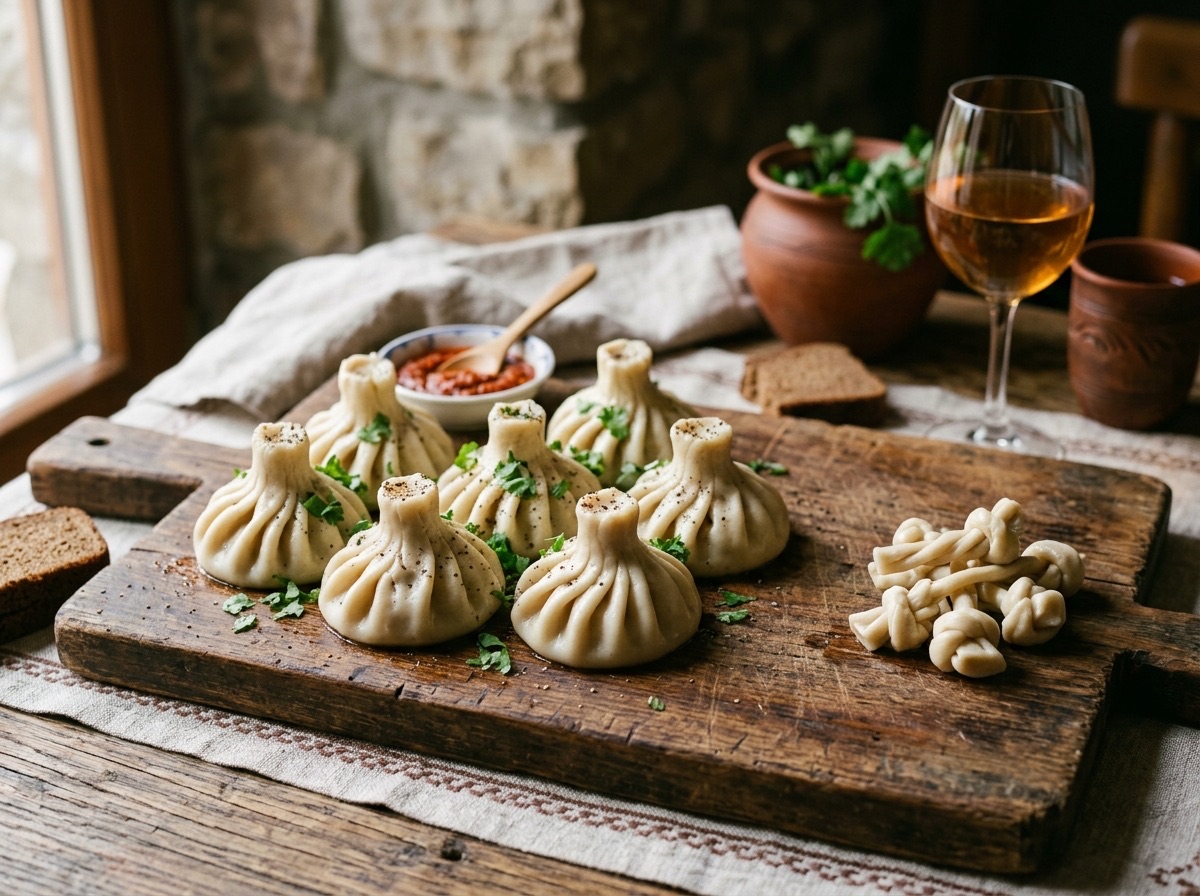
These are Georgian soup dumplings, and they operate by a strict protocol. You pick one up by its twisted knob of dough, bite a small hole in the bottom, and drink the hot broth before eating the rest. The knob itself is left on the plate, and a table of Georgians will often count the discarded stems at the end of a meal as a loose measure of who ate most. The filling is classically spiced beef and pork, seasoned with onion and fresh herbs, but mushroom versions are widespread and perfectly respectable. There are two distinct schools: the urban khinkali, thinner-skinned and refined, and the mountain style, with hand-mixed dough that is thicker, denser, and noticeably more substantial. Both are worth eating; they are different dishes in effect. A pour of cold Saperavi alongside the mountain version is not a bad idea.
Where to try it
- GOBI (Tbilisi) — Tbilisi expert Paul Rimple’s pick for urban-style khinkali: thin-skinned, well-spiced, the broth inside properly hot and abundant.
- Pictograma (Tbilisi) — Paul’s recommendation for mountain-style khinkali, made with beef and hand-mixed dough; heavier and more rustic than the city version, and worth the difference.
3 · Mtsvadi
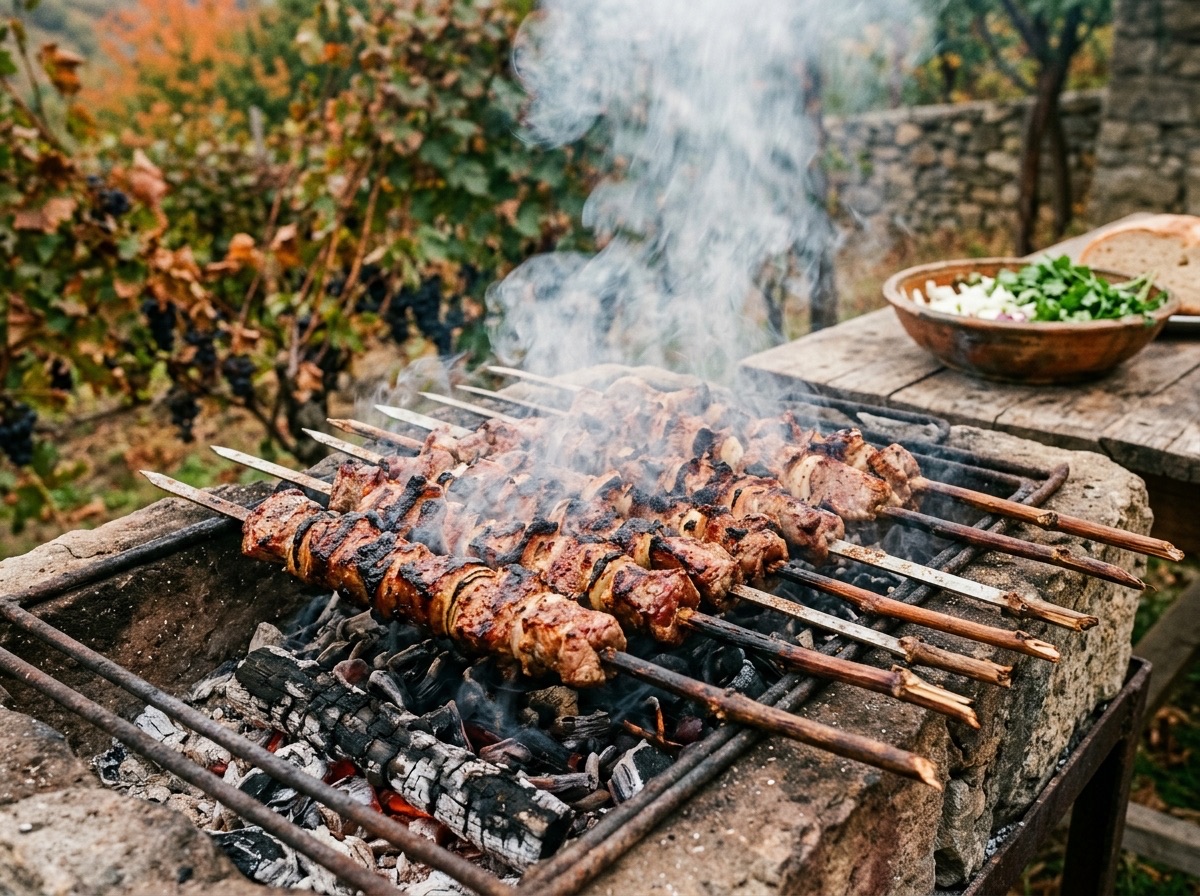
Mtsvadi is the Georgian word for shashlik, the skewered and grilled meat that stretches across the Caucasus and Central Asia, but Georgia’s version has a specific identity. The skewers are traditionally grape-vine cuttings, which burn hot and clean and lend a faint woodsmoke to the meat. The cut is usually pork neck, scored to let the fat render, though lamb and beef versions exist by region and season. A proper mtsvadi arrives unsauced; tkemali, the sharp Georgian plum sauce, is offered alongside, not poured over. It is supra food, the centerpiece of a Georgian feast, and it is eaten with bread and a tumbler of Saperavi from a jug, not a bottle. Paul pointed me specifically toward the airport-area branch of Kakhelebi, which sounds counterintuitive until you actually eat there.
Where to try it
- Kakhelebi (near Tbilisi airport) — Paul’s pick for the best mtsvadi in Tbilisi, the airport-area branch is the one to seek out.
4 · Chakapuli
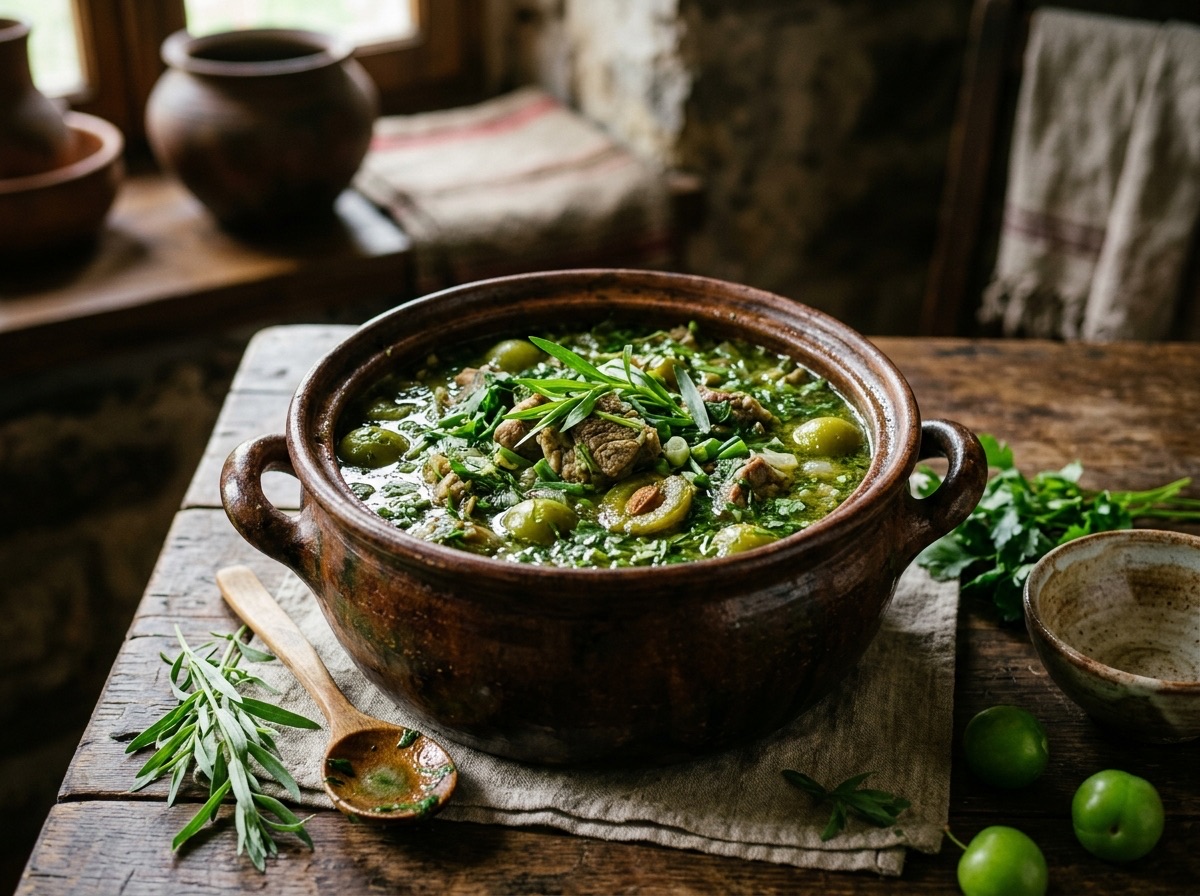
Chakapuli is the dish that marks spring in Georgia, as closely tied to Easter as any food can be to a season. It is a stew of young lamb or veal cooked in dry white wine with sour green tkemali plums, fresh cilantro, and a genuinely generous quantity of fresh tarragon. The tarragon is not a garnish here; it is structural. The broth is bright, herbal, and slightly tart, and the meat is tender from the wine braise. It is one of those dishes that is almost impossible to eat badly when the ingredients are in season.
Where to try it
- Chveni (Tbilisi) — Paul recommends Chveni for chakapuli: the spring lamb stew arrives with enough fresh tarragon to make the herb’s importance completely clear.
5 · Shkmeruli
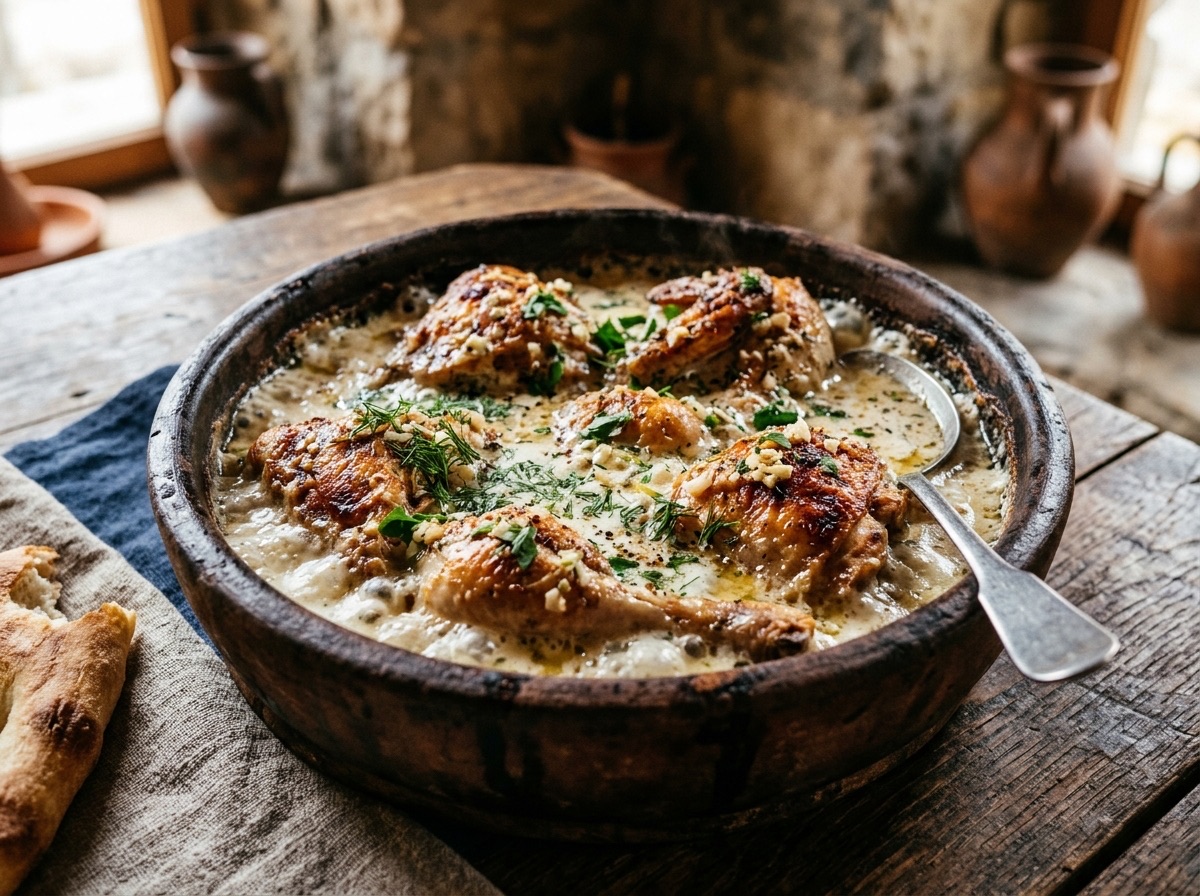
Paul Rimple called it “vampire-proof garlic chicken” and he is not wrong. Shkmeruli is chicken braised in milk or cream with an amount of garlic that would alarm a cautious cook, named for the mountain village of Shkmeri in the Racha region where it originated. The dish reached Tbilisi restaurants relatively recently by Georgian food standards, and there is some variation: brothy versions exist, but the cream-based interpretation is the one that has become canonical in the city. The garlic softens as it cooks but does not retreat; the sauce is pale, rich, and aggressively flavored in the best possible way. It is served in a ketsi, the traditional Georgian clay pan, which keeps it hot at the table. Order bread. You will need it to handle the sauce.
Where to try it
- Shavi Lomi (Tbilisi) — Paul recommends Shavi Lomi for shkmeruli specifically because they commit to the creamy version: the sauce is properly rich, the garlic is not shy.
6 · Tolma
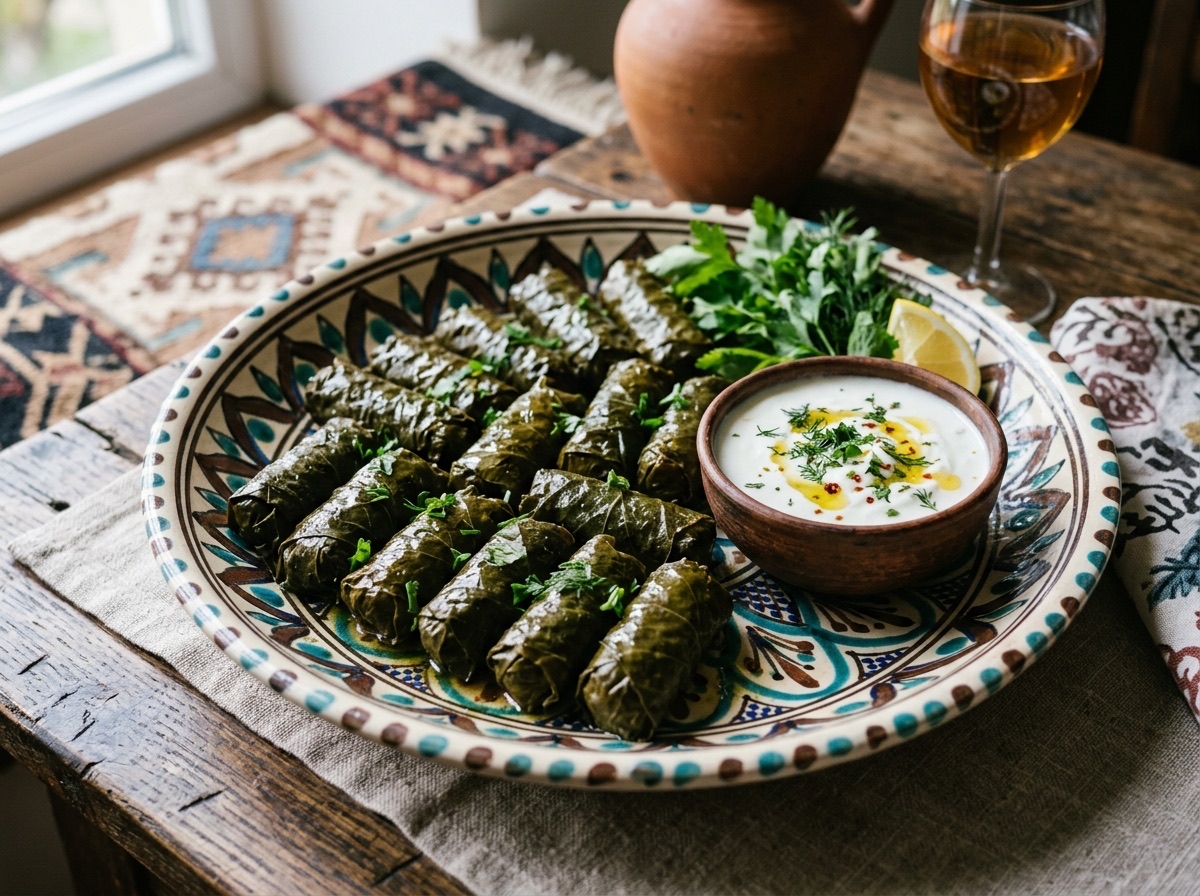
Tolma is the Georgian name for stuffed grape leaves or stuffed vegetables, the dish that travels under many names across the region. Georgians do not claim to have invented it, and they are honest about that, but every restaurant in Tbilisi serves a version and the city has strong opinions about what constitutes a good one. The filling is typically seasoned ground meat and rice wrapped in young grape leaves or packed into hollowed tomatoes, peppers, or eggplant. The grape-leaf version is the most common in restaurants; served with a yogurt and garlic sauce on the side, it is one of the cleaner and more precise things on a Georgian table. Paul’s pick for the best tolma in the city is Sulico Wine Bar, which also happens to have one of the strongest natural-wine lists in Tbilisi.
Where to try it
- Sulico Wine Bar (Tbilisi) — Paul Rimple’s recommendation for the best tolma in Tbilisi, served alongside one of the city’s most serious natural-wine lists.
7 · Lobio
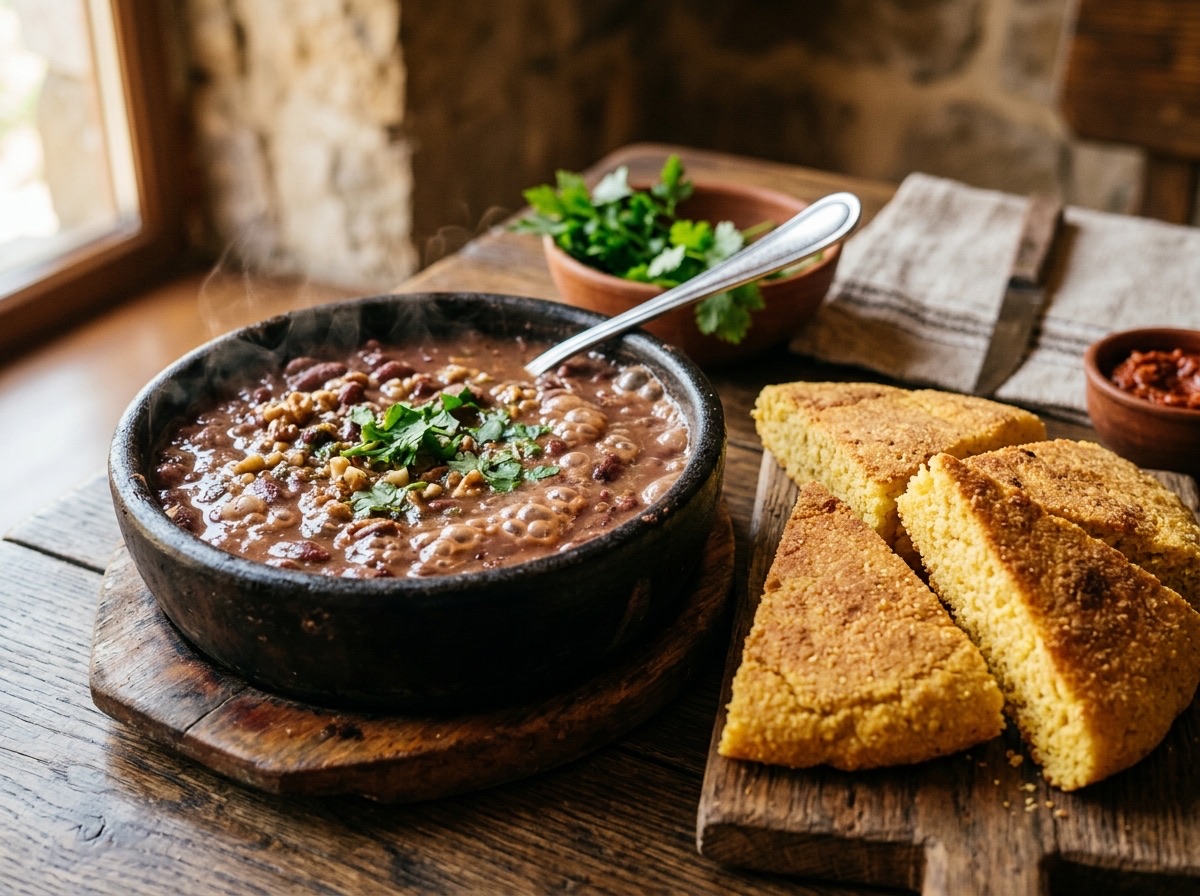
Lobio is the Georgian bean stew, eaten across the country in every season but especially during Lent, when it sustains the observant and pleases everyone else. Red kidney or pinto beans are cooked low and slow with coriander, blue fenugreek, and crushed walnut, sometimes with onion and garlic, the whole thing brought to the table bubbling in a small clay pot. Alongside it comes mchadi, a dense yellow cornbread that you break rather than slice, and a plate of pickled vegetables, typically jonjoli (bladdernut flowers) and pickled cabbage. The combination is vegetarian by structure and satisfying in a way that feels earned. Lobio is eaten everywhere in Tbilisi, from neighborhood lunch counters to proper restaurants; there is no single address to send you to, because nearly any kitchen that takes it seriously will do.
8 · Pkhali
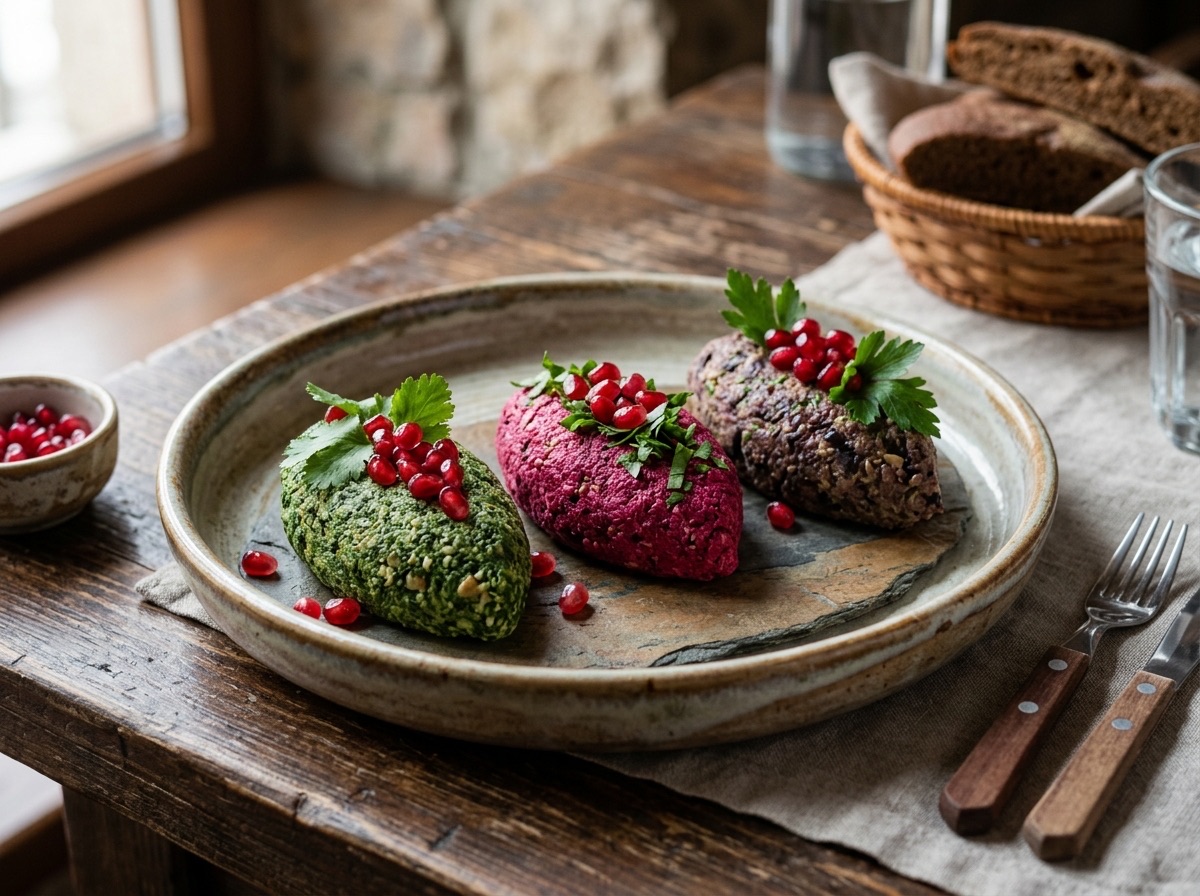
Pkhali are the walnut-paste vegetable spreads that open nearly every Georgian supra, and they are one of the things that distinguish Georgian cooking most clearly from its neighbors. The classic trio is spinach, beet, and eggplant, each cooked and then bound with a paste of walnuts, garlic, vinegar, and the Georgian spice blend that typically includes blue fenugreek and coriander. The three versions arrive as quenelles or small patties, often garnished with a pomegranate seed on top, their colors ranging from deep green to magenta to near-black. They are eaten with shoti bread or a fork, cold or at room temperature, and they work as well with an Rkatsiteli as with anything else on the table. Pkhali shows up at almost every Georgian meal from the first moment; get to know it early.
9 · Satsivi
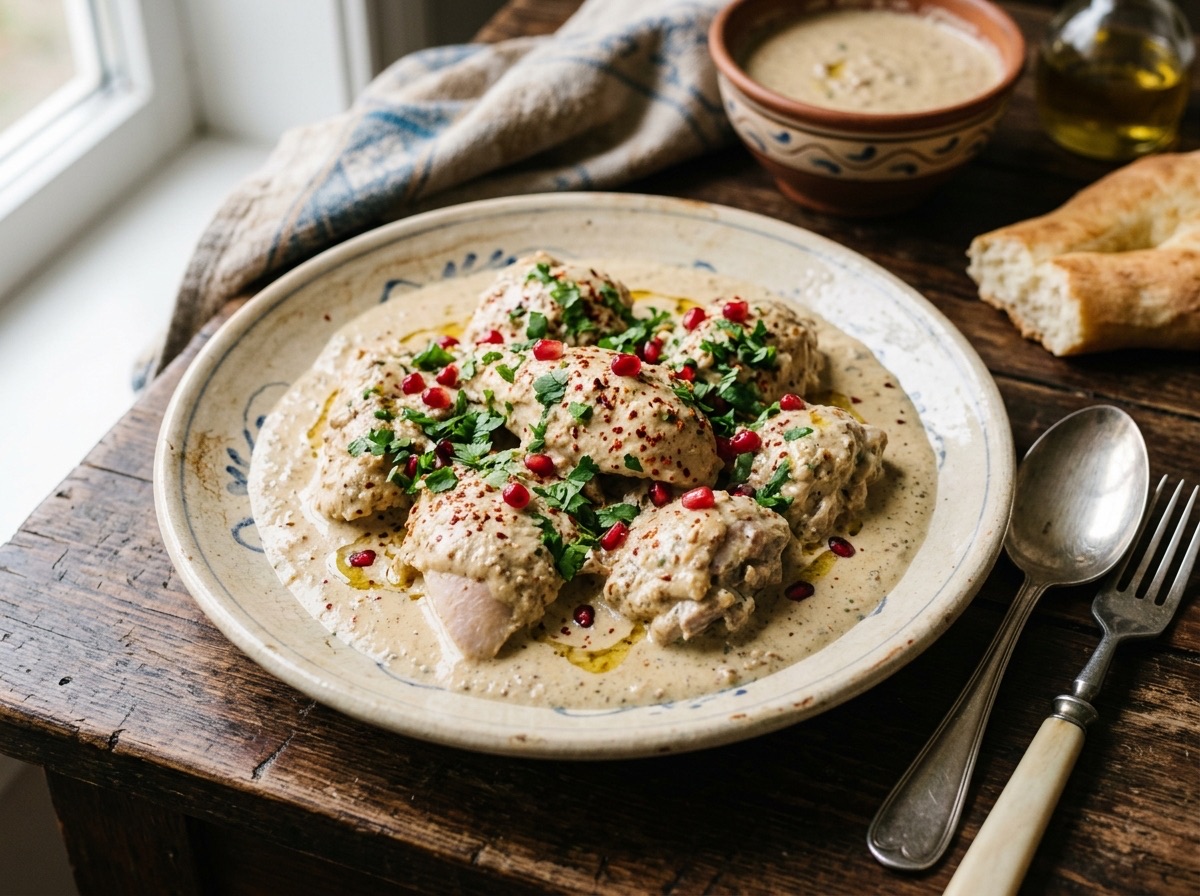
Satsivi is the cold walnut sauce that defines Georgian New Year’s cooking, though it appears year-round in Tbilisi restaurants and is not limited to the holidays. It is made by pouring a thick sauce of crushed walnuts, blue fenugreek, coriander, garlic, and warm spices over poached turkey or chicken and letting it set cold. The sauce thickens as it cools and clings to the meat in a pale, dense coat. The flavor is rich and faintly aromatic, with the walnut carrying most of the weight. It is also made over fish (typically carp) and occasionally over eggplant in a vegetarian variant. As a cold dish in a cuisine that tends toward the warm and robust, satsivi occupies a specific and honored position; it is the dish Georgians think of when they think of home and winter and celebration.
10 · Churchkhela
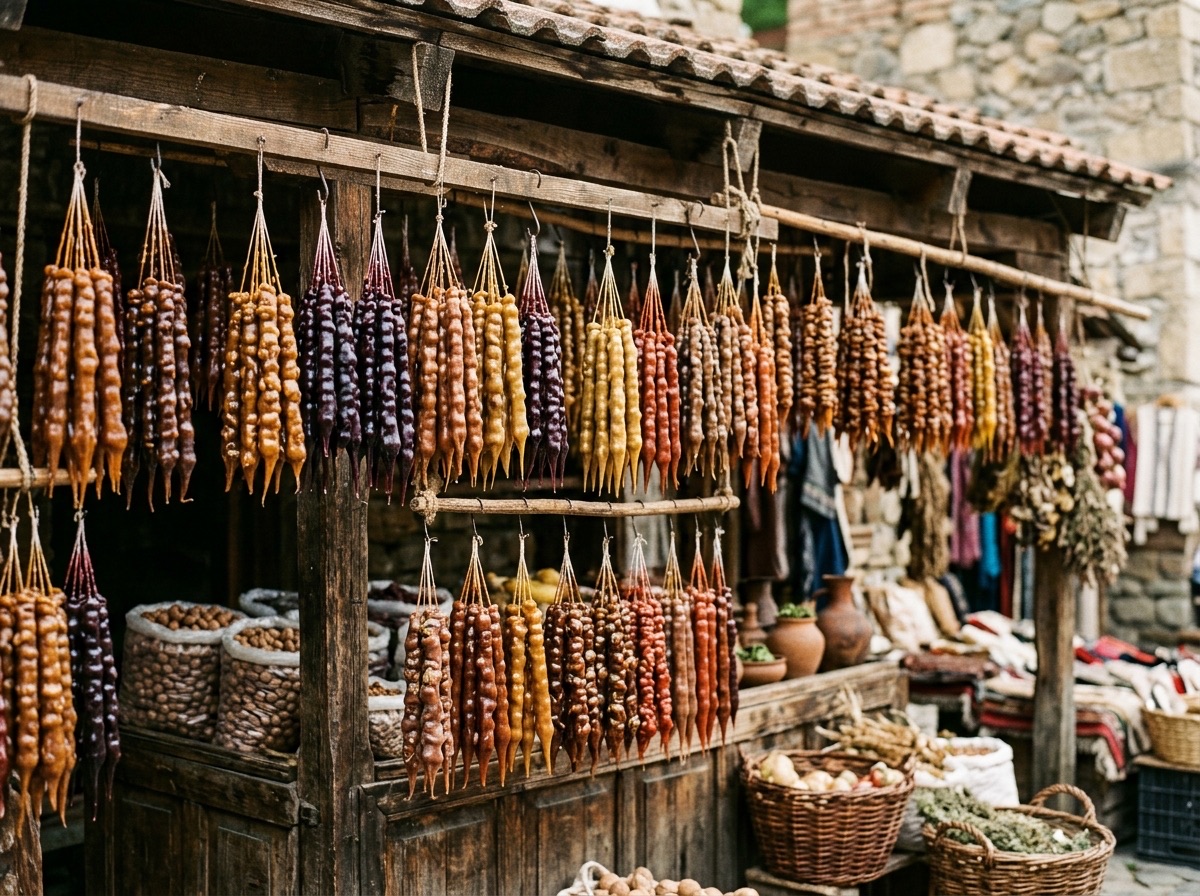
Churchkhela are the walnut-and-grape-must candles you will see hanging at every market, roadside stand, bus station, and tourist shop in Georgia, and you should eat them rather than photograph them. Strings of walnuts (sometimes hazelnuts) are threaded on a cord and dipped repeatedly in thickened grape must called badagi, then hung to dry until the coating sets into a chewy, concentrated shell around the nut. The color depends on the grape variety used: deep burgundy from Saperavi, amber from white grapes. They are energy-dense and intensely sweet-sour, the grape must carrying the full flavor of the wine that was never made. Georgians have carried them as travel food for centuries, which is why they are everywhere near transit points. The nickname “Georgian Snickers” undersells them considerably.
In Tbilisi, the food is rooted, the wine is ancient and strange in the best sense, and the table culture around the supra makes even a casual meal feel like a considered one. And before you fly out, hit Chacha Corner for a shot of the eponymous Georgian grape brandy. Paul says to tell Vato, the owner, that he sent you. For Paul’s 25-year view of Tbilisi, read our full interview with him.
Frequently Asked Questions
What is the most famous food in Tbilisi?
Acharuli khachapuri, the boat-shaped Adjarian cheese bread filled with melted sulguni, a raw egg yolk, and butter, is the dish most visitors remember. It is made to order and eaten immediately, using torn pieces of the bread casing to drag through the warm cheese filling.
What are Georgian soup dumplings called and how do you eat them?
They are called khinkali. The correct method is to pick one up by its twisted dough knob, bite a small hole in the bottom, and drink the hot broth before eating the dumpling itself. The knob is left on the plate, not eaten.
What Georgian wines pair well with the local food?
Rkatsiteli is the most widely planted white and pairs well with rich dishes like acharuli khachapuri and pkhali. Saperavi is the dominant red and holds up to mtsvadi and the heavier meat dishes. For the spring stew chakapuli, look for Kartli-region grapes: Goruli Mtsvane, Tavkveri, and Shavkapito, with the Samtavisi label a reliable starting point.
Is there good vegetarian food in Tbilisi?
Yes. Georgian Orthodox fasting traditions have produced a strong vegetarian canon: lobio (red bean stew with mchadi cornbread), pkhali (walnut-paste vegetable spreads in spinach, beet, and eggplant), and the vegetarian variant of satsivi over eggplant are all fully realized dishes, not afterthoughts.
What is churchkhela and where can you buy it in Tbilisi?
Churchkhela are strings of walnuts or hazelnuts dipped in thickened grape must and dried into chewy, sweet-tart candles. They are sold at nearly every market, roadside stand, and street stall in Tbilisi, in colors ranging from deep burgundy to amber depending on the grape variety used.
What is shkmeruli and where should I eat it in Tbilisi?
Shkmeruli is chicken braised in milk or cream with a large amount of garlic, named for the Racha-region village of Shkmeri where it originated. Paul Rimple recommends Shavi Lomi for the creamy version, which is the more common style found in Tbilisi restaurants.


Georgia has been on my list for years and the khachapuri alone might finally get me on the plane. Saving this for the trip!