
Earlier this year I took my first trip to Tbilisi. I went in with no real expectations beyond a vague hope of khachapuri and natural wine. I left convinced that the city might just be the most interesting culinary destination in Europe right now. Tbilisi is a layered, contradictory, beautiful place: old wooden balconies sagging over cobblestone alleys; Soviet apartment blocks elbowing in next to Art Nouveau facades; a 19th-century French boulevard cutting through it all; an Orthodox cathedral on a hilltop.
The whole thing is stitched together by the Mtkvari river and a kind of relaxed warmth I have not felt in any other major European city. Here, strangers pull you into homes, and wine cellars, into long supras where the toasts are always in your honor. The food was a revelation: vegetables that taste true, fresh herbs in everything, a crossover of cultures and history, and an entire wine tradition I had underestimated despite Georgia having been making wine for eight thousand years. I left with a list of things and places I needed to come back for and a clear sense that the city is in the middle of something fantastical, a creative explosion in food and wine that is still finding its shape.
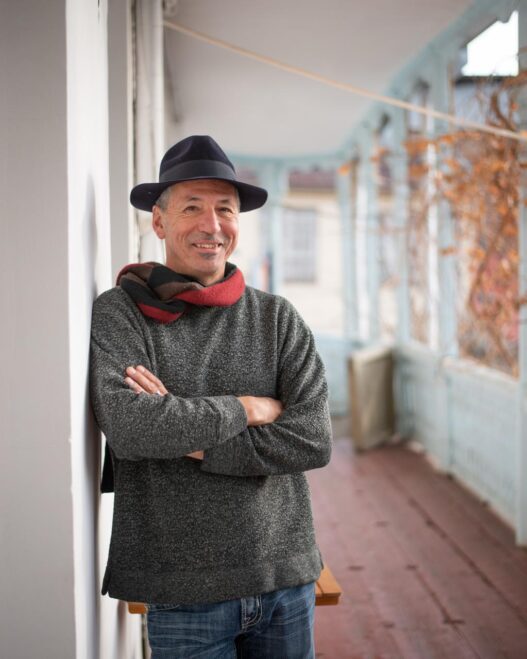
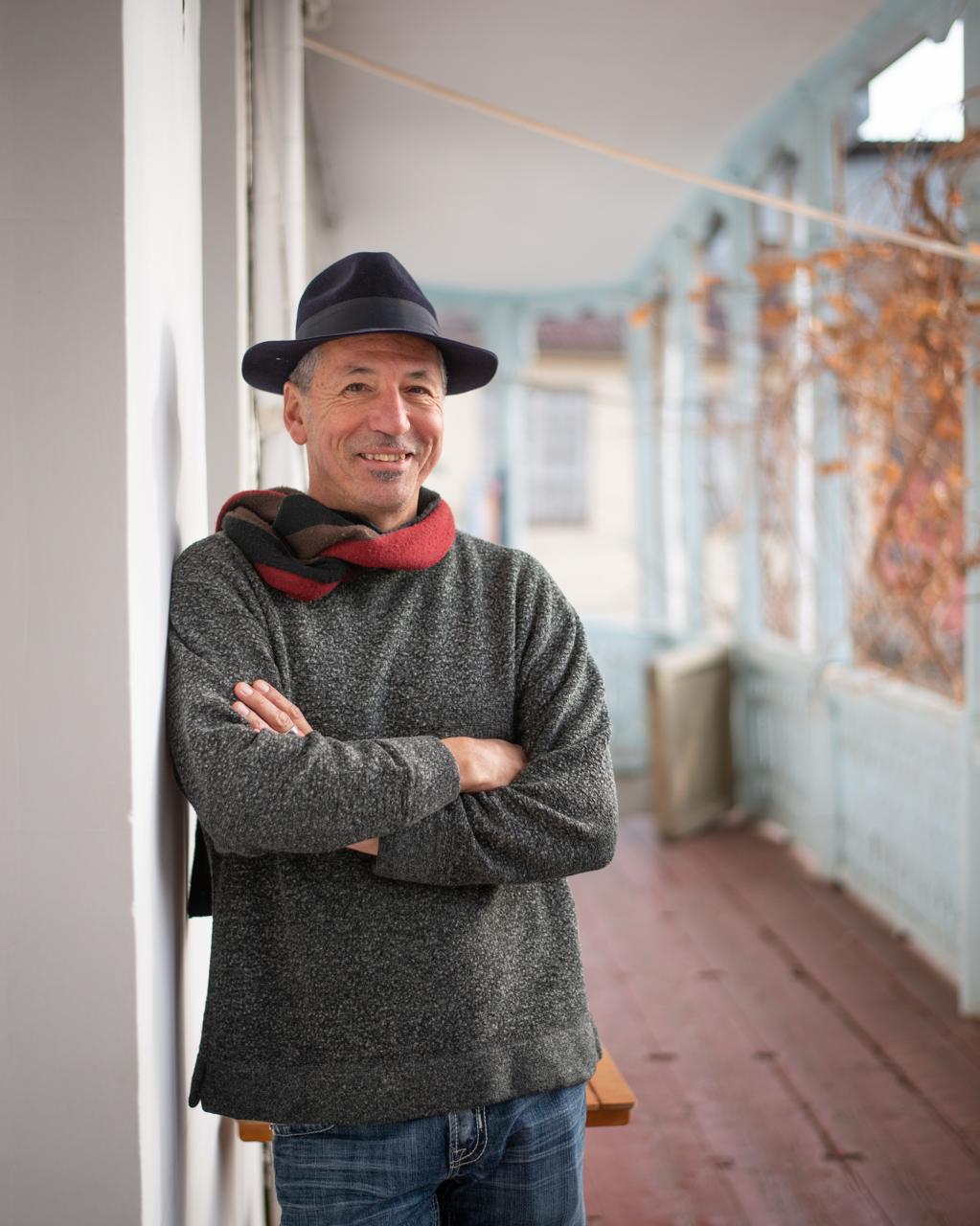
The person who guided me through multiple days and nights of eating and drinking was Paul Rimple, the American journalist and blues musician who landed in Tbilisi in 2001 and never left. Twenty-five years in the city, fluent in its history and its food scene, runs food tours via Meet Me Here Tbilisi. He is one of the few people who can give you both the long view and the on-the-ground take. We talked about how he ended up in Tbilisi, how the city has changed since the post-Soviet collapse, the gastronomic renaissance, the natural wine movement, and the restaurants and wine bars worth your time.
What follows is our conversation, lightly edited.
You’re a journalist, an explorer and a musician from California. Tell me how you ended up in Georgia.
Oof! Long story. How to put it in a nutshell?
I moved to Chicago to play blues. I was lucky, many of the architects of the genre were still alive and I played with lots of them. But after several years other dreams were beckoning me, namely travel. In 1991, I bar hopped across Europe and found my bar in Krakow, which became my home. I had always been writing songs and poems but in Poland I put in lots of work on my fiction until an editor of a national culture magazine asked me if I could write a story about baseball, explain it to Polish people. I got paid for a non-fiction story and ran with it, writing travel stories for the magazine.
In the meantime I was playing blues with a Ukrainian pianist and one day a pair of Georgian cousins crashed our gig with a flute and guitar. We formed the strangest blues band anyone has ever heard. At one point we were: flute, guitar, sax, violin, bongos and me on harmonica and singing.
Anyway, the Georgians moved in with me and my girlfriend, who was starting her career as a photo journalist. We went to Mexico, returned to Krakow intending to move to Mexico City, but we followed up on a promise we had made to our friends and visited Georgia in 2001. And here we are.
What was it about Georgia in general and Tbilisi in particular that spoke to you and made you stay?
Georgia in 2001 was a near-failed state. Corruption was endemic, criminals were more trusted than authorities, who were the biggest criminals. When we arrived, there were billboards across the city advertising a businessman who had been kidnapped. Instead of paying the ransom, his boss had hired the billboards and he was eventually released. Electricity was a luxury we enjoyed for a handful of hours a day. Men wore pistols in their belts as a fashion accessory. What was not to love?
We traveled across the country landing in villages like Dr. Who in the Tardis, and wherever we went, strangers welcomed us into their homes, sharing what little they had with open hearts. The hospitality, so sincere, conquered us and the surreal environment enchanted us.
After living in Poland, I appreciate how Georgians wear their emotions on their sleeves. In Krakow, you meet a person at a pub, connect through profound conversation, you say ‘wow, where have you been all my life?!’ Then a couple days later, you’re walking down the street and you see that person and just when you’re about to wave and greet them, they see you and pretend they didn’t. They have no time to say hi. In Tbilisi, I was walking down the street and a car stopped, blocking the traffic. The driver got out, cars honking, and ran over and hugged me. ‘Paul! How are you?!’ I’m hugging him back wondering who he is and where we met. That’s what I love about Georgians.
The country is mind-blowingly beautiful, the mountains are untamed. You visit a remote village somewhere and think, wow, I could live here. And then you do it again and again. As for Tbilisi, it’s the belly button of Georgia and is constantly changing. Moreover, this is where I became a journalist. It was niche, for sure, but there was always some crazy shit happening to write about. History unfolded in front of my eyes. I mean, the fucking Russians invaded in 2008 and by default I became a war correspondent.
You’ve been in Tbilisi for 25 years. How has the city changed?
As I said, it was anarchic when I arrived 25 years ago. There were Chechen refugees and militants. The sole function of the police was to extort money from citizens. Street crime was a big problem. Then the Rose Revolution happened: reform, economic growth, a clear alignment with European values and a rejection of Russian ones. This has radically shaped the mentality of the young generation with no memory of communism, the war-torn 90s and the Russian invasion of 2008. These kids are European by default. English is their second language, not Russian. And good luck bribing a cop now, and if you drop your wallet, you are more likely to have it handed back to you than not. Honestly, street crime is virtually non-existent.
Today, I see Tbilisi reclaiming its multicultural heritage. Up until recently, the city was populated by what is considered the ‘traditional population,’ those who Stalin didn’t deport. The Iron Curtain killed the Silk Road, but traffic is flowing again. Tbilisi is much more cosmopolitan now than it was ten years ago and that brings really electrifying energy and a wider palate of flavors. There is a cool late-night Japanese dive with good street food, and noodle places are popping up everywhere. There’s a Chinese hot pot joint that’s pretty good and some decent Thai places. Before, if you wanted a change in flavors, there was a Turkish joint, a Chinese restaurant that served Georgian bread, and McDonald’s.
To me, Tbilisi has a unique mix of east and west I haven’t seen in any other large European city. Parts feel like Berlin or Copenhagen, very creative, small artisan shops, young hipsters, coffee shops. Other parts feel more Parisian, big boulevards, striking monuments. Others feel almost like an Austrian alpine village, and across all of it you definitely feel an Eastern European vibe. It’s rebellious, energetic, modern and ancient at the same time, backwards and forwards, European but not really. What’s your take?
There is nothing like Tbilisi. One foot is deeply planted in a heroic, honorable past and the other foot is desperately kicking at the future. I like the dynamics of being somewhere abound with familiarities one moment and total foreignness the next. It’s like living in a collage. I’m kinda tired of the ‘bridge between east and west’ / ‘crossroads of Europe’ cliché, but it’s a cliché for a reason. It’s a land of extremes; there is nothing subtle about Georgia.
Tbilisi has retained its ancient trade-city vibe. It was all caravansaries, a melting pot of ethnicities, unlike anywhere in the world. In one small neighborhood, there is a mosque that both Sunni and Shia share, a synagogue, an Armenian and Catholic church, and a Zoroastrian temple. There is a teahouse in the bath district, the last one in fact, and you go in and a Jew, an Armenian, a Kurd, an Azeri and a Georgian are sitting around a backgammon board.
Let’s talk about the food here. What excites you about it?
Freshness. Bite into a tomato in season and you’ll have an orgasm. Gobs of fresh herbs in everything. Chicken that tastes like chicken. I’m American, our chickens are nothing but tasteless hormone bombs, just texture. You can’t hide that fact no matter how much tomato or mole sauce you drown it in. Georgia is a land of flavor and culinary simplicity.
But what is most exciting is that we are in the middle of a gastronomic renaissance where people are redefining the concept of tradition. When I first came here, it was blasphemous to fiddle with so-called traditional dishes because it was considered an insult to Georgian identity. People didn’t understand that Georgian cuisine was a living organism developed over centuries of trade, conquest and occupation. Before the Soviets, there was a lot of Western European influence reflected in the cuisine. It’s said that every Tbilisi housewife made béchamel. But the Soviets came and nationalized everything from the arts to the food and created the menu, which meant proletariat was in, bourgeois out. Now it’s largely accepted that the cuisine is an evolving organism and chefs are free to have fun with it. I remember when you couldn’t find lettuce anywhere. Now you can find locally grown artichokes and habaneros at the market. That’s crazy.
And the wine, tell me!
Fuck, I’m now recovering from a 3-day weekend of back-to-back wine festivals, preparing myself for another one next weekend.
If you love wine, I can’t imagine a more exciting place to be. Look, 8,000 years of winemaking is great for marketing, but Georgia is only beginning to make good wine now. Remember, the country essentially lost 100 years due to the Soviets and post-Soviet period. It wasn’t until 2010 that the country was earnestly making wine. And you know, wine takes time. Georgians aren’t known for their patience. But in this time, people have been rediscovering long-lost, near-extinct varietals and cultivating them, and since there wasn’t a lot of pre-Soviet documentation, there is a lot of hit and miss with terroir. Still, it’s part of the excitement. Winemakers now understand the importance of hygiene, a particular challenge with qvevri.
I’m a natural wine lover. I’m not fascist about it, I’ll drink pretty much anything, but I’m more interested in feeling a person’s expression through their wine. Big wineries have no personality. Georgia’s natural wine movement is vibrant, honest. It’s not a fashion. Remember, people have been making natural wine here from the beginning.
I love how the country’s wine is as diverse as its landscape and climate. Each region has its indigenous grapes and traditional way of making its wine. East Georgia is hot and dry and where amber wine is from. Wines are traditionally full bodied, tannic, good with meat. West Georgia is milder, wines higher in acidity, lighter, traditionally made with no skin, but not exclusively anymore. I’m a fan of Kartli varieties, which share characteristics of both east and west. I planted a little vineyard a few years ago of Shavkapito, a rare Kartli red. I should have my first harvest this year.
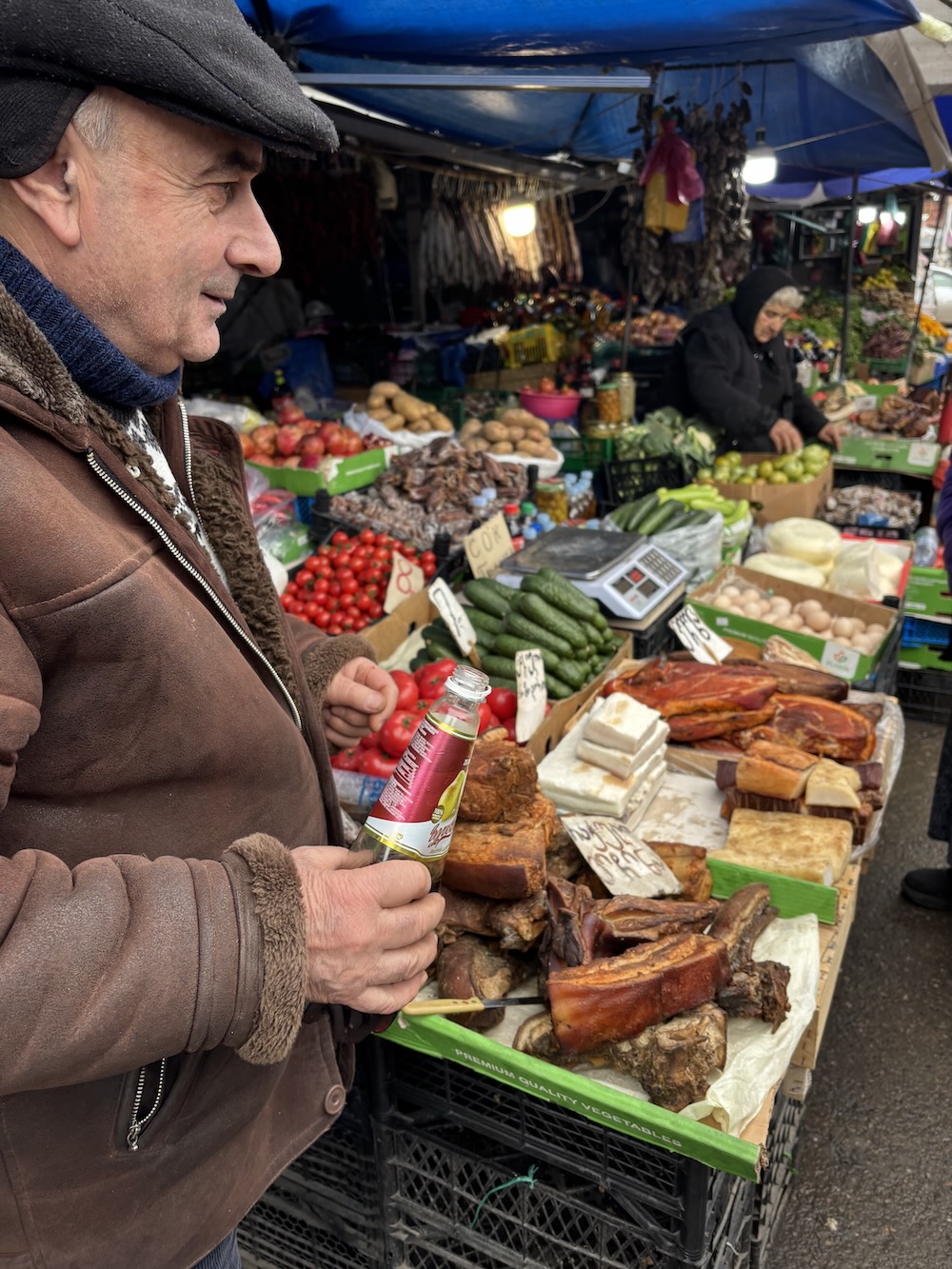
At the Dezerters Bazaar, almost every purchase you make is accompanied by an offer to taste some homemade cha-cha or brandy. Tread carefully, it’s potent stuff!
You take groups of visitors on tours of markets and more. What can people expect from those experiences?
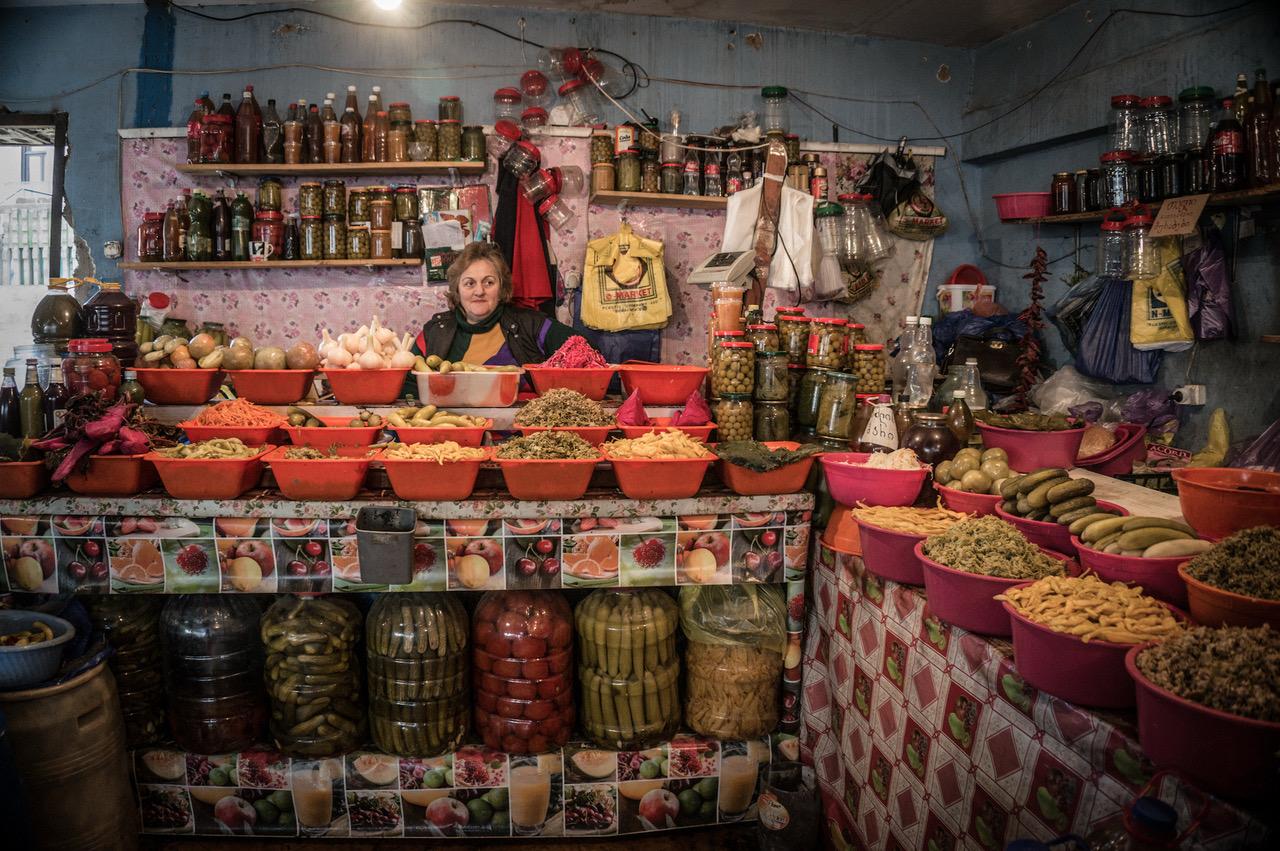
My main Tbilisi tour is a visit to the Dezerter’s Bazaar, the oldest and biggest produce market in Tbilisi. It’s a great introduction to the city and its food and wine culture as we see the seasonal ingredients behind everything you eat and meet some of the sweet people selling them. We have lunch at a favorite restaurant and finish with a laid-back wine tasting.
I also take people on one- and multi-day wine adventures to several regions. These are very down to earth, as my guests are hosted as friends. We dine at the homes of winemakers. The most spectacular tour is my food-based trip to Tusheti, the most isolated region in Georgia. It is truly a Shangri-La of shepherds, horses and wilderness, and an adventure you will forever cherish.
You’re the front man of a famous local blues band, and you play across the city almost weekly. How do Georgians relate to what is in essence a very American type of music?
It’s not that it’s American music, everyone loves rock and roll, rap, jazz. It’s that it’s not a popular genre anywhere. It’s underground with small followings around the world. Georgians used to not understand our music, so often guys would come up and request ‘Brick in the Wall’ and get upset when I said I don’t know that song. This is all changing, though. It’s funny: when I’m back in the US at a blues show, the crowd is middle-aged and retired. Here, we have a following of kids who really dig the music. No one has requested Pink Floyd or Sweet Home Alabama in a very long time.
Can you give me your top restaurants in Tbilisi that visitors shouldn’t miss?
Barbarastan for fine dining, and Veliaminov is old school. The kababs and khinkali at Veliaminov are very very good, people travel here just for that.
For the Ajaran khachapuri, the Jenna Jameson of Georgian food porn and a dish that can give you a coronary, the only place is Retro.
Literra is excellent for its atmosphere and the creations of Georgia’s first celebrity chef, Tekuna Gachechiladze. A beautiful place.
Everyone has their favorite khinkali restaurant. I have a new one, called GOBI. I’m going back in a few hours to try other things on their menu. The place is really good.
Azarphesha feels like part ethnographic museum and part living room. You never know when a table of people will break out in song or someone will sit at the piano and tickle the keys. Food is very good, too.
Anything else international foodie tourists will gravitate towards?
There are lots of wine bars and shops, but lots of them suck. Wine Boutique is a neighborhood shop with a nice selection of independent wines and a cozy atmosphere that welcomes you to sit for a glass or to uncork a bottle. Vino Underground is going through a rebranding, has a great history as Georgia’s first natural wine bar, and is simply a cool place to drink good wine. Sulico Wine Bar is both a great restaurant and has a new wine bar/shop on its patio.
Paul Rimple’s food tours of Tbilisi run regularly via Meet Me Here Tbilisi. Find him there, or at any of the wine bars he just mentioned.



This bumped Tbilisi way up my travel list.
I spent ten days in Tbilisi over Christmas and your description is the closest thing I have read to actually being there. Got home with five bottles of natural wine in my luggage and a list of restaurants for next time. Incredible food city.
The natural wine and khachapuri section is what sold me.
This was such a great read, made me want to book a flight to Tbilisi tomorrow!
We’re waiting for you!
I spent four nights in Tbilisi in March and the dinner at a cellar in the old town (I can’t for the life of me remember the name of the place!!) was the best meal of my entire year.
I went to Tbilisi for a wedding two years ago and ended up extending the trip by a week to chase exactly the food culture this interview talks about. Khachapuri pulled hot from a clay oven in the old town, dinners that ran six hours I still remember in pieces, and qvevri natural wine I’d never tasted anything like. This article makes me want to book one later this year, and I will definitely call on Paul for guidande!! Thanks for putting words to a city most people sleep on.
See you in Tbilisi, Matt!