
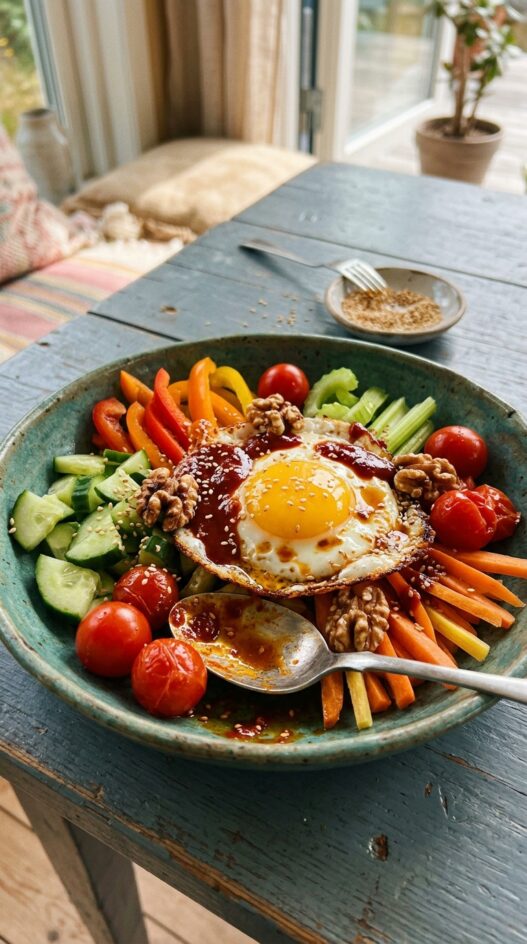
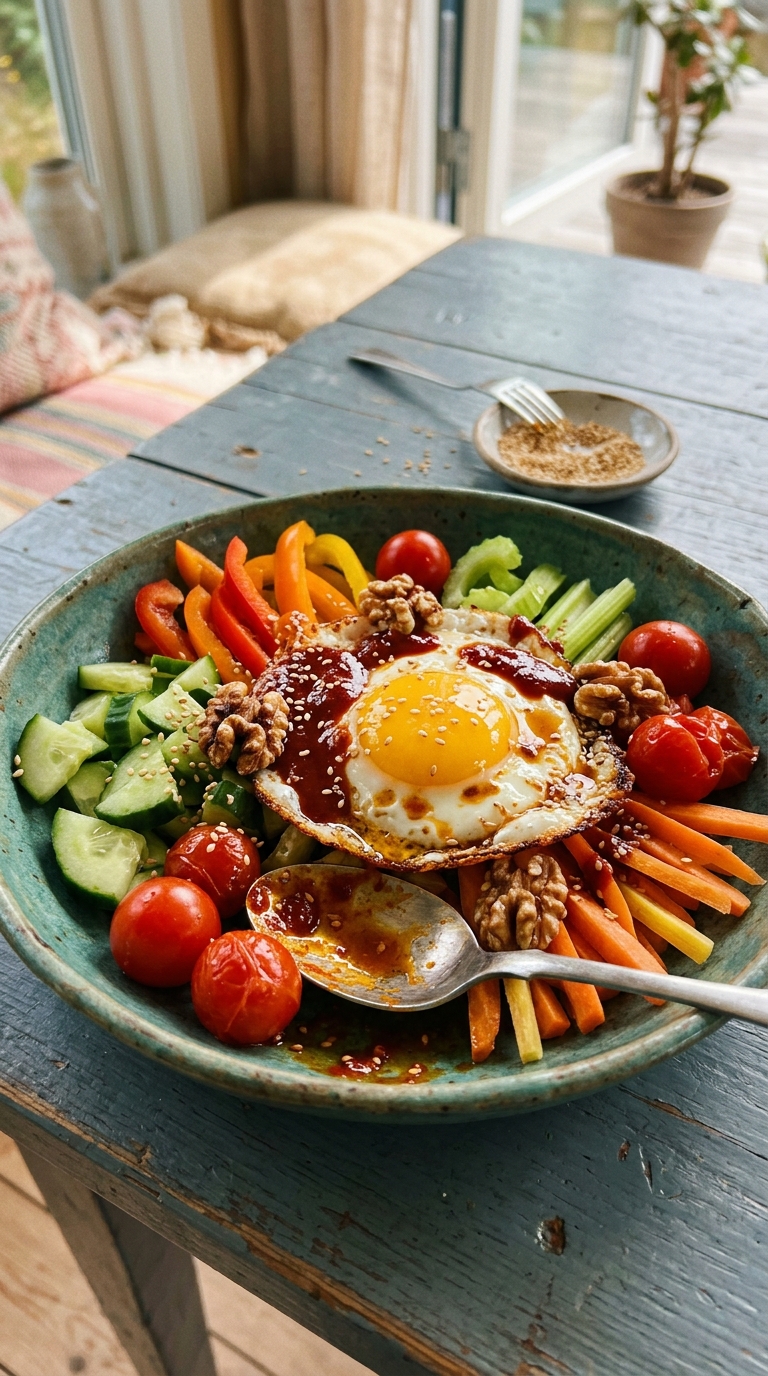
I’m pretty obsessed with Korean food, especially Gochujang paste. I love to use the paste to season meat or fried rice. Bibimbap (Korean rice bowl with gochujang) is on my weekday lunch menu almost every other week, usually with raw veggies. Some days it’s just No-Rice Bibimbap Bowl, which makes it an amazing spicy salad bowl. Mine is usually packed with raw veggies, fried egg and sprinkles of nuts and seeds. Slicing the veggies in different shapes and sizes adds texture to the salad. Use any of your favourite salad ingredients. Top with spicy gochujang sauce. That’s how I rock my salad.
Print
No-Rice Bibimbap Bowl
- Total Time: 20 minutes
- Yield: Serves 1
Description
A vibrant Korean-inspired salad bowl packed with fresh veggies, a perfectly fried egg, and a spicy Gochujang dressing. Its quick, healthy, and satisfying.
Ingredients
- 1/2 small Cucumber, thinly sliced
- 4 whole Cherry Tomatoes
- 0.5 cups (118 ml) Bell Pepper
- 1 stalk Celery
- 0.5 cups (118 ml) Carrot
- 3-4 whole Walnuts
- 1 whole Egg
- 1 tbsp Oil, for frying
- 0.5 tsp Sesame Seeds
- 0.5 tbsp Gochujang Paste
- 1 tsp Sesame Oil
- 2 tbsp Water
- 1 whole clove Garlic
Instructions
- Toast the walnuts and sesame seeds in a pan over low heat, shaking occasionally until the sesame seeds begin to pop. Remove from heat.
- Cut and slice the vegetables and place them in a bowl.
- Add 1 tablespoon of oil to a medium-high heat pan and fry the egg.
- In a small bowl, whisk together gochujang paste, sesame oil, water, and minced garlic until smooth.
- To serve, top the vegetables with the fried egg, toasted walnuts, gochujang mixture, and sesame seeds.
Notes
- For a richer flavor, use toasted sesame oil instead of regular sesame oil.
- Feel free to add other vegetables like spinach, mushrooms, or zucchini.
- To make this a complete meal, add cooked protein such as grilled chicken or tofu.
- Prep Time: 15 minutes
- Cook Time: 5 minutes
- Category: Main Course
- Cuisine: Korean
Nutrition
- Serving Size: 1 bowl
- Calories: 400
- Sugar: 5
- Sodium: 400
- Fat: 25
- Saturated Fat: 5
- Unsaturated Fat: 15
- Carbohydrates: 40
- Fiber: 5
- Protein: 15
- Cholesterol: 180
Frequently Asked Questions
What replaces the rice base in a no-rice bibimbap bowl?
Cauliflower rice is the most common substitute and mimics the neutral base texture well. Zucchini noodles, shredded cabbage, or cooked barley also work depending on your preference.
Do I still use the traditional bibimbap toppings without rice?
Yes. The seasoned vegetables, protein, fried egg, and gochujang sauce all stay the same. The swap is only in the base, so the flavor profile remains consistent with a classic bibimbap.
How do I prepare the vegetables for bibimbap without them tasting bland?
Season each vegetable component separately with sesame oil and garlic before assembling. Cooking them individually rather than together lets each one retain its distinct flavor and texture.
If You Liked This Recipe, You’ll Love These
- Skillet Shakshuka with Feta
- Salade Niçoise: Classic French Tuna Salad
- Thai Peanut Chicken Stir-Fry
- Fried Rice with Kimchi and Pork Belly
- Brisket Ho Fun Rice Noodle Soup





Thanks for a fantastic recipe, making it all the time.
Looks delicious but if there is no rice, it is not bibimbap. “Bap” literally means rice.