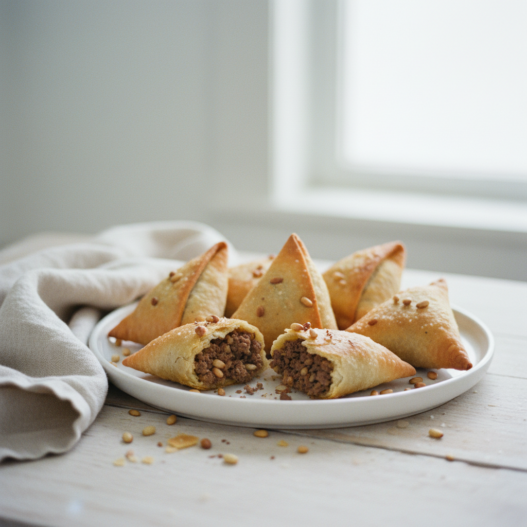
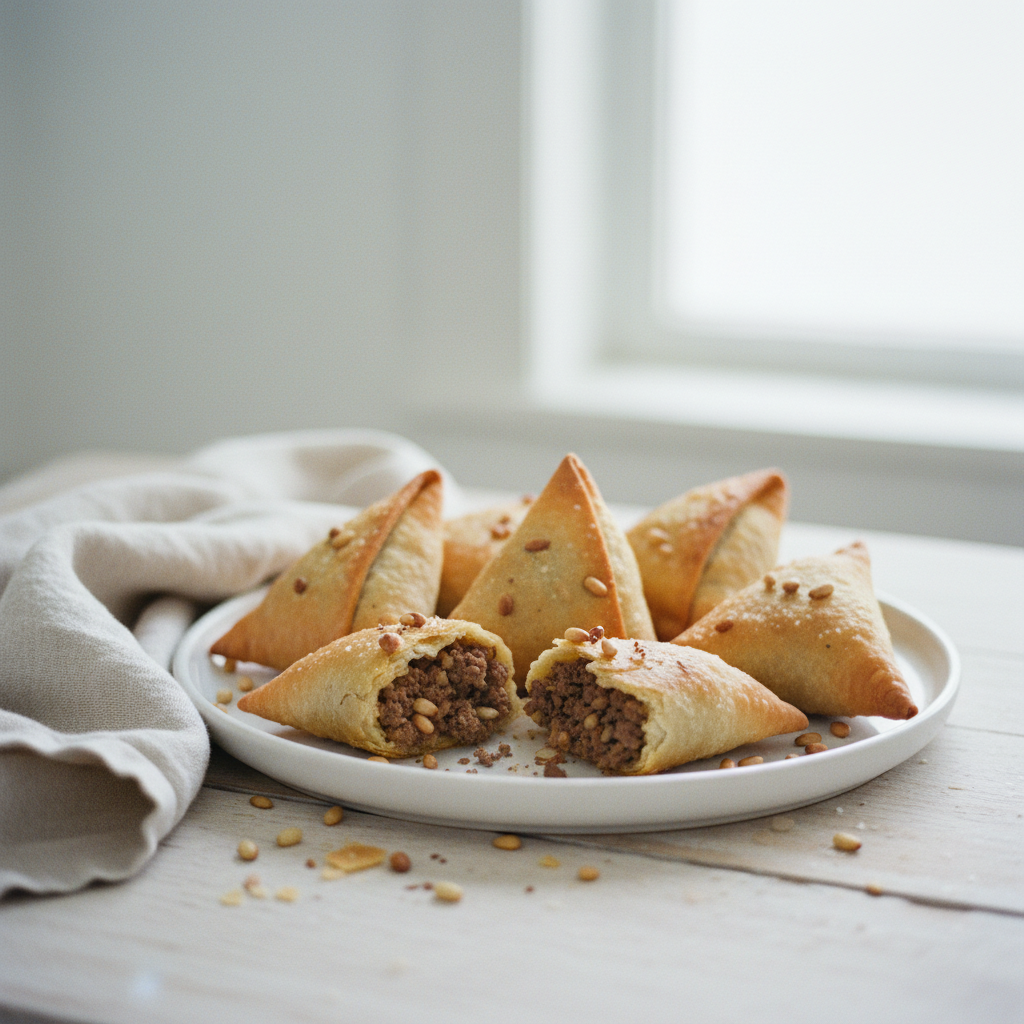
At many oriental iftar buffets and at homes of friends from the Levant, I’d spot these little lovelies, shiny skinned and crisp to the tooth, next to others — soft half moons and the doughy tetrahedrons, sported in many contrasting pastry crusts and fleshy fillings to suit the various cravings of those breaking their fast. Believed to have originated in Central Asia before the 10th century, the Uzbeks still call it somsa, similar to its original name, samsa. Similar to the pasties that were eaten by tin miners in Cornwall for their easy handling, samosas were also thought to be injected into Indian culture by the Muslim traders and soldiers who carried them in saddlebags on long journeys after preparing them, many at a time, during their rest stops. This is a simple recipe, given that you’re fine with the heat of frying. In essence, all you need to do is begin preparing early, make large quantities at a time and freeze them in between layers of baking paper to avoid them sticking to one another as they love to do.
Print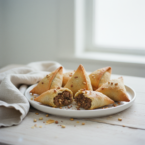
Crispy Beef and Pine Nut Samosas
- Total Time: 50 minutes
- Yield: Serves 10-12
- Diet: Omnivore
Description
Savory beef and pine nut filling encased in crispy samosa pastries. A perfect appetizer for any occasion.
Ingredients
- 30-35 samosa wrappers
- 1 lbs (454 g) ground beef
- 1 large onion
- 2-3 cloves garlic
- 1/4 cups (60 ml) beef stock
- 1/2 tsp cinnamon
- 1/4 tsp cumin
- 1/4 cups (60 ml) pine nuts
- Salt and freshly ground pepper
- 1 large egg + 1 tsp flour
Instructions
- Keep the samosa wrappers covered with a damp towel while preparing the beef.
- In a large pan on medium-high heat, add the onions and garlic until fragrant and translucent, then add the ground beef.
- Stir the beef into the onions and garlic until combined, then cook, stirring every few minutes, until browned.
- Add the cinnamon, cumin, salt, and pepper and mix, then pour in the beef stock and stir in the pine nuts.
- Lower your heat and leave to cook until the stock has been absorbed.
- Turn off your heat and leave to cool.
- At the bottom of each samosa pastry strip, brush the bottom of the side closest to you with egg wash, then fold over the pastry from the opposite corner to create an open-sided triangle.
- Spoon some of the beef filling (1 full teaspoon to 1 1/2 teaspoons) into the pocket you’ve created. Tuck the filling into the pocket and fold it over more than once until you reach the end of the wrapper.
- Before sealing, tuck in any protruding samosa paper, then seal the edge by brushing with egg wash.
- Repeat with the rest of the wrappers.
- Freeze the samosas you won’t fry for later.
- Deep fry in hot vegetable oil (not olive oil) for one minute, then remove when golden and crispy. Do not crowd your oil with samosas.
- Drain well from the oil before serving.
Notes
- For a richer flavor, toast the pine nuts lightly in a dry pan before adding them to the beef mixture.
- To prevent soggy samosas, ensure the beef filling is completely cool before assembling.
- Leftover samosas can be stored in an airtight container in the freezer for up to 3 months; reheat in a preheated oven at 375°F (190°C) for 10-12 minutes.
- Prep Time: 30 minutes
- Cook Time: 20 minutes
- Category: Main Course
- Method: Deep-Frying
- Cuisine: Indian-inspired
Nutrition
- Serving Size: 1 samosa
- Calories: 200
- Sugar: 2
- Sodium: 250
- Fat: 15
- Saturated Fat: 5
- Unsaturated Fat: 8
- Carbohydrates: 15
- Fiber: 2
- Protein: 10
- Cholesterol: 30
Frequently Asked Questions
How do I keep samosa wrappers from cracking or opening during frying?
Seal the edges well with an egg wash, pressing firmly to close all seams. Make sure the filling isn’t too wet, as excess moisture creates steam that can force the seams open in the hot oil.
Should I drain excess fat from the beef before adding the pine nuts?
Yes, drain off most of the fat after browning the beef so the filling isn’t greasy. A small amount left in the pan helps toast the pine nuts and carry the spice flavors, but too much will make the samosas heavy.
What oil temperature is correct for frying these samosas?
Around 350F to 360F gives a golden crust without the interior staying raw. Too hot and the outside burns before the pastry cooks through; too low and the samosas absorb oil and turn greasy.