
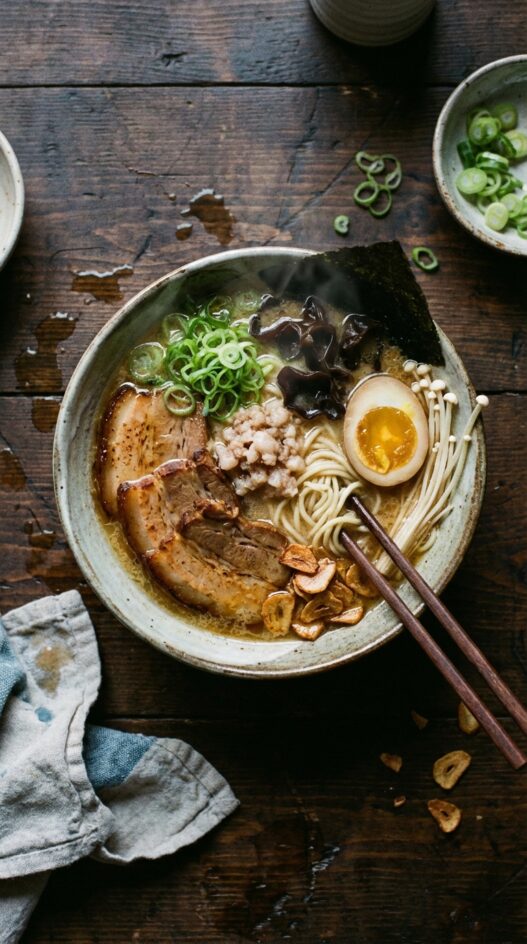
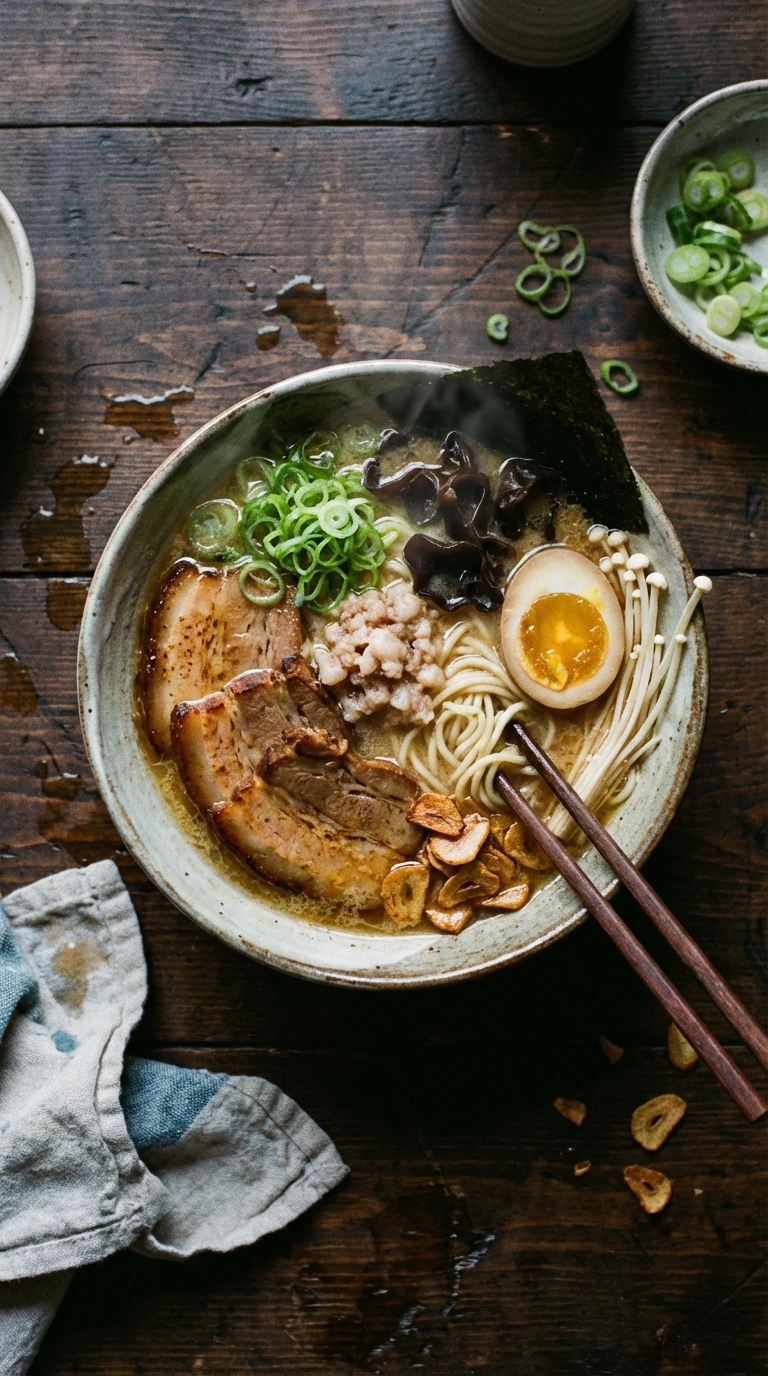
I was a Ramen virgin for a long time. It wasn’t until I watched Hikaru No Go, a Japanese anime that my brains processed its existence. Who said cartoons were bad for you. They can totally give a world view of things.. in this case, of noodles.
The main character Hikaru, who loves Ramen, often goes to a Ramen place. He slurps the noodles loudly and that noise would get me every time. It always made me wonder just how good Ramen is.
However, due to the insufficient amount of space in my tummy, I never bothered to explore Ramen. Most of the space was already occupied with Malaysian, spicy food. But then, as if the Ramen Gods thought it was time, I had the most life changing conversation in my life. With my bro in law.
Ironically, we were sitting at an Udon place eating Udon noodles. At that time, I only had my eyes on Udon. He proceeded to give an inspirational Ramen speech. A speech that trumps even the greatest speech on earth. It moved me. Not to tears, but to eat my very first bowl of Ramen Noodles soon after.
I think I nearly died. I was hooked. Totally obsessed. A ramen freak.
Instant noodles were a big part of my life… until I quit. But I’ve not been able to fill that void. That chewy, bouncy noodles void. Then, there was Ramen.
Nutrient dense rich, delicious broth made from bones, fat and marrow of both chicken and pork that leaves a sticky sheen of gelatin gloss on your lips as you devour them. Tiny fats swimming in the surface ommph the umami factor with fresh chewy and bouncy noodles, ‘soft yolk’ eggs and slices of thin, melt in the mouth pork belly.
Aaah… this is the ultimate comfort food.
The trick to a superb broth is:
1. Both chicken and pork is used along with onions, garlic, leeks and mushrooms.
2. Not only bones are used, but fats, collagen and marrows are used to make it gelatinous and give it its depth in flavor.
3. Broth has to be simmered for 6 – 12 hours. The longer the time, the more gelatin develops in the soup.
4. As for color, if you like your broth to be white, you will have to wash the bones off any bits of dark marrow or coagulated blood.
Print
Homemade Tonkotsu Ramen
- Total Time: 750 minutes
- Yield: 6 servings
- Diet: Omnivore
Description
Rich, comforting ramen, made from scratch. Learn the secrets to the perfect broth and delicious toppings.
Ingredients
Broth:
- 5 oz (142 g) pork fat
- 4 lbs (1814 g) pig hocks and/or trotters, cut into small pieces
- 2 lbs (907 g) chicken backs, cut into small pieces
- 1 lb (454 g) chicken feet
- 1 large onion, peeled and slit around the middle
- 1 whole head garlic
- 2 inches fresh ginger, sliced
- 1 leek, sliced
- 15 green onions, white parts only, cut in half
- 5-8 slices white oyster mushrooms
Pork belly (chashu):
- 1 1/2 lbs (680 g) slab boneless pork belly, rolled and secured with string
- 1 cup (237 ml) water
- 1/2 cup (118 ml) soy sauce
- 1 cup (237 ml) white grape juice
- 1 tsp lemon juice
- 2 tbsp sugar
- 5 green onions, halved
- 1 whole head garlic, bruised
- 2 inches fresh ginger, sliced
- 2 whole shallots, halved
- 1/2 tsp whole black peppercorns
Marinated eggs:
- 3 eggs
Noodles:
- 2 lbs (907 g) fresh ramen noodles, cooked according to package directions
Seasoning and toppings (to taste):
- Mayu (black garlic oil), to taste (see notes)
- Salt, to taste
- Soy sauce, to taste
- Tahini, to taste
- Miso paste, to taste
- Garlic and shallot oil, to taste
- Sesame oil, to taste
- Enoki mushrooms, blanched in hot broth
- Black fungus mushrooms, blanched in hot broth for a couple of minutes
- Green parts of the broth green onions, thinly sliced
- Nori (sushi seaweed), cut into 4-inch squares
- Garlic, sliced and fried until crispy
Instructions
Broth:
- Place the chicken, pork bones, and pork fat in a large stock pot. Add enough water to fully cover. Cover and bring to a boil over high heat.
- Drain the bones and wash off any dark marrow or coagulated blood under cold water.
- Rinse the pot, return the bones, and add the remaining broth ingredients. Add water to barely cover. Cover and bring to a boil over high heat.
- Simmer covered on low for 6–12 hours on the stove, or 12–18 hours in a slow cooker. Check the first 10–15 minutes to ensure it is barely simmering.
- During the last 30 minutes to 1 hour, place the 5 oz of pork fat in a sieve set in the broth; cover and cook. Drain the fat and finely mince it.
- Skim some or all of the fat from the finished broth (easiest after refrigeration).
Pork belly (chashu):
- Preheat the oven to 250°F (121°C). Place the pork belly in a saucepan, add water to cover, and bring to a boil.
- Drain and remove any scum.
- Return the pork belly to the saucepan with the remaining chashu ingredients. Cover and bring to a boil over high heat.
- Transfer to the preheated oven and cook for 5 hours, shaking the pan every hour to ensure even coating.
- Insert a skewer — if there is no resistance, it is ready. Cook longer if desired.
- Cool completely, then chill in the refrigerator (with the eggs) so the pork absorbs more flavor and is easier to slice.
- When ready to serve, cut the strings, slice the pork, and briefly reheat in hot ramen broth.
Marinated eggs:
- Bring enough water to cover the eggs to a boil in a saucepan.
- Reduce heat to medium, gently add the eggs, and simmer for exactly 6 minutes.
- Drain and peel the eggs under cold water.
- Place the peeled eggs in the cooled chashu braising liquid. Soak a paper towel in the liquid and drape it over the eggs to keep them submerged. Marinate for 4–12 hours in the refrigerator alongside the pork belly.
- When ready to serve, carefully slice the eggs in half and briefly warm in hot ramen broth — do not overheat.
Assembling:
- Bring the broth to a boil and add seasoning gradually to taste.
- Arrange noodles in a bowl and add sliced chashu, a halved marinated egg, minced pork fat, and your choice of toppings and garnishes. Serve immediately.
Notes
For mayu (black garlic oil), slowly cook a whole head of garlic in oil until the cloves are deeply charred, then blend smooth. The broth can be made 2–3 days ahead and refrigerates well; the fat cap that forms on top is easy to skim.
- Prep Time: 30 minutes
- Cook Time: 720 minutes
- Category: Main Course
- Method: Braising
- Cuisine: Japanese
Nutrition
- Serving Size: 1 large bowl
- Calories: 700
- Sugar: 10
- Sodium: 1500
- Fat: 40
- Saturated Fat: 15
- Unsaturated Fat: 20
- Carbohydrates: 60
- Fiber: 5
- Protein: 40
- Cholesterol: 200
Frequently Asked Questions
How long does it take to make tonkotsu broth from scratch?
The broth requires at least 6-12 hours of simmering — kept at a bare simmer rather than a rolling boil — to achieve the thick, milky texture.
Why do you need to blanch the bones first?
Blanching removes blood, dark marrow, and impurities that cause a grey, murky broth. A clean boil after blanching produces a clearer, better-tasting stock.
Can I make tonkotsu ramen broth in a pressure cooker?
Yes. A pressure cooker can achieve a similar milky consistency in 3-4 hours. The result is close to the stovetop version but the flavor is slightly less developed.
What toppings are traditional for tonkotsu ramen?
Chashu pork, soft-boiled marinated eggs (ajitsuke tamago), nori, bamboo shoots (menma), green onions, and black garlic oil are all standard toppings.
Can I freeze tonkotsu broth?
Yes. Cool completely and freeze in portions for up to 3 months. The fat will solidify on top; skim it or stir it back in when reheating.


I made this on a snowy weekend and the broth came out exactly the milky white color you described, kept the rest in the freezer for next week.
I obsessed over tonkotsu ramen after a trip to Tokyo where I had a bowl that was so rich the chopsticks stood up in it. Spent two days making a batch back in February, eight hours of pork bones simmering on the stove, then finished with chashu and a soft yolk egg. The broth gel test the next day passed, jiggled like jello in the fridge. It’s a project but the bowl was worth every hour.
Put this ramen together for a weekend date night at home—it definitely elevated our usual kitchen experiments. Big fan!
Does the broth reduce significantly while simmering, or do I need to keep adding water to maintain the volume?
It does reduce quite a bit over that long simmer, so I keep a kettle of hot water nearby and top it up to hold the volume. Just add it hot so you do not knock the simmer back down. You are going for milky and rich, not scorched and thick. Worth every hour!
Wow, this was incredible, I am now a tonkotsu MASTER! Thanks!!
As a massive ramen lover, it never crossed my mind to be able to make tonkotsu at home, but this recipe convinced me to try and it is absolutely SMASHING. So good! I’ll still do takeout of course, but this will be a go to for some more special occasions!
Ok, this is officially incredibly tasty. Thank you!
Ok, I am obsessed with this – I am such a ramen lover, and this is perfect!!
I mean, holy cow (or pig), this is just perfect. I love tonkotsu and this was so dang delicious!
This was incredible, thank you so much for the recipe – it turned out fantastic, and made me feel like a professional ramen chef!
Very instructive recipe, I tried to write one here, from Japan !
https://shizuokagourmet.com/en/tonkotsu-ramen-professional-recipe/
If you have any opinion about the process, it is a little bit old article though
Looks like a good one Jacky, thank you for commenting!
Which part u add a salt?
Hi Raffael! Right at the end, in the bowl.
I love it
Same!
Look yummy! One of my favorite Tonkotsu Ramen, nice to see your recipe, easy to follow, will cook this for family this weekend. Thanks you!
Hope it turned out well Thomas!