
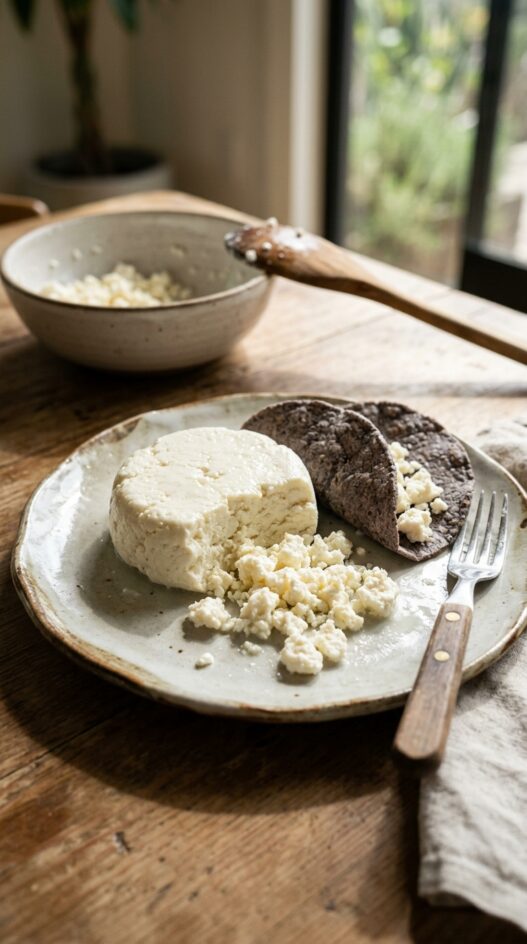
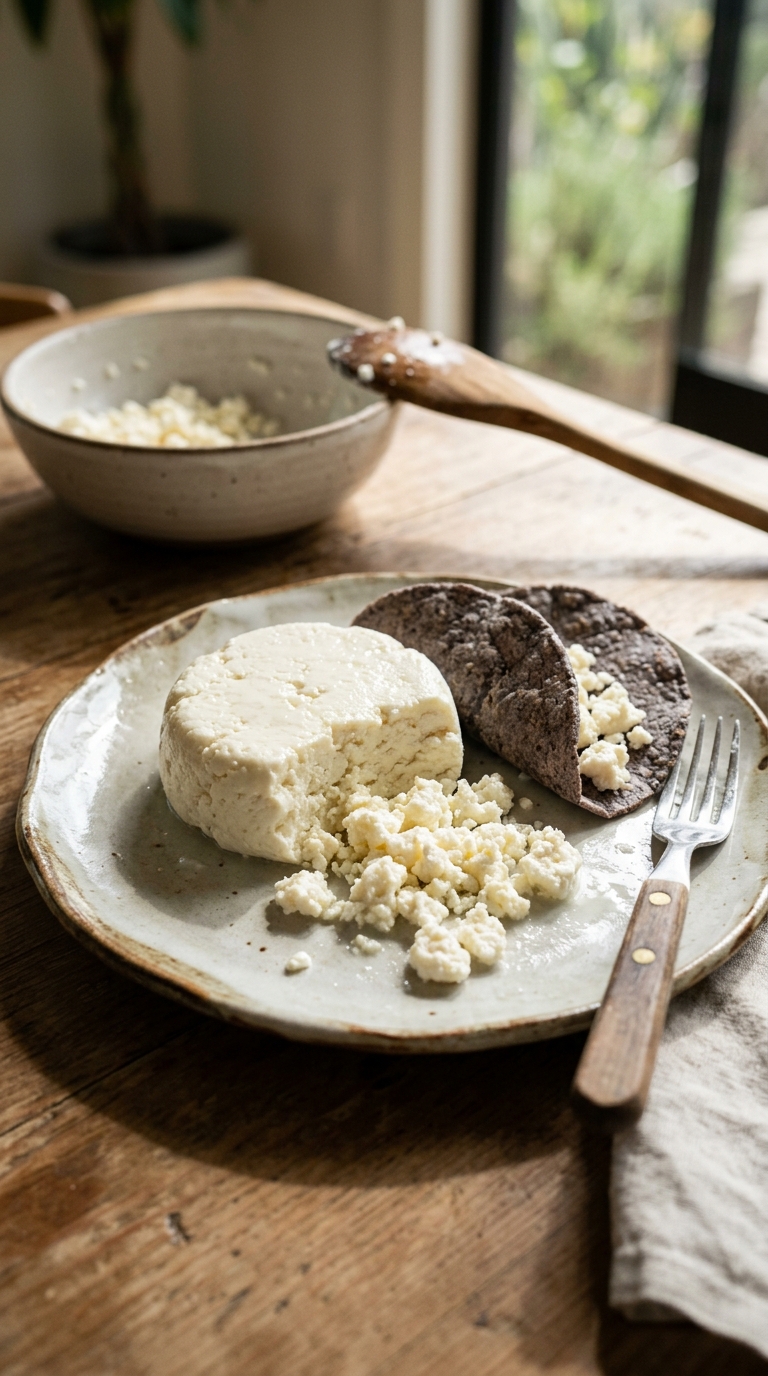
Contrary to what Tex-Mex restaurants (or Mexican-inspired restaurants) will lead people to believe, Mexican food is never drowning in cheese. Sure, Mexican cuisine uses cheese but not to the extent that those aforementioned restaurants do. Cheese in Mexican cuisine is most often used as a light topping, light being the key word. When it is used as a filling, then of course the amount required is more.
Sure, we have a few dishes that are all about the queso, like quesadillas, chiles rellenos, seared cheese and queso fundido. But other than that, in a real authentic Mexican restaurant or home, you will never be served dishes with so much cheese you can barely tell what’s underneath. Oh, and yellow cheese does not exist/belong in real authentic Mexican food. Ay! But that and other non-existing/belonging foods is a story for another day. Perhaps one can use the amount of cheese on a plate as a measuring point to the authenticity of the food in a restaurant?
The Spanish conquistadors are who originally brought cheese making, and milk-based products for that matter, to Latin America. Later, as Swiss and German settlers arrived in different parts of Mexico, they introduced their own dairy processes and cheeses. Modern day Mexican cheeses range from soft fresh cheeses to firm aged cheeses. The variety is small compared to, let’s say, French cheeses, but they do their job perfectly in Mexican cuisine.
Queso fresco – literally “fresh cheese” – is the cheese most commonly used in Mexican cooking. It is a crumbly cheese used throughout the country — not melted into dishes, but sprinkled, filled, or sliced. This homemade version requires only whole milk, lemon juice, and buttermilk — no special tools, no rennet.
Get the milk out and start that queso for tonight’s Mexican dinner!
The Place of Queso Fresco in Mexican Cuisine
Queso fresco is the everyday cheese of Mexican home cooking. The name translates literally as “fresh cheese,” and the unpressed style — soft, mild, lightly salted — is exactly that: a cheese eaten within days of being made, not a wheel that ages on a shelf. It is to Mexican kitchens what feta is to Greek ones or ricotta salata to Italian: the crumble-on-top cheese that finishes a dish without taking it over.
The technique is centuries old in concept but characteristically Mexican in execution. Milk is heated gently, curdled with an acid (vinegar, lemon, lime, or — as in this recipe — buttermilk), drained, lightly salted, and pressed only enough to form a slumpy disk. No rennet, no aging cave, no cheese press required. A Mexican kitchen with a strainer and a clean dish towel makes queso fresco in an afternoon.
Real Queso Fresco vs. Supermarket Substitutes
The block of “queso fresco” on the supermarket shelf is sometimes the real thing and often something else. Authentic queso fresco has a few non-negotiable characteristics:
- It crumbles but doesn’t melt. Try heating a small piece in a pan — real queso fresco softens but holds its shape. If it pools into a melted puddle, it isn’t queso fresco; it’s likely an Oaxaca-style cheese or a Monterey Jack mislabeled.
- It’s white, not yellow. Yellow cheese — cheddar-style with annatto coloring — doesn’t belong in real Mexican cuisine. A pale-cream-to-white color is the only authentic option.
- It’s mildly salty, not aged-cheese sharp. Queso fresco is salted lightly during making. If the cheese tastes sharp or piquant, it has been over-aged or it’s a different cheese (cotija) being marketed as queso fresco.
- It has visible moisture and a slight tang. Fresh acid-coagulated cheese carries the flavor of the milk and the acid — a faint dairy-and-citrus quality, never the fermented funk of aged cheese.
If your supermarket queso fresco melts into a sauce or has the orange-yellow color of cheddar, you have something else in the package. The homemade version below produces what an abuela in Guanajuato would recognize.
The Mexican Fresh Cheese Family
Queso fresco is one node in a small but distinctive family of Mexican cheeses. Each has a defined role and they aren’t interchangeable:
- Queso fresco — soft, crumbly, mild, acid-coagulated. Crumbled over tacos, enchiladas, beans, salads. Doesn’t melt.
- Queso panela — also acid-coagulated and fresh, but pressed firmer and shaped in a basket mold. Sliceable, holds shape when grilled. Good for queso a la plancha.
- Queso ranchero — essentially a drier, firmer queso fresco, sometimes pressed into wheels. Grates more cleanly than fresh queso fresco.
- Cotija — aged, hard, salty. The Mexican parmesan. Crumbled fine over elotes and beans where you’d grate parmesan in Italy.
- Queso Oaxaca — stretched-curd string cheese, like a Mexican mozzarella. The melting cheese, used in quesadillas and queso fundido.
- Asadero — semi-soft melting cheese, similar role to Oaxaca but smoother. Often used in queso flameado.
- Requesón — Mexican ricotta, made from the leftover whey after queso fresco. Soft, slightly sweet, used in fillings.
The defining split is melt-or-crumble. Queso fresco, panela, ranchero, and cotija are the crumblers; Oaxaca and asadero are the melters. Mexican cuisine rarely asks one to do the job of the other. Crumble queso fresco over enchiladas, chicken tinga, or street-style carne asada tacos; reach for Oaxaca when you want melt.
Queso Fresco vs. Feta, Ricotta Salata, and Paneer
If you can’t find queso fresco, three Old World cousins make reasonable substitutes depending on the dish:
- Feta — closest in crumb and salt level, but saltier and tangier than queso fresco. Rinse briefly under cold water to reduce the brine flavor before using. Best on dishes where the salty edge isn’t unwelcome.
- Ricotta salata — pressed Italian ricotta. Drier and saltier than queso fresco, but the crumb is similar. Best as a finishing crumble.
- Paneer — Indian fresh cheese, also acid-coagulated. Almost identical production process to queso fresco, but paneer is pressed firmer and unsalted. The closest technique twin; the texture is denser and the flavor flatter.
None of them are queso fresco. The point of making it at home is that the real thing takes about as long to produce as it takes to drain — perhaps two hours from cold milk to crumbled cheese on a taco. The recipe below assumes that’s a reasonable trade.
How to Make Queso Fresco: Step by Step Guide
Step 1: Heat the Milk
Pour milk into a large pot. Heat over medium heat until tiny bubbles form around the edges, just before boiling.
The milk should feel warm to the touch but not hot enough to burn your finger.
Reduce heat to low immediately.
Step 2: Forming the Curds
Slowly stir in the buttermilk. Next, add fresh lemon juice.
Continue gently stirring until curds begin to form (small solid lumps).
If curds don’t form after 2 minutes, add an additional teaspoon of lemon juice gradually until curds appear.
Turn off heat, cover, and let the curds rest undisturbed for about 10 minutes.
Step 3: Draining the Cheese
Line a colander with muslin or clean cheesecloth, placing it over a bowl or large container to catch the whey.
Carefully pour the curdled mixture into the lined colander. Caution: Hot liquid!
Gather the cloth edges, lift, twist gently, and secure it over a deep bowl using a wooden spoon to suspend the bundle. Allow the whey to drain away from the cheese curds.
Leave to drain for 50 minutes, periodically tightening the cloth to remove excess moisture.
Step 4: Season and Shape Cheese
After draining, unwrap cheese curds into a bowl. Add salt to taste, mixing thoroughly by hand.
Press the cheese into your desired shape using your hands or a small bowl or mold.
Cover and refrigerate for at least 1 hour until chilled and firmed up.
Step 5: Serve
Serve crumbled or sliced on tacos, salads, quesadillas, or your favorite dishes.
How to Make Queso Fresco at Home (Traditional Mexican Fresh Cheese)
- Total Time: 70 minutes (1 hr 10 min)
- Yield: Makes one 225g cheese
Description
Homemade Queso Fresco is a fresh, mild, Mexican cheese that is made by gently heating whole milk, curdling it with buttermilk and lemon juice, and then draining the curds to form a lovely soft cheese. It’s perfect crumbled over tacos, salads, or even enjoyed on its own.
Ingredients
- 34 ounces (1 liter) whole milk (3.5% fat recommended; UHT works fine)
- 1 cup (240 ml) buttermilk
- 2 teaspoons freshly squeezed lemon juice (more if needed)
- Salt, to taste
Equipment:
- Large pot
- Colander
- Clean muslin or cheesecloth
- Large container for draining whey
Instructions
Step 1: Heat the Milk
- Pour milk into a large pot. Heat over medium heat until tiny bubbles form around the edges, just before boiling.
- The milk should feel warm to the touch but not hot enough to burn your finger.
- Reduce heat to low immediately.
Step 2: Forming the Curds
- Slowly stir in the buttermilk. Next, add fresh lemon juice.
- Continue gently stirring until curds begin to form (small solid lumps).
- If curds don’t form after 2 minutes, add an additional teaspoon of lemon juice gradually until curds appear.
- Turn off heat, cover, and let the curds rest undisturbed for about 10 minutes.
Step 3: Draining the Cheese
- Line a colander with muslin or clean cheesecloth, placing it over a bowl or large container to catch the whey.
- Carefully pour the curdled mixture into the lined colander. Caution: Hot liquid!
- Gather the cloth edges, lift, twist gently, and secure it over a deep bowl using a wooden spoon to suspend the bundle. Allow the whey to drain away from the cheese curds.
- Leave to drain for 50 minutes, periodically tightening the cloth to remove excess moisture.
Step 4: Season and Shape Cheese
- After draining, unwrap cheese curds into a bowl. Add salt to taste, mixing thoroughly by hand (this is also where you can add chili, or other seasoning to make it your own creation).
- Press the cheese into your desired shape using your hands or a small bowl or mold.
- Cover and refrigerate for at least 1 hour until chilled and firmed up.
Step 5: Serve
- Serve crumbled or sliced on tacos, salads, quesadillas, or your favorite dishes.
Notes
For firmer cheese, allow it to drain longer.
Adjust salt based on your preference—start lightly and add as needed.
Use leftover whey for smoothies or bread baking; it’s nutritious and flavorful.
Fresh Queso Fresco is best consumed within a few days.
- Prep Time: 5 mins
- Draining Time: 50 mins
- Cook Time: 15 mins
- Category: Side Dish
- Method: Curdling
- Cuisine: Mexican
Nutrition
- Serving Size: 2 tbsp
- Calories: 70
- Sugar: 1g
- Sodium: 180mg
- Fat: 5g
- Saturated Fat: 3g
- Unsaturated Fat: 2g
- Trans Fat: 0g
- Carbohydrates: 2g
- Fiber: 0g
- Protein: 4g
- Cholesterol: 15mg
Why Your Queso Fresco Didn’t Work: A Cheesemaker’s Diagnostic
Homemade queso fresco is a simple cheese to make, but five things go wrong with predictable regularity.
“The milk never curdled.”
The most common failure, and almost always one of two causes. (a) You used ultra-pasteurized (UHT) milk — its proteins are denatured by high-temperature processing and won’t coagulate cleanly. Use regular pasteurized whole milk; “vat pasteurized” or “low-temperature pasteurized” is even better. (b) The milk wasn’t hot enough when you added the acid. Target is just below boiling, around 195°F (90°C). If you don’t see steam rising vigorously and the surface starting to wrinkle, the milk isn’t ready.
“The cheese is too tough and rubbery.”
You over-drained or over-pressed. Queso fresco wants to slump a little — it shouldn’t have the solid sliceability of paneer. Drain only until the curds hold together as a soft mass; press only lightly to shape. If you want sliceable cheese, you wanted queso panela instead.
“The cheese is too crumbly to slice at all.”
Opposite problem — under-pressed, or not enough salt to bind the curds. Salt acts as a mild dehydrant and protein-binder during the final shaping. Use a generous pinch and work it through the curds before forming.
“There’s a bitter taste.”
Two causes: the milk scorched on the bottom of the pot (use a heavy-bottomed pan and stir regularly), or you over-acidified. Acid quantity matters — too much and the cheese carries the vinegar/lemon flavor. The recipe below uses buttermilk and a small amount of lemon for a milder coagulation than straight vinegar gives.
“The flavor is flat and milky, like nothing.”
Under-salted, or the milk itself was flavorless. Real Mexican queso fresco often uses milk from cows that graze on varied pasture — the milk carries flavor. If your milk is generic supermarket whole milk, your cheese will taste like generic supermarket whole milk. Try a small-dairy local milk if you can find one. And don’t skip the salt.
The same heating-and-draining technique scales sideways into related preparations — for a different acid-coagulated dairy from the same family, see our strained yogurt cream cheese.
Why Acid Coagulation Instead of Rennet
Most cheeses you’ve heard of — cheddar, brie, mozzarella, parmesan — are coagulated with rennet, an enzyme originally from cow stomachs (or, more commonly today, microbial or vegetable equivalents). Queso fresco takes a different path: an acid (vinegar, lemon, lime, buttermilk, or any combination) is added to hot milk, and the milk proteins drop out of solution. This matters in three ways:
- Flavor — acid coagulation leaves the cheese with the gentle dairy flavor of the milk itself, plus a faint citrus or buttermilk edge from the acid. Rennet-coagulated cheeses develop more complex flavors as enzymes continue to work in the curd.
- Texture — acid-coagulated curds are softer and more crumbly. Rennet curds are firmer and can be stretched (mozzarella, Oaxaca) or aged into hard cheeses (parmesan, cotija). Queso fresco’s defining crumbliness is a direct consequence of using acid.
- Practicality — rennet is harder to source for home cooks; vinegar and lemon juice are not. This is one reason queso fresco has been a domestic cheese for centuries: anyone with a pot and an acidic liquid can make it.
The same logic applies to paneer (Indian), ricotta (the traditional Italian style), and panir (Persian). Queso fresco is the Mexican entry in a global family of acid-coagulated fresh cheeses.
Frequently Asked Questions
What kind of milk should I use to make queso fresco?
For the best results, use whole milk as it provides the creaminess needed for queso fresco.
How do I achieve the right texture for my queso fresco?
To get the desired crumbly texture, press the curds gently after draining them to remove excess whey without over-compressing.
Can I add flavors to my queso fresco while making it?
Yes, you can mix in ingredients like chopped herbs or spices after the curds have formed for added flavor.
Can I use ultra-pasteurized (UHT) milk for queso fresco?
No — UHT milk’s proteins are denatured by high-temperature processing and won’t curdle cleanly. Use regular pasteurized whole milk. “Vat pasteurized” or “low-temperature pasteurized” works even better because the proteins are most intact.
How long does homemade queso fresco last in the fridge?
Five to seven days, wrapped tightly in plastic or stored submerged in lightly salted water (1 tsp salt per cup water). Queso fresco is unaged and high-moisture, so it doesn’t keep as long as harder cheeses. Don’t freeze it — freezing destroys the texture.
Is queso fresco lactose-free?
It’s low-lactose, not lactose-free. Most of the lactose in milk goes out with the whey during draining, so finished queso fresco contains roughly a quarter of the lactose of the original milk. Many lactose-intolerant people tolerate it well, but it’s not zero.
What’s the difference between queso fresco and paneer?
Almost identical production process — both are acid-coagulated fresh cheeses made from heated milk. The differences are pressing (paneer is pressed firmly into a dense block; queso fresco is pressed lightly and stays crumbly) and salt (queso fresco is salted; paneer is unsalted). They can substitute for each other in a pinch, but the textures and roles differ.
Can I use vinegar instead of lemon juice and buttermilk?
Yes. White vinegar works well — use about 1 tablespoon per quart of milk, added when the milk reaches near-boil. The flavor is more neutral than lemon or buttermilk; some prefer it, others find it slightly harsh. For the mildest cheese, stick with the buttermilk and lemon combination.
If You Liked This Recipe, You’ll Love These
- Pepinos Con Chile y Limon: Mexican Cucumbers with Chile and Lime
- Mexican Shrimp Cocktail: Cóctel de Camarones
- Make Authentic Mexican Huarache
- Authentic Homemade Mexican Chorizo





I couldn’t believe how simple this is. milk, buttermilk, lemon juice, and you have cheese in an hour. the hardest part was being patient during the 50 minutes of draining.
This is fantastic, worked super well!
Great to hear!!
In Step 1 you instruct to bring the milk, using medium heat, to a warm temperature not hot enough to burn a finger and then reduce the heat to low. In Step 2 the heat is turned off before waiting for the milk to curdle. Then in Step 3 there is a warning that the milk will be hot. Did I miss something because somehow warm milk subjected to decreasing heat got hot? Okay, now the big question. What differs Queso Fresco from other acid & milk cheeses? It seems like I’ve seen recipes for ricotta, paneer, quark, and cottage cheese all using UHT milk and acid, whether it be lemon juice, buttermilk, vinegar, citric acid, etc. I know store bought ricotta, paneer, and cottage cheese taste different but it seems all the aforementioned cheese would taste the same if homemade.
Hey David, you’re right about that line and we’ll tidy it up! On the bigger question you’ve got it: they’re all acid set fresh cheeses and the difference is handling. Paneer is pressed hard and unsalted, ricotta drains loose, cottage cheese stays slack with cream added back, queso fresco gets salted and pressed.
I live in Europe so can’t find queso fresco here at all. I tried this recipe today and even doubled it but it only made about a tablespoon of cheese.
Queso fresco is served on a daily basis in my home. My husband lived this receipt. I make queso every day, sometimes i spice it up, ,comino, red chile flakes, ect. Thank you so much for this easy queso fresco receipt.
I lovebhownsimple this is. I am trying it as we speak and hope its as delicious as it sounds! One question, can you do anything with the leftover whey?
Thank you very much!!
the whey is great in bread dough! Use it in place of water. I also throw it in smoothies. lots of protein in there, seems wrong to dump it.
I am so loving this! Adam will just love this, he is crazy about authentic foods especially Mexican and this is a favorite cheese of his :) I myself love the world of cheese so I am right there…
Hi Alisha, Really? Maybe you guys will try it and enjoy a little homemade cheese.
I can only imagine tasting your fresh homemade cheese. I think this is a fun project and I’m interested to follow your adventure;-)
Thanks Patty:) I’ve been bitten by the cheese making bug. Wish me luck.
Queso fresco is hard to find where I am at or at least not on a regular basis. A trip to the Mexican market is usually in order. I am eager to try your recipe.
I have always considered the “cheesier” versions of Mexican food more Tex-Mex than authentic Mexican. I definitely lean towards the authentic which is usually lighter and fresher tasting.
Hi Laura, A trip to the Mexican market is not such a bad thing:) I hope you do try it and enjoy the queso.
Yes, absolutely! So many people don’t realize that, glad you do.
I’ve made similar cheese. I remember being so surprised when I realized how simple it is to actually make your own cheese at home! This cheese looks perfect. Great article!
Hi Tamara, Yes it really is so simple one would never know. Thank you.
queso fresco, ah que rico!! Here in South Texas queso fresco is sold by the pound in every store, but a homemade version is always nice to have on hand. I would love to try your homemade version, maybe this weekend. A spiced version, can’t wait!
Hola Bonnie, I can imagine there is an abundance of authentic Mexican ingredients there. Let me know what you think if you make it. I’m still learning and tweaking so feedback would be great.