
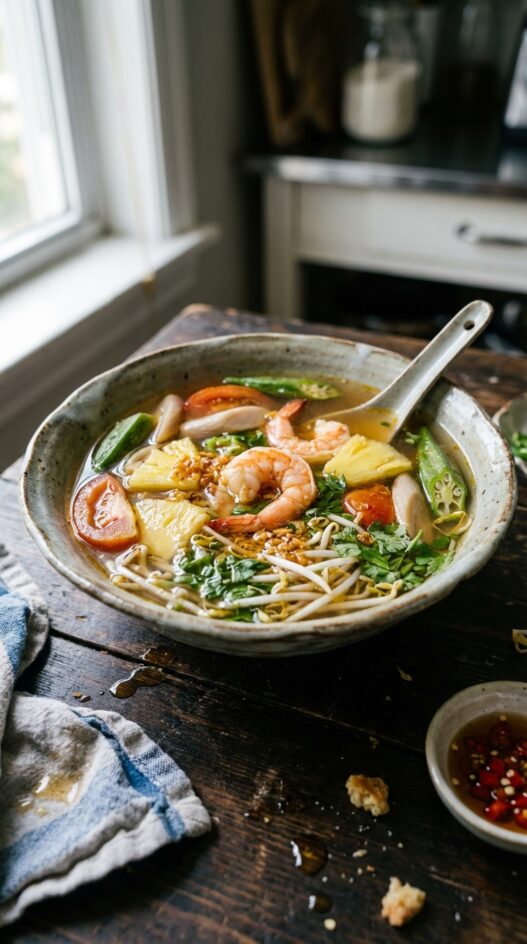
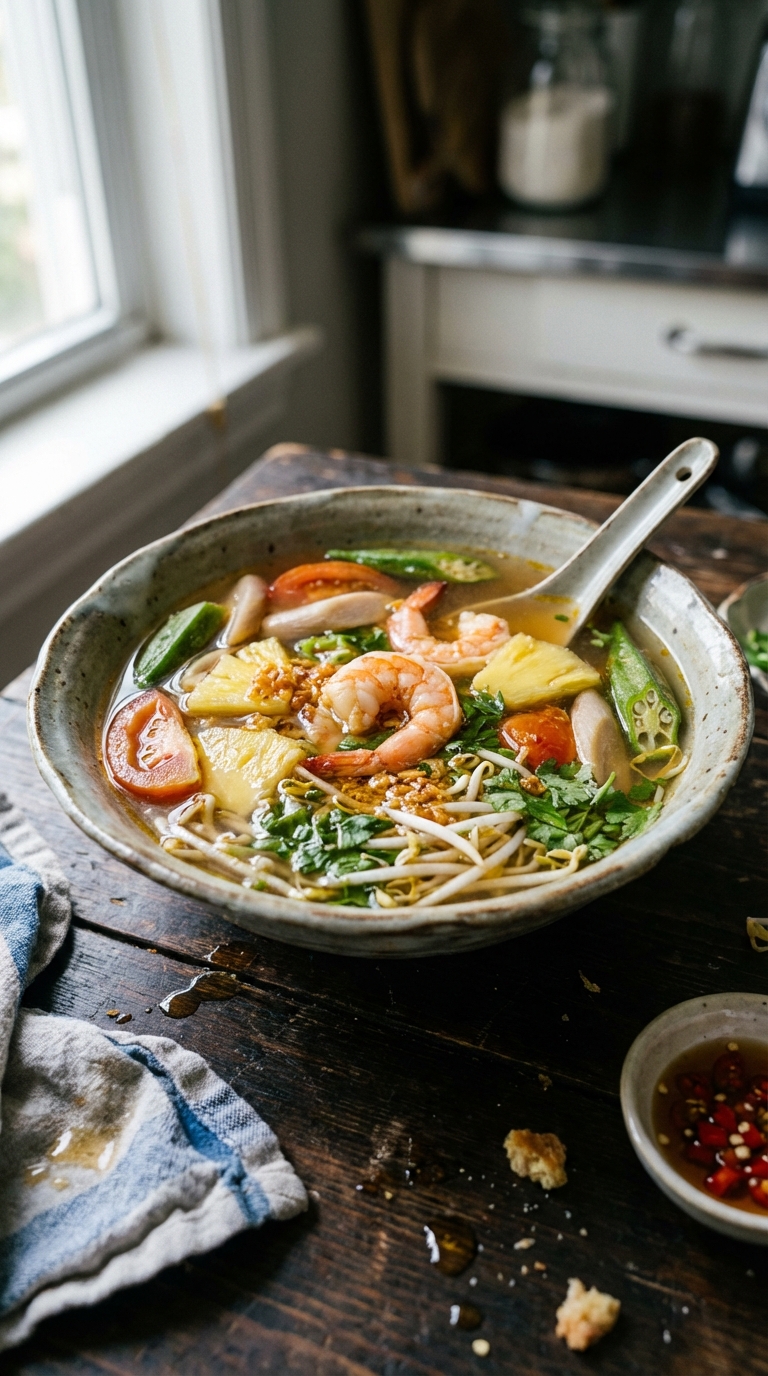
The ingredients used in Canh Chua Tôm are deeply rooted in Vietnamese cuisine and reflect the country’s history and geography. The use of tamarind, for example, is a nod to Vietnam’s long history of trading with other Southeast Asian countries. Tamarind was introduced to Vietnam by Indian traders during the Champa Kingdom, which lasted from the 7th to the 19th century.
Similarly, the use of herbs such as rau ram (Vietnamese coriander) and ngò om (rice paddy herb) in Canh Chua Tôm is a reflection of Vietnam’s agricultural heritage. These herbs are commonly found in the Mekong Delta region, where they grow abundantly in the fertile soil along the river.
Canh Chua Tôm is also a dish that reflects the Vietnamese philosophy of balance and harmony in food. The sweet and sour flavors of the soup are carefully balanced to create a harmonious and satisfying taste. This philosophy is deeply ingrained in Vietnamese culture and is evident in the country’s other culinary traditions, such as the use of yin and yang principles in traditional Chinese medicine.
Today, Canh Chua Tôm is a beloved dish in Vietnam and is enjoyed by people of all ages and backgrounds. It’s a dish that has evolved over time, with different regions and families adding their own unique twist to the recipe. Whether it’s served as a comforting family meal or a special dish for a celebration, Canh Chua Tôm is a symbol of Vietnamese hospitality and culinary creativity.
Step by Step Guide to Making Canh Chua Tôm: Vietnamese Sour Soup with Prawns
Step 1: Prepare Garlic Oil
Heat peanut oil in a small frying pan over medium heat.
Add minced garlic and fry gently until garlic turns golden (2–3 minutes).
Carefully transfer garlic-infused oil into a small heatproof bowl. Set aside to cool.
Step 2: Prepare the Soup Base
In a large saucepan, bring water to a simmer over medium-high heat.
Add tamarind paste and sugar. Stir gently until fully dissolved.
Add fish sauce, taste, and adjust seasoning if needed.
Step 3: Cook the Vegetables and Prawns
Once broth comes to a boil, add pineapple and okra. Cook for about 1–2 minutes.
Add prawns, gently stir, and cook until prawns turn pink (about 2 minutes).
Immediately remove from heat.
Step 4: Final Ingredients
Stir in sliced elephant ear stems (or substitute greens) and tomato wedges, letting residual heat lightly cook them.
Step 5: Serving
Place fresh bean sprouts at the bottom of serving bowls.
Ladle hot soup gently over the bean sprouts.
Top each bowl generously with chopped rice paddy herb (or cumin-lemon substitute) and cilantro.
Drizzle a tablespoon of garlic oil over each serving.
Serve hot alongside steamed jasmine rice, and additional fish sauce with chopped chili if desired.
FAQ – Canh Chua Tôm
What can I use if I can’t find tamarind paste?
Use lime juice or vinegar mixed with a small pinch of sugar as a substitute.
Can this soup be made vegetarian?
Absolutely—use tofu or mushrooms in place of prawns and vegetable broth instead of water and fish sauce.
How long does this soup keep in the fridge?
Store in an airtight container for up to 2 days. Reheat gently on the stovetop.
Can I freeze Vietnamese sour soup?
Freezing is not recommended due to texture changes in vegetables and prawns.
What else can I serve with Canh Chua Tôm?
This soup is traditionally served with jasmine rice and a side of savory Vietnamese dishes.
Canh Chua Tôm – Vietnamese Sour Soup with Prawns
- Total Time: 25 minutes
- Yield: Serves 4
- Diet: Pescatarian, Omnivore
Description
This vibrant Vietnamese prawn soup bursts with fresh flavors from the Mekong Delta. A quick and healthy weeknight meal, perfect with rice.
Ingredients
- 0.5 cups (120 ml) peanut oil
- 4 cloves garlic, minced
- 6 cups (1420 ml) water
- 1 tablespoon tamarind paste
- 0.25 cups (60 ml) sugar
- 4 tablespoons fish sauce
- 1 cups (237 ml) fresh pineapple, cut into small segments
- 4 fresh okra, sliced diagonally
- 10 ounces (280 grams) fresh tiger prawns, peeled and deveined
- 2 elephant ear stems, finely sliced diagonally
- 1 large tomato, cut into wedges
- 1 cups (237 ml) fresh bean sprouts
- 0.25 cups (60 ml) finely chopped rice paddy herb
- 0.5 cups (120 ml) fresh cilantro, finely chopped
- Optional: fresh chopped chili, to serve
Instructions
- Prepare Garlic Oil
- Heat peanut oil in a small frying pan over medium heat. Add minced garlic and fry gently until garlic turns golden (2–3 minutes). Carefully transfer garlic-infused oil into a small heatproof bowl. Set aside to cool.
- Prepare the Soup Base
- In a large saucepan, bring water to a simmer over medium-high heat. Add tamarind paste and sugar. Stir gently until fully dissolved. Add fish sauce, taste, and adjust seasoning if needed.
- Cook the Vegetables and Prawns
- Once broth comes to a boil, add pineapple and okra. Cook for about 1–2 minutes. Add prawns, gently stir, and cook until prawns turn pink (about 2 minutes). Immediately remove from heat.
- Final Ingredients
- Stir in sliced elephant ear stems (or substitute greens) and tomato wedges, letting residual heat lightly cook them.
- Serving
- Place fresh bean sprouts at the bottom of serving bowls. Ladle hot soup gently over the bean sprouts. Top each bowl generously with chopped rice paddy herb (or cumin-lemon substitute) and cilantro. Drizzle a tablespoon of garlic oil over each serving. Serve hot alongside steamed jasmine rice, and additional fish sauce with chopped chili if desired.
Notes
- For a richer flavor, use homemade tamarind paste if available.
- If tiger prawns are unavailable, substitute with shrimp or firm white fish.
- Leftovers can be stored in the refrigerator for up to 2 days; reheat gently and add fresh cilantro before serving.
- Prep Time: 15 minutes
- Cook Time: 10 minutes
- Category: Soup
- Method: Simmering
- Cuisine: Vietnamese
Nutrition
- Serving Size: 1.5 cups
- Calories: 350
- Sugar: 10
- Sodium: 800
- Fat: 20
- Saturated Fat: 5
- Unsaturated Fat: 12
- Trans Fat: 0g
- Carbohydrates: 30
- Fiber: 4
- Protein: 25
- Cholesterol: 150
If you like this, you are going to love these favorite Vietnamese recipes:
Vietnamese Shrimp Spring Rolls with Peanut Sauce
Egg Coffee – A Vietnamese Classic
Vietnamese Pork Balls on Rice Noodles
Frequently Asked Questions
What type of tamarind should I use for Canh Chua Tôm?
For Canh Chua Tôm, it’s best to use tamarind paste or concentrate, as it provides a more consistent sour flavor compared to fresh tamarind.
Can I substitute rau ram if I can’t find it?
Rice paddy herb — not rau ram — is what goes into this soup. If it’s hard to find, swap in the cumin-lemon substitute already used for it. Cilantro appears separately in the dish as its own ingredient, not as a rau ram stand-in.
How can I enhance the balance of sweet and sour in the soup?
To enhance the sweet and sour balance, adjust the amount of tamarind and sugar to your taste, adding them gradually while tasting until you achieve the desired flavor.
If You Liked This Recipe, You’ll Love These
- Ta-a Noodles – Taiwanese Pork Noodles
- Roasted Sweet Pepper Crab Bisque
- Ultra-Crispy Oven Baked Chicken Drumsticks
- Crispy Salmon Cakes with Homemade Remoulade Sauce








Oh this is just delish, what a great soup!!
I never realized that the tamarind in the soup had such a history tied to the trade with the Champa Kingdom. Interesting how many local dishes have hidden stories!
Definitely adding this to my recipe rotation. Excellent! Have made it twice now and the balance of sour and spicy is great. Just a word of caution, make sure you know how spicy your chilies are!!!
Probably my favorite soup recipe in the WORLD. I love this so much.
Fantastic! Yes, as advertised, great harmony of tastes and textures. I used mushrooms instead of okra, and spinach instead of elephant ear stems.
That sounds absolutely wonderful! Glad you liked it!
This is so, SO good!