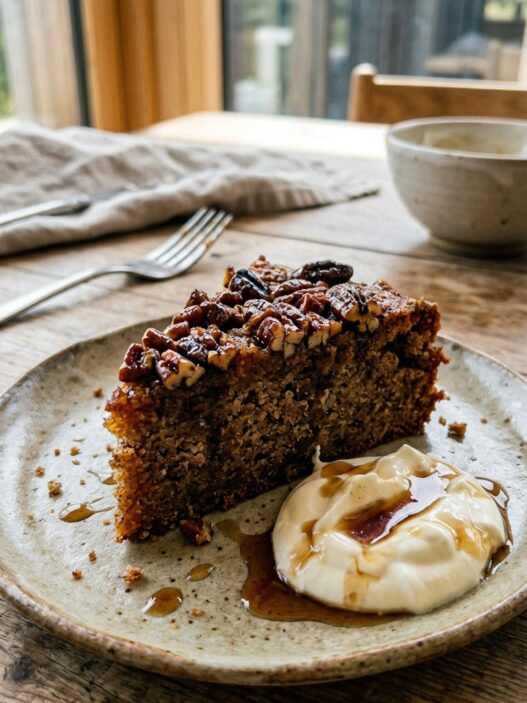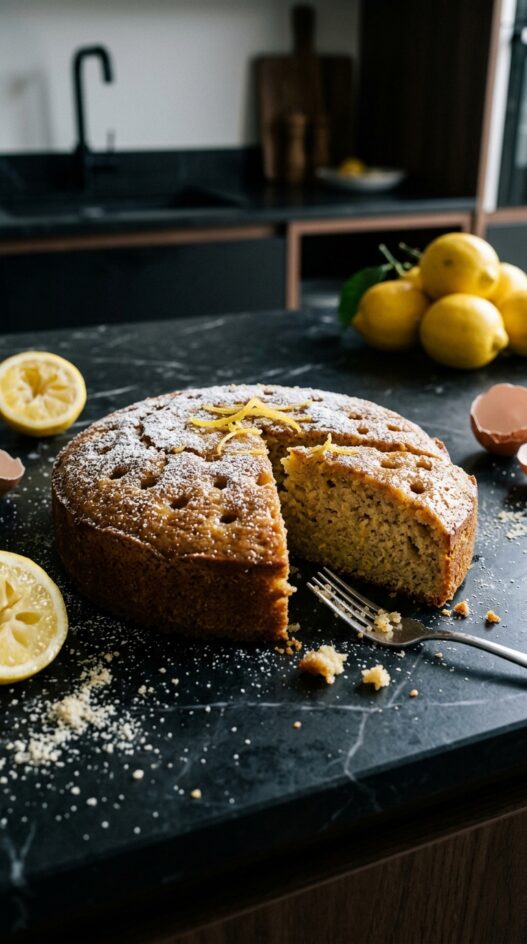
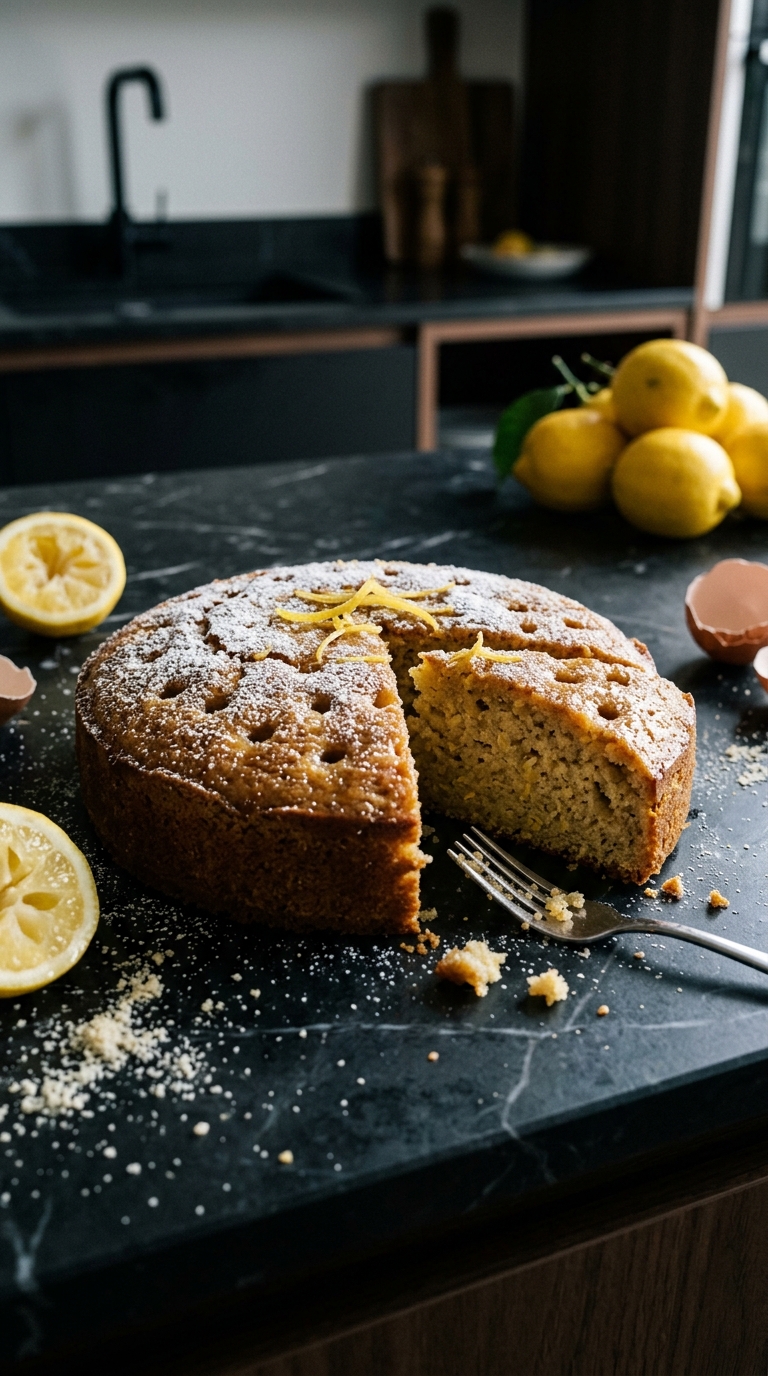
Since I started eating gluten free, I haven’t really eaten cake like this. I find that gluten free recipes are often restricted to cookies, muffins or raw food, as it is hard to replace the wheat flour in bigger cakes. You cannot taste the potatoes at all, but they act as the moist and starchy element, and I’d go as far as argue that most people wouldn’t even notice that this cake was gluten-free. I will definetely use potatoes in baking like this again!
As any other recipe I create, most of the ingredients can easily be replaced to fit what you have access to. The lemons can technically be replaced by any other citrus fruit, just make sure to adjust the sugar amounts as it will be too sweet with for example oranges. If you do not have vanilla you can easily leave it out, or alternatively use fresh vanilla pods (I would have done, if I had any). The chestnut flour can also easily be replaced with only almond flour…this will probably make a bit of a lighter cake.
So – get this little beauty on your Easter menu, and prepare to welcome spring in a slice of cake!
Print
Gluten Free Lemon Drizzle Cake
- Total Time: 1 hours
- Yield: 8
Description
This gluten free cake is perfect for Easter. It is not particularly fancy, but it’s packed full of flavour and the little hidden waterfalls of tangy lemon syrup are to die for.
Ingredients
Cake
- 200 grams of soft, salted butter
- 200 grams of golden caster sugar
- 4 eggs
- 100 grams of almond flour
- 75 grams of chestnut flour
- 250 grams of cold mashed potatoes
- Zest of 2 lemons
- 2 tsp of gluten free baking powder
- 1 tsp of vanilla paste or the seeds of 1 fresh vanilla pod
Syrup
- Juice of 1 lemon
- 1 tbsp of agave sirup
Instructions
- Whisk the soft butter and sugar until white and fluffy.
- Add 1 egg at a time, whilst whisking gently. Don’t be discouraged if it splits, it will come together when you add the other ingredients.
- Add the flours, the potatoes, vanilla, lemon zest and baking powder. Stir till combined.
- Spoon into a 20cm baking tin (round or square.. you choose!)
- Bake at 180 degrees celsius for 40 minutes or until a toothpick comes out clean.
- Let cool for 10 minutes.
- Make approximately 30 holes in the surface of the cake with a toothpick.
- Combine the lemon juice and the agave (use normal sugar to taste, if you do not have agave), and pour over the cake so all of the wholes get some.
- Leave to cool completely. Dust with icing sugar and a bit of fresh lemon peel. Serve on it’s own or with some cool creme fraiche!
- Prep Time: 20 mins
- Cook Time: 40 mins
- Category: Baking
- Cuisine: British
Nutrition
- Serving Size: 1 slice
- Calories: 400
If You Liked This Recipe, You’ll Love These
- Perfect Lemon Cake with Lemon Syrup
- Sicilian Orange Cake
- Shiso Meyer Lemon Tart
- Glazed Orange Pound Cake with Orange Zest
Frequently Asked Questions
Why does this gluten-free cake use mashed potatoes?
I add 250 g of cold mashed potatoes to the batter because potatoes act as the moist and starchy element in place of wheat flour. You cannot taste the potato at all — most people wouldn’t even notice the cake is gluten-free. It was enough of a revelation that I plan to use potatoes in baking again.
Can I use a different citrus fruit instead of lemon?
Yes, but you need to adjust the sugar amounts — oranges are sweeter than lemons, so using orange juice in the syrup would make it too sweet without reducing the sugar. The 1 tbsp of agave in the syrup provides a gentler starting point, which makes it easier to taste and adjust.
Can I replace chestnut flour with something else?
Yes. The 75 g of chestnut flour can easily be replaced with more almond flour, which will probably make the cake a bit lighter in texture and less earthy in flavor.
How does the lemon syrup get into the cake?
After baking and cooling for 10 minutes, make approximately 30 holes across the top of the cake with a toothpick. Then combine the juice of 1 lemon with 1 tbsp of agave and pour the syrup over the cake so every hole receives some — think of them as hidden waterfalls of tangy lemon syrup.