
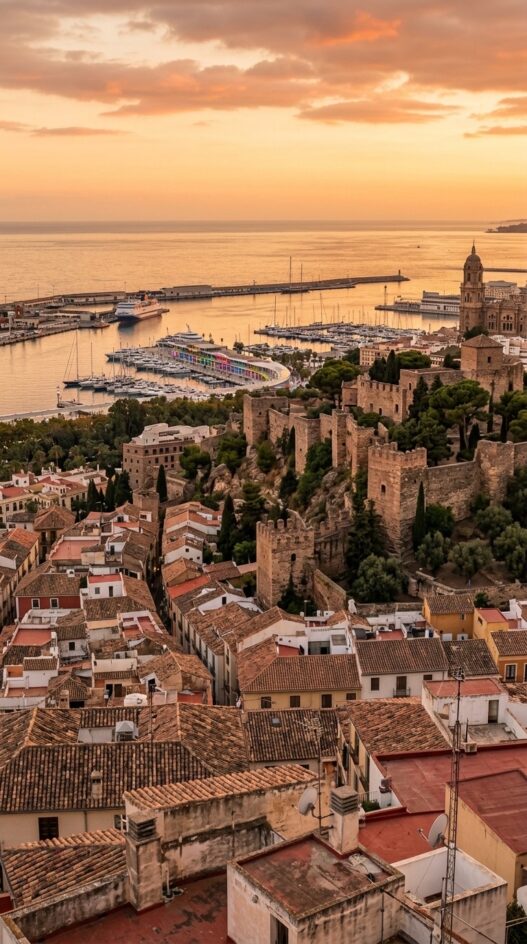
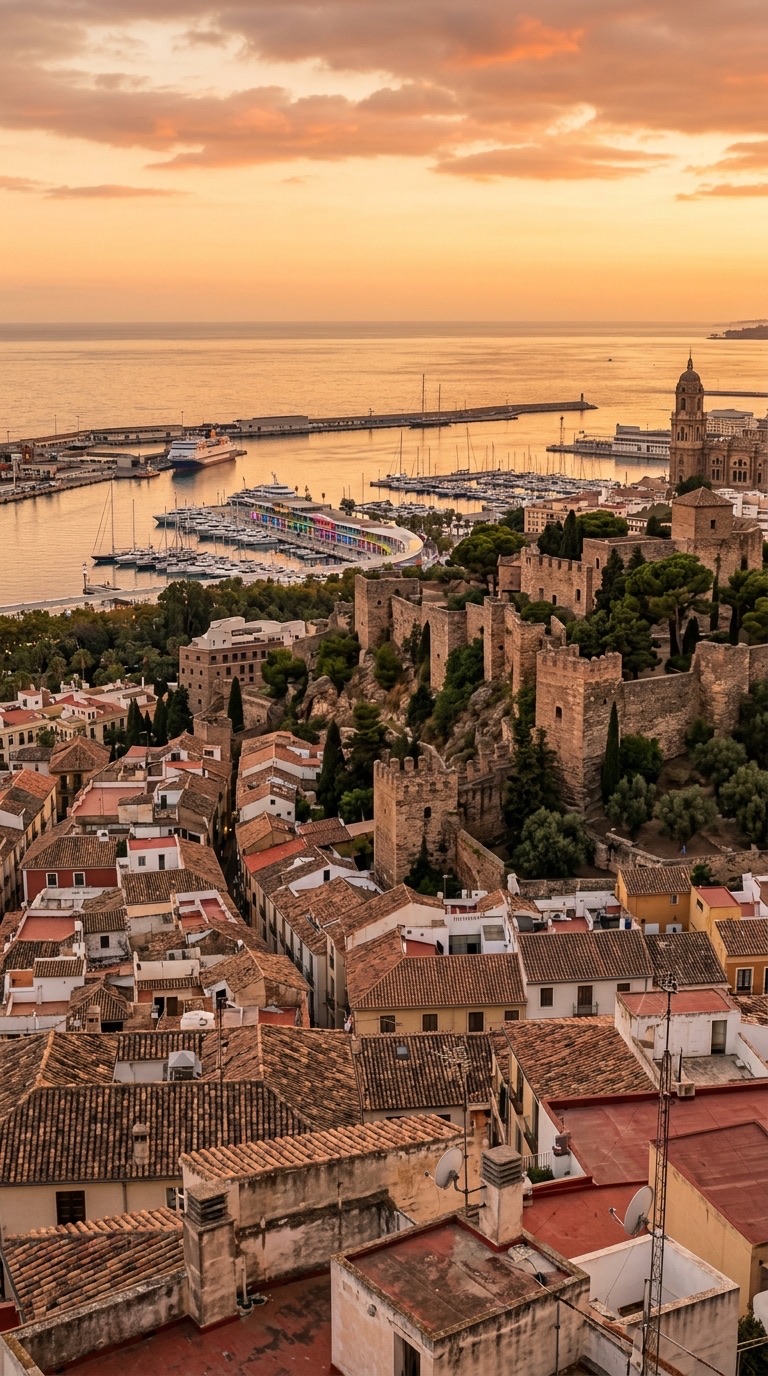
I have called the Málaga region home for years over the span of two decades, and the city feeds you in ways that feel almost unreasonably good. This is a city with one foot in the sea and another planted in the orchards and olive groves of inland Andalucía, and its food reflects every one of those layers. Some of what you will eat here is Málaga-specific, born on these beaches and in these streets; some of it is the best of broader Andalusian and Spanish tradition, dishes and ingredients that are among the pinnacle of eating. Come hungry, slow down, and work through this list.
1 · Espetos
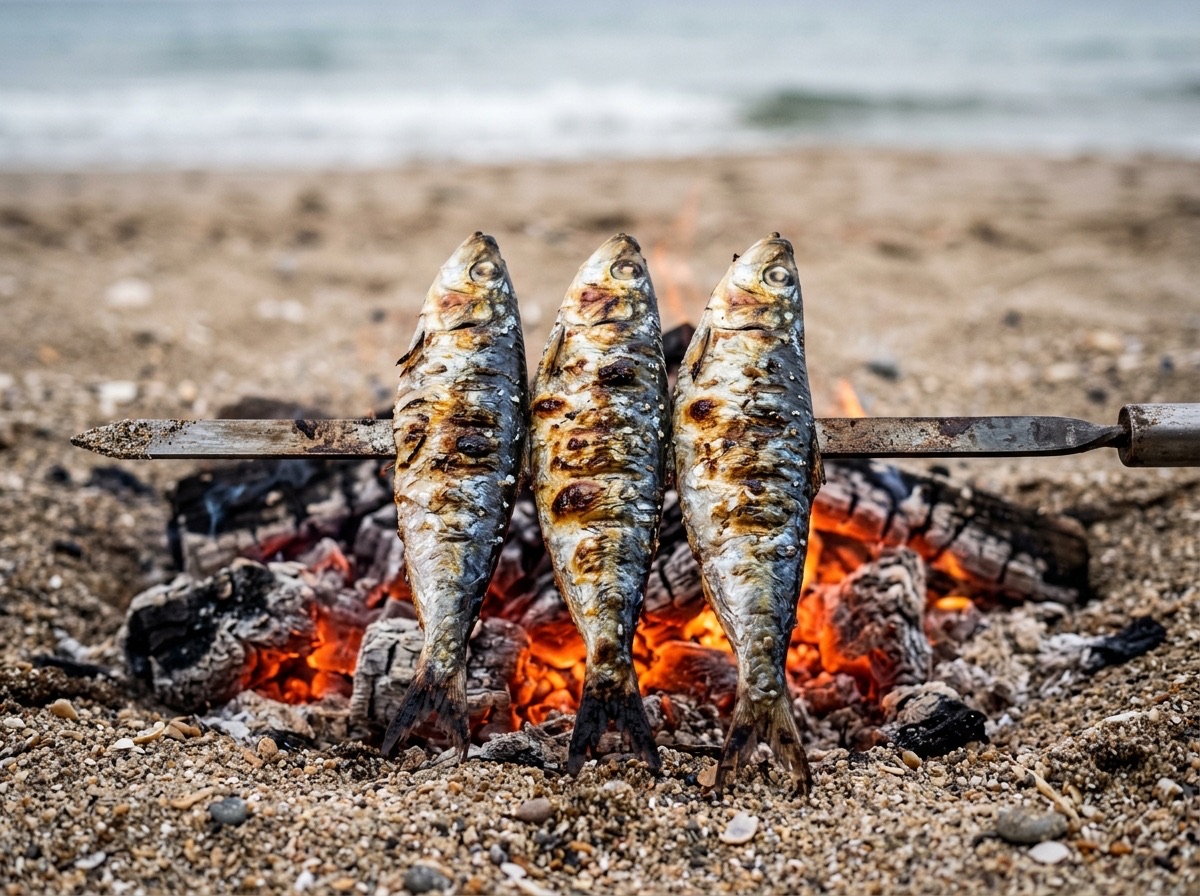
The sardine skewer grilled over a driftwood fire on the beach is not a dish that travels well, which is exactly why you eat it here. The tradition began in the El Palo neighbourhood of Málaga in the mid-1800s, when a fisherman named Miguel El Bizco started grilling the day’s catch on cane skewers sunk into the wet sand beside an open fire. The technique is unchanged: whole sardines, threaded through the spine onto skewers, tilted over an almond-wood fire on the shoreline until the skin crisps and the fat sizzles. A squeeze of lemon is the only intervention. Look for chiringuitos along La Malagueta beach and the stretch toward El Palo where the tradition started, order a round of espetos with cold local beer, and eat them the moment they arrive off the fire.
Where to try it
2 · Fritura Malagueña
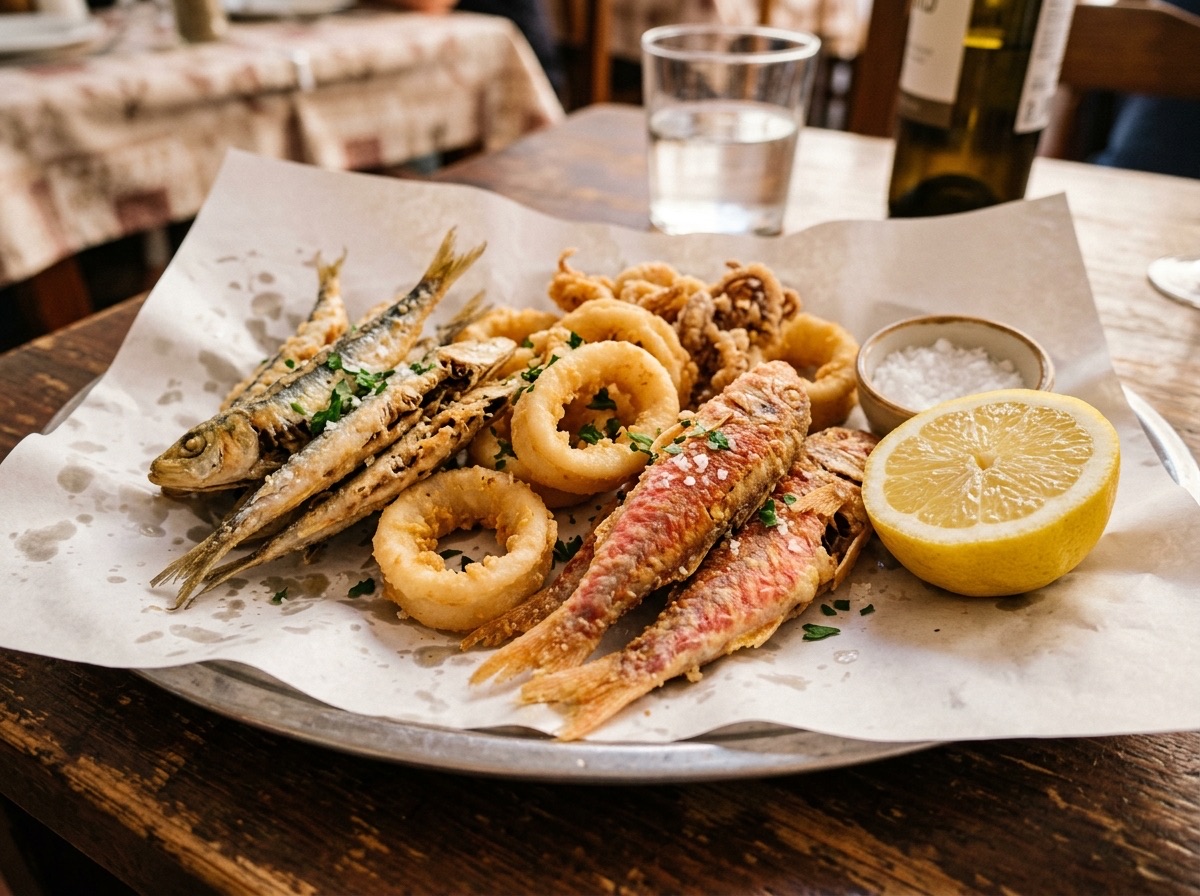
Málaga’s answer to the question of what to do with the best fish the Mediterranean offers is to coat it in chickpea flour (or sometimes wheat flour) and flash-fry it in very hot olive oil until it shatters at the touch. The result is fritura malagueña: a paper-lined platter of boquerones, calamari rings, small red mullet, baby squid, and whatever else was caught that morning, all fried to a dry, weightless crunch that has nothing in common with the greasy fish-and-chip-shop impression you might arrive with. The chickpea flour batter is the Malagueño signature, giving the coating a faintly nutty sweetness and an extra-crisp finish. It arrives with a wedge of lemon and nothing else. Any good cervecería near the port or along the seafront will do a proper version; the quality of the oil and the heat of the fryer are the variables to watch for. Order it as a shared starter and you will understand immediately why fried fish is treated as a serious culinary category in this city.
Where to try it
- El Tintero — No menu, the servers yell out what they are carrying and you just grab a plate as they walk by. Try any of their fried fish.
3 · Boquerones
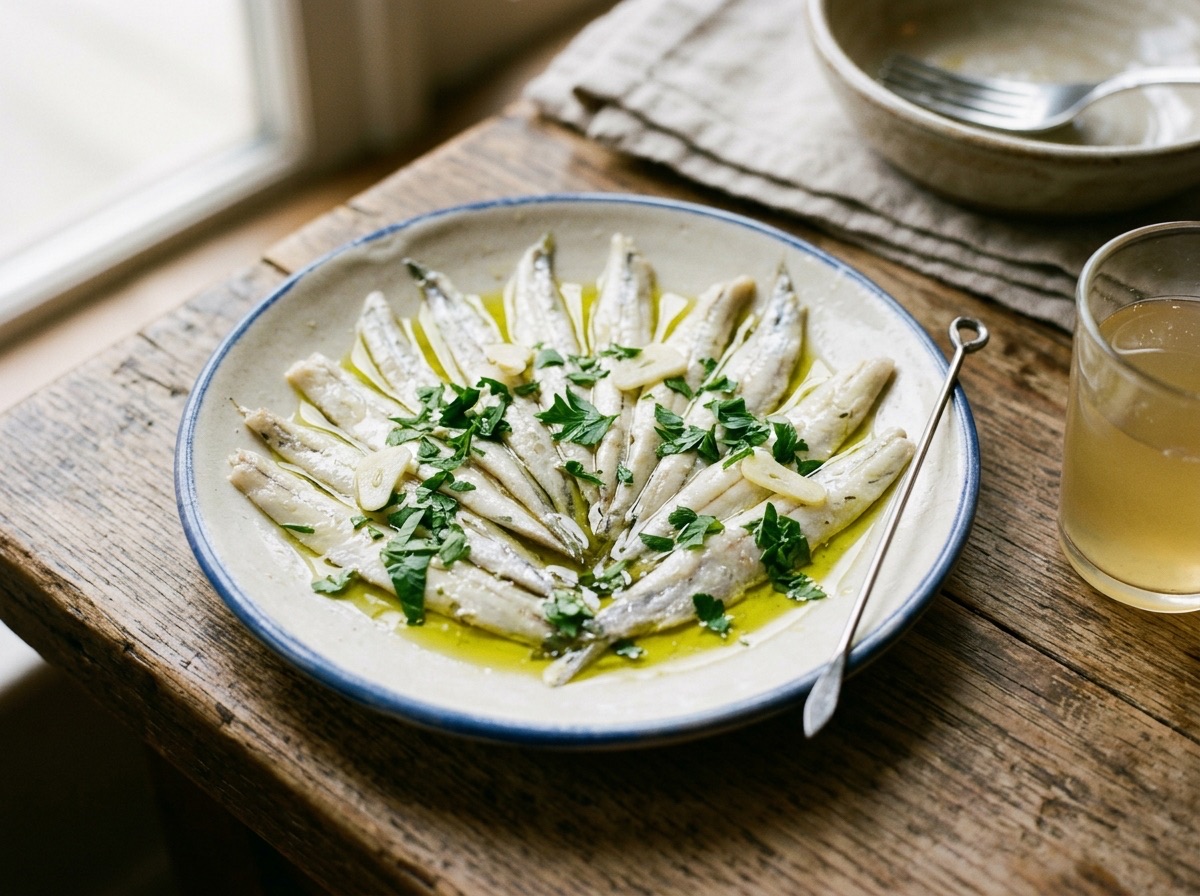
The anchovy has given Málaga its enduring nickname: malagueños are called boquerones, a piece of local self-mythology that tells you how deeply the city identifies with the fish pulled from its bay. The boquerón deserves to be considered in two distinct registers. Boquerones fritos are the same fish as the fritura, fried whole and eaten by the handful, crisp and hot. Boquerones en vinagre are a different animal entirely: the fresh anchovies are cured in white wine vinegar for 6-12 hours until the flesh turns opaque and white, then dressed with garlic, parsley, and a thread of olive oil. The vinegared version demands good bread and a cold glass of white wine; the fried version is best with a beer and no plate. Both are available at essentially every cervecería and tapas bar in the city center, and in Málaga, unlike in most places, there is a reasonable chance that the fish was in the sea that morning. Order both, compare, and form your own opinion.
4 · Porra Antequerana
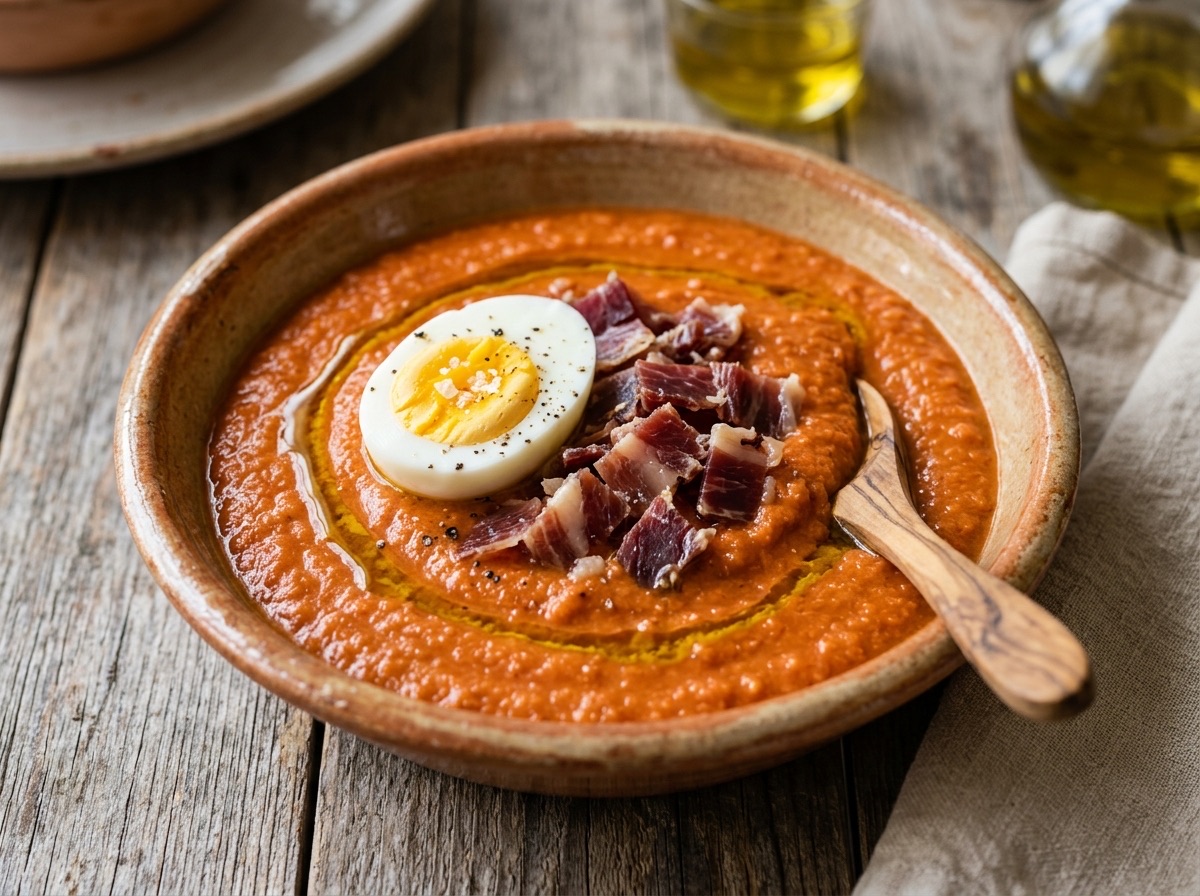
Antequera sits forty-five kilometres north of Málaga, high on a limestone plateau between mountain ranges, and the food it sends down to the coast is some of the most satisfying in the province. Porra antequerana is a cold tomato-and-bread purée, closer in texture to salmorejo from Córdoba than to gazpacho, but thicker still, enriched with more olive oil and garlic, and served topped with chopped jamón and hard-boiled egg. The bread gives it body; the garlic gives it attitude; the ripe tomatoes give it the color of a Málaga sunset. It is the kind of dish that looks like very little and delivers a great deal. Outside of Andalucía almost no one has heard of it, which is part of what makes finding it on a Málaga menu feel like a small piece of luck. Many restaurants in the city serve the Antequera version alongside or instead of standard gazpacho; order it when you see it, especially in summer, when the tomatoes are at their peak.
5 · Ajoblanco
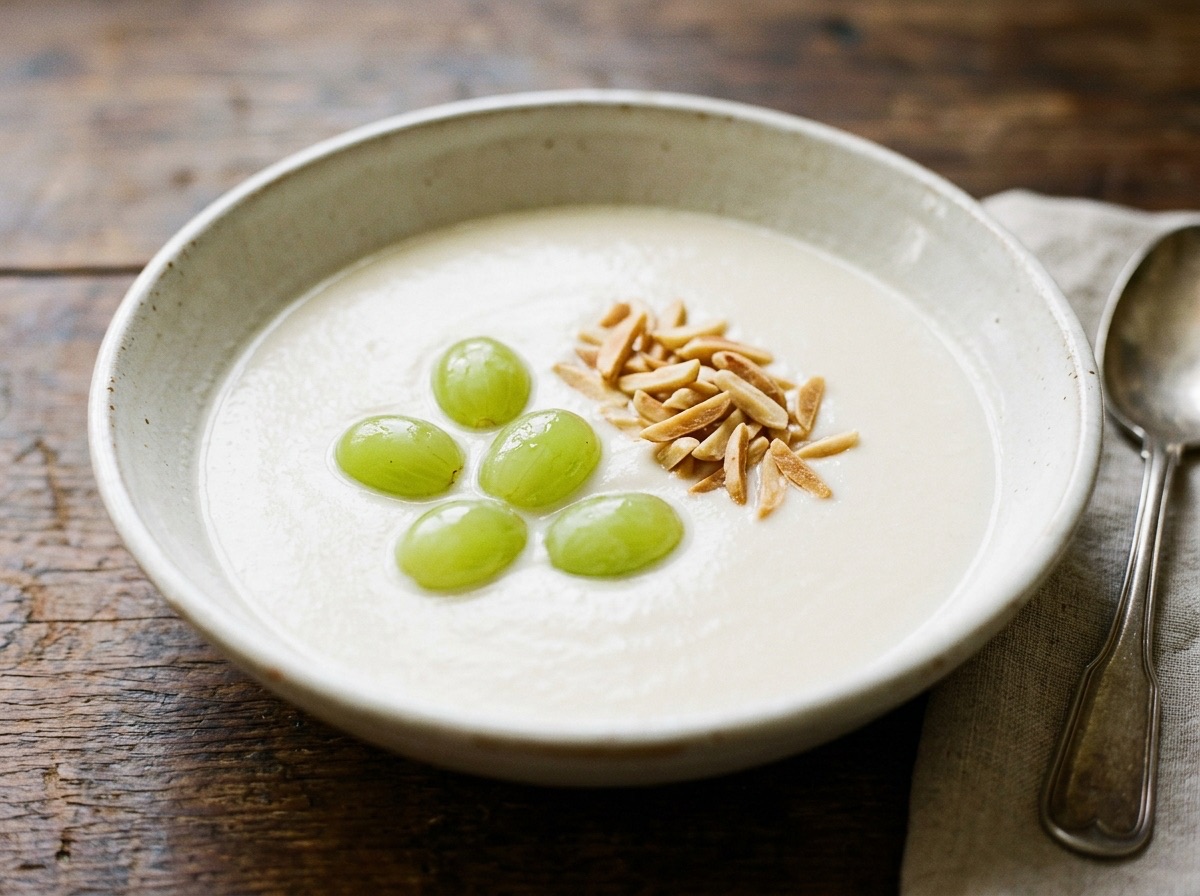
Before the tomato arrived in Europe from the Americas, Andalucía already had its cold soup, and it came from the Moors. Ajoblanco predates tomato-based gazpacho by several centuries: a silky white emulsion of blanched almonds, stale bread, garlic, olive oil, and sherry vinegar, blended until completely smooth and served chilled, traditionally with peeled muscatel grapes placed on top. The Moors brought almond cultivation to southern Spain during their seven centuries in Andalucía (8th to 13th century), and ajoblanco is the most direct culinary inheritance of that period still in regular rotation. The muscatel grapes are not incidental; their high sugar content cuts the savour of the garlic and balances the richness of the almond oil. In Málaga’s hot interior especially, this is the soup people have been drinking against the August heat for a very long time. Some restaurants garnish with a drizzle of Pedro Ximénez or a few melon balls as a modern variant; both work. The original is better.
6 · Gazpachuelo Malagueño
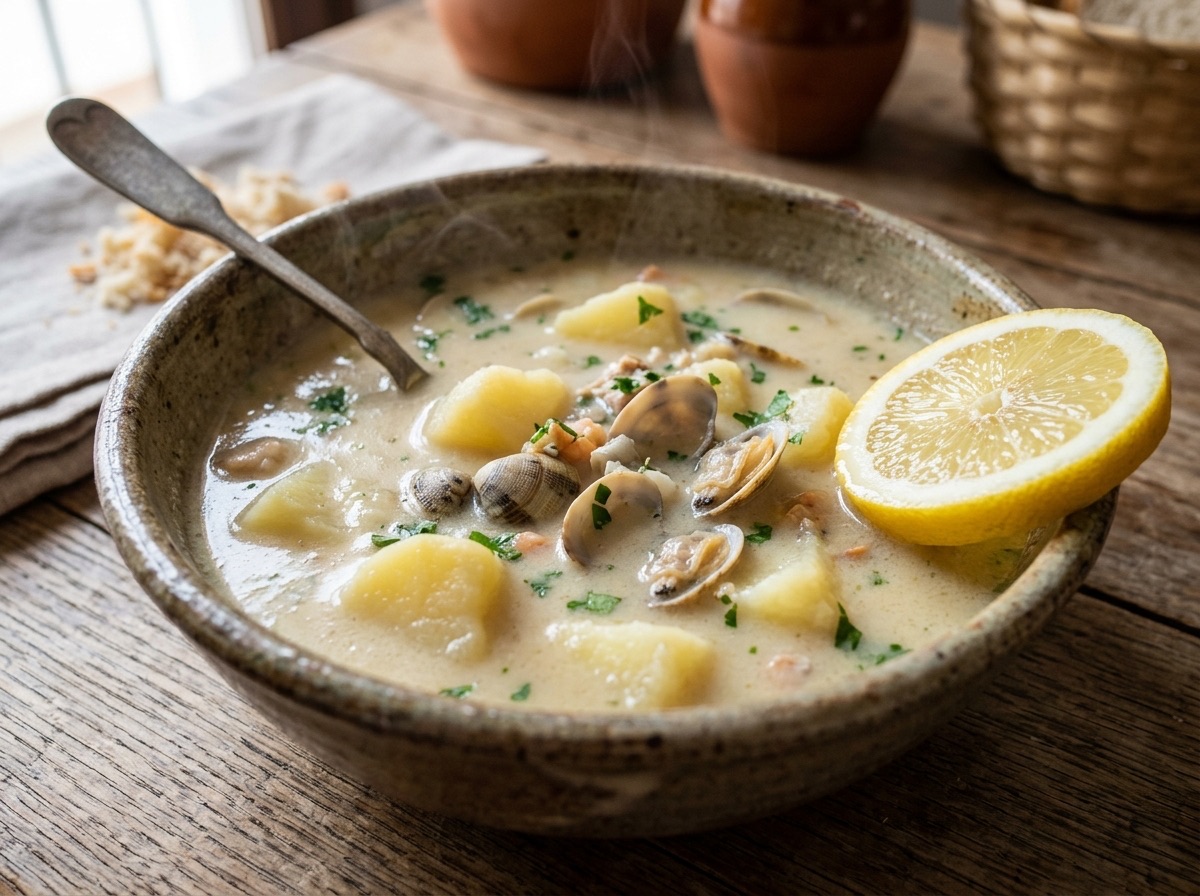
The name sounds like a cousin of gazpacho, but gazpachuelo malagueño is a warm dish, a fisherman’s soup, and it is built on a foundation that surprises most visitors: mayonnaise. The broth (typically fish stock, sometimes shellfish) is finished with freshly made mayonnaise and lemon juice, then poured over boiled potatoes and, in some versions, small clams or langostinos and a handful of rice. The mayonnaise sounds odd to a non-Andalusian ear, but the technique is identical to a French sauce beurre blanc or an aioli enriched velouté: the emulsified fat enriches the broth, prevents it from splitting at serving temperature, and gives the soup a body that no cream could replicate. This is resolutely local; outside the province of Málaga it is almost impossible to find. The best versions are made with a hand-beaten mayonnaise added at the last moment. Seek it out at traditional, unpretentious marisquerías and family-run restaurants rather than tourist-facing menus, and it may well be the most memorable thing you eat here.
Where to try it
7 · Ensaladilla Rusa
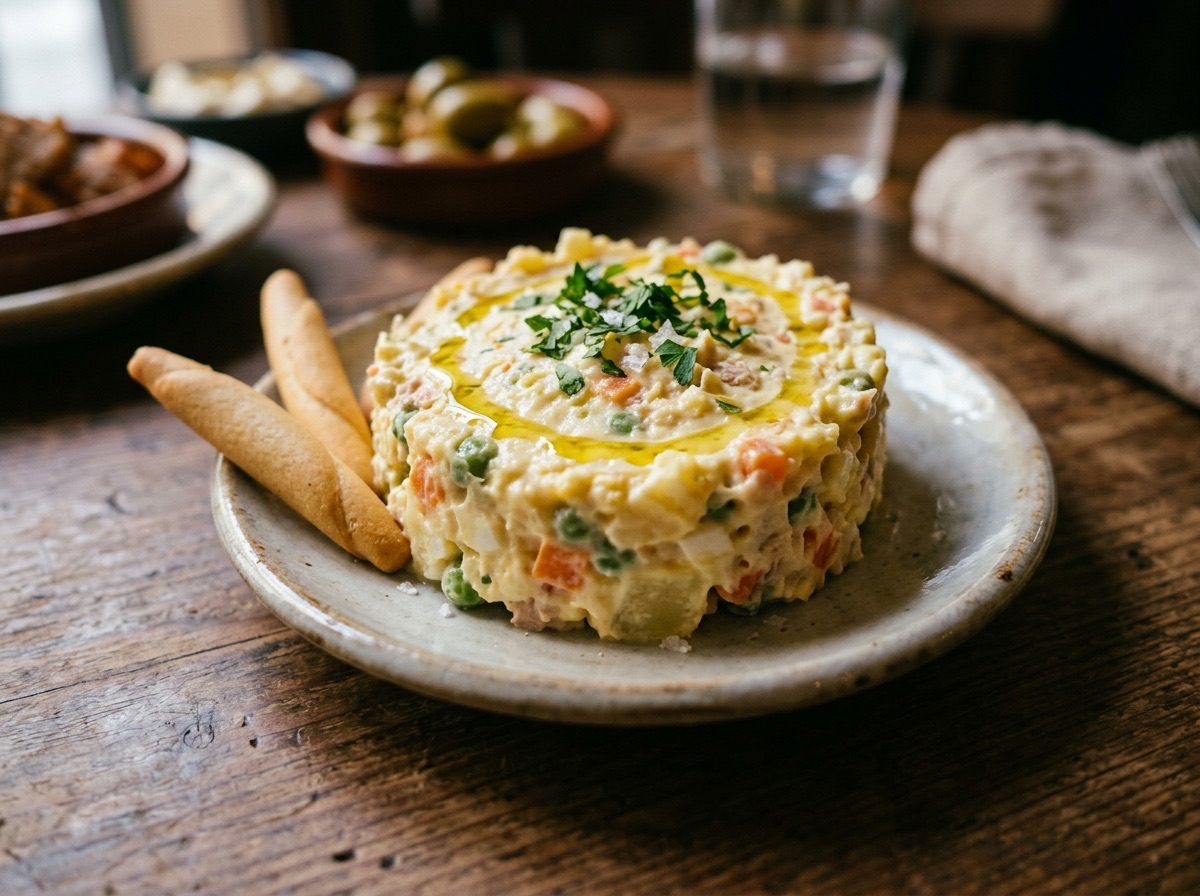
Ensaladilla rusa did not originate in Málaga, nor in Spain; it is a descendant of the French-Russian Olivier salad popularised in nineteenth-century Moscow. But what happened to it in Spain, and particularly in Andalucía, is a transformation thorough enough that ownership feels earned. A Málaga ensaladilla is potato salad with tuna, mayonnaise, peas, carrots, sometimes prawns, sometimes boiled egg, always made in-house and served at room temperature on a small plate as the opening tapa, typically with bread. In Málaga’s dense network of corner cervecerías, it arrives on the counter almost automatically when you order a caña of draft beer, a cultural habit that functions less as a formality and more as a statement of hospitality. The quality differential between a bar that makes its ensaladilla fresh that morning and one that opens a container is enormous and obvious. Look for a version with a generous hand of olive oil worked into the mayonnaise, visible flakes of good tuna, and potatoes that still have texture. It is the first thing you eat in this city, and it sets the tone for everything that follows.
8 · Ibérico de Bellota
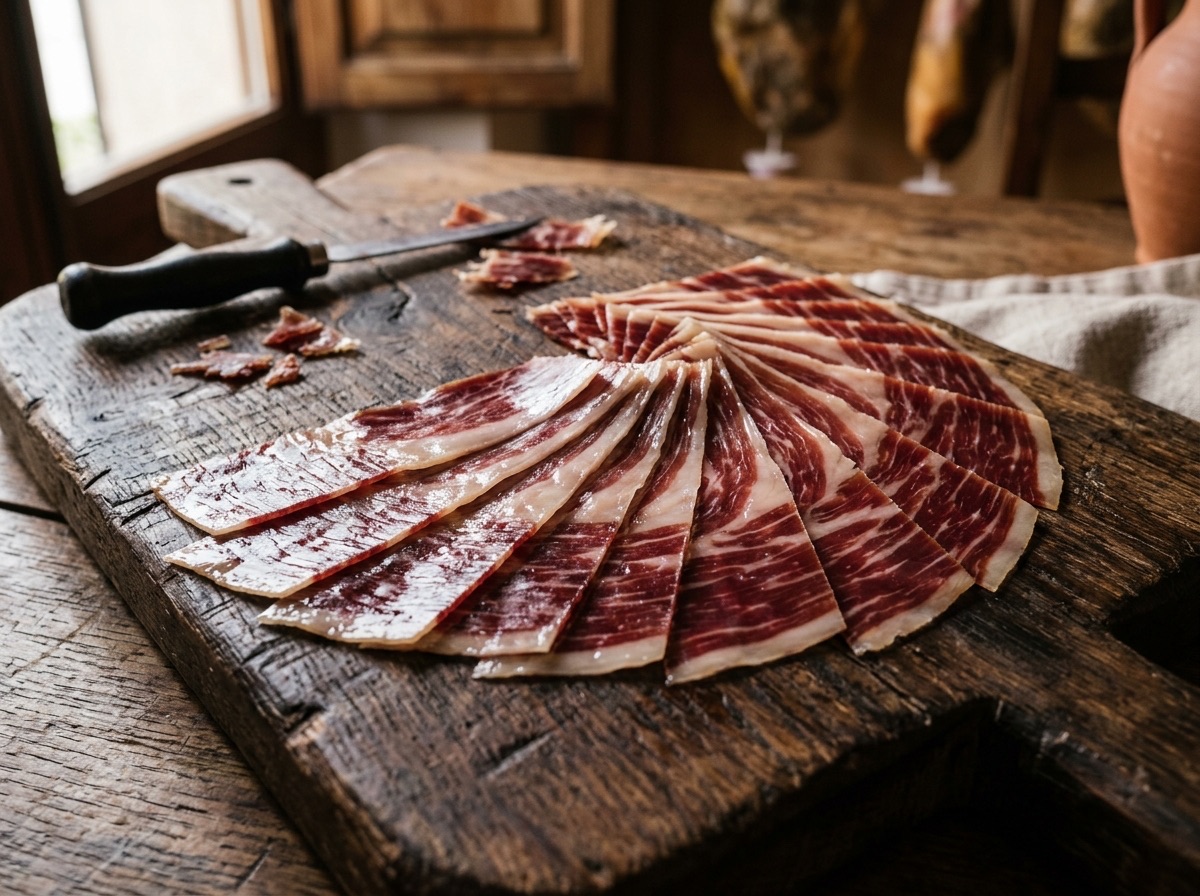
No ham in the world is made quite like this. Jamón ibérico de bellota comes from the pata negra pig, a breed descended from the wild boar that ranges across the dehesa (the open cork-oak and holm-oak woodland of southwestern Spain), spending its final months eating almost nothing but acorns. The fat marbles into the muscle in a way that resembles wagyu beef more than any other cured meat; the flavor is nutty, sweet, and deeply savory all at once, and the finish lingers for a remarkable amount of time. The great Denominations of Origin (Jabugo in Huelva, Guijuelo in Salamanca, Los Pedroches in Córdoba, Extremadura) lie outside Málaga province, but that is not a reason to defer the experience. Málaga’s restaurants and jamónerías serve these hams with a reverence that matches the best of Spain, and the combination of high-quality jamón with local AOVE-drizzled bread, sherry, or a glass of Málaga wine puts the whole thing in its best possible context. Ask any jamonería counter in the city center for a jamón ibérico de bellota 100%, order a portion sliced to order, and eat it standing up with a glass of something cold.
9 · Olive Oil
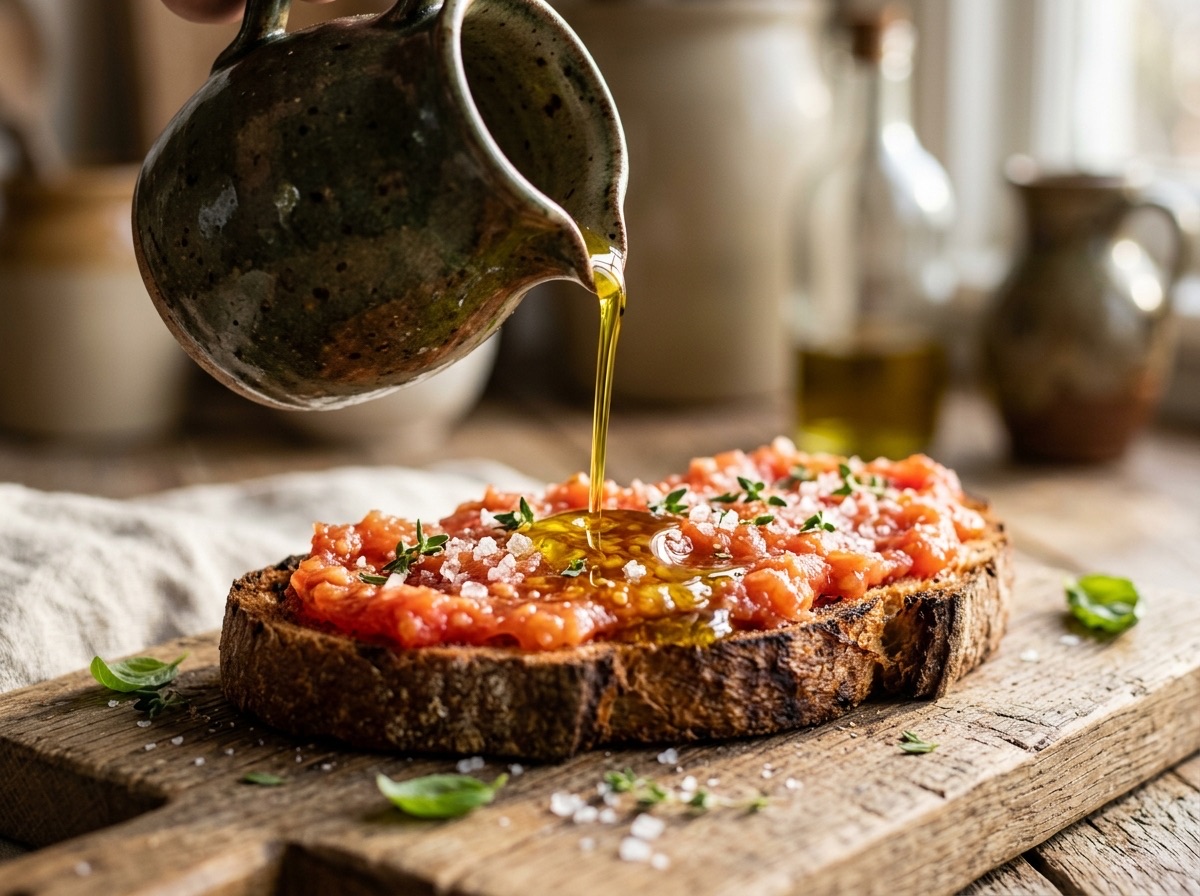
Andalucía produces roughly 1.4 million tonnes of olive oil per year, more than Italy and Greece combined, more than the rest of the world combined. This is not a regional curiosity; it is the defining agricultural fact of southern Spain, and it shapes almost every dish on this list. Málaga has two Denominations of Protected Origin within its own province: DOP Antequera, from the olive groves of the inland plateau, and DOP Sierra de Málaga, from the mountain valleys to the north of the city. The canonical way to encounter both is the Andalusian breakfast: a tostada (thick-cut toasted bread, often sourdough or a dense white) spread with ripe crushed tomato and given a serious pour of fresh-pressed AOVE, finished with sea salt. It sounds too simple to be worth discussing. It is one of the best meals you will eat in Spain. The oil quality at a good Málaga breakfast bar is high enough that you will taste the difference from olive oil you have known elsewhere; the fruitiness of a fresh Picual or Hojiblanca from Antequera has a green, peppery finish that makes supermarket olive oil seem like a different product entirely. Start every morning here this way.
10 · Tuna (Atún Rojo)
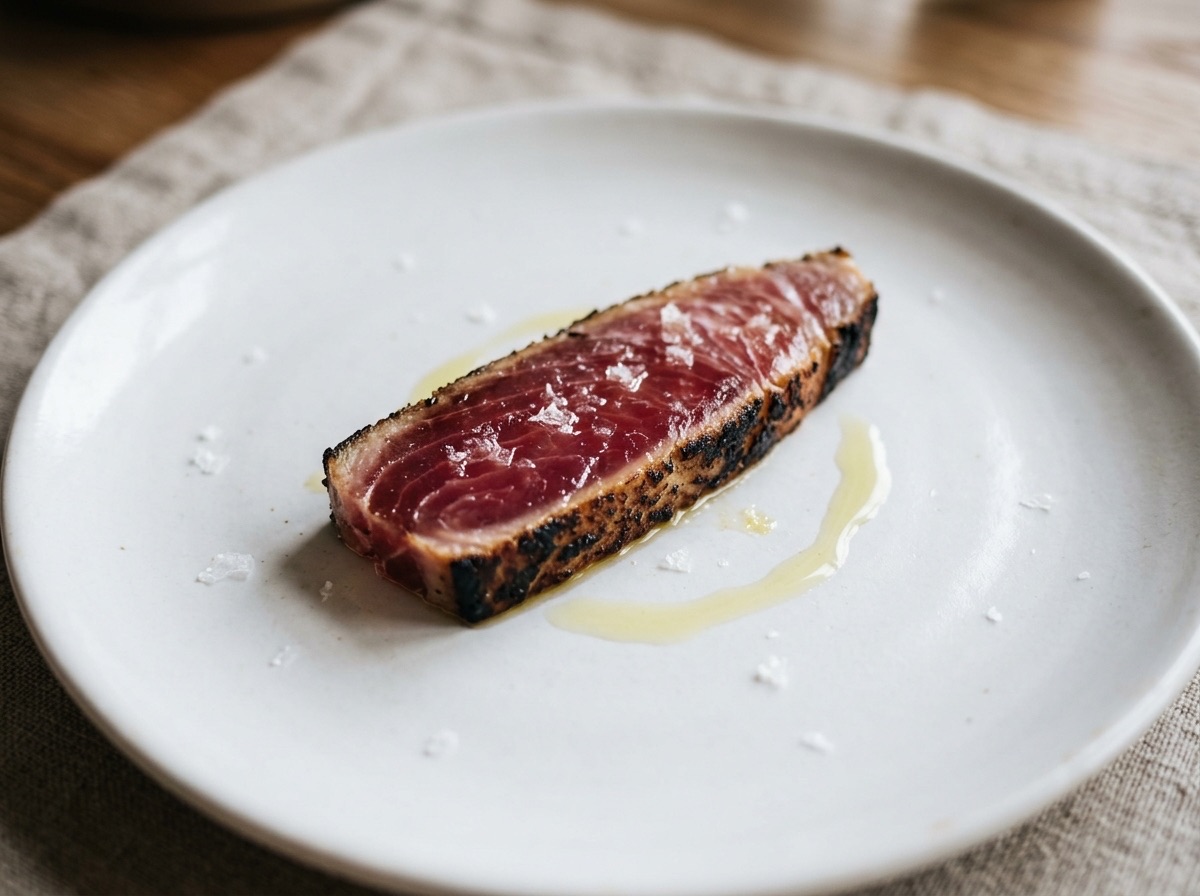
Atlantic bluefin tuna has been trapped and brought ashore at Cádiz by the almadraba method since Phoenician times, making it one of the oldest continuously practiced fishing traditions in the world. The almadraba is a fixed net system placed in the Strait of Gibraltar during the bluefin’s annual migration (April through June), and the tuna caught this way are enormous, wild, and at the absolute peak of their fat content. Málaga is not Cádiz, but Málaga’s better restaurants serve this fish with the respect it commands, and the proximity to Cádiz (roughly 200 kilometres) means the supply chain is short and the quality arrives intact. The belly cut (ventresca) is the most prized: sliced thin over dressed salad leaves, or grilled briefly over charcoal until just seared on the outside and raw at the center. Encebollado, atún rojo slow-cooked with onions and olive oil, is the traditional preparation; tartare is the modern one; mojama (salt-cured, air-dried loin, sliced paper-thin over almonds) is the preserved form that concentrates everything extraordinary about the fish into a slice the thickness of a credit card. Bluefin tuna this good, this close to where it was caught, is one of the specific pleasures Málaga offers that most of the world simply cannot replicate.
Where to try it
- Mercado Central de Atarazanas — The big market in the center of town. Tons of seafood and fish stalls to pick beautiful tuna and other products from. Many of the stalls cook the fish for you, enjoy with a caña or a copa!
Málaga is one of those cities that rewards you for moving slightly outside the beaten path, so don’t stay on the main tourist drags. The food is not complicated, so make sure you look for authentic places that really take the products seriously. Work through this list at whatever pace the heat allows, follow it with a glass of Málaga Dulce wine or a cold local craft beer, and leave with a clear sense of why this city’s cuisine belongs in a conversation with the best in Spain. Buen provecho.
Make these at home: recipes from this guide
Frequently Asked Questions
What is the most famous food in Málaga?
Espetos, the sardines grilled on cane skewers over beach fires, are the most iconic Málaga dish. The chiringuito tradition began in the El Palo neighbourhood in the mid-1800s and remains the food most identified with the city.
What is ajoblanco and why is it associated with Málaga?
Ajoblanco is a chilled white soup made from blanched almonds, bread, garlic, olive oil, and vinegar, traditionally garnished with muscatel grapes. It predates tomato-based gazpacho by centuries and is a direct culinary legacy of the Moorish presence in Andalucía. Málaga is the region most closely associated with it.
Is gazpachuelo malagueño related to gazpacho?
Despite the similar name, gazpachuelo malagueño is a warm fisherman’s soup, not a cold vegetable purée. It is made with fish broth enriched with mayonnaise and lemon juice, served over potatoes and sometimes shellfish. It is almost unknown outside Málaga province.
Where does the jamón ibérico de bellota served in Málaga come from?
The great ibérico bellota Denominations of Origin (Jabugo, Guijuelo, Los Pedroches, Extremadura) are all outside Málaga province. Málaga has no jamón DOP of its own. However, Málaga’s restaurants and jamónerías source from these great producers and serve the ham with exceptional quality and reverence.
What is porra antequerana and how does it differ from salmorejo?
Porra antequerana is a cold tomato and bread purée from the inland Antequera region of Málaga province. It is thicker and more garlicky than salmorejo from Córdoba, enriched with more olive oil, and traditionally topped with chopped jamón and hard-boiled egg. It is less well known internationally than salmorejo but equally worth seeking out.
When is the best time to eat bluefin tuna (atún rojo) in Málaga?
The Cádiz almadraba season runs from April through June, when Atlantic bluefin migrates through the Strait of Gibraltar. Fresh atún rojo is at its best and most available in Málaga restaurants during these months, though mojama (salt-cured dried loin) and frozen ventresca are served year-round.


Saving this for a fall escape.
Heading to Málaga for ten days in October with the kids and this list is going on the fridge. Have you been to any of the newer chiringuitos near La Carihuela worth booking for an early dinner? Thanks for the round-up.
Espetos at El Cachalote at sunset last June were the highlight of two weeks in Spain, wonderful list and brought back the almond-wood smoke straight away.
Fantastic Málaga round-up, the espetos paragraph took me right back to a beach dinner outside the city!
Ajoblanco kept coming up when I lived nearby and once you taste it on a hot afternoon you understand. Made it last summer with Marcona almonds, sherry vinegar at the end was the move. Cold almond-and-garlic soup with grapes on top sounds odd until that first sip. Absolutely delicious.
I lived in Málaga for a year teaching English and the food scene there is genuinely one of the best in Spain. Espetos at midnight on La Malagueta with a Cruzcampo is exactly what the article describes, you don’t realize you’re eating one of the best things until you’ve left and can’t get it anywhere else. Adding ajoblanco to my home rotation as soon as the almonds are ready. Thank you for putting Málaga in front of more people.
Born in La Caleta and spent half my childhood at chiringuitos along El Palo, this list reads legit. Espetos at El Cachalote are the right call, the almond-wood smoke against the sardine fat is something remember years later. Fritura malagueña done well shatters under a fork, the chickpea-flour coating crisp enough to crack but never greasy. Café del Cuento for chocolate con churros after, my abuelo’s habit and now mine.