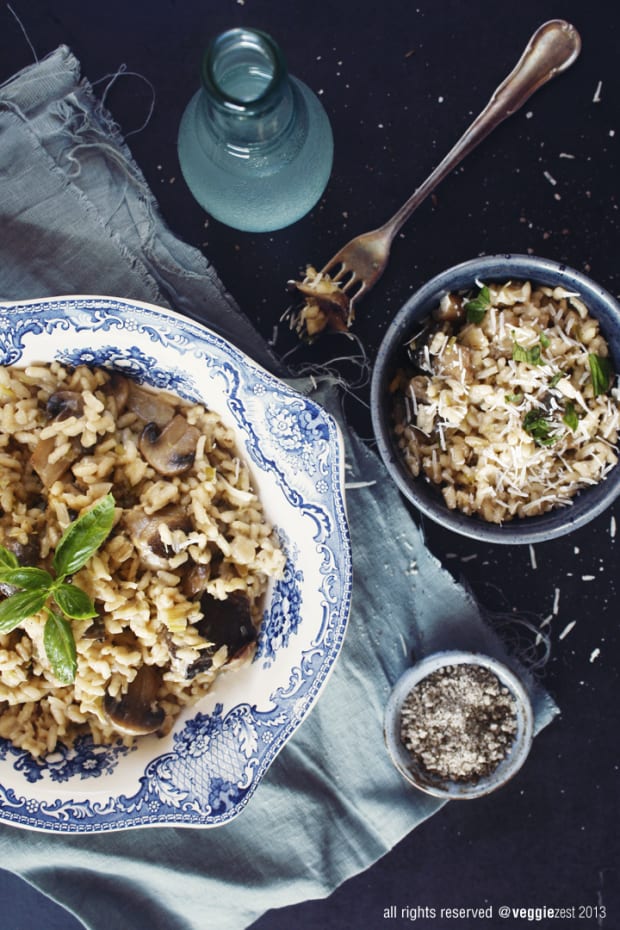
Typically you would use some kind of a stock for making risotto, but I made a mixture of water and lavender salt for this recipe. You don’t have to use lavender salt if you don’t have it handy – any kind of stock or even plain water with a little bit of salt and any kind of dried herb would be just as good. Its important though to keep the water warm while cooking the risotto. Apart from that, it’s fairly easy to make and tastes best when you eat it fresh.
Print
Leeks and Mushroom Risotto
- Total Time: 35 minutes
- Yield: 4 servings
Description
This creamy Leeks and Mushroom Risotto is made with arborio rice, a mix of button and shiitake mushrooms, and a hint of lavender salt for a unique flavor twist.
Ingredients
- 1 cup (240 ml) arborio rice
- 3 cups (720 ml) water seasoned with 1 tsp of lavender salt (or substitute with vegetable stock)
- 2 tbsp (30 ml) cream
- 1 cup (240 ml) sliced mushrooms (a mix of button and shiitake)
- 3 shallots, sliced
- 1 leek, sliced
- 2 tbsp (30 ml) olive oil
- Salt, to taste
- Black pepper, to taste
- Grated Parmesan cheese, for serving
Instructions
- In a medium saucepan, warm the water with lavender salt over medium heat. Once it starts simmering, reduce the heat to low to keep it warm.
- In a wide saucepan, heat the olive oil over medium heat. Add the sliced shallots and leeks, and cook for about 5-7 minutes until the vegetables become soft and translucent.
- Add the sliced mushrooms to the pan and cook for another 5 minutes, stirring occasionally, until the mushrooms are tender and lightly browned.
- Stir in the arborio rice and cook for 2-3 minutes, allowing the rice to toast slightly.
- Begin adding the warm water or stock, one ladle at a time, stirring frequently. Allow the liquid to be absorbed before adding the next ladle. Continue this process for about 18-20 minutes, or until the rice is creamy and cooked to al dente.
- Stir in the cream, and season with salt and black pepper to taste. Cook for an additional 2 minutes to heat through.
- Remove from heat and serve immediately, garnished with grated Parmesan cheese.
Notes
- Keep the water or stock warm while cooking the risotto to ensure even cooking.
- If you don’t have lavender salt, use any stock or plain water with herbs.
- Risotto is best enjoyed fresh, so serve immediately after cooking.
- Store leftovers in an airtight container in the refrigerator for up to 2 days.
- Prep Time: 10 minutes
- Cook Time: 25 minutes
Nutrition
- Serving Size: 1 serving
- Calories: 320
- Sugar: 3
- Sodium: 480
- Fat: 12
- Carbohydrates: 45
- Fiber: 3
- Protein: 7
- Cholesterol: 15
If You Liked This Recipe, You’ll Love These
- Mushroom Risotto from OTTO Woolloomooloo, Sydney, Australia
- Mushroom and Squid Risotto
- Risotto allo Zafferano: Italian Saffron Risotto
- Velvety Cream of Mushroom Soup with Truffle Oil
Frequently Asked Questions
What is lavender salt and what can I use instead?
Lavender salt is salt infused with culinary dried lavender and adds a floral, herbal note to the cooking liquid. You don’t need it — any stock (vegetable or otherwise) or even plain water seasoned with a little salt and any dried herb works just as well.
Why does the liquid need to stay warm while I add it to the rice?
Adding cold liquid to hot risotto rice shocks the starch and slows the cooking process unevenly. This is the key technique: keep the water or stock at a low simmer in a separate saucepan and ladle it in warm, one ladle at a time, over the 18–20 minute cooking period.
Can I save leftovers?
Risotto is best eaten fresh immediately after cooking. Leftovers can be stored in an airtight container in the refrigerator for up to 2 days — though the texture will thicken and won’t be the same as fresh.