
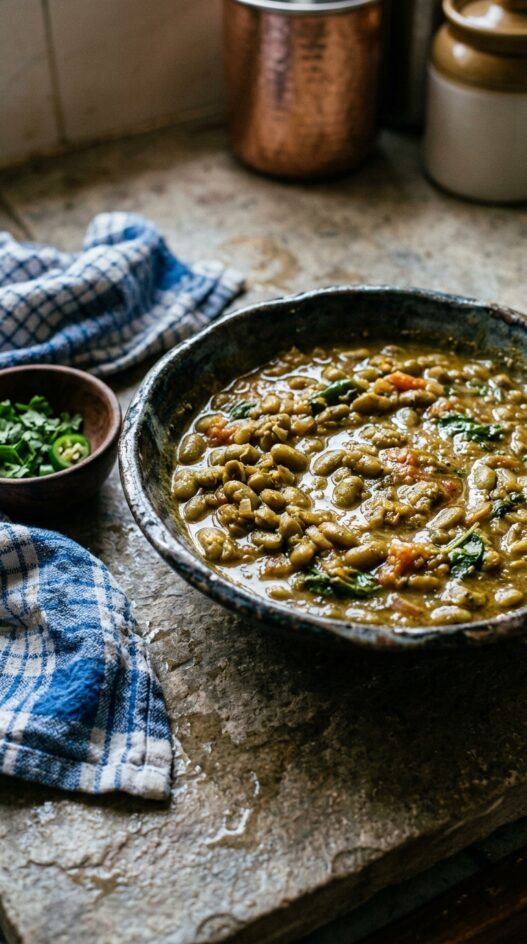
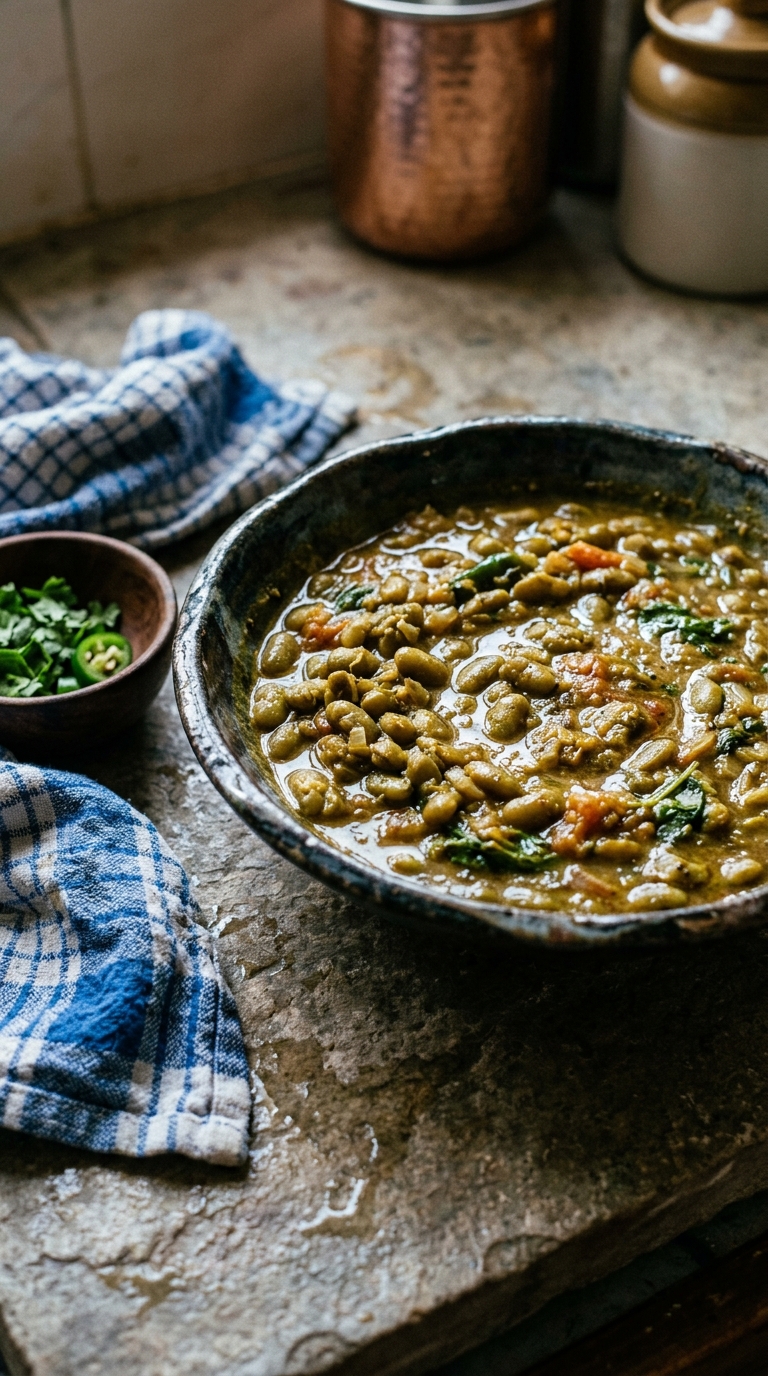
Its not every day that you come across beauties like these beans, especially when Hyderabad is not a native for these beans. I am told that they are a staple at Tumkur, which is where half of my family is from. Nevertheless, they are very healthy and add to the daily protein percentage.
Don’t fret if you do not find these beans at your local vegetable vendor. Consider this Usli recipe a basic recipe, and substitute these beans for any other veggies, should you not find these at your vegetable vendor. My other veggie choices for this recipe are cauliflower florets paired with some peas and French beans paired with carrots. You can microwave them to cook them slightly instead of pressure cooking them so that they don’t turn into a mash.
Also, consider this method of making the masala. Coconuts added with poppy, green chilli and coriander makes a very flavorful, fragrant and a full bodied masala, very different to the regular onions and tomato one. I am going to experiment more with this masala very soon, and see if I can replicate this recipe with other hard bean seeds like Chickpeas or kidney beans.
Print
Hyacinth Beans Curry
- Total Time: 35 minutes
- Yield: 4 servings
Description
This Hyacinth Beans Curry is a rich and flavorful dish featuring a unique coconut and poppy seed masala, perfect for pairing with rice or roti.
Ingredients
- 1 1/2-2 cups (360-480 ml) Avarekalu or any veggies (e.g., cauliflower florets, peas, French beans, carrots)
- 1 medium onion, finely diced
- 2 medium tomatoes, finely chopped
- 1 inch piece of ginger
- 4-6 garlic cloves
- 1 tbsp (15 ml) garam masala
- 1/4 cup (60 ml) coconut (dried or tender)
- 2 tbsp (30 ml) poppy seeds
- 2-3 green chillies
- 1/4 cup (60 ml) coriander leaves
- Salt, to taste
- 2 tbsp (30 ml) oil
Instructions
- Grind the coconut, poppy seeds, green chillies, and coriander leaves together in a mixer-grinder to form a smooth paste. Set aside.
- Boil the Avarekalu or your choice of veggies in a pressure cooker or microwave until slightly tender, ensuring they do not turn mushy. Set aside.
- Grind the ginger and garlic cloves into a paste.
- Heat oil in a pan over medium heat. Add the diced onions and sauté until they turn golden brown.
- Add the ginger-garlic paste and sauté for another 2-3 minutes until the raw smell disappears.
- Stir in the chopped tomatoes and cook until they are soft and the oil starts to separate.
- Add the ground coconut masala paste and garam masala. Cook for 5-7 minutes, stirring occasionally, until the masala is well cooked and fragrant.
- Add the boiled veggies and salt to taste. Mix well and cook for another 5 minutes, allowing the flavors to meld together.
- Serve hot with rice or roti.
Notes
- If Hyacinth beans are unavailable, substitute with cauliflower, peas, or carrots.
- Microwave veggies to prevent them from becoming mushy.
- The coconut masala can be used with other beans like chickpeas or kidney beans.
- Store leftovers in an airtight container in the fridge for up to 3 days.
- Prep Time: 15 minutes
- Cook Time: 20 minutes
- Category: Main Course
- Cuisine: Indian
Nutrition
- Serving Size: 1 serving
- Calories: 250
- Sugar: 6
- Sodium: 450
- Fat: 12
- Carbohydrates: 32
- Fiber: 8
- Protein: 6
- Cholesterol: 0
If You Liked This Recipe, You’ll Love These
- Dhingri Matar – Creamy Indian Mushroom and Pea Curry
- Pumpkin Masala Curry
- Eggplant and Cauliflower Curry with Tofu
- Weeknight Chana Masala
Frequently Asked Questions
What can I use if I can’t find hyacinth beans (Avarekalu)?
I designed this to work with any vegetable. Good substitutes include cauliflower florets, peas paired with French beans, or carrots — the same 1½–2 cups quantity applies. You can microwave the substitute veggies slightly instead of pressure cooking to prevent them from turning mushy.
What makes the coconut masala paste in this curry different from a standard onion-tomato base?
I grind the masala from ¼ cup coconut (dried or tender), 2 tbsp poppy seeds, 2–3 green chillies, and ¼ cup coriander leaves. This combination creates a very flavorful, fragrant, and full-bodied masala that is quite different in character from the more common onion-tomato-based curries.
Can this coconut masala be used with other beans like chickpeas?
Yes — I’ve been wanting to experiment with this masala using harder bean seeds like chickpeas and kidney beans, so the flavor profile works well beyond just hyacinth beans.
How long do leftovers keep?
Leftovers keep for up to 3 days stored in an airtight container in the refrigerator.







I understand that dried hyacinth beans are poisonous, but not if cooked twice.
This was fantastic! I made it almost exactly as you indicate after buying hyacinth beans and not knowing what to do with them! I used onions, carrots and some sweet potato for the vegetables. Also grated a little fresh turmeric in with the ginger/garlic and added half the coconut’s water into the sauce. I was quite surprised by the fresh and tart flavor that resulted! I’m not sure what this tartness was due to–perhaps the coconut/cilantro/poppy mixture? Thank you for sharing!
Hugh, In the recipe above, the local name of the beans, Avarekalu is used.
No mention of the hyacinth beans in the ingredients or method though…