
Numerous occasions call for a breakfast sandwich, and most of them probably lean toward convenience. Rushing out the door for work or grabbing a Saturday afternoon hangover cure, the breakfast sandwich has long been the go-to food for those on the move. But if we take a step back and rethink this morning meal for what it truly is—a blank canvas—the possibilities become infinitely more varied, and the experience far more enjoyable.
As with most sandwiches, the magic is in the bread. You can put almost anything between two slices, but if the bread isn’t good (think: soggy, rough, stale!), the magic is lost. We can avoid this carbohydrate conundrum by making the bread ourselves—in this case, English muffins.
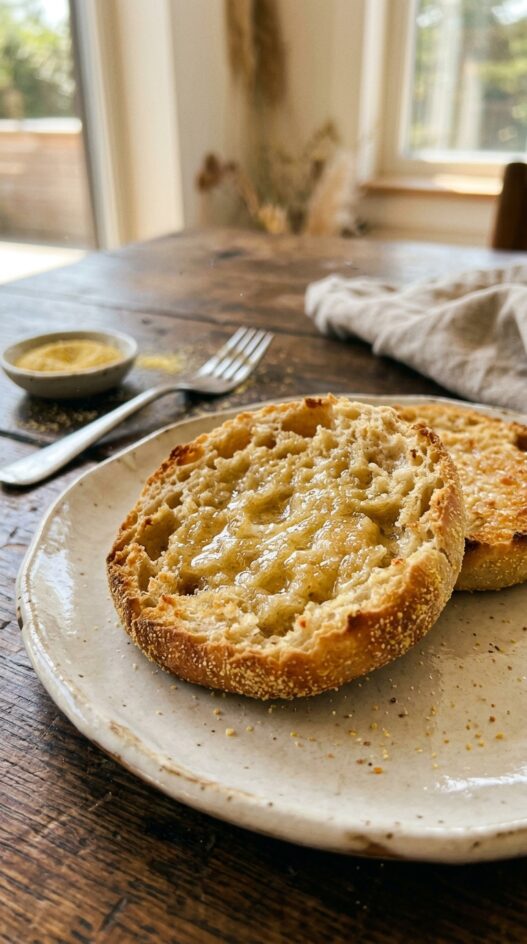
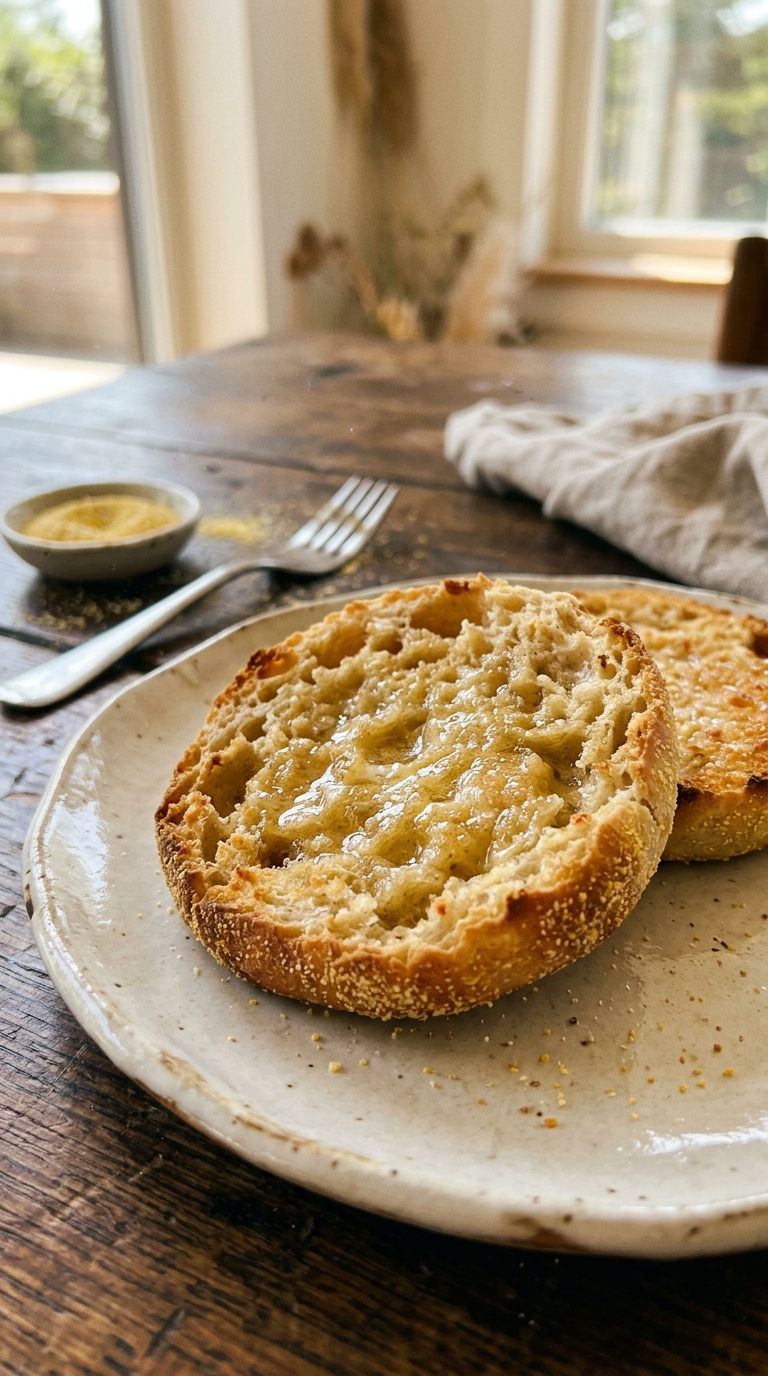
English muffins are one of the most satisfying and easy breads to make. Perfectly sized for burgers, sandwiches, or toast, they’re versatile enough for breakfast, lunch, or dinner. This recipe takes extra steps to ensure the signature nooks and crannies (so coveted in certain brands) are present—just remember to split them with a fork! Make the full batch, and you’ll have muffins to spare. Slather them with butter and jam, poach an egg and whip up hollandaise for eggs Benedict, or do as I do: make a breakfast sandwich piled high with a fried egg, bacon, slices of Granny Smith apple, and a swipe of Dijon mustard.
How to Make English Muffins at Home
1. Heat the Milk and Butter
- In a small saucepan over low heat, combine the milk and butter. Warm until the butter melts, then remove from heat. Let the mixture cool slightly until it’s warm to the touch but not hot, around 105-110°F (40-43°C).
2. Combine Dry Ingredients
- In a large mixing bowl (or the bowl of a stand mixer), sift together the flour, kosher salt, sugar, baking soda, and instant yeast.
3. Mix the Dough
- Add the warm milk-butter mixture and the lightly beaten egg to the dry ingredients.
- Using a stand mixer fitted with a dough hook or by hand, mix until the dough begins to come together. Knead for 5-6 minutes on medium speed (or about 8 minutes by hand) until smooth and slightly sticky. The dough should feel damp and velvety.
4. Roll Out the Dough
- Turn the dough onto a floured surface. Roll it out to about 1-inch (2.5 cm) thickness using a rolling pin.
- Use a round cutter, English muffin ring, or a large canning jar lid to cut out muffin rounds, about 3 inches in diameter. Place each round on a baking sheet dusted with cornmeal.
5. Dust and Rest the Muffins
- Lightly dust the tops of each muffin with additional cornmeal.
- Cover the muffins with a clean kitchen towel and let them rise at room temperature for about 20 minutes. This short rise helps achieve that classic airy texture.
6. Cook the Muffins on the Stovetop
- Heat a large cast-iron skillet or non-stick pan over low heat. You want a low and steady heat to prevent burning.
- Place a few muffins in the skillet, spacing them apart to allow room to expand. Cook for 3-5 minutes on each side until golden brown and slightly crisp on the outside. The muffins should rise slightly during cooking.
7. Finish in the Oven
- Once the muffins are golden brown on both sides, transfer them to a baking sheet.
- Preheat the oven to 325°F (165°C). Bake the muffins for an additional 12-15 minutes to finish cooking the centers.
8. Split and Serve
- Allow the muffins to cool slightly. To open, use a fork to split them in half (this helps keep the nooks and crannies intact).
- Toast and serve warm with butter, jam, or your favorite toppings.
Recipe Notes
- Instant Yeast: Instant yeast can be added directly to dry ingredients without proofing, making the process faster and easier.
- Fork-Splitting: Use a fork rather than a knife to split your muffins for the best texture. This preserves the nooks and crannies.
- Cast-Iron Cooking: Cast iron is ideal for cooking the muffins as it retains heat well, but any heavy skillet will work. Just be sure to keep the heat low.
Homemade English Muffins
- Total Time: 55 mins
- Yield: 12-14 muffins
Description
Made with simple ingredients, these English muffins are filled with nooks and crannies. They are cooked on the stovetop and then finished in the oven for the perfect golden crust.
Ingredients
Instructions
1. Heat the Milk and Butter
- In a small saucepan over low heat, combine the milk and butter. Warm until the butter melts, then remove from heat. Let the mixture cool slightly until it’s warm to the touch but not hot, around 105-110°F (40-43°C).
2. Combine Dry Ingredients
- In a large mixing bowl (or the bowl of a stand mixer), sift together the flour, kosher salt, sugar, baking soda, and instant yeast.
3. Mix the Dough
- Add the warm milk-butter mixture and the lightly beaten egg to the dry ingredients.
- Using a stand mixer fitted with a dough hook or by hand, mix until the dough begins to come together. Knead for 5-6 minutes on medium speed (or about 8 minutes by hand) until smooth and slightly sticky. The dough should feel damp and velvety.
4. Roll Out the Dough
- Turn the dough onto a floured surface. Roll it out to about 1-inch (2.5 cm) thickness using a rolling pin.
- Use a round cutter, English muffin ring, or a large canning jar lid to cut out muffin rounds, about 3 inches in diameter. Place each round on a baking sheet dusted with cornmeal.
5. Dust and Rest the Muffins
- Lightly dust the tops of each muffin with additional cornmeal.
- Cover the muffins with a clean kitchen towel and let them rise at room temperature for about 20 minutes. This short rise helps achieve that classic airy texture.
6. Cook the Muffins on the Stovetop
- Heat a large cast-iron skillet or non-stick pan over low heat. You want a low and steady heat to prevent burning.
- Place a few muffins in the skillet, spacing them apart to allow room to expand. Cook for 3-5 minutes on each side until golden brown and slightly crisp on the outside. The muffins should rise slightly during cooking.
7. Finish in the Oven
- Once the muffins are golden brown on both sides, transfer them to a baking sheet.
- Preheat the oven to 325°F (165°C). Bake the muffins for an additional 12-15 minutes to finish cooking the centers.
8. Split and Serve
- Allow the muffins to cool slightly. To open, use a fork to split them in half (this helps keep the nooks and crannies intact).
- Toast and serve warm with butter, jam, or your favorite toppings.
Notes
Instant Yeast: Instant yeast can be added directly to dry ingredients without proofing, making the process faster and easier.
Fork-Splitting: Use a fork rather than a knife to split your muffins for the best texture. This preserves the nooks and crannies.
Cast-Iron Cooking: Cast iron is ideal for cooking the muffins as it retains heat well, but any heavy skillet will work. Just be sure to keep the heat low.
- Prep Time: 30 min
- Rising Time: 20 min
- Cook Time: 25 min
- Category: Dessert
Nutrition
- Serving Size: 1 muffin
- Calories: 180
- Sugar: 2g
- Sodium: 270mg
- Fat: 4g
- Saturated Fat: 2g
- Unsaturated Fat: 1g
- Trans Fat: 0g
- Carbohydrates: 31g
- Fiber: 1g
- Protein: 5g
- Cholesterol: 120mg



I forgot the baking soda so these didn’t have that slightly sour taste of English muffins, but the recipe worked beautifully. Needed a little more flour than called for, but no matter.
I just ate my first muffin using fast yeast it was great & light. Hubby said best yet
How much does this make?
I made these this evening so they’ll be fresh for breakfast tomorrow, and they came out beautifully, really fluffy and aromatic. I used the active dry yeast since that’s what I had on hand, but proofed it in a few teaspoons of warm water before adding it to the rest of the ingredients. That seemed to do the trick, since I got a good rise, and they are nice and fluffy (of course I’m having one right now, at 10:30pm. Don’t judge me.)
I tried this recipe yesterday. We split & toasted them this morning. They were heavy. I think that was because I. used dry active years not instant yeast. I let them rise 20 minutes and think I should have let them rise longer. Next time I will use instant yeast or bread machine yeast
I just made these and they are fantastic! They didn’t really rise for me in the twenty minutes but puffed up beautifully in the pan :-) I used mostly whole wheat flour instead of just white flour
Why have to cook the muffin before put into oven, can it bake in the oven once it raise?
If you just want biscuits put them in the oven, but not for English muffins…you don’t need to put them in the oven at all if you don’t want to….cooking them on the stove top is the cooking method for these.
The dough only rises once after it is rolled and cut? Maybe I missed something?
You did not miss anything, that is the only rise. I give mine twenty minutes under a towel after cutting, and the baking soda alongside the yeast does the rest of the lift.
I’ve been baking breads and rolls for over 4 yrs using instant dry yeast kept in my freezer for a very long time, no problems. I do not proof with instant yeast. I made a similar recipe last weekend, only I used my bread machine to make the dough. They came out excellent!
if I use active dry yeast, should I wait for it to rise before cutting?
Making these now, didn’t proof yeast and am having really great rising results. I didn’t bother with the 2tsp measured amount of yeast, just opened a packet and dumped it in. I’m very excited to toast and eat with some butter and rose hip jelly. Thanks!
I just made the English muffin recipe on AllRecipes yesterday but just found this one today! :( I’ll use this recipe next time, but I know I’ll like it a lot better since this one has egg, baking powder, half the sugar, and more salt. Thanks for sharing this!
Also, Holly, proofing yeast can be pretty helpful if:
> your yeast came in a jar (and it’s been left on the counter a lot after opening)
> or is in a packet of questionable freshness (like if it’s near its expiration date).
Yeast expires and proofing yeast can save you from the trouble of having dough that didn’t rise.
You don’t have to proof instant yeast, just throw it all in.
you are getting proofing confused with fermentation which comes before proofing. The longer you can ferment a dough , the better the flavor and texture. This is a great recipe but a sort of short cut to the real thing. I find it funny when the years of baking experience you all write about is in your home kitchen with measuring cups…..
The recipe does not include directions for proofing and adding the yeast. I have been baking for over 45 years so I have an idea. New cooks may not.
You do not have to proof instant yeast, just put with other dry ingredients.
This looks so delicious! I will definitely try this.