
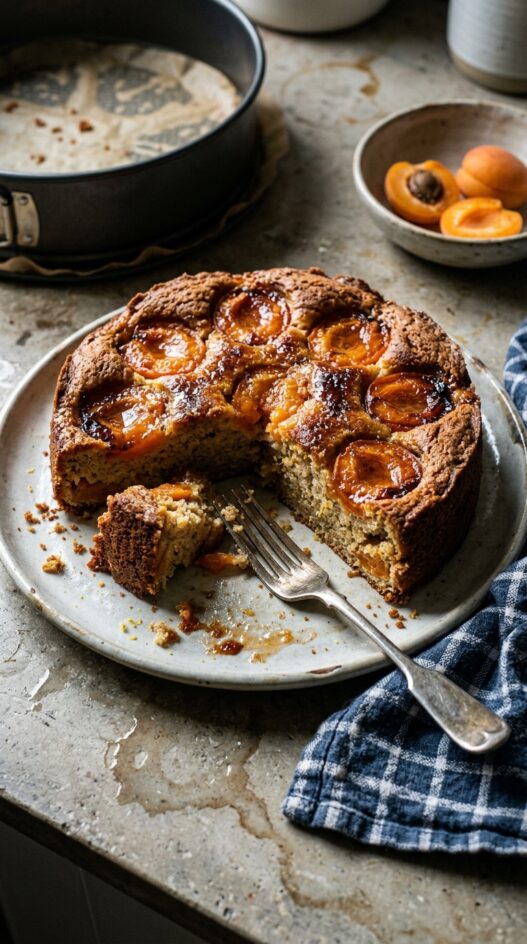
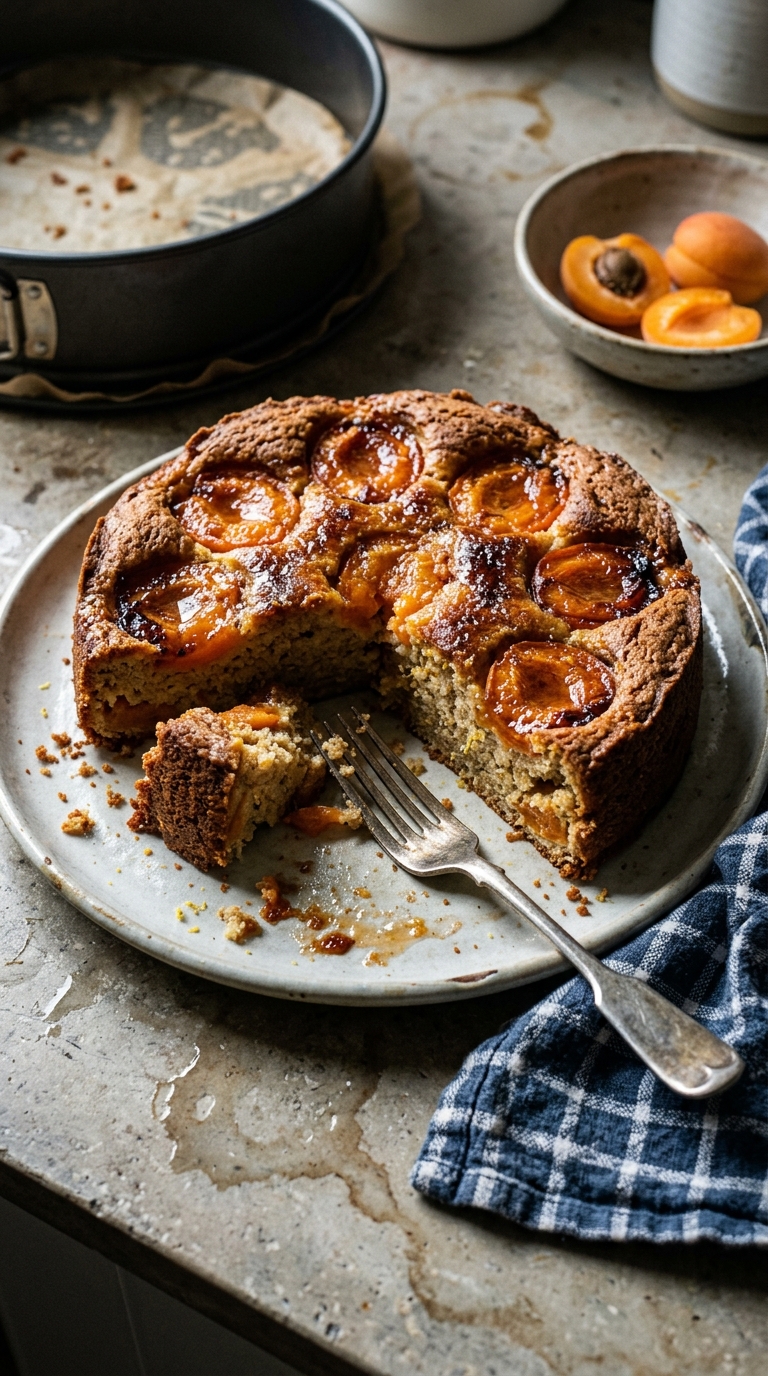
It’s hard to find delicious apricots in Massachusetts–usually I’m limited to whatever the grocery store has shipped in from California, and while plenty large these are often mealy and flavorless. Apricots are notoriously poor travelers, and much like strawberries, flavor gets sacrificed for sturdiness–and the ability to travel cross-country.
So I go a little crazy during those few short weeks when the Red Jacket Orchard apricots from upstate New York come in at the grocery store, and even crazier when the farmer’s markets have apricots on display. So it was that I bought about seven pounds of apricots and carried them home on the commuter rail–the majority dedicated to an apricot-cardamom jam. True to their delicate nature, a few still remained for eating fresh out of hand, but the rest were bruised from their commute–feeling, perhaps, much as we all do after a long day? No way could these be wasted, so little surprise what comes next: I found myself baking!
I love baking with ricotta–it adds a wonderful springiness as well as sturdiness to baked goods. More prosaically, we were about to go on vacation and the expiry date on the tub was nigh. There’s plenty of cheesecake-apricot recipes on the web, but I had the urge to make one of those snacking cakes that can acceptably be eaten at breakfast.
Print
Apricot Ricotta Cake
- Total Time: 2 hours
- Yield: 6-8
Description
Serve this rustic cake with ice cream for dessert or sneak a slice for a sweet breakfast.
Ingredients
- 1 1/2 cups (360 ml) spelt flour
- 1/2 cup (120 ml) all-purpose flour
- 3 tsp baking powder
- 1 tsp salt
- 1 cup + 2 tbsp (270 ml) sugar, divided
- zest of 2 lemons
- 4 large eggs, at room temperature
- 250 grams ricotta
- 1 tsp rose water
- 6-8 apricots, washed, divided in half and stone removed
Instructions
- Center a rack in the oven and preheat the oven to 350°F. Oil a 9-inch round cake or springform pan and place a piece of parchment paper in the bottom.
- In a small bowl, stir together the flour, baking powder, and salt.
- Place the eggs, zests and the sugar in the bowl of a mixer fitted with the whisk attachment.
- Beat on medium-high speed until the mixture is pale and thick, about 3 minutes.
- Set the mixer to its lowest speed and beat in the ricotta.
- Add the sifted dry ingredients, beating only until they are incorporated.
- Pour about the batter into the prepared pan. Place as many apricots as you can fit on top of the batter and sprinkle them with the extra sugar.
- Bake the cake for 1 1/4 to 1 1/2 hours, until a toothpick inserted into the center comes out clean. Remove from the oven and set on a cooling rack for 15 minutes.
- Carefully remove the sides of the springform pan and let the cake cool for at least 30 minutes. Serve the cake warm or at room temperature with whipped cream or ice cream.
- Prep Time: 30 mins
- Cook Time: 1 hour 30 mins
- Category: Baking
- Cuisine: Italian
Nutrition
- Serving Size: 1 slice
- Calories: 320
If You Liked This Recipe, You’ll Love These
- Apfel Kuchen: Traditional German Apple Cake
- Sicilian Orange Cake
- Glazed Orange Pound Cake with Orange Zest
- Perfect Lemon Cake with Lemon Syrup
Frequently Asked Questions
What does the ricotta do in this cake that butter or oil wouldn’t?
The 250g of ricotta adds “a wonderful springiness as well as sturdiness to baked goods” — qualities that make this a snacking cake suitable for breakfast rather than a delicate, crumbly dessert. I beat the ricotta in at the mixer’s lowest speed, then add the dry ingredients, for a batter that bakes for a long 1 1/4 to 1 1/2 hours at 350°F without drying out.
Why does the recipe use spelt flour alongside regular all-purpose flour?
I use 1 1/2 cups (360 ml) of spelt flour and 1/2 cup (120 ml) of all-purpose flour. Spelt is an ancient grain with a mild, nutty flavor and slightly more protein than standard wheat, which contributes to the cake’s sturdy texture and faint wholesome flavor. The all-purpose flour keeps the crumb from becoming too dense.
Why are the apricots placed on top of the batter rather than folded in?
I press the 6–8 apricots (washed, halved, and stoned) into the top of the batter before baking and sprinkle them with the extra 2 tbsp of sugar. Placing them on top means they roast and caramelize slightly during the long bake, giving the cake a jammy, burnished fruit topping rather than dissolving into the crumb. Apricots are delicate and poor travelers — bruised or very ripe ones work perfectly here.






what a lovely recipe, but what’s the rose water for? want to try, but don’t want to mess it up for a little water.