
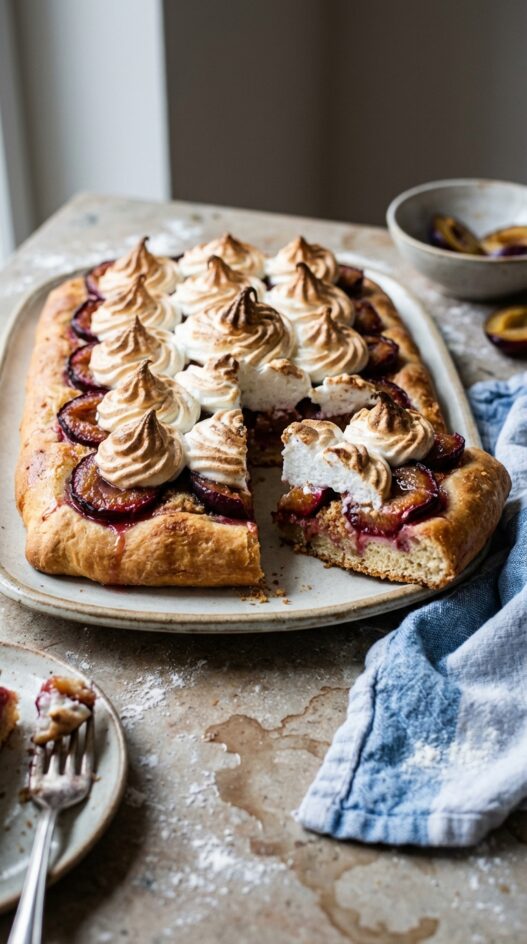
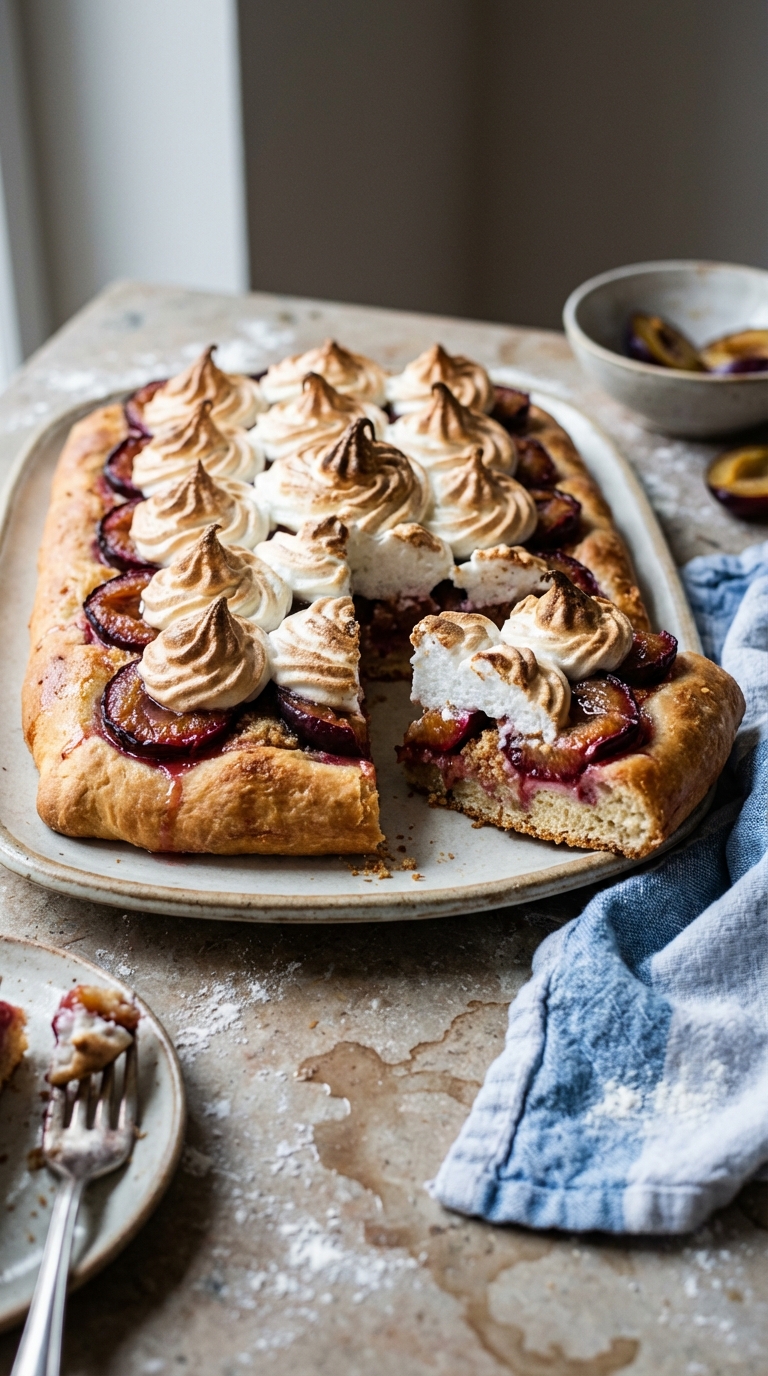
A delicious plum pie recipe from a 1930’s cookbook, reformulated for modern flavors and tastes but still with respect for it’s Hungarian origins.
In my childhood, we didn’t use plums for cakes, more for jams, so instead of looking for a family recipe, I open an old cookbook from the 1930’s which I found in an antique shop last year. Its pages are yellowed, have spots and the scent of time and past cookings. Since plum was apparently neglected in our kitchen, I find a good opportunity to change this by baking a wonderful plum pie as written in the book. Although it had been almost 100 years ago when this book was published, the recipe is easy to follow and understand. Or at least it seems.
Just to be sure I call my grandmother for some advice, sit down under our cherry tree and start taking notes. This recipe contains exact quantities of ingredients except for milk and plums. So we guessed. We found it strange to use so many eggs compared to the given quantity of flour, and also it is unusual to bake the dough with the meringue from the beginning. Anyway, we hope that people knew what they were doing at that time and I start preparing the pie with great enthusiasm
I could tell you it was wonderful and could share recipe immediately with you. Instead, I am going to tell you what happened after in reality.
When the pie was ready, it looked nice. I think it tastes good, but somehow…it is not the best. So instead of writing the blog post drove to my grandmother’s house.
“So how is it? “- she asks, while she takes a bite of the pie, and I observe her face while she tastes it.
“It’s good!”- she says with surprise in her voice, and I response with surprise as well.
“Is it? I think it lacks on something…I don’t know…maybe not enough milk”. I am a bit disappointed and helpless.
My grandmother takes her job as a cake critic seriously so we sit down at the table in the living room, she takes another bite and eats it slowly and thinks.
“Maybe its dough is a bit dense, I must say”- she says slowly then pushes the meringue with her fingertip. “And the meringue is too sticky. Let’s go through this recipe once more!”
I added more milk, didn’t sprinkle the plums with cinnamon and sugar because it softens the dough. Beating egg yolks helped to lighten dough as well. I also added more plums on top. And what of the meringue? I pre-baked the dough with the plums, then reduced the heat and topped it with the meringue. “Sweetheart, I found a similar recipe in my book, you should definitely pre-bake the pie! Don’t worry it will work out well!”
“Sweetheart, I found a similar recipe in my book, you should definitely pre-bake the pie! Don’t worry it will work out well!”
So I did. The dough became light, the amount of plums turned out to be just perfect, and the meringue is just as sticky as it should be
So happened, that 80 years after this recipe had been published, my grandmother and I – with whom we have exactly 50 years difference in age- rebaked, rewrote this plum pie recipe so I can share it with you for further rebaking, rewriting and discussions.
Plum pie from a 1930’s cookbook reformulated by my grandmother and me.
Step by Step Guide to Making Hungarian Plum Pie
- Prepare Plums: Halve and pit the plums. Set aside.
-
Making Crumble: Cut butter into small pieces. Mix with flour to form a crumble.
-
Yeast Mixture: Dissolve yeast and 1 teaspoon of sugar in half of the milk. Let it rise for a few minutes.
-
Egg Yolk Mixture: Beat egg yolks with two teaspoons of sugar until foamy. Add the remaining milk.
-
Dough Formation: Combine the yeasted milk and egg yolk mixture with the flour. Knead into a soft, flexible dough.
-
Rolling Dough: Roll out the dough to 1 cm thickness, forming a rectangle.
-
Adding Breadcrumbs & Plums: Sprinkle breadcrumbs over the dough and arrange plums on top.
-
Rising Dough: Let the dough rise for 45 minutes.
-
Preheat Oven: Preheat to 180°C (350°F).
-
Baking Pie: Pre-bake for 15 minutes.
-
Egg White Topping: Beat egg whites with the remaining sugar. Pipe onto the pie.
-
Final Baking: Lower the temperature to 150°C (300°F). Bake for another 15 minutes until golden brown.
100 Year Old Recipe: Hungarian Plum Pie
- Total Time: 60 minutes
- Yield: Serves 8
- Diet: Omnivore
Description
A classic plum pie recipe, updated for modern tastes while honoring its Hungarian roots. Sweet, fruity, and perfect for any occasion.
Ingredients
- 4 cups (1000 ml) Flour
- 10 tablespoons (140 g) Butter
- 1 pinch of Salt
- 3 tsp + 4 tbsp Sugar
- 1 ounce (30 g) Fresh Yeast
- 2/3 cup (150 ml) Milk
- 5 Eggs, separated
- 21 ounces (600 g) Plums
- Fine Breadcrumbs
Instructions
- Prepare Plums: Halve and pit the plums. Set aside.
- Making Crumble: Cut butter into small pieces and mix with flour to form a crumble.
- Yeast Mixture: Dissolve yeast and 1 teaspoon of sugar in half of the milk. Let it rise for a few minutes.
- Egg Yolk Mixture: Beat egg yolks with two teaspoons of sugar until foamy. Add the remaining milk.
- Dough Formation: Combine the yeasted milk and egg yolk mixture with the flour. Knead into a soft, flexible dough.
- Rolling Dough: Roll out the dough to 1 cm thickness, forming a rectangle.
- Adding Breadcrumbs and Plums: Sprinkle breadcrumbs over the dough and arrange plums on top.
- Rising Dough: Let the dough rise for 45 minutes.
- Preheat Oven: Preheat to 180°C (350°F).
- Baking Pie: Pre-bake for 15 minutes.
- Egg White Topping: Beat egg whites with the remaining sugar. Pipe onto the pie.
- Final Baking: Lower the temperature to 150°C (300°F). Bake for another 15 minutes until golden brown.
Notes
- For a richer flavor, use Hungarian plums if available. Otherwise, Italian or Damson plums are good substitutes.
- To prevent a soggy bottom, pre-bake the crust for 15 minutes before adding the plums.
- Store leftover pie in the refrigerator for up to 3 days and reheat gently before serving.
- Prep Time: 30 minutes
- Cook Time: 30 minutes
- Category: Dessert
- Method: Baking
- Cuisine: Hungarian
Nutrition
- Serving Size: 1 slice
- Calories: 400
- Sugar: 30
- Sodium: 150
- Fat: 20
- Saturated Fat: 12
- Unsaturated Fat: 6
- Carbohydrates: 60
- Fiber: 4
- Protein: 6
- Cholesterol: 80
Frequently Asked Questions
What type of plums work best for this Hungarian pie?
Italian prune plums (small, oval, firm-fleshed) are the traditional choice and hold their shape during baking. Regular plums work but may release more juice.
Can I use instant yeast instead of fresh yeast?
Yes, use about one-third the weight of fresh yeast when substituting instant yeast. Fresh yeast weighs 30g here, so roughly 10g (about 1 tablespoon) of instant yeast is the equivalent.
What is the texture of this pie?
It has a yeasted, slightly bread-like base made with butter worked into the flour, then topped with breadcrumbs, plums, and a piped meringue of beaten egg whites and sugar. The result is somewhere between a cake and a fruit tart.
How do I know when the pie is done baking?
The crumble should be golden brown and the plums should be soft and bubbling at the edges. A skewer inserted into the dough base should come out clean.
Can I use other stone fruits in this recipe?
Apricots, cherries, and peaches all work well in this format. Adjust the sugar slightly depending on the sweetness of the fruit.


Would like to have a copy of th e cookbook. Any chance you could reproduce it for me? That’s the time my grandmother would have been using one like that.
Hi Beverly,
thank you so much for your interest! Unfortunately there is no way I could reproduce this book, it is an antique book which I found in an antique shop in Hungary, and it has 500 pages…You can find more recipes from this book that I try to reproduce and share and also from some other old cookbooks on my blog (tasteofmemories.com) I am happy you enjoyed my article! Nice greetings from Hungary!
Thank you for your kind comment! I hope you will like the recipe! :)
This looks very delicious. I have my own plumb tree and needed ideas. I will be baking this on Sunday. Tks for sharing5